
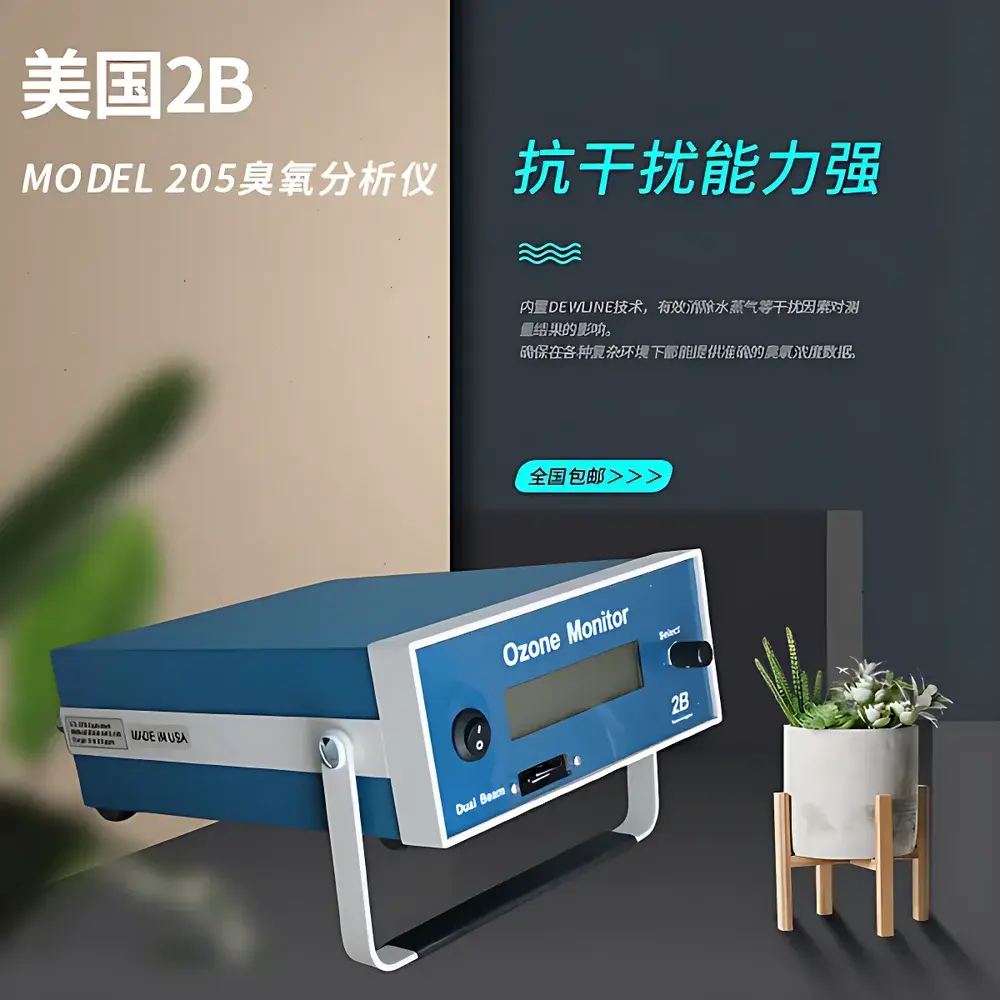
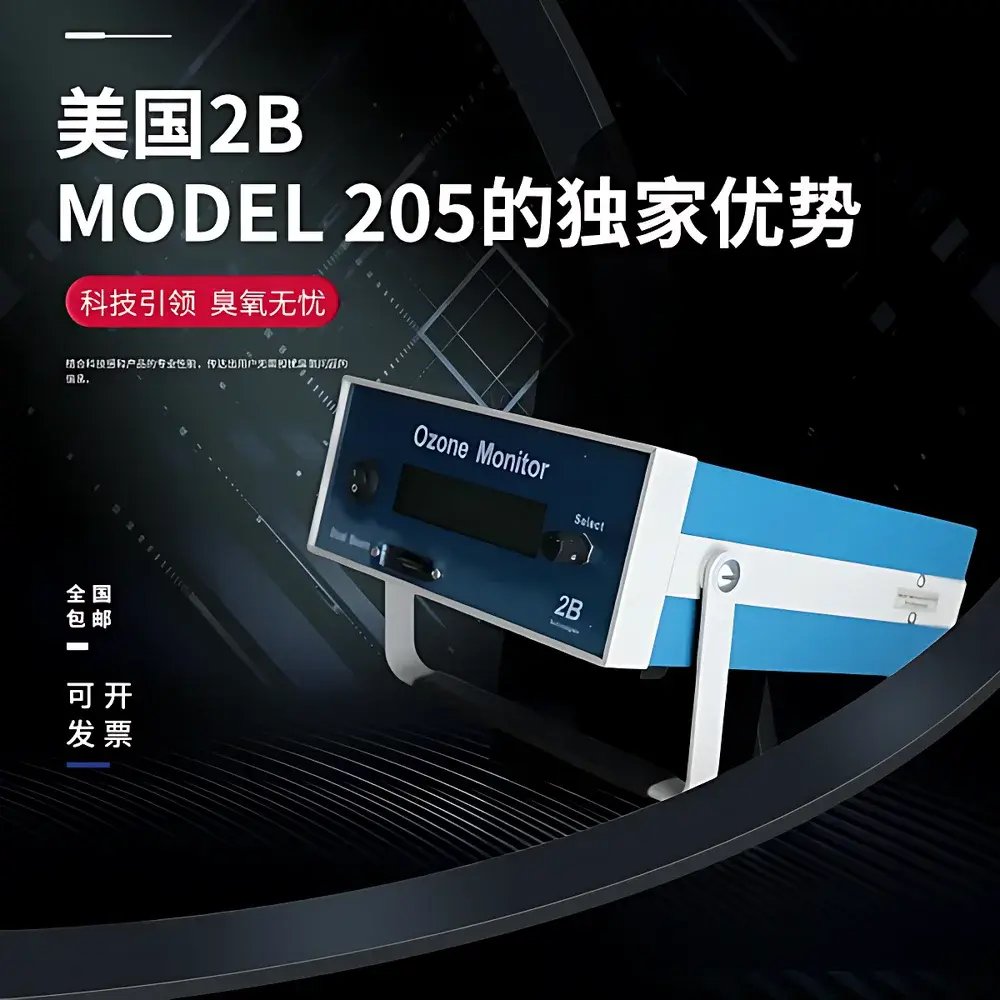
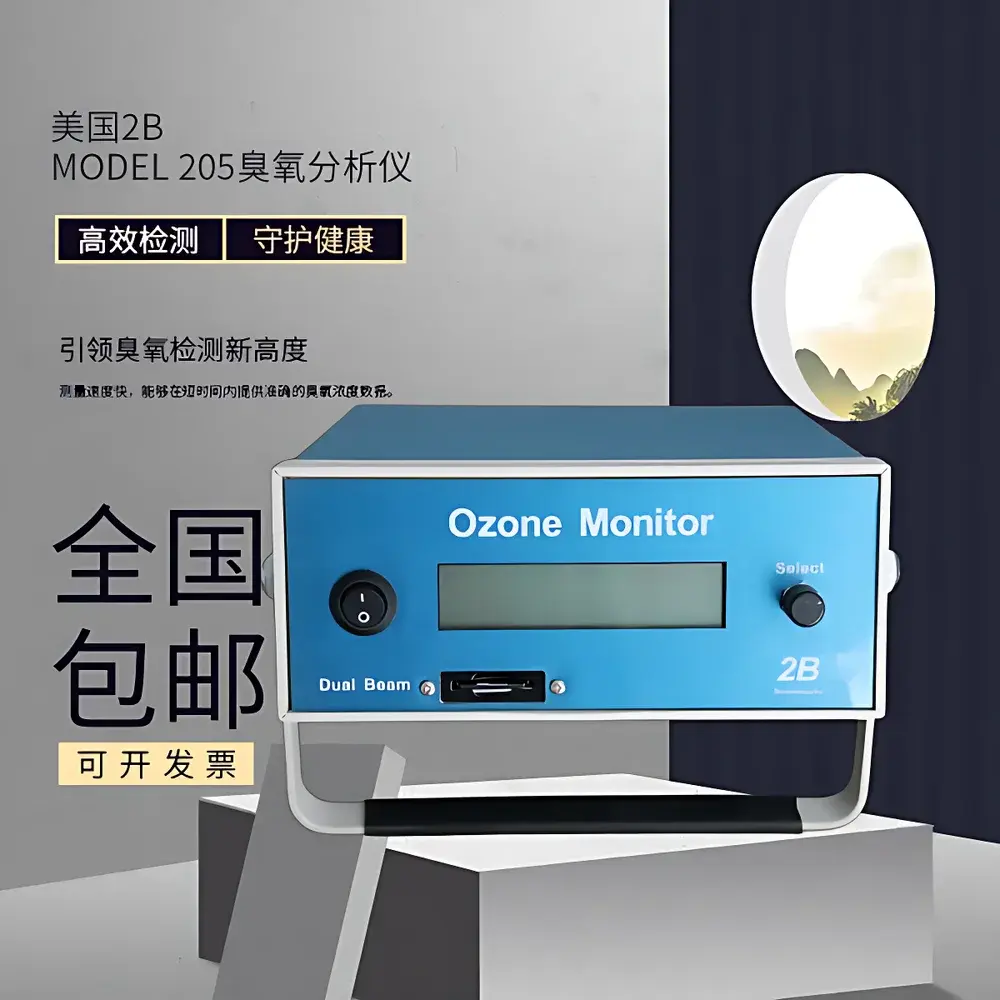
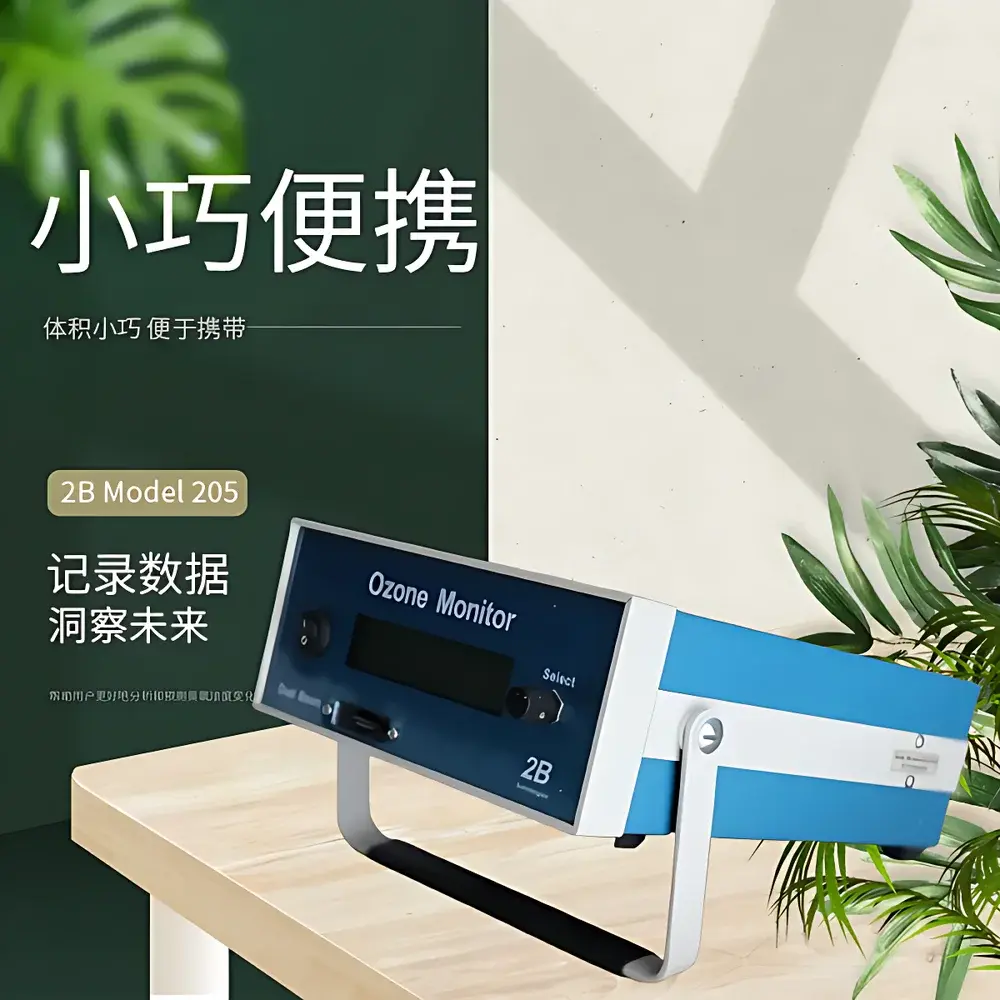
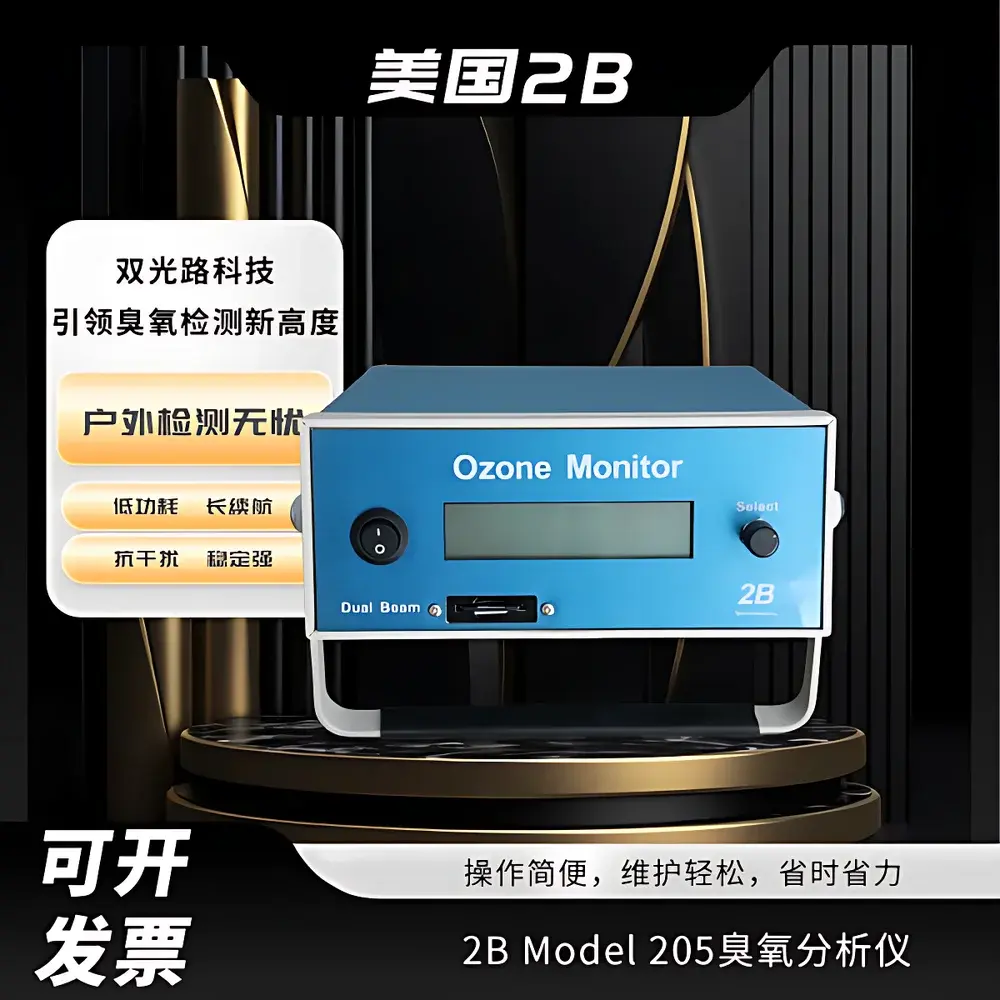
2B Technologies Model 205 Dual-Beam UV Ozone Analyzer
| Brand | 2B Technologies |
|---|---|
| Origin | USA |
| Model | Model 205 |
| Instrument Type | Portable |
| Measurement Range | 0–250 ppm |
| Limit of Detection | 1 ppb |
| Response Time | 2 s |
| Zero Drift | ±1.5 ppb (24 h) |
| Resolution | 1.5 ppb |
| Power Consumption | 5.0 W @ 12 V DC |
| Flow Rate | 1.8 L/min (min. required: 1.2 L/min) |
| Data Storage | 14,336 records |
| Weight | 2.1 kg (4.7 lb) |
| Dimensions | 24.1 × 12.7 × 20.3 cm |
Overview
The 2B Technologies Model 205 Dual-Beam UV Ozone Analyzer is a field-deployable, NIST-traceable instrument engineered for high-temporal-resolution measurement of ambient and process ozone (O₃) concentrations using the well-established 254 nm ultraviolet absorption principle. Unlike single-beam designs susceptible to lamp intensity drift and optical contamination, the Model 205 implements a true dual-beam architecture—simultaneously measuring transmitted light intensity through both an ozone-scrubbed reference path (I₀) and an unscrubbed sample path (I). This real-time differential photometric configuration enables continuous compensation for source fluctuations, detector sensitivity changes, and window fouling, resulting in exceptional baseline stability and measurement robustness under dynamic environmental conditions. With a native time resolution of 2 seconds and selectable averaging intervals (2 s, 10 s, 1 min, 5 min, 1 h), the Model 205 is uniquely suited for applications demanding rapid temporal fidelity—including balloon-borne stratospheric profiling, UAV-based atmospheric surveys, mobile monitoring platforms, and fast-response industrial leak detection.
Key Features
- Dual-beam 254 nm UV absorption photometry with real-time I/I₀ ratio computation for intrinsic drift correction
- NIST-traceable calibration certified with documented uncertainty budget and certificate of conformance
- Ultra-low power consumption (5.0 W at 12 V DC), enabling extended operation from external batteries or solar-charged systems
- Integrated DewLine™ humidity management system to minimize water vapor interference on optical path transmission
- Onboard data logging with real-time clock (RTC), storing up to 14,336 timestamped records (e.g., 1.4 months at 5-minute averaging)
- Simultaneous analog outputs (0–2.5 V) for ozone concentration, internal temperature, and barometric pressure; configurable for external sensor inputs (e.g., RH, GPS-derived altitude)
- RS-232 serial interface supporting ASCII protocol for time, date, O₃ concentration, temperature, pressure, and auxiliary channel values
- Compact form factor (24.1 × 12.7 × 20.3 cm) and lightweight design (2.1 kg) optimized for airborne, portable, and networked deployment
Sample Compatibility & Compliance
The Model 205 is validated for direct analysis of ambient air, indoor air, and low-particulate industrial gas streams without pre-filtration beyond standard 2 µm particulate removal. It complies with EPA Reference Method EQOA-01 for ozone monitoring and meets the performance criteria outlined in ISO 13964:2022 (Ambient air—Determination of ozone—Ultraviolet photometric method). All factory calibrations are traceable to NIST Standard Reference Materials (SRMs) and documented per ISO/IEC 17025 requirements. The instrument supports GLP-compliant operation via audit-trail-capable data logging and user-accessible calibration history. Optional GPS synchronization and CF card expansion enable georeferenced, long-duration campaigns compliant with EPA PM/O₃ network reporting protocols.
Software & Data Management
Data acquisition and configuration are managed via the vendor-provided 2B Technologies Ozone Analyst software (Windows-compatible), which supports real-time telemetry display, remote parameter adjustment, firmware updates, and automated report generation in CSV and PDF formats. Logged datasets include embedded metadata (instrument ID, calibration date, operator tag, GPS coordinates when enabled), ensuring full traceability for regulatory submissions. The RS-232 output protocol is fully documented and interoperable with SCADA systems, LabVIEW environments, and custom Python/Matlab ingestion pipelines. All stored data retain absolute timestamps synchronized to UTC via the onboard RTC, with drift < ±1 second per month—critical for inter-instrument comparison in distributed sensor networks.
Applications
- Stratospheric and tropospheric ozone profiling via radiosonde, UAV, and light aircraft platforms
- Urban and regional air quality monitoring networks requiring EPA-equivalent precision and reliability
- Occupational health and safety compliance monitoring in workplaces with ozone-generating equipment (e.g., water treatment, semiconductor fabrication)
- Process control and emissions verification in industrial settings including medical sterilization, UV curing, and advanced oxidation processes
- Research-grade validation of satellite-based ozone retrievals (e.g., TROPOMI, OMPS) through ground-truth and mobile transect measurements
- Indoor air quality assessment in hospitals, laboratories, and cleanrooms where low-level ozone exposure must be quantified against ACGIH TLV® (0.05 ppm ceiling)
FAQ
What is the fundamental measurement principle used by the Model 205?
It employs dual-beam ultraviolet absorption photometry at 254 nm, measuring the Beer-Lambert law attenuation difference between a scrubbed and unscrubbed optical path.
Is the instrument suitable for unattended long-term deployment?
Yes—its low power draw, internal temperature-compensated optics, DewLine™ moisture control, and robust data logging support multi-week autonomous operation in remote locations.
How is calibration traceability maintained over time?
Each unit ships with a NIST-traceable calibration certificate and includes provisions for field verification using zero air and span gases; recalibration is recommended annually or after 6 months of continuous operation.
Can the Model 205 interface with third-party data acquisition systems?
Yes—via its open ASCII RS-232 protocol and analog voltage outputs, it integrates natively with Campbell Scientific CR-series loggers, National Instruments DAQ hardware, and Modbus-compatible SCADA platforms.
Does the analyzer require consumables beyond the zero cartridge?
No—other than periodic replacement of the ozone scrubber cartridge (typical lifespan: 6–12 months depending on ambient O₃ levels), the system operates maintenance-free with no lamps or filters requiring routine service.
Related Products







