
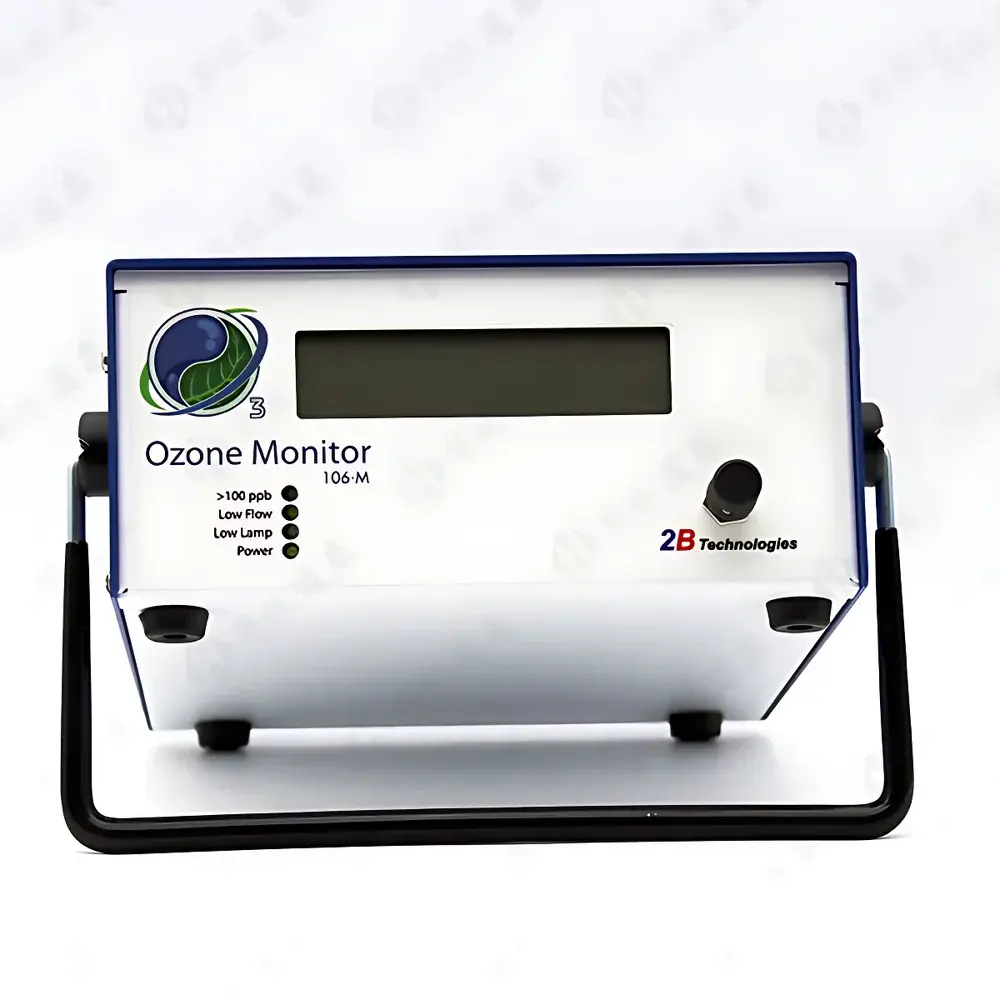
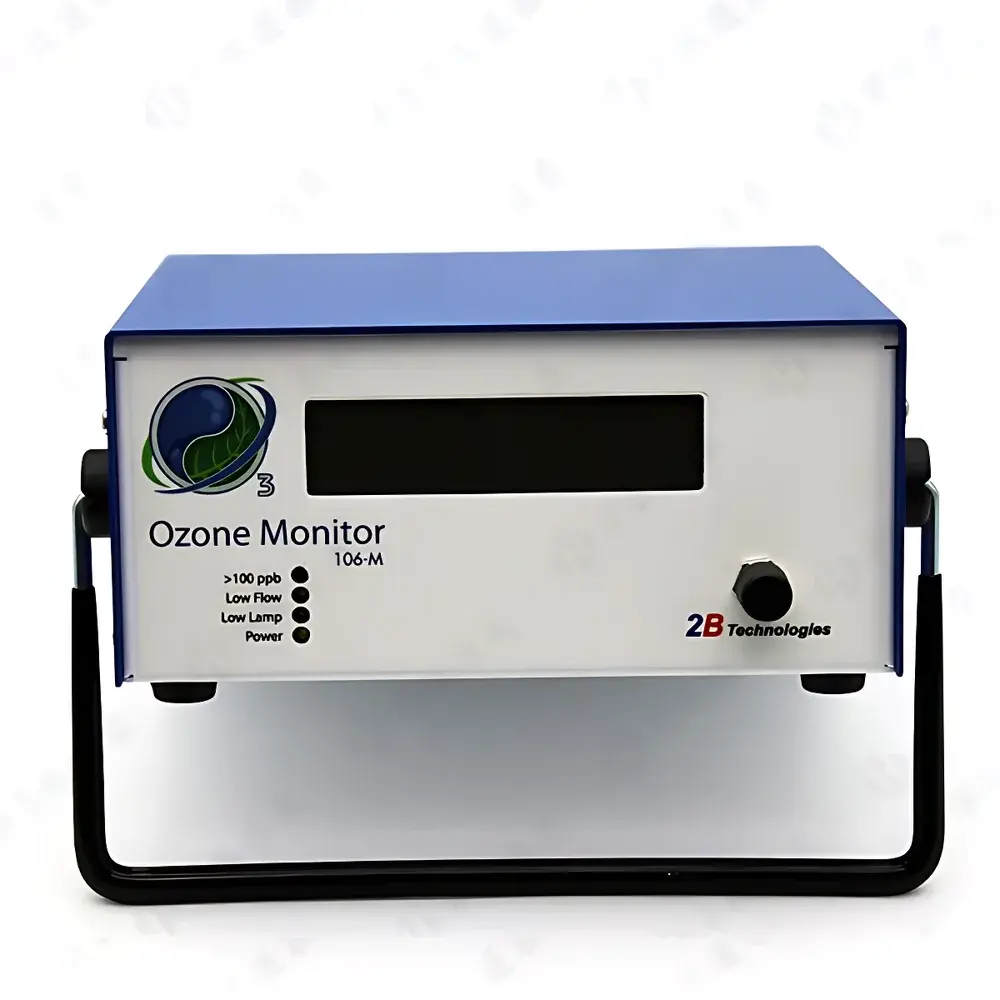
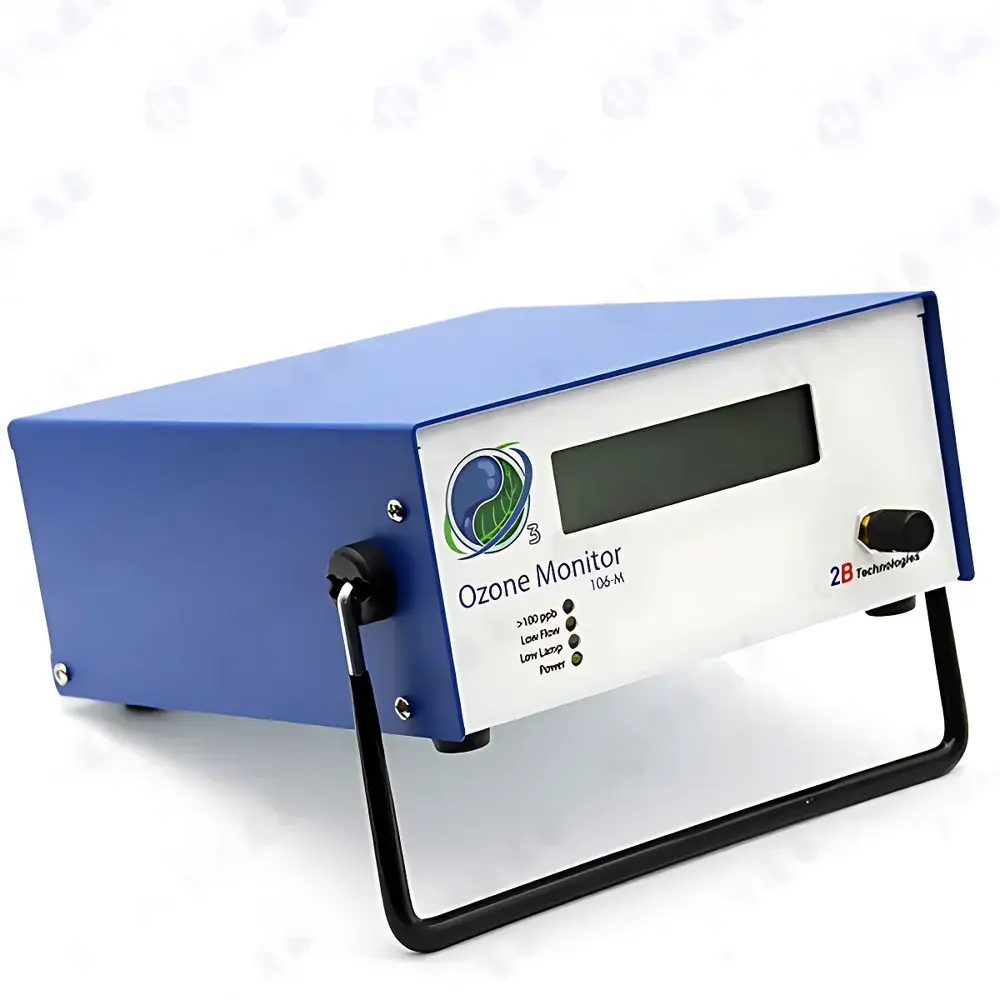
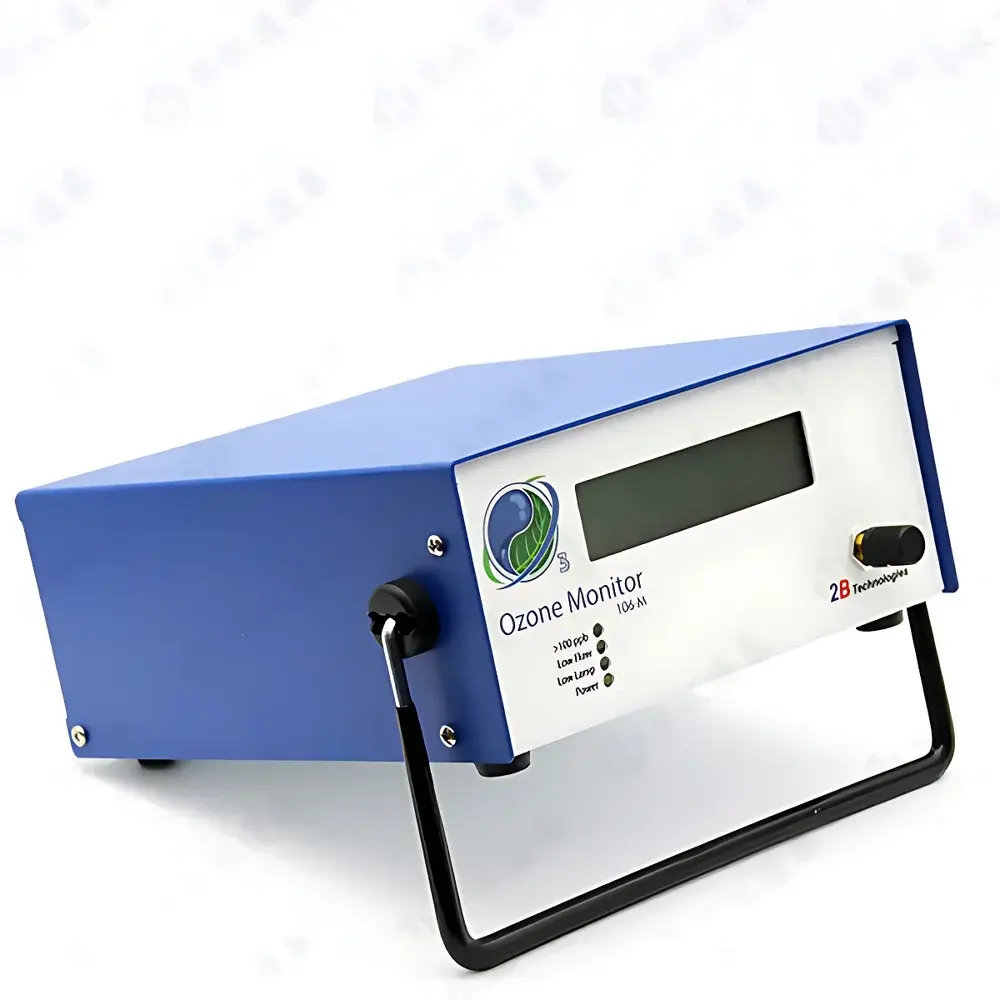
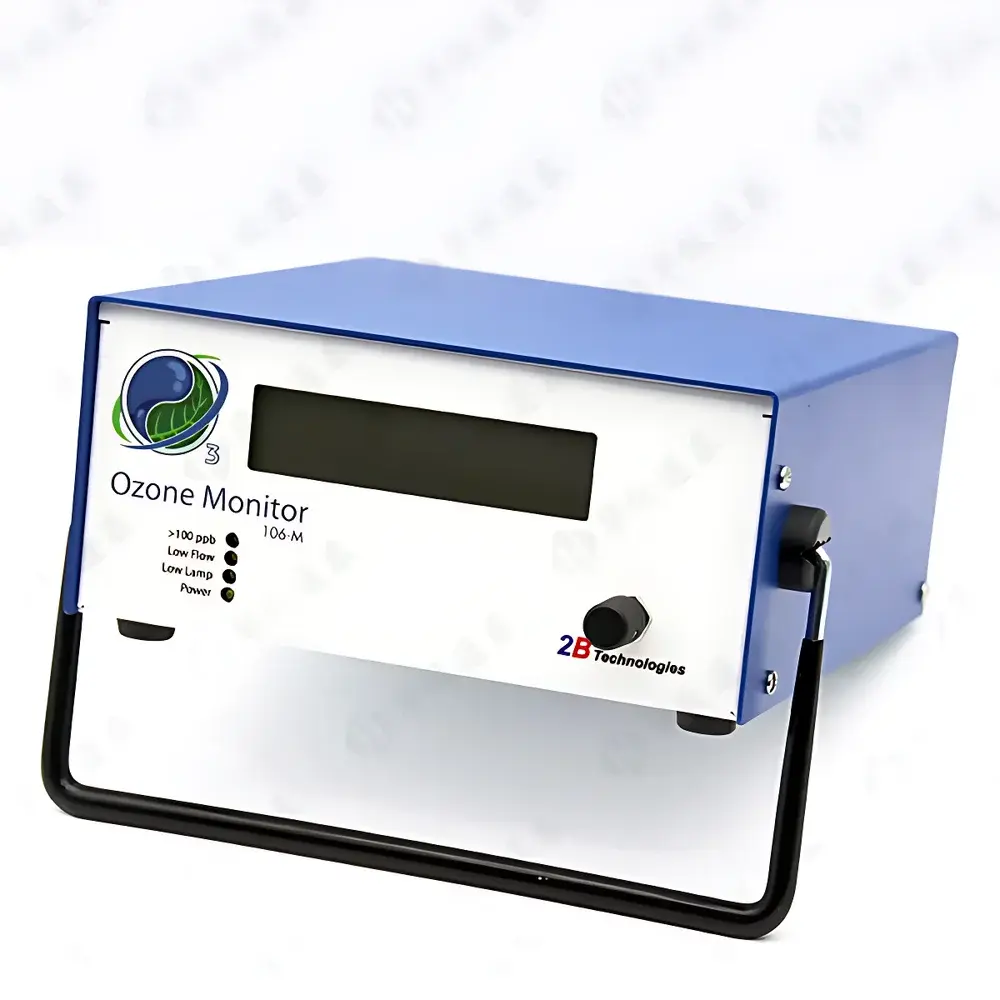
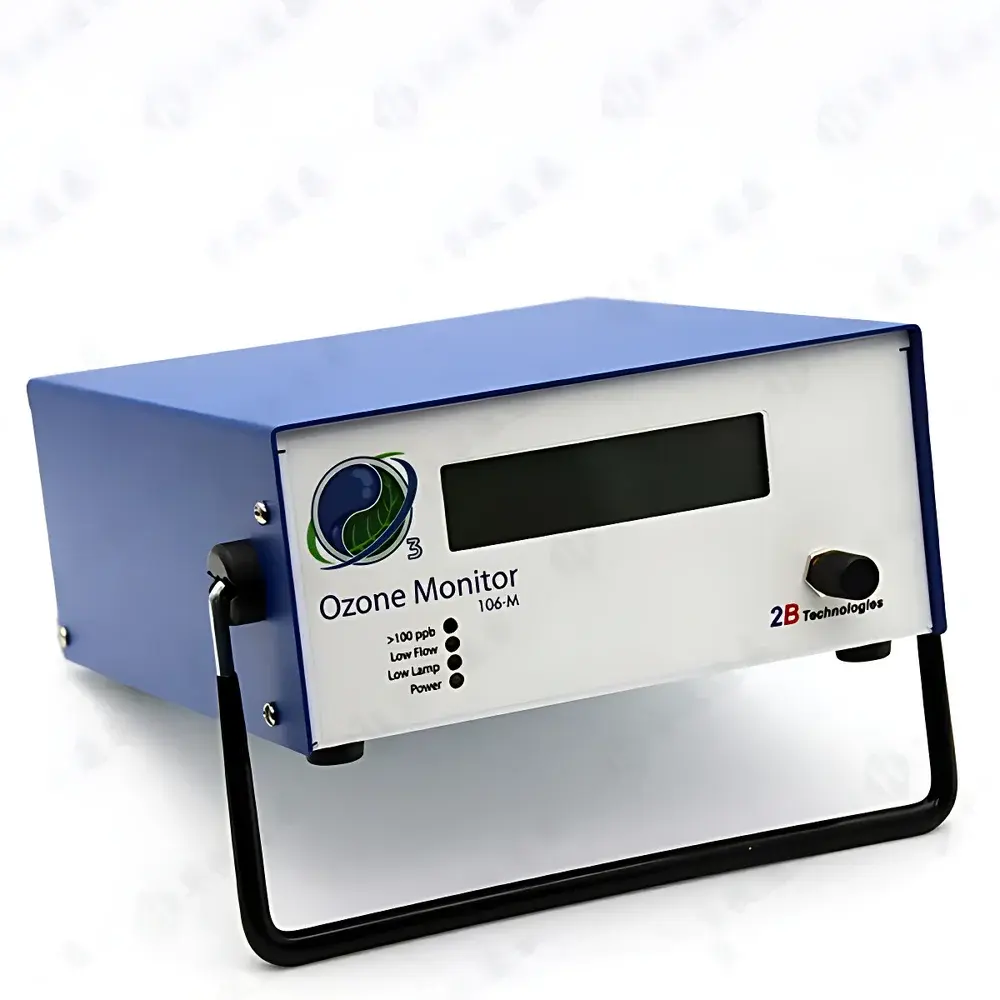
2B Technologies Model 106MH Ozone Analyzer
| Brand | 2B Technologies |
|---|---|
| Origin | USA |
| Model | Model 106MH |
| Instrument Type | Fixed-mount ozone analyzer |
| Measurement Range | 0–10,000 ppm (0–1 vol%) |
| Response Time | 2 s |
| Measurement Interval | 2 s |
| Detection Principle | UV absorption at 254 nm |
| Flow Rate | 1 L/min |
| Data Storage | 32,736 rows (e.g., 113 days at 5-min averaging) |
| Output Interfaces | USB, RS-232, 0–2.5 V analog, 4–20 mA |
| Display | Integrated LCD |
| Power | 11–28 VDC, 500 mA, 6 W |
| Dimensions | 9 × 20 × 24 cm (3.65 × 7.9 × 9.4 in) |
| Weight | 1.9 kg (4.2 lb) |
| Compliance | Designed for continuous environmental and industrial monitoring per EPA, ISO 13964, and ASTM D5012 practices |
Overview
The 2B Technologies Model 106MH Ozone Analyzer is a fixed-mount, laboratory- and field-grade instrument engineered for high-speed, high-stability quantification of ozone (O3) in air or oxygen-rich gas streams. It operates on the well-established principle of ultraviolet (UV) absorption spectroscopy at the 254 nm wavelength—a spectral region where ozone exhibits strong, selective absorbance governed by the Beer–Lambert law. This optical method delivers inherent specificity for ozone without cross-sensitivity to common interferents such as NO2, SO2, or hydrocarbons when properly filtered and calibrated. With a measurement interval of just 2 seconds and a response time (t90) also specified at 2 s, the Model 106MH supports real-time process monitoring, rapid ozone decay studies, and dynamic ambient air quality assessment—particularly in applications demanding sub-second temporal resolution without sacrificing long-term baseline stability.
Key Features
- Ultra-fast 2-second measurement cycle and response time, enabling capture of transient ozone events in industrial exhaust, UV photolysis reactors, or atmospheric boundary layer studies.
- Wide dynamic range: 0–10,000 ppm (0–1 vol%), optimized for mid-to-high concentration environments including ozone generator output validation, water treatment off-gas monitoring, and semiconductor cleanroom verification.
- Compact, PCB-integrated architecture: All critical optical, electronic, and signal-processing components are surface-mounted directly onto a single printed circuit board—minimizing thermal drift, mechanical hysteresis, and calibration dependency.
- Modular enclosure options: Available in standard aluminum housing or NEMA 4X-rated enclosure for outdoor or hazardous-area deployment (e.g., wastewater treatment plants, chemical manufacturing facilities).
- Flexible data handling: Onboard memory stores up to 32,736 data points; configurable averaging intervals (10 s, 1 min, 5 min, 1 h) allow optimization between temporal resolution and storage longevity.
- Multi-protocol connectivity: Simultaneous USB (virtual COM port), RS-232, isolated 4–20 mA current loop, and 0–2.5 V analog output ensure seamless integration into SCADA, DCS, or custom DAQ systems.
Sample Compatibility & Compliance
The Model 106MH is validated for use with ambient air, compressed dry air, and oxygen-enriched streams up to 100% O2. Sample conditioning is minimal: inlet flow is maintained at 1.0 ± 0.1 L/min via integrated mass flow control; no external scrubbers or dryers are required under typical operating conditions (20–30 °C, <80% RH). The analyzer meets design and performance criteria aligned with EPA Reference Method EQOA-01 for ozone monitoring, ISO 13964:2021 (ambient air—determination of ozone—UV photometric method), and ASTM D5012-22 (standard test method for ozone resistance of elastomers). Its firmware supports audit-trail-capable logging and timestamped event markers, facilitating GLP-compliant operation and FDA 21 CFR Part 11–aligned data integrity workflows when paired with validated software platforms.
Software & Data Management
Instrument configuration, real-time data visualization, and historical export are supported via 2B Technologies’ free Windows-based Ozone Logger software. This application enables remote parameter adjustment (e.g., zero/span frequency, averaging window, unit selection), automatic calibration scheduling, and CSV/Excel-compatible export with embedded metadata (UTC timestamps, firmware version, sensor temperature, lamp intensity). Raw absorbance values and processed concentrations are stored separately, permitting retrospective reprocessing using updated calibration coefficients. For OEM integration or automated reporting, the ASCII-based serial protocol provides deterministic command-response syntax—including support for MODBUS RTU over RS-485 (via optional converter)—ensuring compatibility with enterprise-level environmental management systems (EMS) and regulatory reporting gateways.
Applications
- Continuous emission monitoring (CEM) of ozone from industrial oxidation units and UV-based advanced oxidation processes (AOPs).
- Validation and control of ozone generators used in municipal and industrial water disinfection systems.
- Real-time ozone exposure assessment in occupational health and safety programs (OSHA PEL: 0.1 ppm TWA; NIOSH REL: 0.1 ppm ceiling).
- Atmospheric chemistry research requiring high-frequency ozone profiling in mobile laboratories or flux towers.
- OEM integration into air purification devices, HVAC controllers, and smart building IAQ platforms.
- Calibration transfer standard for portable ozone meters and reference-grade secondary standards.
FAQ
What is the minimum detectable ozone concentration for the Model 106MH?
The instrument achieves a resolution of 0.1 ppm and a stated accuracy of ±(0.05 ppm or 2% of reading), making it suitable for applications where precision at the 100-ppm level and above is required.
Can the Model 106MH operate in high-humidity environments?
Yes—condensation-free operation is guaranteed up to 80% relative humidity at 25 °C. For sustained exposure >90% RH, optional Nafion™ dryer integration is recommended.
Is factory calibration traceable to NIST standards?
All units ship with a certificate of calibration traceable to NIST-traceable ozone standards generated via primary UV photolysis methods.
Does the analyzer require routine lamp replacement?
The low-pressure mercury UV lamp has a rated lifetime of ≥12,000 hours (~1.4 years of continuous operation); intensity is continuously monitored and reported in real time.
Can I interface the Model 106MH with a PLC without a PC?
Yes—using the 4–20 mA or RS-232 outputs with standard Modbus RTU or ASCII protocol, direct PLC integration is fully supported without intermediary computing hardware.







