
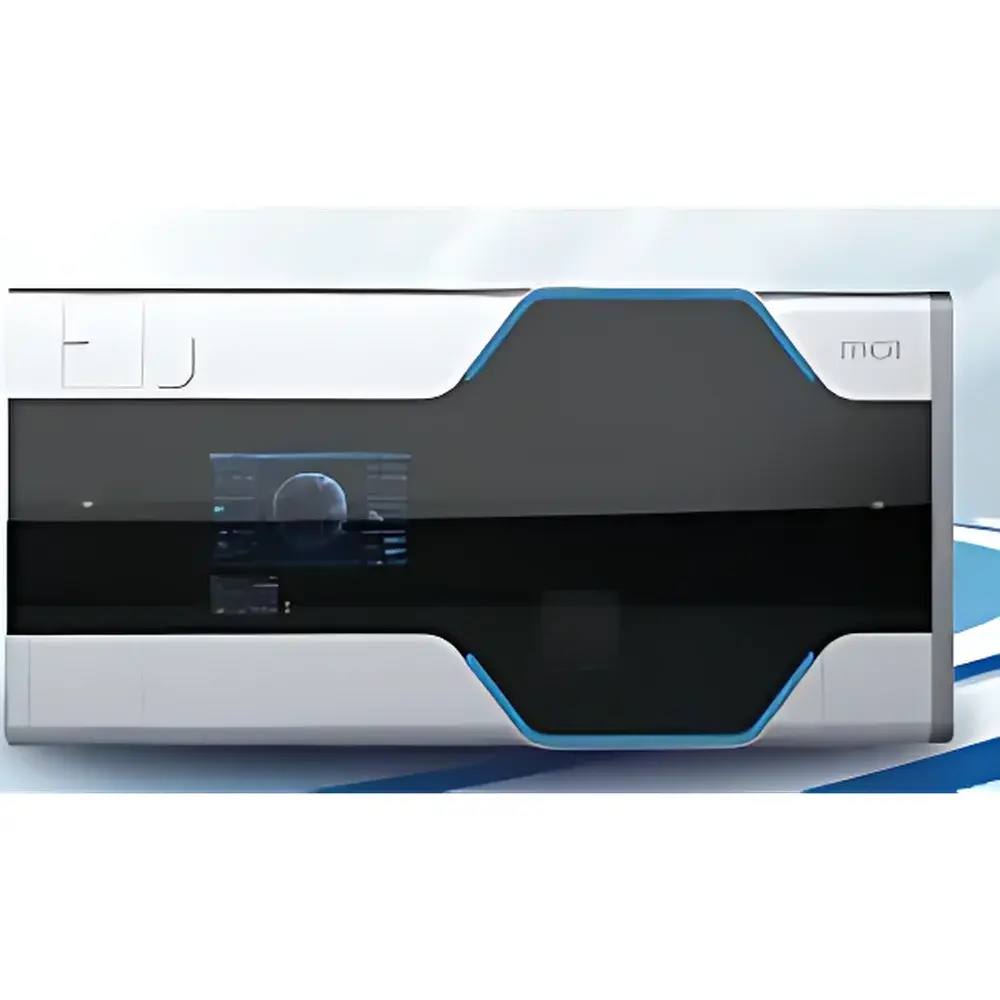
MGI MGICLab-LT Series Automated Cryogenic Storage System
| Brand | MGI |
|---|---|
| Origin | Shandong, China |
| Manufacturer Type | Authorized Distributor |
| Country of Origin | China |
| Model | MGICLab-LT Series |
| Pricing | Available Upon Request |
| Instrument Category | Cryogenic Biobanking Systems |
| Footprint | Customizable |
Overview
The MGI MGICLab-LT Series Automated Cryogenic Storage System is an integrated, robotics-driven biobanking platform engineered for long-term, ultra-low-temperature preservation of biological specimens—including human tissue, blood, plasma, PBMCs, cell lines, and nucleic acid extracts—at temperatures ranging from –80 °C to –196 °C (liquid nitrogen vapor phase). Built upon MGI’s vertically integrated expertise in life science instrumentation and genomics workflow automation, the MGICLab-LT system implements a closed-loop, trackable sample lifecycle architecture. It operates on a dual-chamber or multi-tiered cryo-storage design with robotic arm-based retrieval, barcode-guided sample positioning, and real-time environmental monitoring—ensuring traceability, temperature stability, and minimal thermal excursion during access events. Unlike manual or semi-automated freezers, the MGICLab-LT eliminates human handling variability and supports GLP-compliant biorepository operations by embedding audit-ready metadata at every stage: from primary tube registration and rack-level mapping to cryovial-level freeze-thaw history.
Key Features
- Modular, scalable architecture supporting configurations from 5,000 to >500,000 cryovial capacity—with customizable chamber layout, storage density, and throughput requirements.
- High-precision robotic gantry with redundant positional encoding and collision-avoidance sensors; achieves ≤ ±0.2 mm repeatability in cryovial pick-and-place operations.
- Multi-sensor environmental monitoring: continuous logging of chamber temperature (±0.1 °C accuracy), liquid nitrogen level, O2 concentration (0–25% vol), dew point, and door status—integrated with configurable alarm escalation via SNMP or email.
- Automated inventory reconciliation: dual-read barcode scanning (1D/2D) at entry, transfer, and retrieval points ensures 99.999% sample identification integrity per ISO 20387:2018 biobank accreditation requirements.
- Fail-safe cryogenic redundancy: dual-stage cooling (mechanical pre-cooling + LN2 backup), uninterruptible power supply (UPS)-supported control logic, and emergency venting pathways compliant with NFPA 56 and CGA P-21 standards.
Sample Compatibility & Compliance
The MGICLab-LT accommodates standard ANSI/SLAS-format cryovials (0.5–2.0 mL), internally threaded tubes, and rack-based carriers (e.g., Matrix, Micronic, Thermo Fisher Nunc). All internal materials are certified non-pyrogenic and compatible with ISO 5 cleanroom-grade airflow management. The system meets critical regulatory expectations for biobank infrastructure: it supports ALCOA+ data integrity principles, provides full electronic audit trails (including user ID, timestamp, action type, and before/after state), and enables 21 CFR Part 11–compliant electronic signatures when deployed with validated ZSM Pro Biobank Management Software. Documentation packages include IQ/OQ protocols, temperature mapping reports (per ASTM F2697–21), and validation support for ISO 20387:2018 and CAP-accredited biorepositories.
Software & Data Management
MGICLab-LT is natively integrated with ZSM Pro Biobank Management System—a web-based LIMS designed specifically for longitudinal biospecimen governance. ZSM Pro delivers role-based access control, automated chain-of-custody logging, customizable QC workflows (e.g., viability testing triggers, thawing protocol enforcement), and bidirectional synchronization with external systems including ZLIMS Laboratory Information Management System and sequencing lab dashboards. All metadata—including sample origin, processing history, storage location, freeze cycles, and associated genomic assay results—is stored in a relational PostgreSQL database with daily encrypted backups and optional cloud replication. API endpoints (RESTful JSON) enable interoperability with hospital EMRs, clinical trial platforms (CDISC SDTM/ADaM), and federated biobank networks.
Applications
- Population-scale biobanking initiatives requiring high-fidelity, low-risk specimen archiving across multi-site consortia.
- Pharma-sponsored clinical trial biorepositories where sample integrity, audit readiness, and chain-of-custody rigor directly impact regulatory submission validity.
- Academic core facilities managing diverse biospecimen types—from FFPE blocks and organoids to single-cell suspensions—requiring flexible storage zoning and conditional retrieval logic.
- Translational research hubs integrating biobanking with NGS library prep, spatial transcriptomics, and multi-omics data harmonization pipelines.
- Public health laboratories implementing pandemic-response specimen banks with rapid deployable configuration and remote operational oversight.
FAQ
What temperature ranges does the MGICLab-LT support?
The system operates in two primary modes: mechanical ultra-low-temperature storage (–80 °C) and liquid nitrogen vapor-phase storage (–150 °C to –196 °C), with optional hybrid configurations.
Is the system compatible with existing LIMS or biobank software?
Yes—ZSM Pro includes standardized HL7/FHIR adapters and RESTful APIs for integration with third-party LIMS, EHRs, and bioinformatics platforms.
How is system validation supported for GCP/GLP environments?
MGI provides IQ/OQ documentation templates, temperature uniformity mapping services, and on-site validation engineering support aligned with ISO/IEC 17025 and FDA guidance.
Can storage volume be expanded post-installation?
All MGICLab-LT installations are designed with modular expansion bays; additional cryo-chambers or robotic lanes can be added without disrupting ongoing operations.
What cybersecurity measures are implemented?
The system runs on hardened Linux OS with TLS 1.2+ encryption, RBAC authentication, regular CVE patching, and optional air-gapped deployment for high-security institutional environments.




