
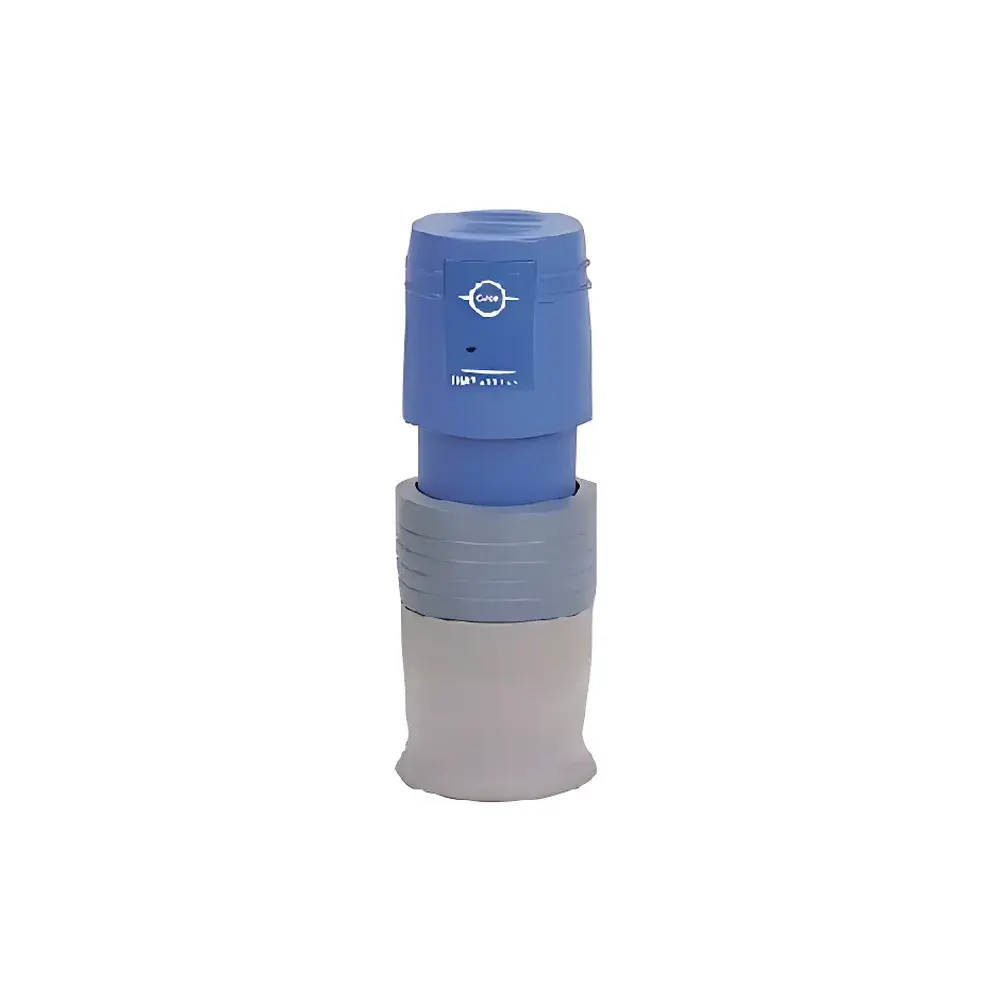
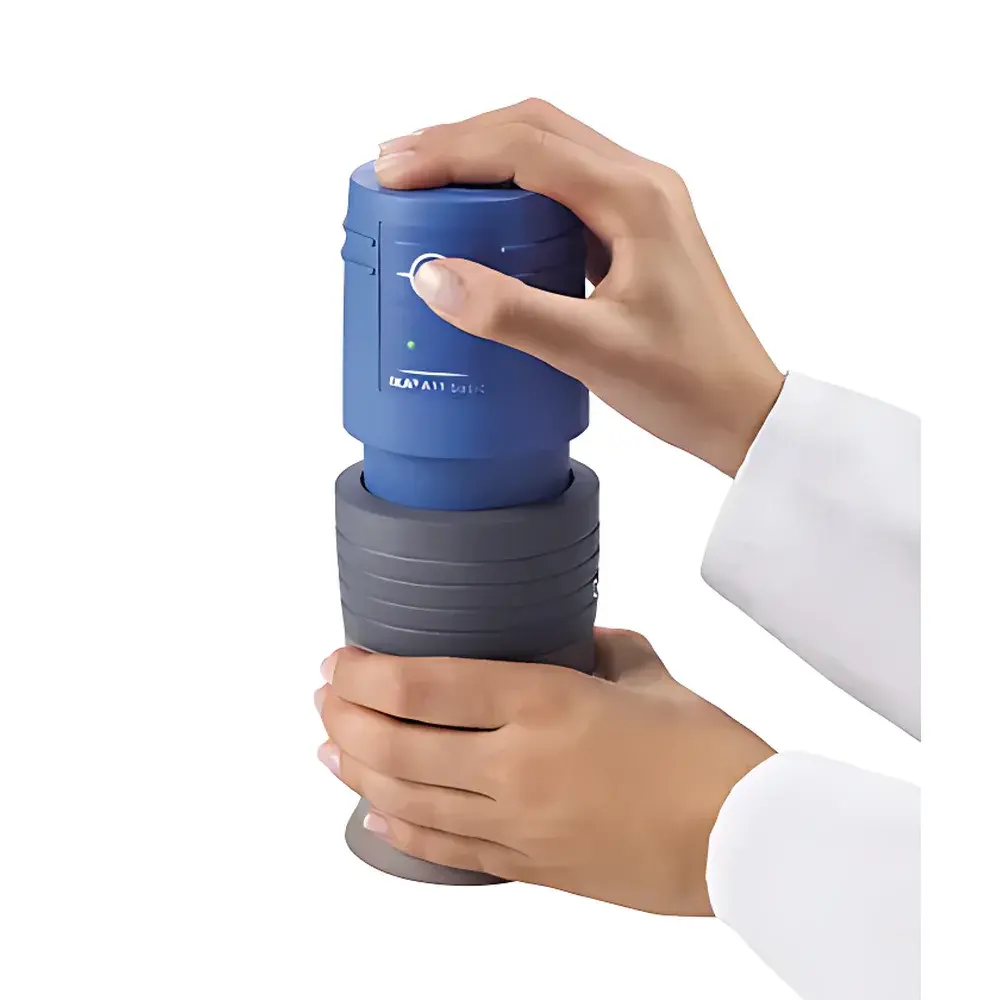
IKA A 11 basic Analytical Mill
| Brand | IKA |
|---|---|
| Origin | Germany |
| Manufacturer Type | Manufacturer |
| Origin Category | Imported |
| Model | A 11 basic Analytical Mill |
| Instrument Type | Analytical Grinder |
| Sample Applicability | Hard and brittle materials (up to 6 Mohs hardness) |
| Feed Particle Size | ≤ 10 mm |
| Output Particle Size | 1–100 µm |
| Final Fineness | < 0.01 mm |
| Batch Volume | 80 mL (standard), optional 250 mL |
| Grinding Mechanism | Impact and shear |
| Motor Input Power | 160 W |
| Motor Output Power | 100 W |
| Max. Speed | 28,000 rpm |
| Max. Peripheral Speed | 53 m/s |
| Grinding Chamber Material | Stainless steel 1.4571 (AISI 316L) and Tefcel® (ETFE reinforced with glass fiber) |
| Cooling Options | Dry ice or liquid nitrogen compatible |
| Duty Cycle | 1 min ON / 10 min OFF |
| Dimensions (W × H × D) | 85 × 240 × 85 mm |
| Weight | 1.5 kg |
| Ambient Temperature Range | 5–40 °C |
| Relative Humidity Limit | ≤ 80 % |
| Protection Class | IP 43 |
| Voltage | 220–240 V / 100–115 V |
| Frequency | 50/60 Hz |
Overview
The IKA A 11 basic Analytical Mill is a compact, high-speed batch-type laboratory grinder engineered for reproducible particle size reduction of hard, brittle, and fibrous samples in analytical and quality control workflows. Operating on dual mechanical principles—impact grinding via a precision-engineered stainless steel rotor and shear grinding using an optional knife assembly—the instrument delivers consistent sub-100 µm particle distributions without thermal degradation. Its design adheres to fundamental principles of comminution physics, where kinetic energy transfer from the rotating rotor (up to 28,000 rpm, 53 m/s peripheral velocity) induces fracture through repeated impact and attrition within a thermally isolated grinding chamber. The device is not intended for continuous operation; its specified 1-minute active grinding cycle followed by a mandatory 10-minute cooling interval ensures motor longevity and prevents sample overheating—critical when processing temperature-sensitive pharmaceutical actives or polymers.
Key Features
- Two-mode grinding architecture: Standard impact grinding with hardened stainless steel 1.4034 rotor (capable of milling materials up to 6 Mohs hardness); optional shear grinding module for fibrous or elastic samples.
- Tefcel® grinding chamber (ETFE polymer reinforced with glass fiber) combined with AISI 316L stainless steel components ensures chemical resistance, low extractables, and compatibility with cryogenic processing.
- Cryogenic readiness: Integrated design supports direct application of dry ice or liquid nitrogen within the grinding chamber—enabling embrittlement of thermoplastic, rubbery, or waxy samples prior to milling.
- Compact footprint (85 × 240 × 85 mm) and lightweight construction (1.5 kg) facilitate integration into fume hoods, gloveboxes, or regulated QC laboratories with space constraints.
- IP 43-rated enclosure provides protection against splashing water and solid objects >1 mm, meeting general laboratory environmental requirements per DIN EN 60529.
- Dual-voltage compatibility (100–115 V / 220–240 V, 50/60 Hz) enables global deployment without hardware modification.
Sample Compatibility & Compliance
The A 11 basic accommodates dry, non-sticky, and moderately cohesive samples including minerals, ceramics, pharmaceutical tablets, spices, and botanicals. It is unsuitable for highly viscous, oily, or adhesive substances unless pre-diluted with liquid carriers (e.g., water or ethanol) to enable dispersion-based grinding. While the instrument itself does not embed digital audit trails or electronic records, its mechanical design and material certifications align with foundational GMP expectations for equipment used in sample preparation preceding analytical testing (e.g., USP <429>, ISO 17025:2017 Clause 6.4). The stainless steel 1.4571 (AISI 316L) grinding chamber complies with EN 10088-1 for corrosion-resistant austenitic steels, supporting cleaning validation protocols. Tefcel® meets FDA 21 CFR 177.1550 for fluoropolymer food-contact applications—relevant for nutraceutical or agrochemical labs requiring traceability of extractables.
Software & Data Management
The A 11 basic operates as a standalone electromechanical instrument with no embedded firmware, touchscreen interface, or data logging capability. All operational parameters—including speed, runtime, and cooling method—are manually set and monitored by the user. This analog control architecture eliminates software validation requirements under FDA 21 CFR Part 11 or EU Annex 11, making it suitable for GLP environments where simplicity, transparency, and minimal qualification burden are prioritized. Users maintain full procedural control via written SOPs governing grinding time, cooling intervals, and post-grinding chamber cleaning—consistent with ISO/IEC 17025 clause 7.2.2 on method validation for sample preparation steps.
Applications
- Pharmaceutical: Homogenization of tablet cores prior to assay or dissolution testing (per USP <701>).
- Materials Science: Preparation of ceramic or metal oxide powders for XRD or SEM analysis.
- Food & Agriculture: Reduction of dried herbs, grains, or feed samples to uniform particle size for proximate analysis (AOAC 984.27).
- Environmental Testing: Grinding of soil or sediment composites for heavy metal extraction (EPA Method 3050B).
- Academic Research: Rapid sample conditioning for FTIR, DSC, or TGA—particularly where cryogenic brittleness enhancement is required.
FAQ
Can the A 11 basic be used for wet grinding?
Yes—aqueous or alcoholic suspensions may be introduced directly into the grinding chamber to assist in dispersing sticky or cohesive materials, though the instrument is not sealed for pressurized liquid operation.
Is the 250 mL grinding cup validated for use with the A 11 basic?
The 250 mL cup is a factory-approved accessory; however, maximum feed size and final fineness specifications apply only to the standard 80 mL configuration. Users must verify performance empirically when scaling volume.
Does the instrument meet explosion-proof requirements for flammable solvent use?
No—the A 11 basic lacks ATEX or IECEx certification and must not be operated in atmospheres containing combustible vapors or dust clouds.
How is cleaning and cross-contamination controlled between batches?
Manual disassembly and cleaning with solvents or ultrasonic baths are required; users must establish and document cleaning verification procedures per their internal SOPs.
Is calibration required for routine operation?
As a mechanical grinder without transducers or feedback loops, formal calibration is not applicable; however, preventive maintenance (e.g., rotor balance check, bearing inspection) per IKA’s service schedule is recommended every 500 operating hours.



