
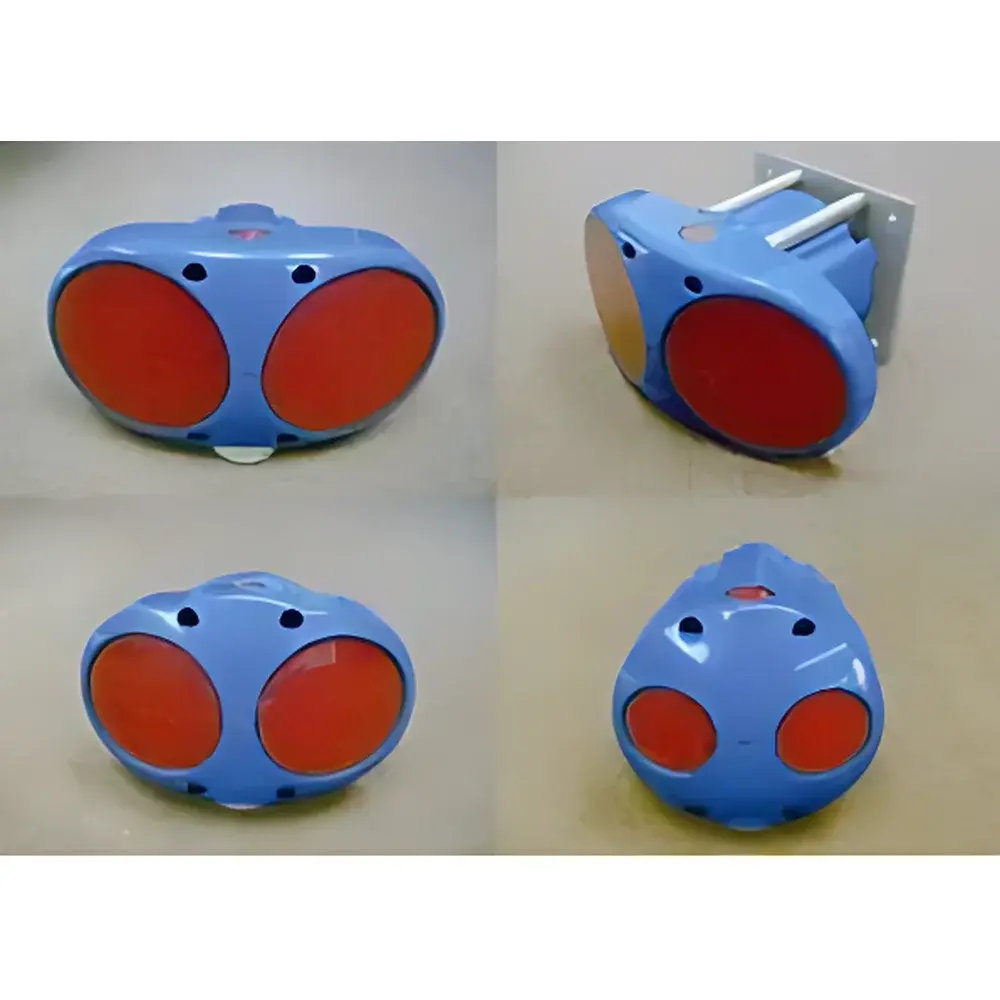
Teledyne RDI ChannelMaster H-ADCP Horizontal Acoustic Doppler Current Profiler
| Brand | Teledyne RDI |
|---|---|
| Origin | USA |
| Model | ChannelMaster H-ADCP |
| Frequency Options | 300 kHz, 600 kHz, 1200 kHz |
| Velocity Range | ±10 m/s (configurable) |
| Velocity Resolution | 0.1 mm/s |
| Depth Cell Size | 0.1–2.0 m (user-selectable, up to 128 cells) |
| Water Level Sensors | Ultrasonic (0.1–10 m, ±0.25% FS, 0.01 cm res), Pressure (0.1–10 m, ±0.5% FS, 0.1 cm res) |
| Temperature Sensor | −4 °C to +40 °C (±0.2 °C, 0.01 °C res) |
| Tilt Sensor | Dual-axis (±10°, ±0.2° @ 0°, ±0.5° @ 10°, 0.01° res) |
| Memory | 4 MB internal flash |
| Communication | RS-232, RS-422, SDI-12 v1.3 |
| Power | 10–18 VDC (typical consumption: 0.13–0.16 W |
| standby | 0.25 mW) |
| Housing | Polyurethane-cast body, titanium fasteners, stainless steel mounting frame |
Overview
The Teledyne RDI ChannelMaster H-ADCP is a horizontally mounted Acoustic Doppler Current Profiler engineered for continuous, high-fidelity velocity and discharge monitoring in open-channel environments—including rivers, irrigation canals, flumes, and estuarine cross-sections. Unlike vertical-beam ADCPs, the H-ADCP transmits acoustic pulses orthogonally across the channel, enabling direct profiling of horizontal velocity components along a transect perpendicular to flow direction. This configuration eliminates reliance on assumptions about vertical velocity distribution or cross-sectional geometry, significantly improving accuracy under unsteady, low-velocity, or highly stratified flow conditions. The instrument leverages Teledyne RDI’s proprietary broadband pulse-to-pulse coherent processing—a proven method delivering superior signal-to-noise ratio, enhanced bottom tracking stability, and robust performance in turbid or aerated water. Designed for permanent or semi-permanent deployment, the H-ADCP integrates seamlessly into hydrometric telemetry networks and supports long-term,无人值守 (unattended) operation with ultra-low power consumption and field-upgradable firmware.
Key Features
- Broadband coherent Doppler processing architecture for high-precision velocity estimation and improved measurement reproducibility under variable sediment load and flow turbulence.
- Three selectable operating frequencies (300 kHz, 600 kHz, 1200 kHz) to optimize resolution vs. profiling range trade-offs—e.g., 1200 kHz for shallow, high-resolution applications; 300 kHz for deeper channels with reduced attenuation.
- Configurable profiling grid: up to 128 user-defined depth cells, with cell size adjustable from 0.1 m to 2.0 m to match site-specific hydraulic gradients and data resolution requirements.
- Integrated multi-sensor suite: co-located ultrasonic and pressure water level sensors (dual redundancy), calibrated temperature probe, and dual-axis tilt sensor—enabling real-time motion correction and hydraulic geometry validation.
- Industrial-grade housing: polyurethane-encapsulated electronics, titanium alloy hardware, and stainless-steel mounting hardware rated for prolonged exposure in aggressive freshwater and brackish environments.
- Flexible communication interface supporting simultaneous RS-232, RS-422, and SDI-12 v1.3 protocols—ensuring compatibility with legacy RTUs, SCADA systems, and modern IoT gateways without protocol conversion.
Sample Compatibility & Compliance
The ChannelMaster H-ADCP is validated for use in natural and engineered open channels with widths ranging from 2 m to over 500 m, and depths from 0.3 m to 30 m (dependent on frequency and water clarity). It operates reliably across a wide range of suspended sediment concentrations (up to 10 g/L), dissolved air saturation levels, and aquatic vegetation density—conditions that commonly degrade performance of optical or electromagnetic flowmeters. The system complies with ISO 748:2022 (Measurement of liquid flow in open channels — Velocity-area method), ASTM D5490-21 (Standard Guide for Measuring Surface Velocities Using Acoustic Doppler Instruments), and supports traceable calibration per NIST-traceable procedures. Data output formats adhere to CUAHSI HIS WaterML 2.0 and comply with USGS NWIS standards for integration into national hydrologic databases. All firmware and configuration files maintain full audit trails compatible with GLP/GMP documentation requirements.
Software & Data Management
The H-ADCP is supported by two complementary software platforms: WinH-ADCP (Windows-based configuration, diagnostics, and real-time visualization) and FlowPro-H (advanced discharge computation engine compliant with ISO 1070-1 and USGS Techniques and Methods Book 3, Chapter A22). FlowPro-H implements adaptive cell weighting, backscatter intensity filtering, and uncertainty propagation models aligned with ISO/IEC 17025:2017 Annex A.4 guidelines. Raw binary data are stored in standardized .ad2 format with embedded metadata (time stamp, GPS position if external receiver connected, sensor status flags, tilt compensation parameters). Internal 4 MB flash memory enables autonomous logging at user-defined intervals (1 min to 24 h), with automatic rollover and timestamped file naming. Data export supports CSV, XML, and NetCDF-4 for interoperability with Python-based hydrodynamic modeling workflows (e.g., Delft3D, HEC-RAS, MIKE SHE).
Applications
- Real-time discharge monitoring at hydrometric stations for flood forecasting, reservoir inflow estimation, and water allocation compliance reporting.
- Continuous flow quantification at wastewater treatment plant outfalls and combined sewer overflow (CSO) structures to support regulatory reporting under EPA NPDES permits.
- Velocity field mapping in navigation channels and port basins to inform vessel traffic management and sediment transport modeling.
- Boundary condition generation and validation for 2D/3D hydrodynamic and water quality models (e.g., EFDC, WASP, CE-QUAL-W2).
- Long-term trend analysis of riverine flow regime shifts associated with climate variability and land-use change—leveraging >10-year operational stability and thermal drift compensation algorithms.
FAQ
How does the H-ADCP differ from a vertically oriented ADCP in open-channel applications?
The H-ADCP measures horizontal velocity profiles across the channel width, eliminating dependence on stage-discharge rating curves and reducing sensitivity to vertical velocity distribution assumptions. Vertical ADCPs require accurate bathymetry and often fail under rapidly varying backwater conditions or during low-flow periods with weak bottom return signals.
Can the H-ADCP operate in tidal or reversing flow environments?
Yes—the broadband Doppler processing enables bidirectional velocity detection with consistent accuracy. Built-in tilt compensation and dual water level sensing allow reliable operation during rapid stage fluctuations typical of estuarine and deltaic settings.
Is the system suitable for Class I (USGS) or Grade A (EA UK) hydrometric certification?
When deployed per ISO 748 and configured with redundant water level sensing, tilt correction, and regular field verification, the ChannelMaster H-ADCP meets the technical criteria for Grade A classification per EA Technical Guidance Note TG22 and supports USGS Class I rating where site geometry and installation conform to TWRI 3-A22 specifications.
What cybersecurity provisions are implemented for remote data access?
The H-ADCP itself operates as a serial data source without IP connectivity. When integrated via third-party RTUs or cellular gateways, security relies on device-level TLS 1.2 encryption, role-based authentication, and configurable firewall rules—fully compatible with IEC 62443-3-3 asset hardening frameworks.
Does the system support automated QA/QC flagging of suspect velocity cells?
Yes—FlowPro-H applies dynamic signal quality thresholds (correlation amplitude, echo intensity, variance limits) and automatically flags cells exceeding user-defined uncertainty bounds. Flags are embedded in exported datasets and visible in real-time WinH-ADCP displays.







