
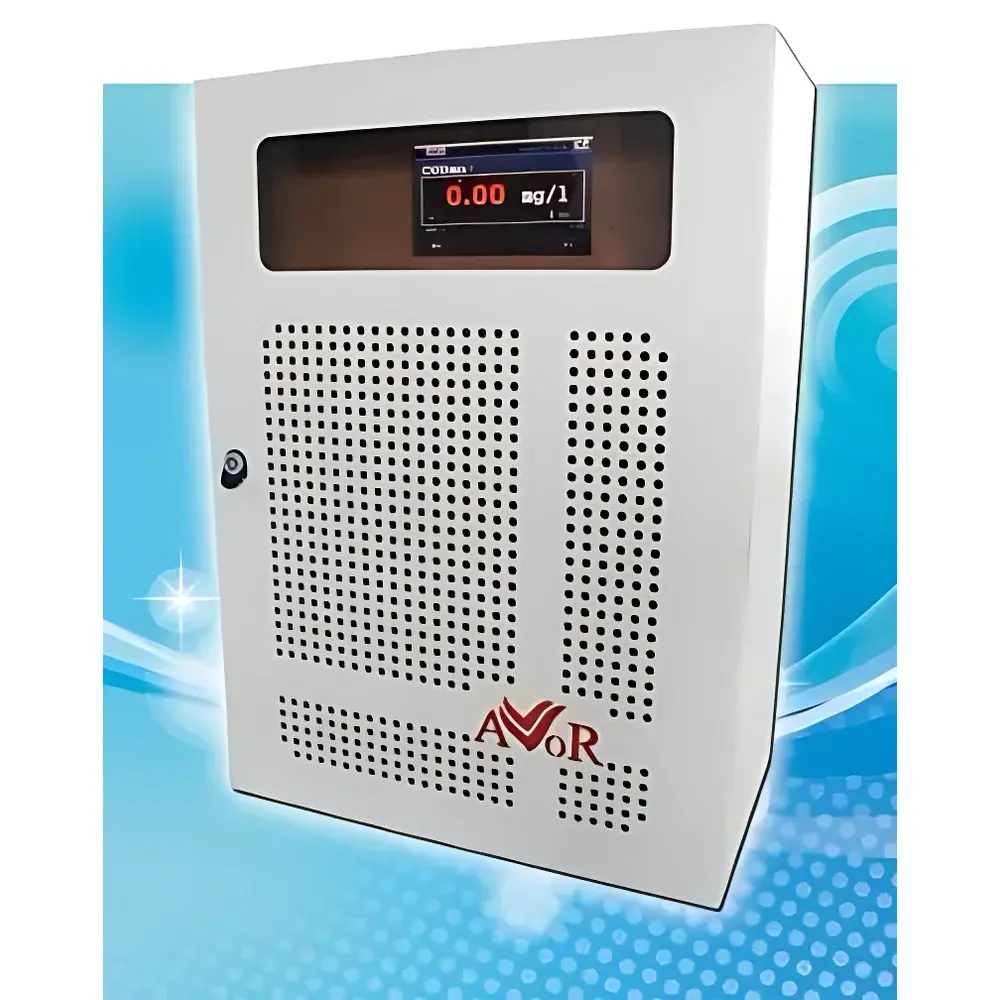
AVVOR 9000-CODmn Permanganate Index Analyzer
| Origin | Canada |
|---|---|
| Manufacturer Type | Authorized Distributor |
| Origin Category | Imported |
| Model | AVVOR 9000-CODmn |
| Pricing | Available Upon Request |
Overview
The AVVOR 9000-CODmn Permanganate Index Analyzer is a fully automated benchtop instrument engineered for precise, reproducible determination of the permanganate index (also known as CODMn) in drinking water and surface water samples. It implements the standardized titrimetric oxidation method based on potassium permanganate under acidic conditions—aligned with ISO 8467:1993, GB 11892–1989, and HJ/T 100–2003. Unlike open-reflux chemical oxygen demand (CODCr) methods, this analyzer targets low-to-moderate organic load matrices where chloride interference must be minimized (<300 mg/L Cl−). The system replaces manual pipetting, heating baths, and visual endpoint detection with programmable micro-peristaltic pumps, temperature-controlled digestion, and real-time ORP (oxidation-reduction potential) monitoring—enabling unattended operation while maintaining metrological traceability to reference methods.
Key Features
- Isolated micro-peristaltic pumping system for both reagents and samples—ensuring high volumetric accuracy (±0.5% RSD) and long-term delivery stability without cross-contamination.
- Dynamic ORP-based endpoint detection algorithm: continuously monitors electrochemical potential during back-titration; identifies inflection points via first-derivative analysis of dE/dt, eliminating subjective color interpretation and electrode recalibration requirements.
- Integrated thermal module maintains precise digestion temperature at 97 ± 0.5 °C for exactly 30 minutes—compliant with standard reaction kinetics for permanganate oxidation of labile organics and inorganic reductants (e.g., Fe2+, NO2−, S2−).
- Self-optimizing calibration protocol: automatically adjusts pump priming duration, rinse cycles, and signal gain based on ambient temperature, fluid viscosity, and electrode response history—reducing operator dependency.
- Modular flow path design with chemically resistant PTFE and borosilicate glass components—minimizing adsorption losses and enabling rapid cleaning or component replacement during routine maintenance.
Sample Compatibility & Compliance
The AVVOR 9000-CODmn is validated for use with clarified, non-turbid aqueous samples exhibiting permanganate index concentrations between 0.5 and 20 mg/L O2. It is expressly intended for potable water, spring water, lake water, and river water applications—not for industrial wastewater or high-chloride effluents (>300 mg/L Cl−). Method performance meets the precision criteria outlined in ISO 5667-3:2018 (intermediate precision ≤10% RSD) and supports GLP-compliant documentation when paired with audit-trail-enabled software. All reagent handling complies with CLP/GHS labeling requirements; waste streams are segregated per local hazardous material regulations.
Software & Data Management
Instrument control and data acquisition are managed via AVVOR ControlSuite™ v4.x—a Windows-based application supporting multi-user access control, electronic signatures, and 21 CFR Part 11–compliant audit trails. Each analysis generates timestamped raw ORP curves, calculated endpoints, intermediate values (e.g., blank-corrected titrant volume), and final CODMn results with uncertainty estimation per GUM (Guide to the Expression of Uncertainty in Measurement). Data export formats include CSV, PDF analytical reports, and direct integration with LIMS via ASTM E1384-compliant HL7 or ODBC interfaces. Calibration logs, maintenance records, and system diagnostics are archived with immutable timestamps.
Applications
- Regulatory compliance monitoring for municipal drinking water treatment plants (e.g., WHO Guidelines for Drinking-water Quality, Annex 2.1).
- Trend analysis of organic pollution in watershed surveillance programs—especially where BOD5 measurement is impractical due to long incubation times.
- Validation of membrane filtration or UV disinfection efficacy by tracking changes in oxidizable carbon fractions.
- Research laboratories assessing biodegradable organic load in ecological studies of oligotrophic freshwater systems.
- Third-party environmental testing labs requiring ISO/IEC 17025-accredited CODMn reporting with full method traceability.
FAQ
What is the maximum allowable chloride concentration for accurate CODMn measurement?
Chloride must not exceed 300 mg/L; higher concentrations interfere with permanganate oxidation kinetics and may cause false-high results due to competitive oxidation pathways.
Does the instrument require daily electrode calibration?
No—ORP electrodes are factory-characterized and stabilized; the dynamic endpoint algorithm compensates for gradual drift, eliminating routine calibration per analysis batch.
Can the AVVOR 9000-CODmn be used for wastewater samples?
It is not recommended for untreated or highly contaminated wastewater; the method lacks robustness against suspended solids, high chloride, or refractory organics—use CODCr (dichromate) methods instead.
How is digestion temperature controlled and verified?
A PID-regulated heating block with dual platinum RTD sensors ensures ±0.5 °C stability; temperature validation is performed automatically during startup using NIST-traceable reference probes.
Is remote monitoring supported?
Yes—via optional Ethernet/Wi-Fi connectivity, users can view real-time status, receive email alerts for completion or error conditions, and access historical datasets through secure HTTPS web interface.
Related Products







