
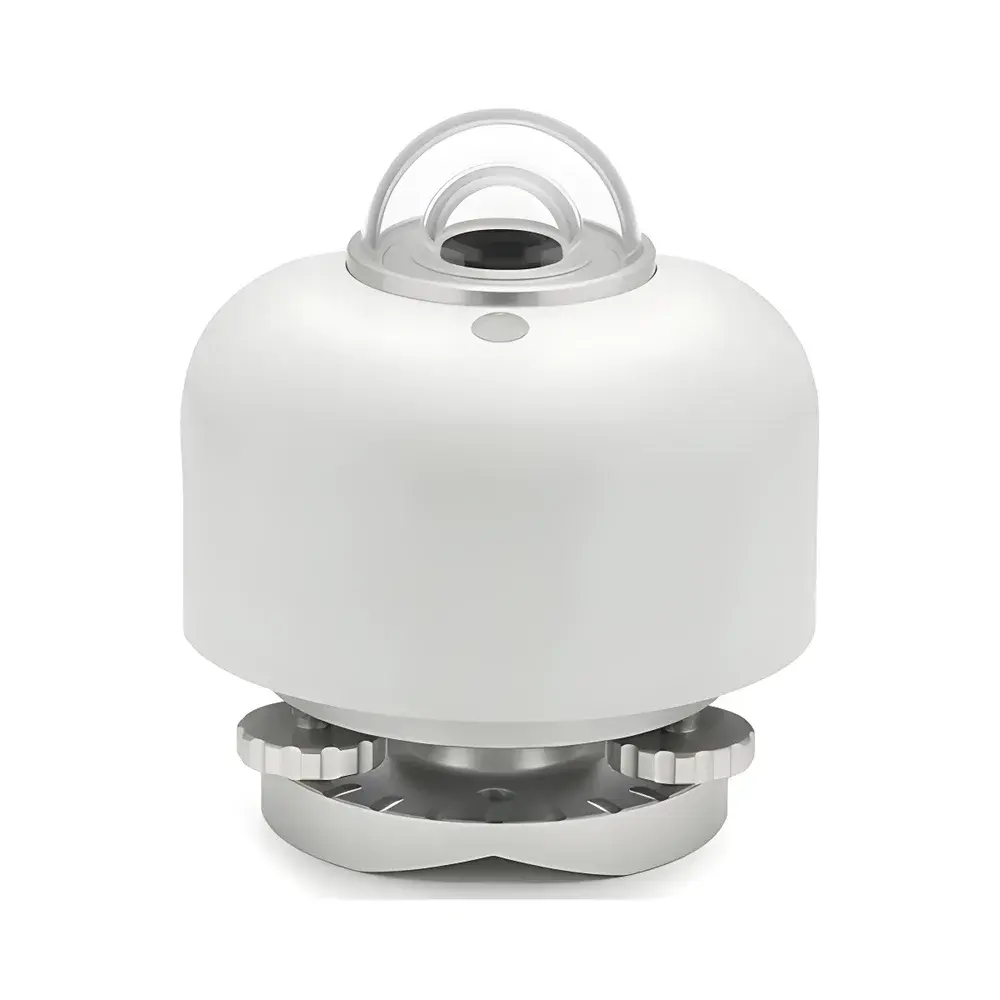
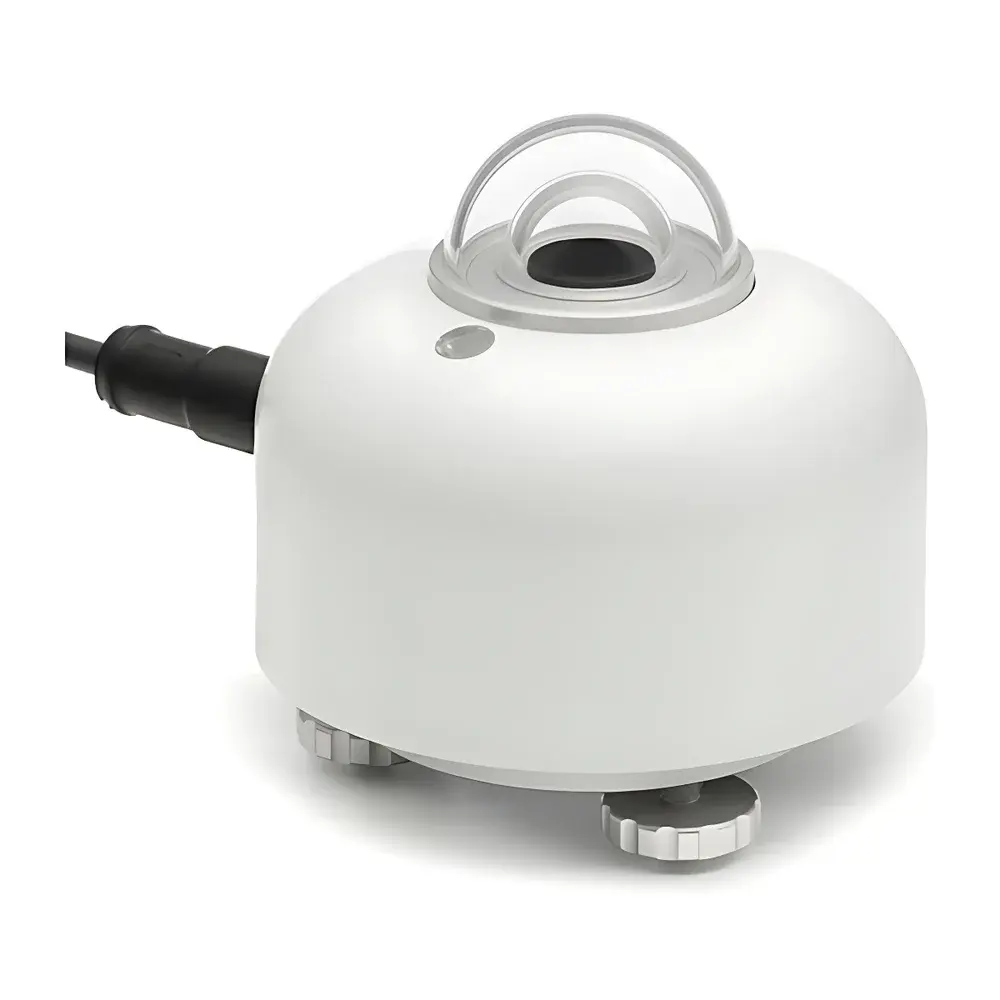
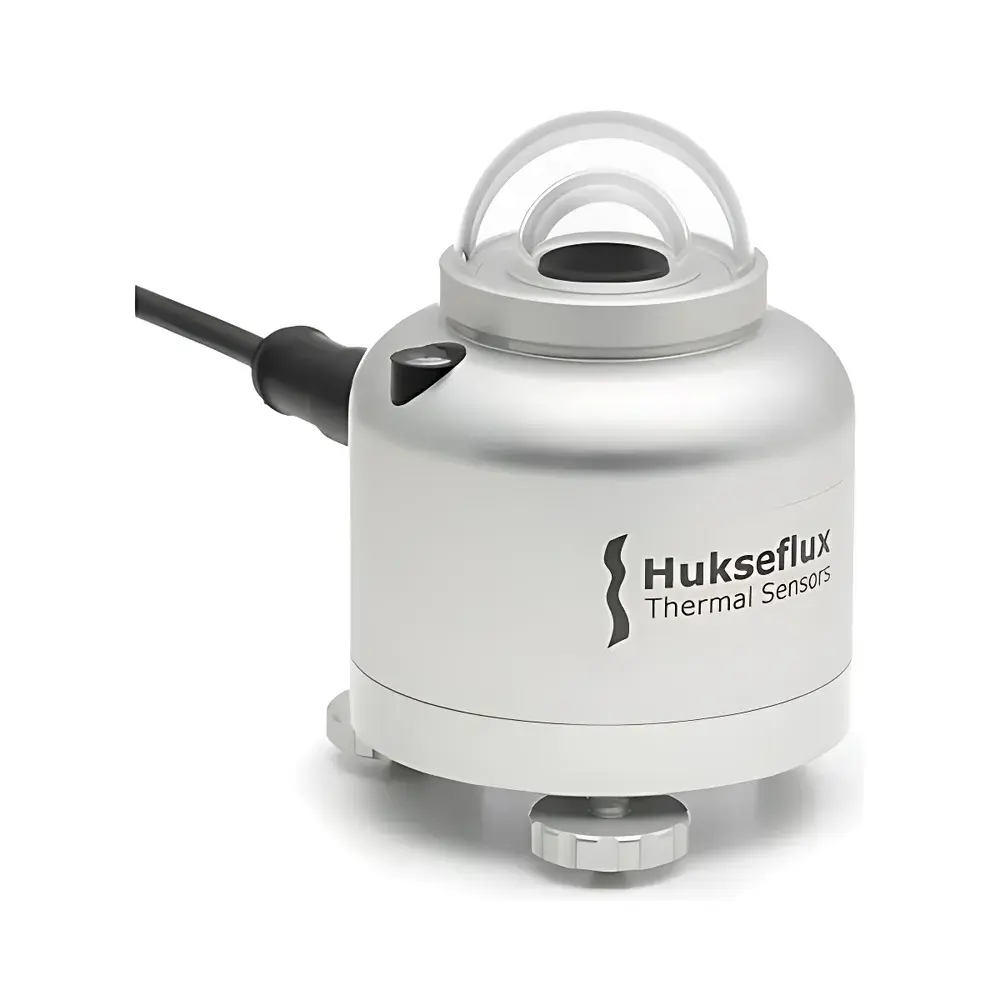
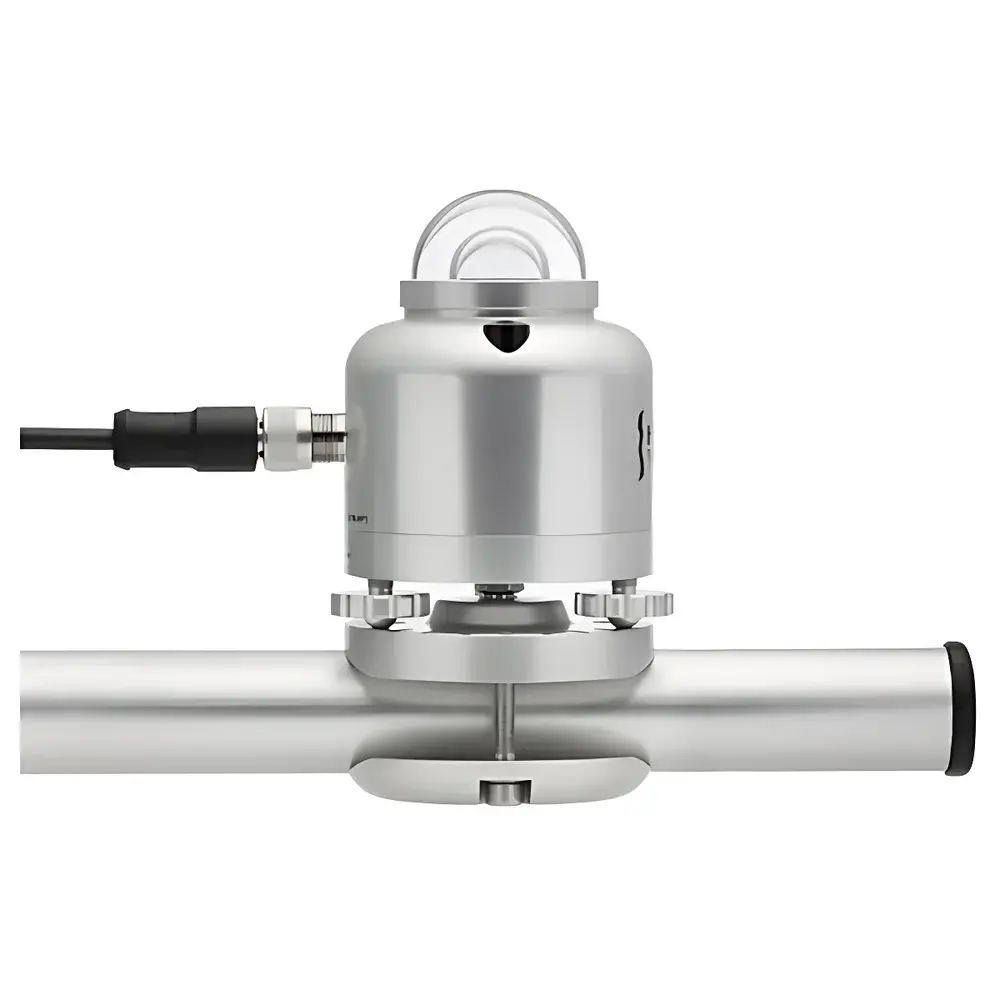

Hukseflux SR15-D2A2 Pyranometer
| Brand | Hukseflux |
|---|---|
| Origin | Netherlands |
| Model | SR15-D2A2 |
| Spectral Range | 285–3000 nm |
| ISO 9060 | 2018 Classification: Spectrally Flat Class B |
| Calibration Uncertainty | < 1.8 % (k = 2) |
| Measurement Range | 0–3000 W/m² |
| Response Time | < 10 s |
| Zero Offset (unventilated) | 5 W/m² |
| Operating Temperature | −40 to +80 °C |
| Temperature Response | ±2 % (−40 to +80 °C) |
| Power Supply | 5–30 VDC |
| Digital Output | TTL Modbus RTU |
| Analog Output | 4–20 mA |
| Cable Length | 5 m |
| Compliance | ISO 9847, ASTM E2848, IEC 61724-1, WMO No. 8 |
Overview
The Hukseflux SR15-D2A2 is a high-accuracy, spectrally flat Class B pyranometer engineered for precise hemispherical solar irradiance measurement in accordance with ISO 9060:2018 and the World Meteorological Organization (WMO) Guide to Meteorological Instruments and Methods of Observation (WMO-No. 8). It operates on the thermopile principle—detecting net thermal flux across a blackened, thermally isolated sensing surface—and delivers calibrated output proportional to broadband solar radiation incident on a planar surface within a 180° field of view. The instrument measures global horizontal irradiance (GHI), plane-of-array (POA) irradiance, reflected (albedo) irradiance (when inverted), and simulated solar irradiance under artificial light sources—including solar simulators used in photovoltaic (PV) testing laboratories. Its spectral response (285–3000 nm) closely matches the air-mass 1.5 global spectrum, ensuring minimal spectral error under real-world atmospheric conditions. Designed for long-term outdoor deployment or controlled indoor environments, the SR15-D2A2 integrates dual-output capability—TTL-based Modbus RTU digital communication and a 4–20 mA analog current loop—enabling seamless integration into SCADA systems, data loggers, and PV monitoring platforms compliant with IEC 61724-1 and ASTM E2848.
Key Features
- Spectrally flat Class B performance per ISO 9060:2018 and legacy ISO 9060:1990 “Secondary Standard” classification
- Calibration uncertainty of 2.8 %)
- Dual-output interface: TTL Modbus RTU (addressable, diagnostic-capable) and galvanically isolated 4–20 mA analog output for redundancy and legacy system compatibility
- Low zero-offset (< 5 W/m², unventilated) and excellent temperature stability (±2 % over −40 to +80 °C), minimizing thermal-induced drift in uncontrolled environments
- Robust mechanical design with stainless steel housing, hermetically sealed quartz dome, and IP67-rated enclosure for continuous outdoor operation
- Response time < 10 s—sufficient for high-resolution PV performance ratio (PR) analysis, clear-sky index tracking, and cloud-edge detection
- Wide operating voltage range (5–30 VDC) and low power consumption suitable for solar-powered remote stations
Sample Compatibility & Compliance
The SR15-D2A2 is compatible with natural sunlight, xenon-arc, metal-halide, and LED-based solar simulators meeting IEC 60904-9 spectral classification requirements. Its calibration adheres to ISO 9847 for pyranometer intercomparison and field validation. Regulatory and industry standards alignment includes: ASTM E2848 (test methods for determining the performance of PV systems), IEC 61724-1 (photovoltaic system performance monitoring guidelines), and WMO-No. 8 (for national meteorological network deployment). As a Class B sensor, it satisfies WMO recommendations for regional solar monitoring networks and fulfills GLP-aligned data integrity requirements when paired with audit-trail-enabled data acquisition systems. The instrument supports daylight duration calculation via the “irradiance threshold method” defined in WMO-No. 8—eliminating the need for dedicated sunshine recorders in cost-sensitive deployments.
Software & Data Management
Hukseflux Sensor Manager software provides native Windows-based configuration, real-time diagnostics, and data visualization for SR15-D2A2 units. Users can modify Modbus slave addresses, baud rates, parity settings, and polling intervals without hardware intervention. Diagnostic functions include live readout of internal sensor temperature, raw thermopile voltage, and communication status flags—enabling rapid field validation and fault isolation. Export options support CSV and Excel formats with timestamped metadata (including calibration certificate ID, date, and uncertainty budget). For enterprise-scale deployments, the Modbus RTU protocol ensures interoperability with third-party SCADA platforms (e.g., Campbell Scientific LoggerNet, Siemens Desigo, or Ignition SCADA) and supports integration into cloud-based PV analytics platforms compliant with IEC 61850-7-420 and MQTT-based telemetry architectures.
Applications
- Photovoltaic plant performance monitoring (PR, yield, degradation analysis) per IEC 61724-1 Tier B/C requirements
- Solar resource assessment for site feasibility studies and bankable energy yield modeling
- Calibration reference for secondary pyranometers and pyrheliometers in field intercomparisons
- Indoor solar simulator irradiance mapping and stability verification in PV module and cell testing labs
- Albedo and surface reflectance quantification in urban heat island and snow-cover studies
- Long-term climate observation networks operated under WMO or national meteorological service protocols
- Daylight duration derivation for agrometeorological and ecological research applications
FAQ
What is the difference between SR15-D2A2 and SR15-D1?
The SR15-D2A2 features TTL-level Modbus RTU digital output and a 4–20 mA analog output, whereas the SR15-D1 uses RS-485 Modbus RTU and includes an integrated heater.
Is the SR15-D2A2 suitable for use with unventilated mounting?
Yes—it specifies zero offset ≤ 5 W/m² under unventilated conditions, making it appropriate for installations where active ventilation is impractical.
Can this pyranometer be used for albedo measurements?
Yes—when mounted inverted on a horizontal surface, it measures reflected shortwave irradiance; combined with a co-located downward-facing unit, it enables albedo calculation per ISO 50007.
Does the 4–20 mA output require external power?
No—the SR15-D2A2 powers the 4–20 mA loop internally; only two wires are needed for both power and signal transmission.
How often should recalibration be performed?
Hukseflux recommends recalibration every two years for critical applications, or annually for metrological-grade networks, following ISO/IEC 17025-accredited laboratories and traceability to WRR.







