
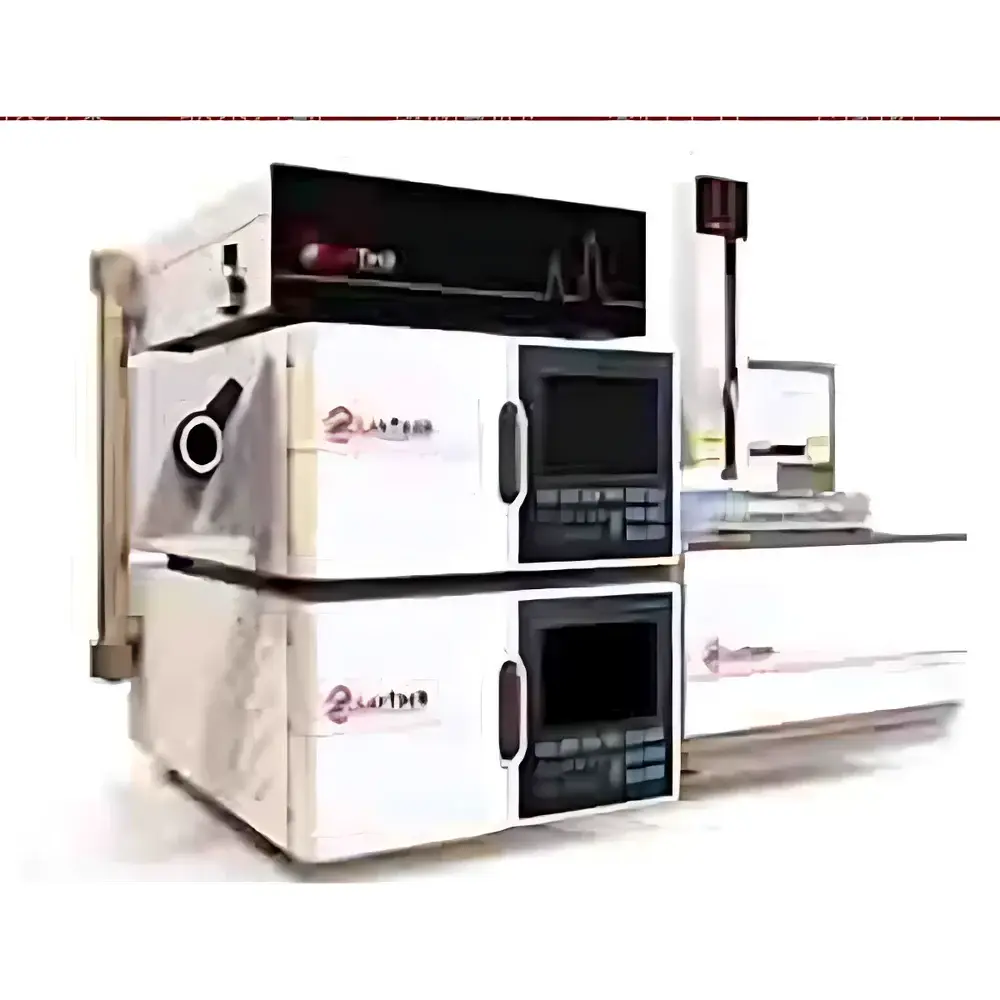
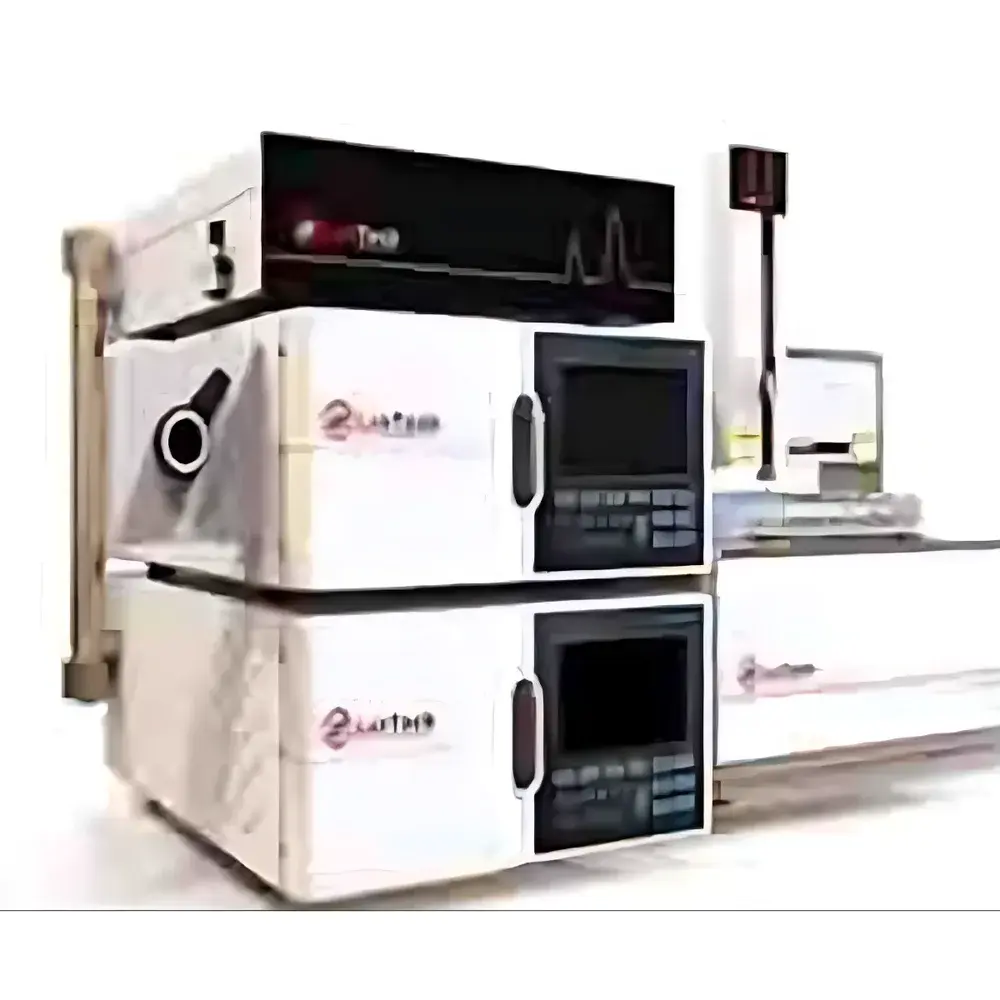
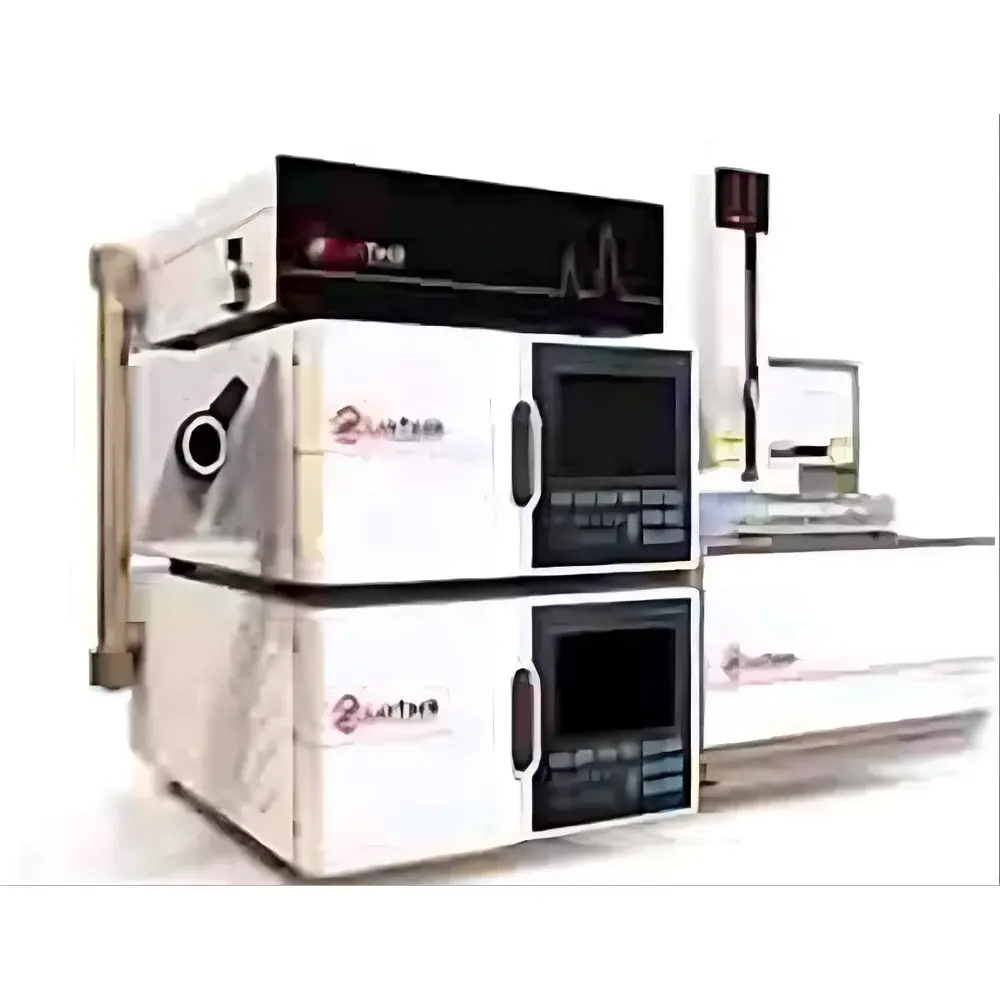
LabTech GPC 600 UP Semi-Automatic Gel Permeation Chromatography Purification System
| Brand | LabTech |
|---|---|
| Origin | Beijing, China |
| Model | GPC 600 UP |
| Flow Rate | 0–50 mL/min |
| Maximum Pressure | 42 psi |
| Flow Stability | ±0.1% RSD |
| Auto-Sampling Volume Range | 0–10 mL |
| Auto-Sampling Capacity | 1 position |
| Detection | Variable-Wavelength UV Detector |
| Collection Platform | Precision XYZ Robotic Arm with Septum-Piercing Capability |
| Pump Type | High-Accuracy Dual-Piston Solvent Delivery Pump |
| Software | Graphical User Interface with Role-Based Access Control and Audit-Trail-Enabled Data Logging |
| Compliance | Designed for GLP-compliant laboratories |
Overview
The LabTech GPC 600 UP Semi-Automatic Gel Permeation Chromatography (GPC) Purification System is an engineered solution for molecular-weight-based sample cleanup in analytical laboratories. Based on the fundamental principle of size-exclusion chromatography (SEC), the system separates analytes from complex matrices—such as soil extracts, food homogenates, biological tissues, and agricultural commodities—by differential elution through a porous gel-packed column. Larger molecules elute first, while smaller contaminants (e.g., pesticides, plasticizers, lipids, pigments) are retained longer or excluded entirely. This orthogonal separation mechanism effectively removes macromolecular interferences (e.g., proteins, polymers, humic substances) and low-molecular-weight impurities (e.g., solvents, preservatives), thereby enhancing detection sensitivity, reducing matrix-induced signal suppression in GC-MS or LC-MS, and extending the service life of downstream analytical columns and detectors.
Key Features
- Stainless-steel pre-packed GPC columns—factory-validated for reproducible retention times and minimal batch-to-batch variability; no manual packing required.
- High-precision dual-piston solvent delivery pump delivering flow stability of ±0.1% RSD across the full 0–50 mL/min range, ensuring consistent elution profiles under varying backpressure conditions (up to 42 psi).
- Integrated variable-wavelength UV detector (190–600 nm) enabling real-time fraction monitoring and threshold-based collection triggering.
- XYZ robotic collection platform with septum-piercing needle technology for sealed vial access—minimizing solvent evaporation and exposure to ambient vapors during collection.
- Automated internal/external needle wash cycle between injections, preventing cross-contamination and maintaining quantitative recovery across sequential runs.
- Modular architecture compatible with LabTech’s parallel concentration systems (e.g., TurboVap® series) and rotary evaporators—enabling direct transfer of collected fractions without manual repipetting or intermediate storage.
- Graphical touchscreen interface supporting multiple collection modes: time-based, peak-triggered, UV-threshold, and volume-scheduled—configurable per method.
Sample Compatibility & Compliance
The GPC 600 UP accommodates standard laboratory glassware including 10–60 mL collection vials, 4–20 mL concentrator tubes, and 50–250 mL round-bottom flasks used in rotary evaporation. It supports common GPC mobile phases such as cyclohexane, ethyl acetate, dichloromethane, and their mixtures. The system meets functional requirements for routine compliance with EPA Methods 3640A and 8082A, AOAC Official Method 2007.01, and ISO 17252:2015 for lipid and pesticide residue cleanup. Its software framework supports audit-trail generation, electronic signatures, and user-level permission hierarchies—facilitating alignment with GLP, ISO/IEC 17025, and FDA 21 CFR Part 11 data integrity expectations when deployed with validated configurations.
Software & Data Management
The embedded control software provides intuitive method development, real-time chromatogram visualization, and customizable reporting templates. All method parameters, run logs, UV spectra, and collection events are timestamped and stored with immutable metadata. Role-based access control (RBAC) enforces separation of duties: administrators configure instruments, analysts execute methods, and reviewers approve reports. Data export is supported in CSV, PDF, and XML formats for integration into LIMS environments. Optional validation packages—including IQ/OQ documentation and 21 CFR Part 11 add-ons—are available for regulated laboratories requiring formal instrument qualification.
Applications
The GPC 600 UP is routinely deployed in environmental testing labs for cleanup of PAHs, PCBs, organochlorine pesticides, and dioxin-like compounds from sediment, sludge, and water extracts. In food safety laboratories, it purifies mycotoxins, veterinary drug residues, and fat-soluble vitamins from meat, dairy, and cereal matrices. Agricultural research facilities utilize it for removing chlorophyll and waxes prior to cannabinoid or terpenoid quantification in plant extracts. Its semi-automated workflow bridges the gap between manual column chromatography and fully automated platforms—offering robustness and throughput suitable for mid-volume QC/QA operations.
FAQ
What types of samples are compatible with the GPC 600 UP?
It processes liquid extracts derived from solid-phase extraction, sonication, or accelerated solvent extraction—commonly from environmental, food, feed, and botanical samples.
Can the system be upgraded to full automation?
Yes—the modular design allows seamless integration with LabTech’s GPC1000 autosampler module and fraction collector expansion kits for unattended operation.
Is column regeneration supported?
Pre-packed stainless-steel columns are designed for single-use or limited reuse (typically ≤50 injections per column); regeneration is not recommended due to irreversible adsorption and pore collapse risks.
Does the UV detector support quantitative analysis?
The detector is calibrated for qualitative peak tracking and fraction triggering; quantitative calibration requires external standards and post-GPC analysis by GC or LC.
How is data integrity ensured during long unattended runs?
All system events—including pump status, UV absorbance, valve positions, and collection coordinates—are logged with cryptographic timestamps and cannot be edited retroactively within the native software environment.
Related Products



