
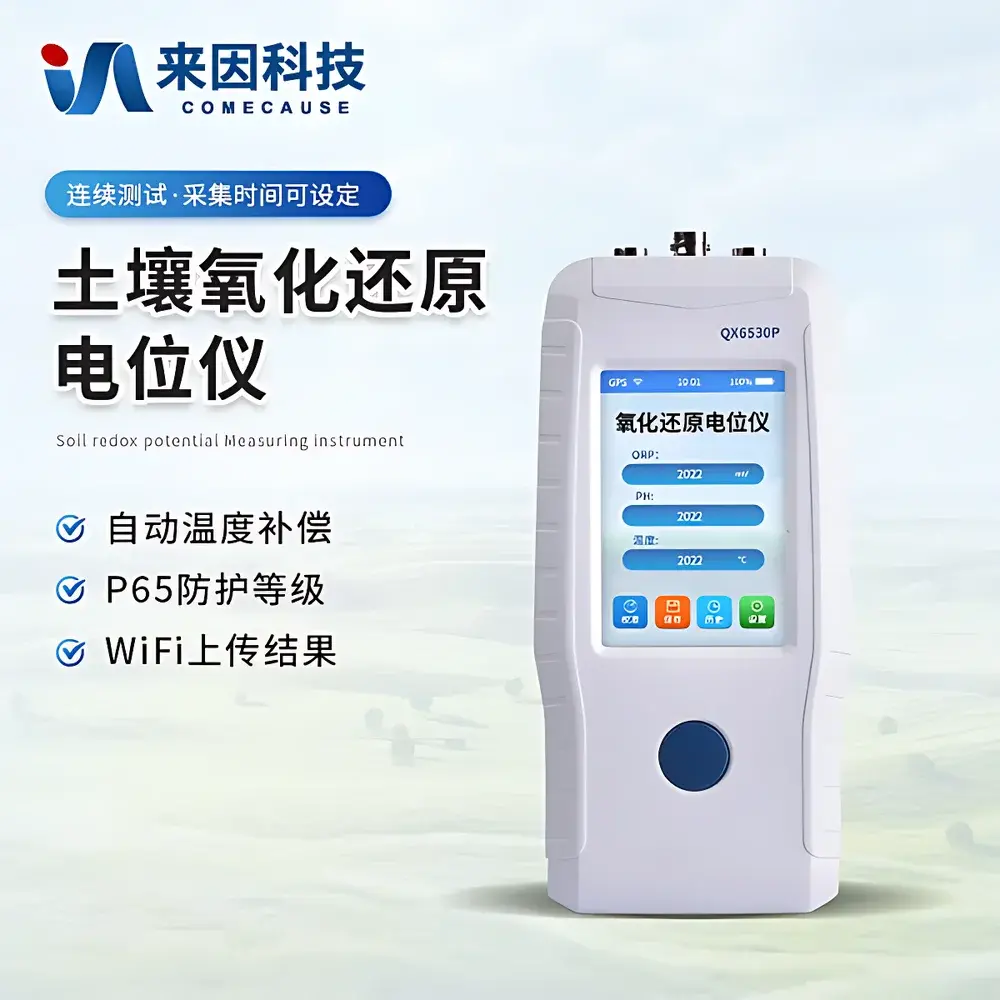
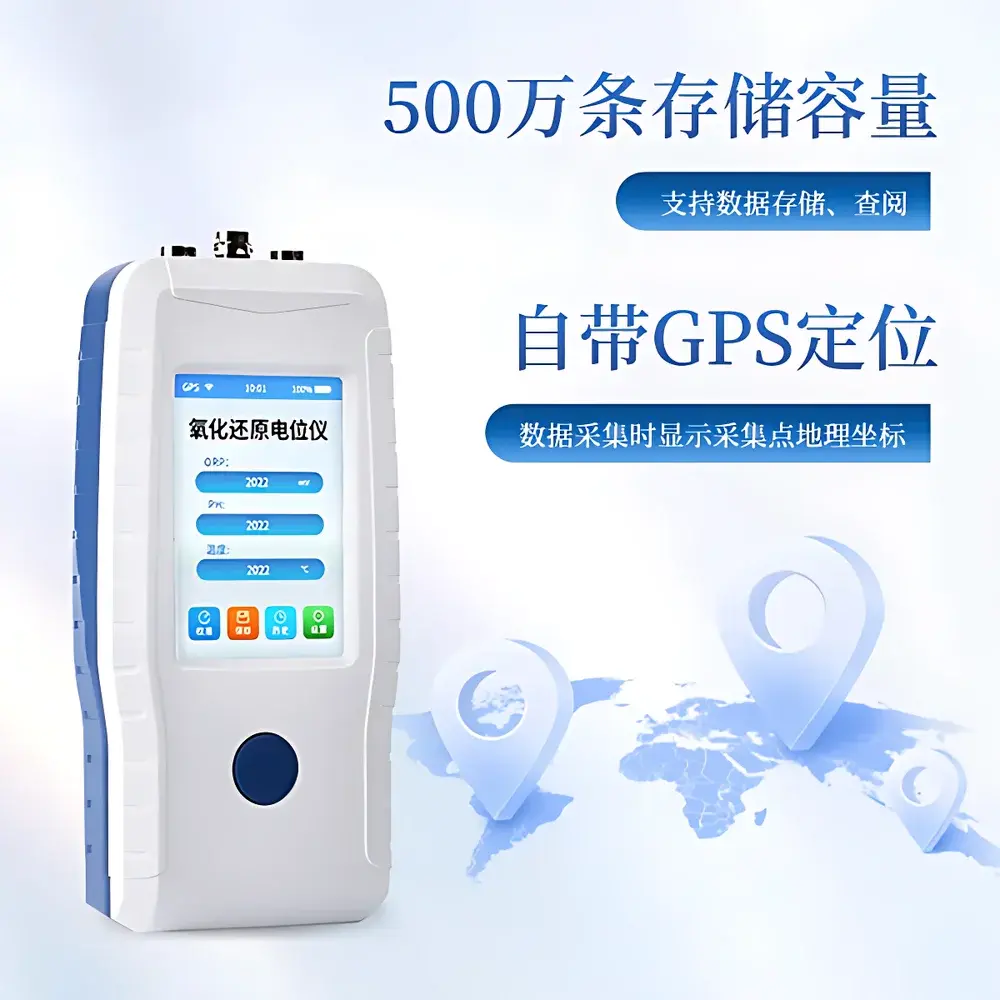
COMECAUSE QX6530P Portable Soil Oxidation-Reduction Potential (ORP) and pH Meter
| Brand | COMECAUSE |
|---|---|
| Model | QX6530P |
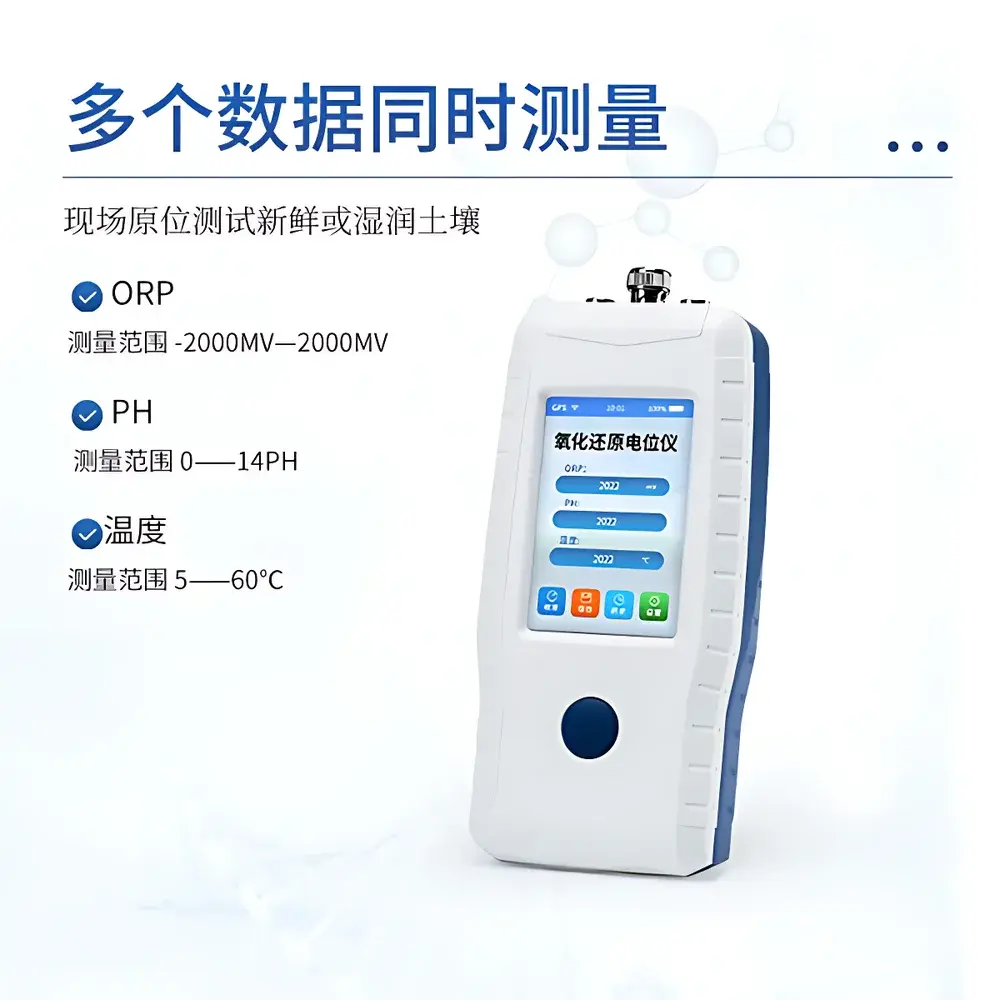
| ORP Range | −2000 to +2000 mV, Resolution: 0.1 mV, Accuracy: ±10 mV |
| pH Range | 0–14, Resolution: 0.1, Accuracy: ±0.05 |
| Temperature Range | 5–60 °C, Resolution: 0.1 °C, Accuracy: ±1 °C |
| Power Supply | DC 5 V / 2 A |
| Rated Power | 3 W |
| Battery Capacity | 6000 mAh |
| IP Rating | IP65 |
| Dimensions (L×W×H) | 500 × 380 × 180 mm |
| Weight | 4.1 kg |
Overview
The COMECAUSE QX6530P is a field-deployable, multi-parameter soil monitoring instrument engineered for in-situ measurement of oxidation-reduction potential (ORP or Eh), pH, and temperature directly within moist or freshly sampled soil matrices. ORP serves as a fundamental thermodynamic indicator of the electron activity in soil systems—reflecting the net balance between oxidizing and reducing species such as O2/H2O, Fe3+/Fe2+, NO3−/NH4+, and SO42−/H2S. Unlike discrete chemical assays, ORP provides a real-time, integrative proxy for redox status—critical for assessing biogeochemical cycling, microbial metabolism, contaminant speciation (e.g., Cr(VI) vs. Cr(III), As(III) vs. As(V)), and root-zone oxygen availability. The QX6530P implements potentiometric measurement per the Chinese standard HJ 746–2015, which aligns methodologically with ISO 10390:2021 (soil pH and redox potential determination) and ASTM D3740–22 (quality system requirements for environmental testing laboratories). Its design prioritizes robustness under variable field conditions while maintaining metrological traceability through factory-calibrated electrodes and integrated temperature compensation.
Key Features
- ARM Cortex-M3 microcontroller platform running a lightweight Android-based firmware—enabling responsive touchscreen interaction without reliance on external computing devices.
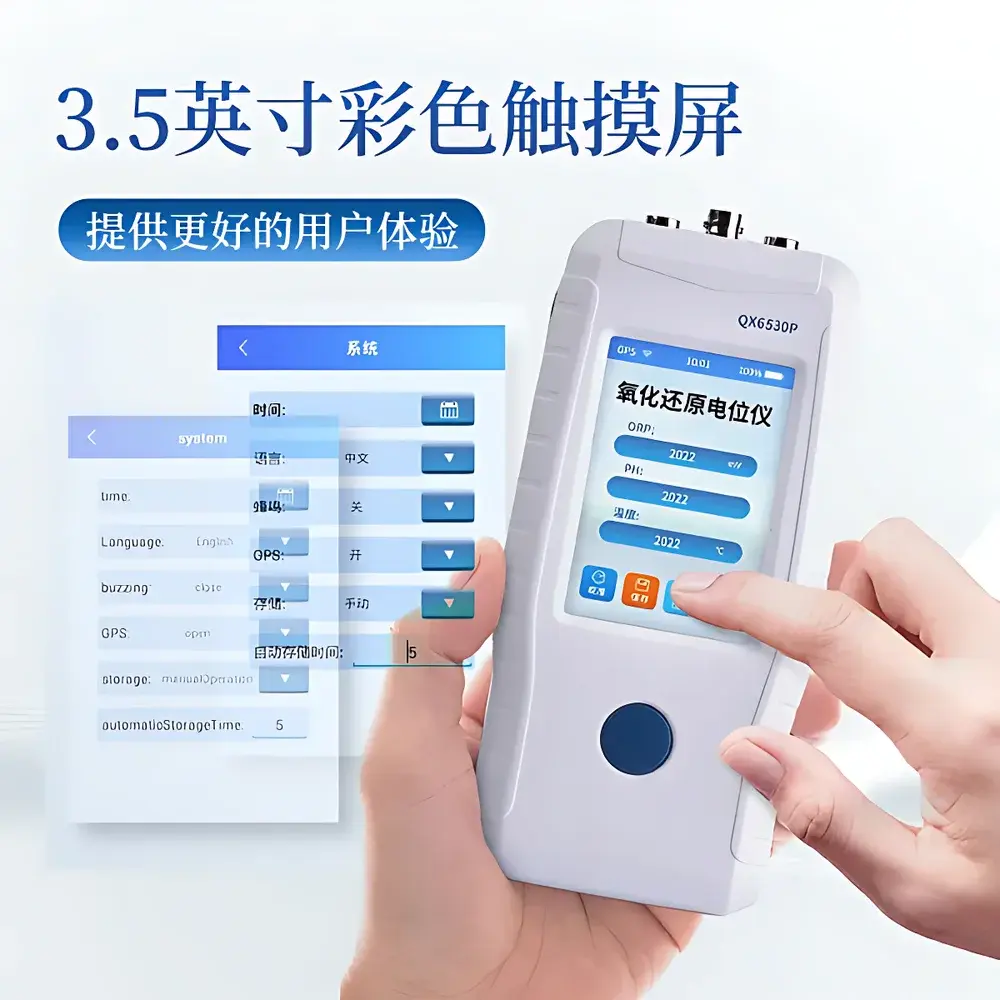
- 3.5-inch capacitive color LCD with auto-adjusting backlight and programmable sleep mode to extend battery life during intermittent use.
- Continuous logging capability with user-defined sampling intervals (configurable in minutes), supporting time-series analysis of redox dynamics during flooding/drainage cycles or bioremediation monitoring.
- Dual-mode temperature compensation: automatic (using built-in NTC sensor) and manual override for calibration validation or non-standard media.
- Dedicated probe assembly comprising a platinum ORP sensing electrode, Ag/AgCl reference electrode, and stainless-steel hollow rod—designed for direct insertion into undisturbed soil profiles with minimal disturbance to native pore structure.
- Auto-hold function with stable-signal detection algorithm: locks reading only after voltage drift falls below 2 mV/10 s, eliminating subjective judgment of endpoint stability.
- Onboard data storage capacity of up to 5 million records—retaining timestamp, ORP (mV), pH, temperature (°C), and probe ID for full audit trail integrity.
- Type-C rechargeable lithium-polymer battery (6000 mAh) with real-time state-of-charge display; compatible with universal 5 V USB power adapters.
- IP65-rated enclosure—dust-tight and protected against low-pressure water jets—suitable for outdoor deployment across agricultural, remediation, and ecological survey applications.
Sample Compatibility & Compliance
The QX6530P is validated for use with mineral soils, organic-rich substrates (e.g., peat, compost), and saturated sediments where probe penetration is mechanically feasible. It does not support measurements in highly viscous slurries, frozen soils, or dry aggregates (<15% gravimetric moisture content), as insufficient electrolyte continuity impedes reliable electrochemical contact. All measurements conform to HJ 746–2015, which specifies electrode conditioning protocols, stabilization criteria, and reporting conventions—including mandatory temperature annotation alongside Eh values. While not certified to IEC 61000-4 electromagnetic immunity standards, its analog front-end employs shielded differential amplification and optical isolation to minimize noise from ambient RF sources common in farm machinery or telemetry infrastructure. For regulated environments requiring electronic record integrity, the device supports CSV export via USB and retains internal logs with immutable timestamps—facilitating alignment with GLP documentation practices and preliminary FDA 21 CFR Part 11 readiness (though formal validation remains site-specific).
Software & Data Management
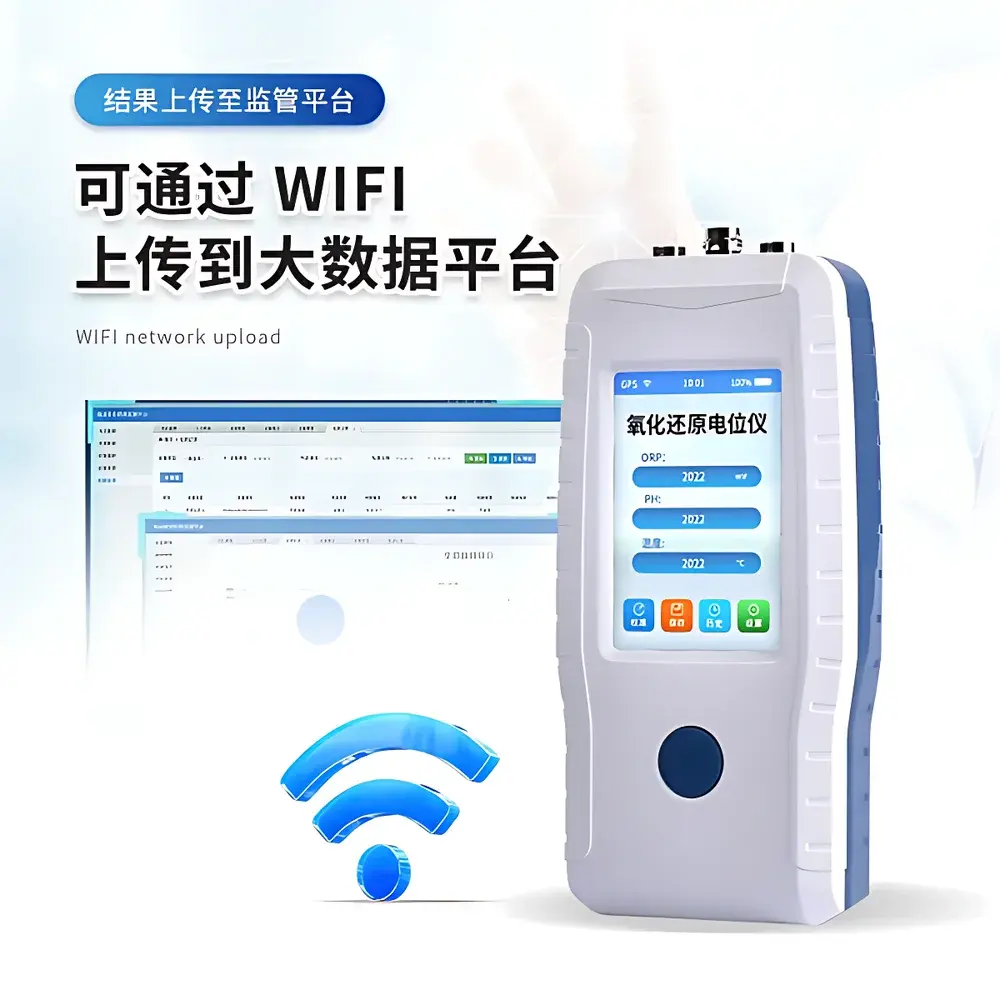
Data acquisition and management are handled natively via the embedded interface: users configure logging schedules, perform single-point ORP/pH calibration using standard buffer solutions (e.g., quinhydrone for ORP, pH 4.01/7.00/10.01), and review historical datasets with scrollable waveform plots. Export functionality generates UTF-8 encoded CSV files containing columns for datetime (ISO 8601), ORP (mV), pH, temperature (°C), and measurement status flags (e.g., “stable”, “unstable”, “out-of-range”). No proprietary software is required for basic operation; however, optional cloud synchronization (via Wi-Fi-enabled gateway modules) allows integration into centralized environmental dashboards compliant with MQTT or HTTP REST APIs. All stored data retain firmware-generated digital signatures to prevent post-acquisition tampering—a key requirement for third-party verification in regulatory submissions.
Applications
- Rice paddy management: Monitoring Eh gradients across flood-drain cycles to optimize anaerobic/aerobic transitions—reducing methane emissions while preventing Fe/Mn toxicity.
- Contaminated land remediation: Tracking Eh recovery trends during monitored natural attenuation (MNA) or enhanced bioremediation—correlating redox shifts with dechlorination rates or metal immobilization efficiency.
- Greenhouse horticulture: Integrating real-time ORP feedback into irrigation control logic to prevent root hypoxia in substrate-based growing systems (e.g., rockwool, coco coir).
- Wetland restoration: Establishing baseline redox zonation in restored hydric soils and validating hydrologic reconnection success through longitudinal Eh profiling.
- Soil health assessment: Supporting regenerative agriculture programs by quantifying redox resilience—the capacity of soil to buffer against abrupt oxygen depletion following heavy rainfall or compaction events.
FAQ
How often should the ORP electrode be cleaned and recalibrated?
Electrode cleaning with mild detergent and deionized water is recommended after every 10–15 field measurements or when visible fouling occurs. Full two-point calibration (using quinhydrone buffer at ~+220 mV and Zobell’s solution at ~+300 mV) should be performed daily before critical surveys.
Can the QX6530P measure ORP in submerged sediment layers?
Yes—provided the hollow stainless-steel probe is fully inserted to the target depth and allowed ≥90 seconds for equilibration. Avoid rapid vertical movement during measurement to prevent localized pore-water displacement.
Is temperature compensation applied automatically during ORP calculation?
Yes. The instrument applies the Nernst equation correction based on real-time thermistor readings, with default slope of −59.16 mV/pH unit at 25 °C. Manual override permits adjustment for non-aqueous media or elevated temperatures.
What is the expected service life of the ORP electrode under routine field use?
With proper storage (in KCl-saturated solution) and periodic reconditioning, the Pt sensing element typically maintains performance for 12–18 months. Reference junction clogging is the most common failure mode—mitigated by regular soaking in 0.1 M HNO3.
Does the device support Bluetooth or wireless data transmission out of the box?
No. Wireless connectivity requires an optional accessory module (QX-WiFi-Kit), sold separately. Standard configuration relies on USB-C direct transfer or manual SD card export (if equipped).







