
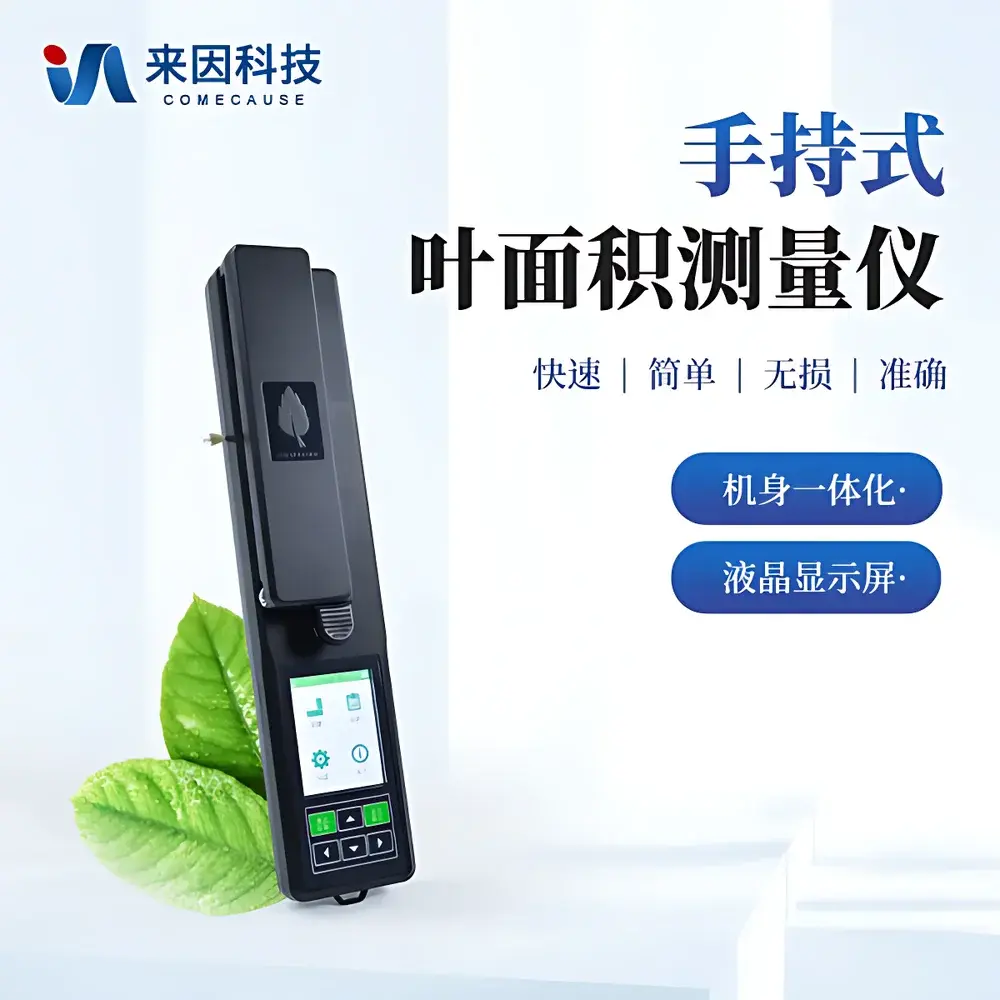
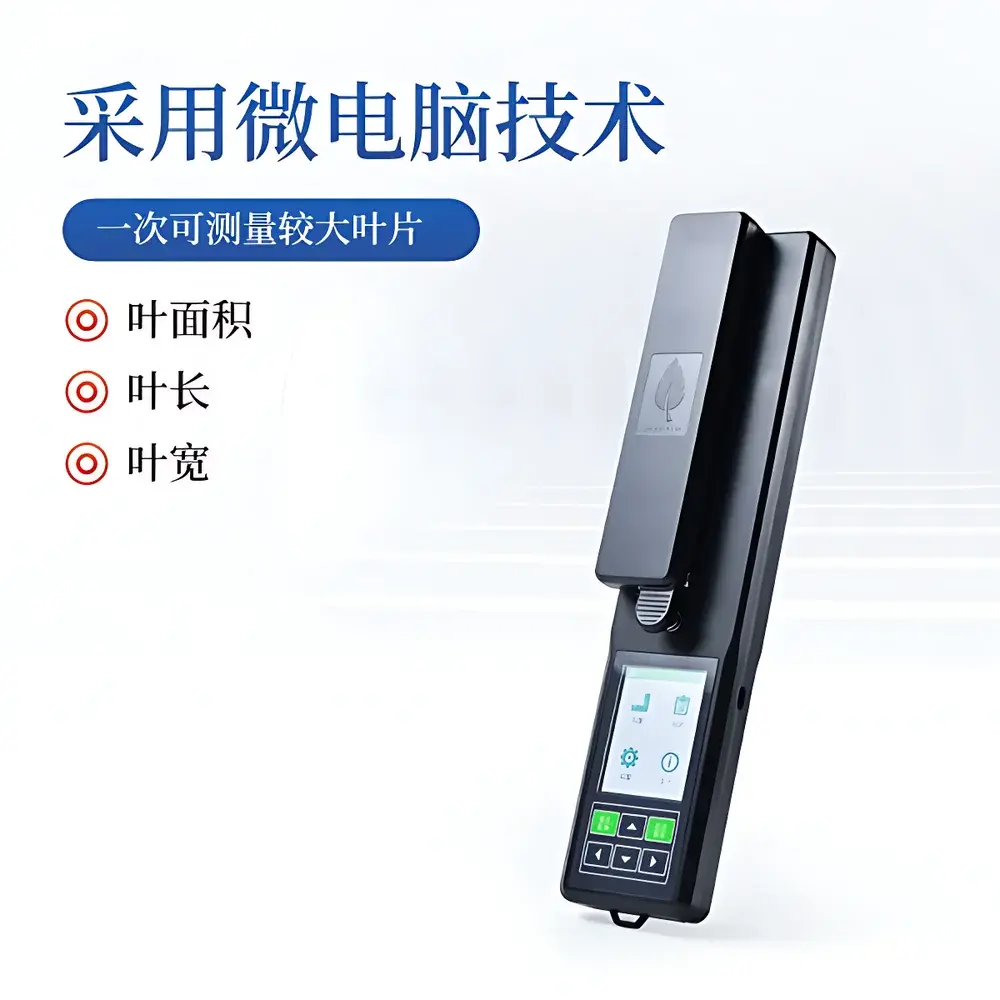

COMECAUSE YMJ-A Handheld In-Vivo Leaf Area Meter
| Brand | COMECAUSE |
|---|---|
| Origin | Shandong, China |
| Manufacturer Type | Direct Manufacturer |
| Model | YMJ-A |
| Width Range | 0–155 mm |
| Length Range | 0–2000 mm |
| Area Unit | cm² |
| Resolution | 0.01 cm² |
| Measurement Accuracy | ±2% |
| Data Storage Capacity | 5000 sets |
| Power Supply | Built-in 3200 mAh Li-ion battery + removable 1400 mAh external battery |
| Display | LCD with microcontroller interface |
| Calibration | User-accessible internal calibration module |
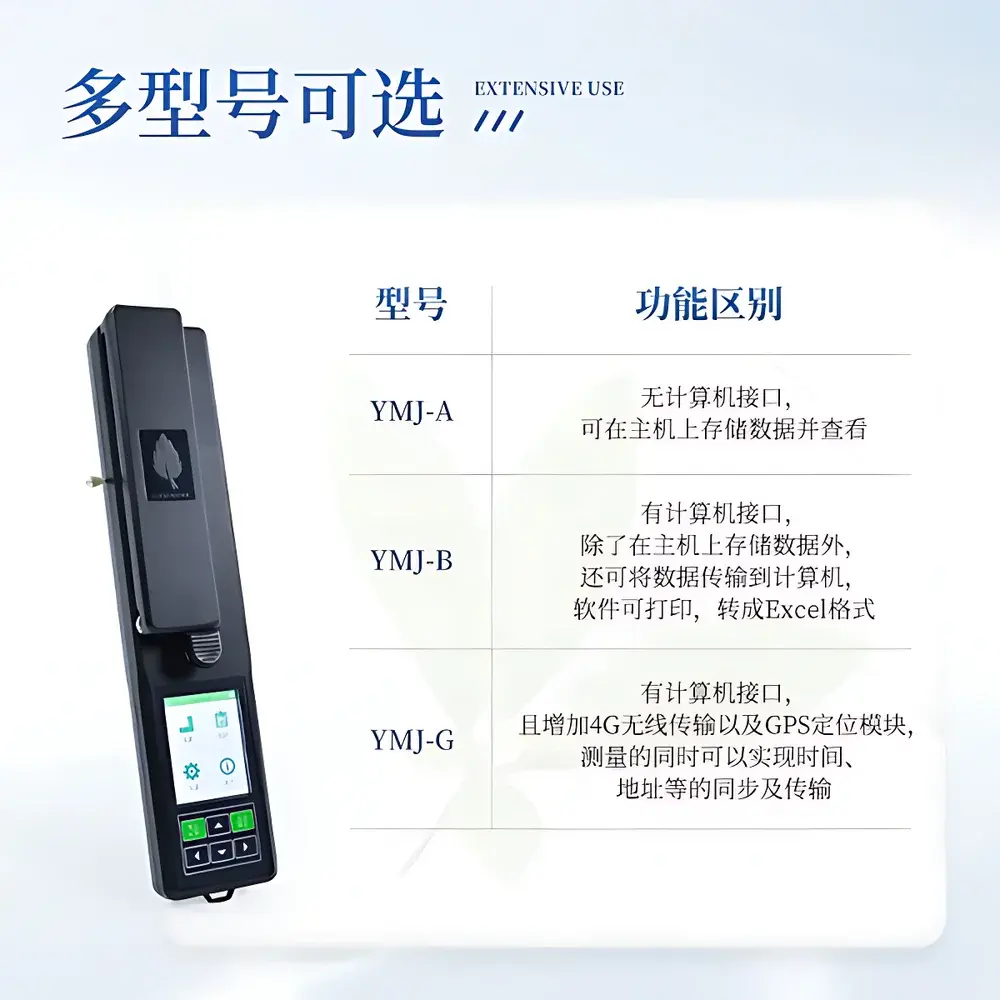
| Interface | Type-C (data export only on YMJ-B/G variants) |
| Compliance | Designed for field-deployable plant phenotyping in accordance with ISO 11769 (Plant biology — Terminology for leaf morphometric parameters), ASTM E2918-22 (Standard Guide for Field Data Collection in Plant Science Studies) |
Overview
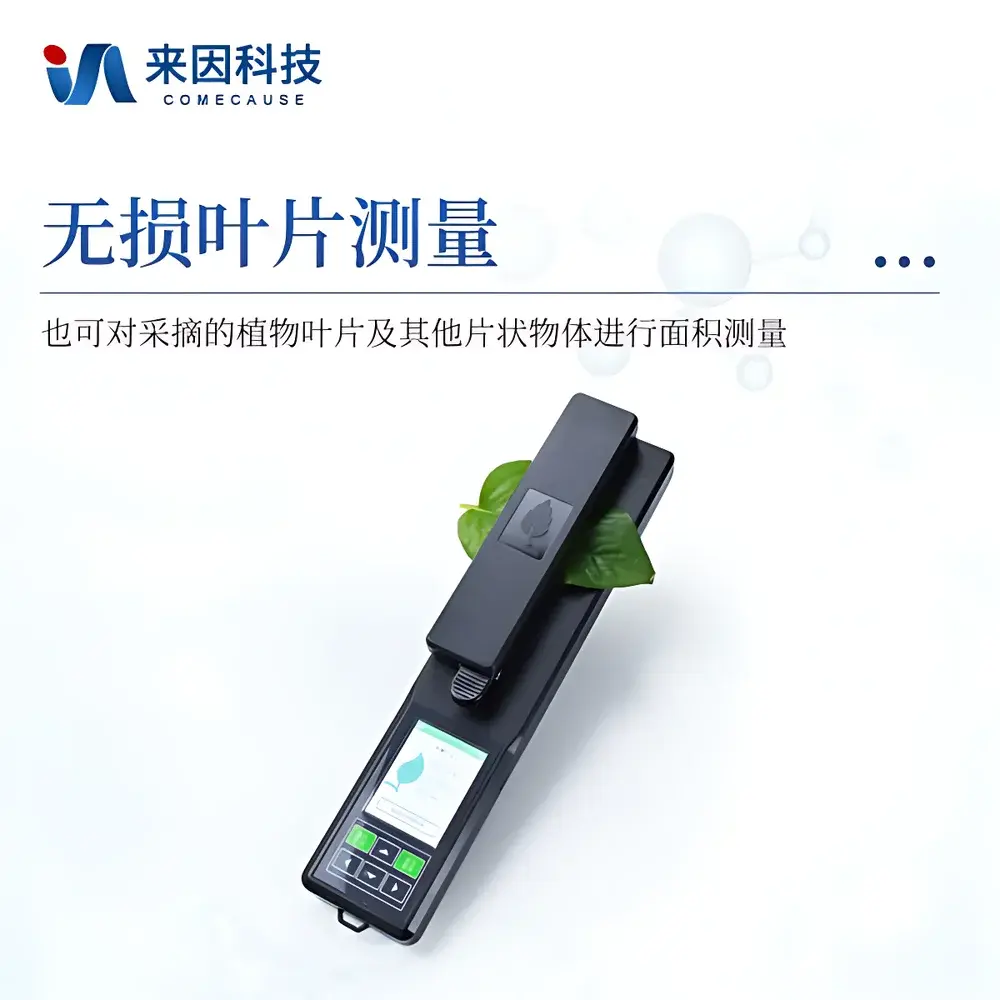
The COMECAUSE YMJ-A Handheld In-Vivo Leaf Area Meter is a field-portable, non-destructive optical measurement instrument engineered for rapid, high-reproducibility quantification of leaf morphometric parameters in situ. It operates on the principle of real-time digital image segmentation: a calibrated linear scanning sensor captures high-contrast silhouette profiles of living or excised leaves as the user manually draws the probe across the leaf surface. The embedded microcontroller processes pixel-based area integration using validated edge-detection algorithms, converting physical dimensions into precise planar area values (cm²), length (mm), and width (mm). Unlike destructive gravimetric or tracing methods, the YMJ-A eliminates sample preparation, preserves physiological integrity, and enables repeated longitudinal measurements on the same plant—critical for growth monitoring, stress response assays, and canopy architecture modeling. Its ruggedized handheld form factor, integrated LCD interface, and extended battery life support continuous operation in uncontrolled outdoor environments, including agricultural plots, forest understories, and ecological transects.
Key Features
- Integrated probe-and-host architecture: Eliminates cable management and alignment errors common in modular systems.
- High-resolution optical scanning: 0.01 cm² area resolution with ±2% measurement accuracy across the full operational range (0–155 mm width × 0–2000 mm length).
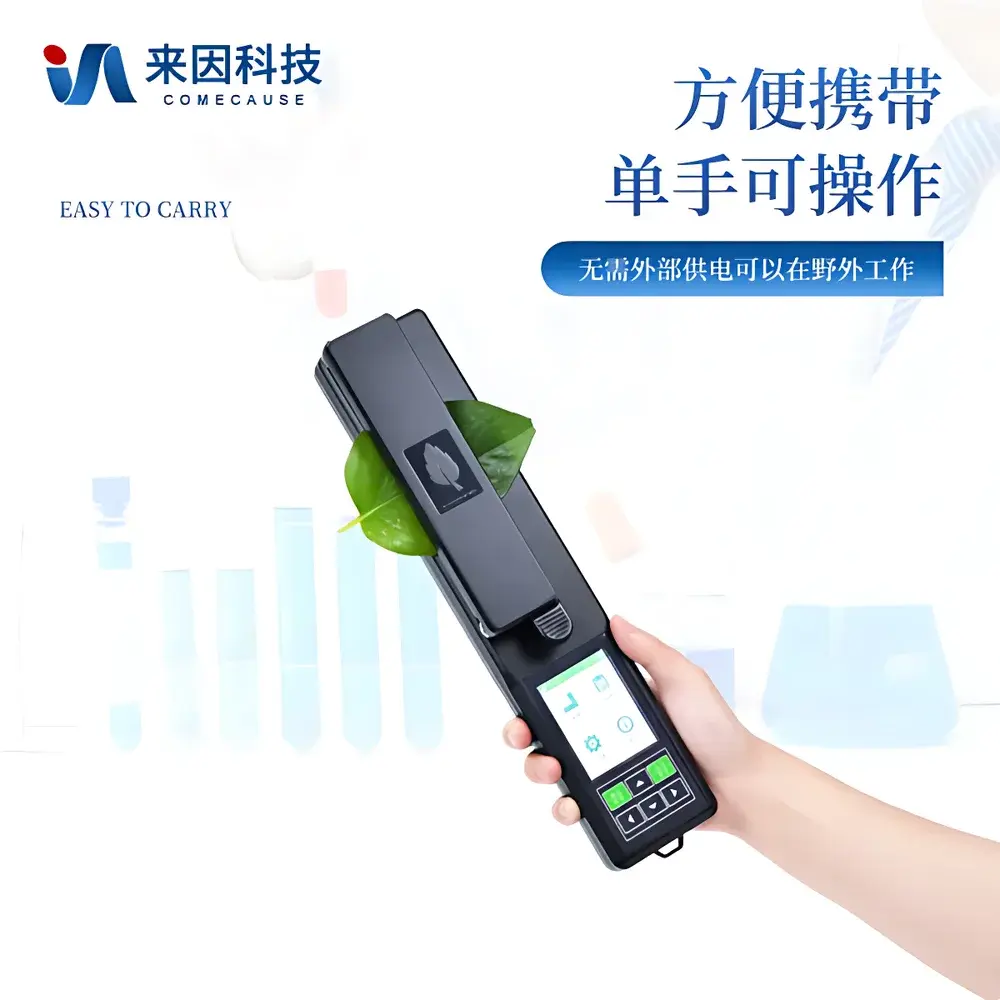
- Dual-battery system: Primary 3200 mAh internal Li-ion battery supplemented by hot-swappable 1400 mAh external pack—enabling >12 hours of continuous field use without recharging.
- On-device data management: Stores up to 5000 complete measurement records (leaf area, length, width, timestamp) with intuitive LCD navigation and menu-driven review.
- User-accessible calibration module: Allows field recalibration against certified reference standards to maintain traceability under variable ambient lighting or temperature conditions.
- Low-power microcontroller platform: Optimized firmware ensures minimal thermal drift and consistent signal-to-noise ratio during prolonged operation.
- Type-C universal interface: Supports firmware updates and bulk data export to Windows/macOS/Linux systems via standard USB 2.0 protocol (compatible with COMECAUSE LeafMetrics™ desktop software suite).
Sample Compatibility & Compliance
The YMJ-A accommodates fresh, intact leaves from dicotyledonous and monocotyledonous species—including broadleaf crops (e.g., maize, soybean, tomato), woody perennials (e.g., oak, poplar), and herbaceous wild plants—without requiring clipping, pressing, or drying. Its 155 mm maximum width and 2000 mm maximum length support measurement of single large leaves (e.g., banana, taro) or segmented scans of compound leaves. The device complies with internationally recognized protocols for non-invasive plant phenotyping: it satisfies the dimensional repeatability requirements of ISO 11769 for leaf area reporting and aligns with ASTM E2918-22 guidelines for field-collected morphometric data integrity. While not FDA-regulated, its data structure supports GLP-compliant metadata logging (time, operator ID, location tag) when paired with optional YMJ-G variant hardware.
Software & Data Management
Data exported via Type-C interface are structured in UTF-8 CSV format, containing columns for measurement ID, date/time stamp, leaf area (cm²), length (mm), width (mm), and unit-specific calibration index. COMECAUSE LeafMetrics™ desktop software (Windows/macOS) provides visualization tools for temporal series analysis, batch statistical summaries (mean, SD, CV%), and export to Excel-compatible .xlsx files. All data files include embedded hash signatures for audit trail verification. Though the YMJ-A lacks built-in wireless transmission, its file structure is fully interoperable with cloud platforms (e.g., AgriCloud, CropSight) supporting manual upload workflows. Firmware updates are delivered through signed binary packages verified via SHA-256 checksums.
Applications
- Longitudinal leaf expansion kinetics in drought or nutrient-stress experiments.
- Canopy light interception modeling for precision irrigation scheduling.
- Phenotypic screening of mutant or transgenic lines in controlled-environment agriculture.
- Forest inventory support: rapid estimation of leaf area index (LAI) proxies in plot-level assessments.
- Educational field labs: hands-on training in plant biometry and allometric scaling principles.
- Ecological monitoring: tracking seasonal leaf development in response to climate variables (e.g., growing degree days, photoperiod).
FAQ
What is the maximum leaf size measurable with the YMJ-A?
The instrument supports leaves up to 155 mm in width and 2000 mm in length—sufficient for most angiosperm species, including large monocots such as banana or sugarcane.
Does the YMJ-A require external power during field use?
No. It operates exclusively on its dual-battery system; no AC adapter or external power source is needed during measurement.
Can measurements be performed under direct sunlight?
Yes. The optical sensor employs ambient-light compensation algorithms and high-contrast thresholding to maintain accuracy under variable illumination, including full solar exposure.
Is calibration traceable to national standards?
The internal calibration module accepts user-defined reference standards (e.g., NIST-traceable polyester film templates); calibration logs are stored with each measurement batch.
How is data integrity ensured during export?
CSV exports include cryptographic hash fields and UTC timestamps; LeafMetrics™ software validates file integrity before import and flags corrupted records.




