
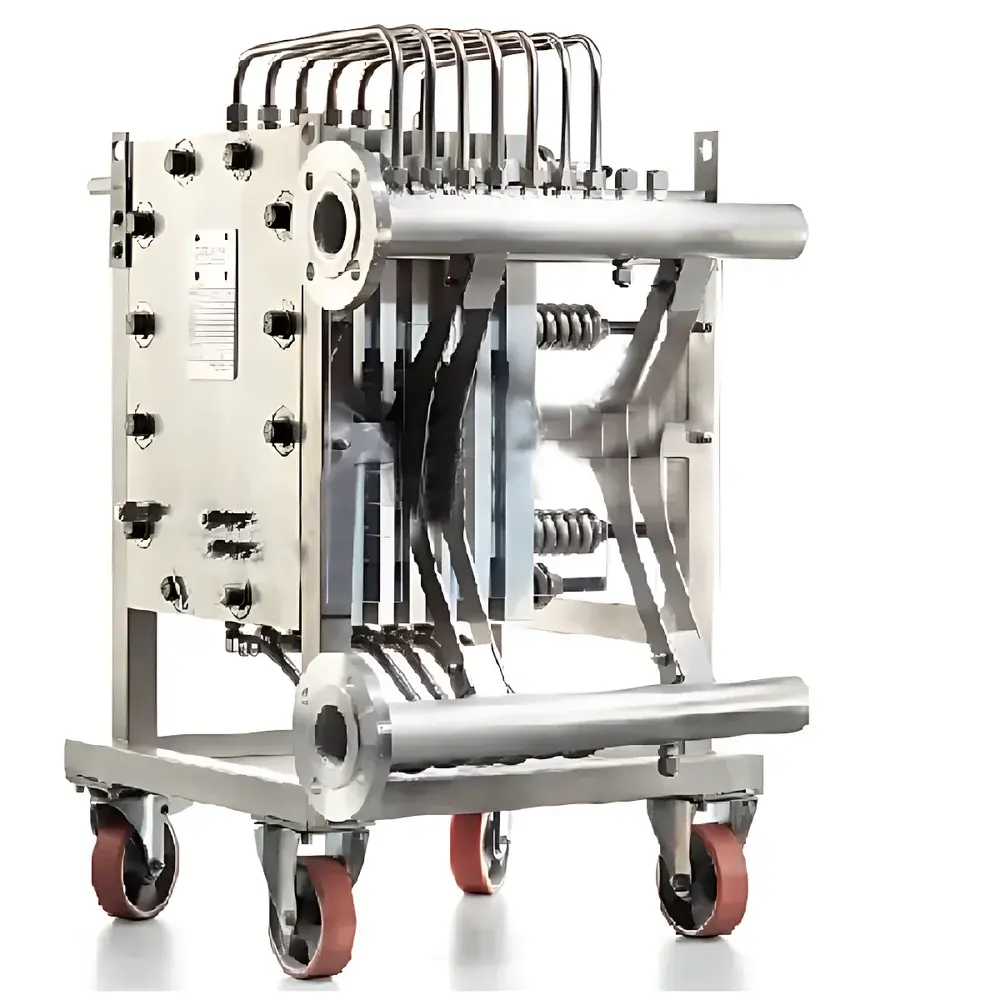
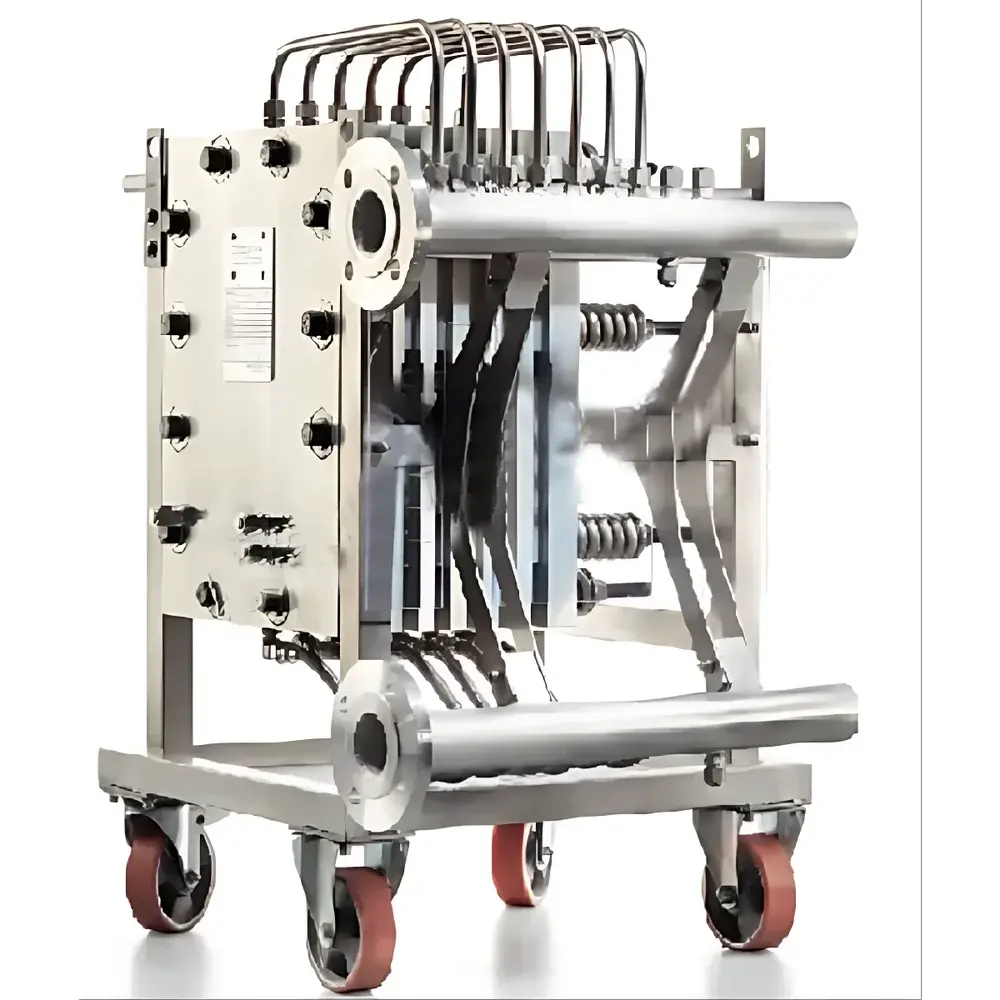
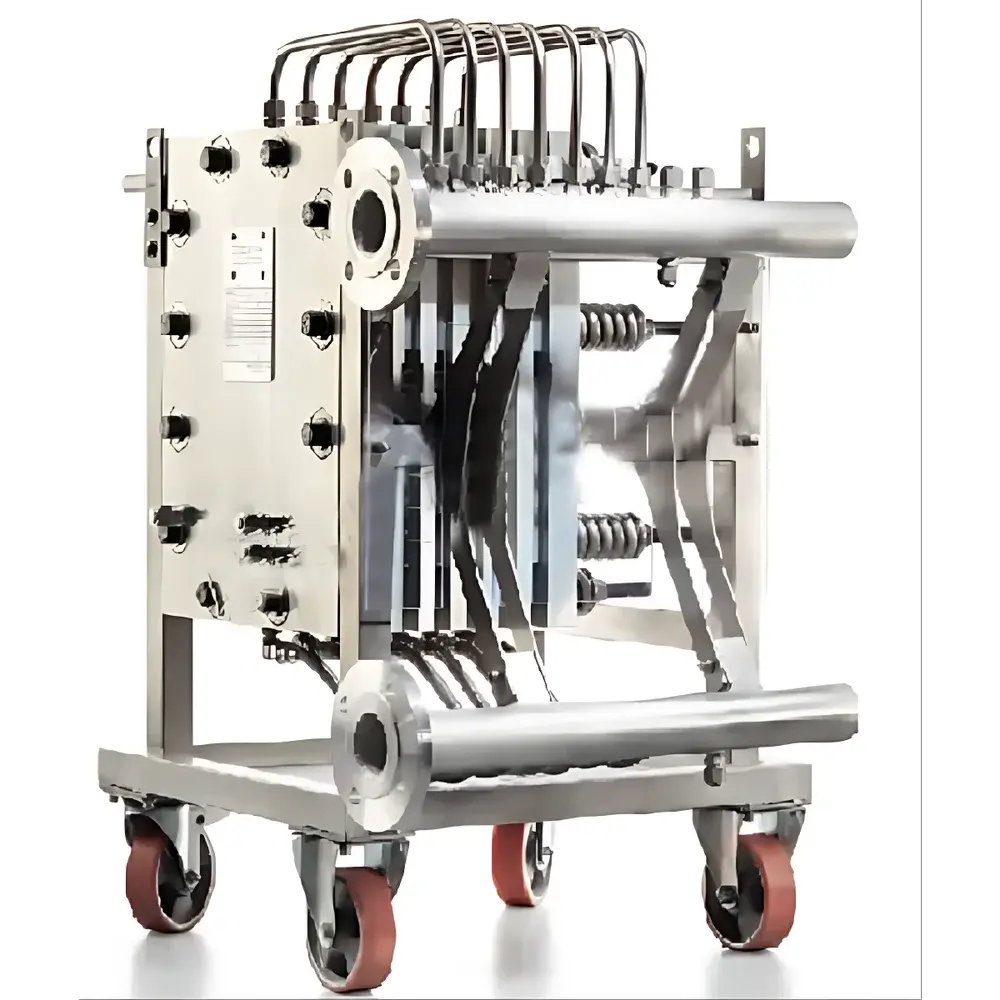
Corning G4 High-Throughput Silicon Carbide Microchannel Continuous Flow Reactor
| Brand | Corning |
|---|---|
| Origin | USA |
| Manufacturer Status | Authorized Distributor |
| Origin Category | Imported |
| Model | G4 |
| Pricing | Upon Request |
| Instrument Classification | Microchannel Reactor |
| Usable Volume | Small-Scale |
| Construction Material | Silicon Carbide (SiC) Ceramic with PFA Tubing and Perlast® Seals |
| Operating Pressure | Low-Pressure (≤10 bar typical, compatible with atmospheric to moderate pressurized operation) |
| Fluid Throughput Capacity | Up to 2000 m³/year |
| Regulatory Compliance | Designed for GLP/GMP-aligned continuous manufacturing environments |
Overview
The Corning G4 High-Throughput Silicon Carbide Microchannel Continuous Flow Reactor is an engineered platform for scalable, precision-controlled chemical synthesis under continuous flow conditions. Based on Corning’s proprietary Advanced-Flow Reactor® (AFR®) architecture, the G4 leverages monolithic silicon carbide (SiC) microchannel substrates—fabricated via precision ceramic sintering—to deliver exceptional thermal conductivity (>120 W/m·K), chemical inertness across pH 0–14 and aggressive oxidizing/reducing media, and mechanical robustness at elevated temperatures (up to 200 °C). Unlike glass or stainless-steel microreactors, SiC eliminates metal leaching, enables solvent-free or low-solvent transformations, and sustains stable performance under prolonged exposure to halogens, strong acids (e.g., HNO₃, HF), and high-concentration peroxides. The reactor operates on laminar flow principles with characteristic channel dimensions of ~200–500 µm, ensuring narrow residence time distribution (RTD < ±5% CV), rapid heat dissipation (<0.1 s thermal response), and near-instantaneous mixing via diffusion-dominated interfacial contact. This physical foundation supports kinetic-limited reactions—including nitrations, halogenations, lithiations, and catalytic hydrogenations—with reproducible selectivity and reduced byproduct formation.
Key Features
- Monolithic silicon carbide reaction core: Chemically inert, thermally stable, non-porous, and corrosion-resistant—eliminating metal contamination and enabling direct handling of aggressive reagents.
- Scalable modular design: Maintains identical fluidic geometry and mass/heat transfer characteristics from lab-scale G1 to production-scale G4 (1:1000 volumetric scale-up ratio), minimizing process requalification.
- Integrated low-footprint engineering: Compact stainless-steel frame with ASME B16.5 Class 150 flanged utility connections (cooling/heating fluids, feed inlets, product outlets) facilitates drop-in installation into existing plant infrastructure.
- Full-wetted path of non-metallic materials: SiC channels + PFA (perfluoroalkoxy) tubing + Perlast® (fluoroelastomer) gaskets ensure compliance with USP Class VI and FDA 21 CFR 177.1550 requirements for pharmaceutical intermediates.
- Low hold-up volume (<50 mL total system volume) and inherent process safety: Limits inventory of hazardous intermediates; inherently limits thermal runaway potential per OSHA 1910.119 Process Safety Management criteria.
Sample Compatibility & Compliance
The G4 reactor accommodates homogeneous liquid-phase reactions, gas–liquid multiphase systems (e.g., hydrogenation, ozonolysis), and solid-catalyzed processes when paired with packed-bed inserts. It is validated for use with organic solvents (THF, DMF, acetonitrile, chlorinated hydrocarbons), aqueous acidic/alkaline streams, and neat reagents. System compatibility aligns with ISO 14040/14044 for life-cycle assessment due to reduced solvent consumption, energy demand, and waste generation. Design documentation supports regulatory submissions under FDA 21 CFR Part 11 (electronic records/signatures), EU Annex 11, and ICH Q13 (Continuous Manufacturing), including audit-trail-enabled parameter logging and version-controlled configuration files.
Software & Data Management
While the G4 hardware operates as a standalone flow module, it integrates seamlessly with third-party process analytical technology (PAT) platforms—including Real-Time UV-Vis spectrophotometers, inline FTIR probes, and Corning’s optional AFR® Control Suite v3.2. This software layer provides synchronized acquisition of temperature, pressure, flow rate, and residence time data; automated calibration traceability; and export to CSV, .mat, or ISA-88-compliant formats. All operational logs include electronic signatures, time stamps, and user authentication—fully compliant with ALCOA+ (Attributable, Legible, Contemporaneous, Original, Accurate, Complete, Consistent, Enduring, Available) data integrity principles.
Applications
- Pharmaceutical continuous manufacturing: API synthesis steps requiring precise exotherm control (e.g., diazotization, Grignard additions).
- Agrochemical intermediate production: Nitration and sulfonation under safe, solvent-minimized conditions.
- Specialty polymer precursors: Step-growth condensations with strict stoichiometric control and moisture exclusion.
- Electrochemical synthesis: Paired with flow electrolyzers for redox-mediated C–H functionalization.
- Process intensification studies: Kinetic mapping, residence time optimization, and impurity profiling via automated gradient experiments.
FAQ
What is the maximum operating temperature and pressure for the G4 reactor?
The SiC core is rated for continuous operation up to 200 °C and 10 bar; short-term excursions to 220 °C are permissible with derated flow rates.
Can the G4 be used for heterogeneous catalysis?
Yes—when equipped with standardized SiC-supported catalyst cartridges or custom-packed beds; pressure drop remains linear up to 5 bar ΔP across 100-mm bed length.
Is cleaning-in-place (CIP) supported?
Fully compatible with hot caustic (2 M NaOH, 80 °C), nitric acid (30%, 60 °C), and solvent flush protocols; no disassembly required.
How is scale-up from G1 to G4 validated?
Via dimensionless number matching (Re, Pe, Da) and identical RTD profiles—Corning provides comparative CFD reports and experimental residence time histograms upon request.
Does the system meet FDA or EMA requirements for commercial manufacturing?
Yes—the G4 design basis conforms to ICH Q5 (biotechnology products), Q7 (GMP for APIs), and Q13 (continuous manufacturing), with full traceability of material certifications (ASTM C623 for SiC), weld logs (for frame), and seal qualification data.



