X-imaging Smart Automated Cell Line Development System
| Brand | X-imaging |
|---|---|
| Origin | Shanghai, China |
| Manufacturer Type | Original Equipment Manufacturer (OEM) |
| Country of Origin | China |
| Model | Smart Automated Cell Line Development System |
| Pricing | Available Upon Request |
Overview
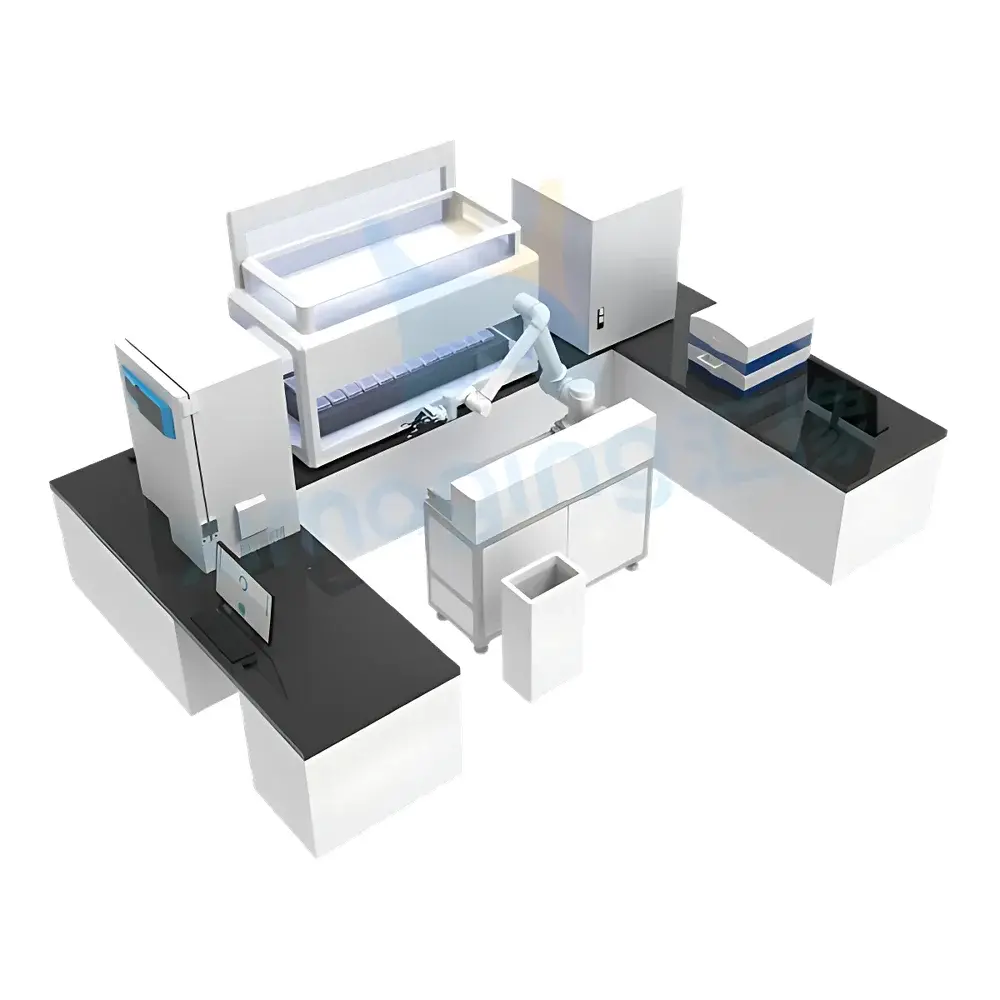
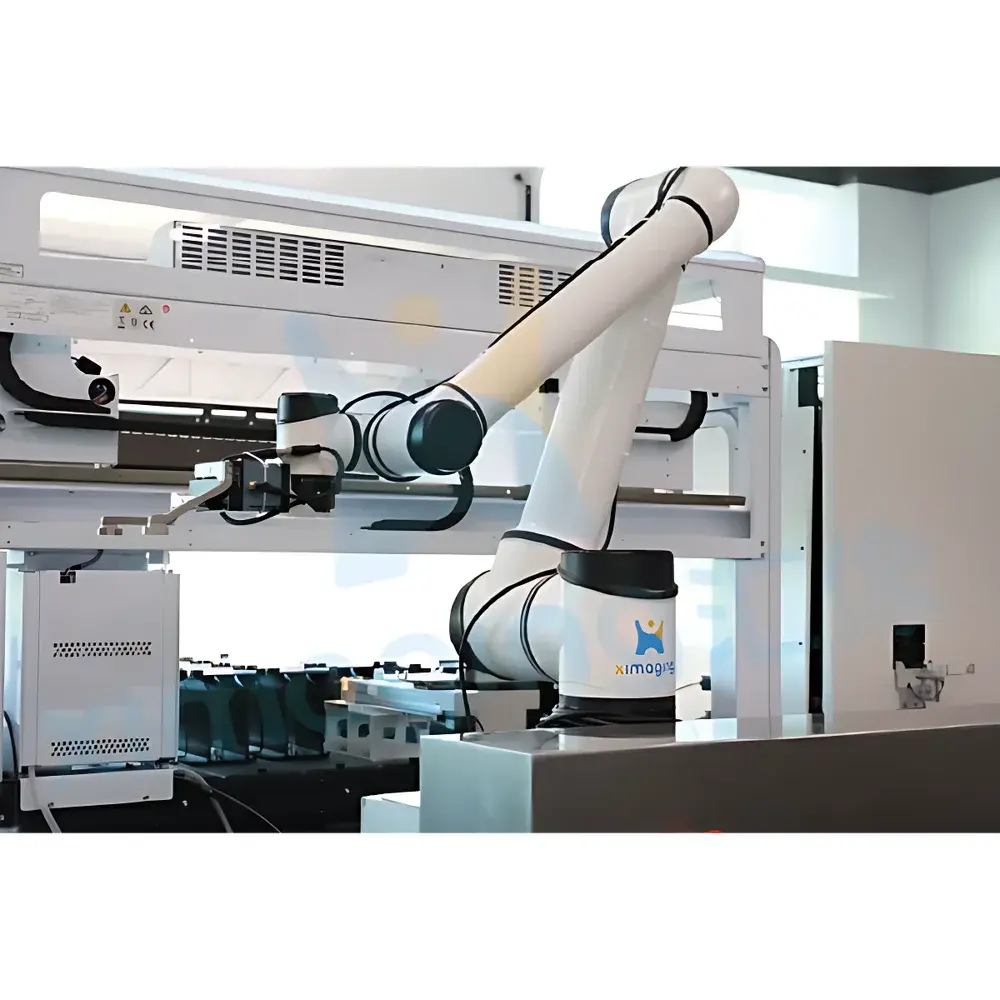
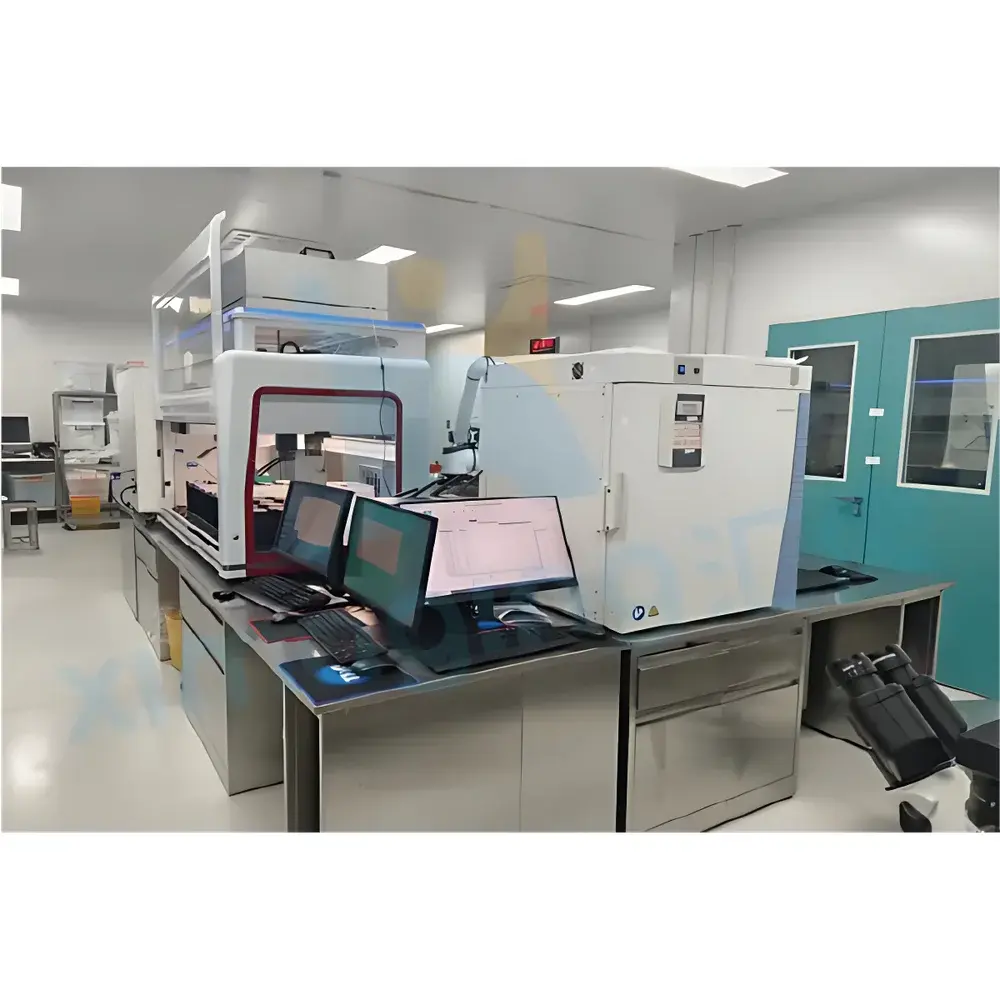
The X-imaging Smart Automated Cell Line Development System is an integrated laboratory automation platform engineered for precision, reproducibility, and scalability in mammalian cell line development (CLD). Built upon a collaborative robotic architecture, it orchestrates synchronized operation of liquid handling workstations, CO₂-controlled automated incubators, high-content cellular imaging systems, and real-time molecular expression analyzers—including fluorescence-based detection and label-free phenotypic monitoring. The system implements a closed-loop workflow grounded in quantitative cell biology principles: from single-cell seeding and clonal expansion tracking to on-platform viability assessment, monoclonal verification via time-lapse imaging, and endpoint titer quantification. Designed specifically for biopharmaceutical R&D environments, it replaces manual, multi-instrument handoffs with a unified, audit-ready process—minimizing operator-induced variability while maintaining full traceability of every cell passage, media exchange, and imaging event.
Key Features
- High-Throughput Clonal Isolation: Combines robotic microplate handling with AI-driven image segmentation to identify and isolate monoclonal colonies with ≥99.8% positional accuracy across 96-, 384-, and 1536-well formats.
- End-to-End Process Automation: Executes sequential steps—including cell dispensing, conditioned medium exchange, phase-contrast/fluorescence imaging at user-defined intervals, colony picking via non-contact laser-assisted isolation, and post-pick expansion—all without human intervention.
- Modular Functional Expansion: Supports seamless integration of third-party modules compliant with SLAS/ANSI standards, including impedance-based cell counting (e.g., Cedex), surface plasmon resonance (SPR) biosensors for binding kinetics, and plate-based luciferase reporter assays.
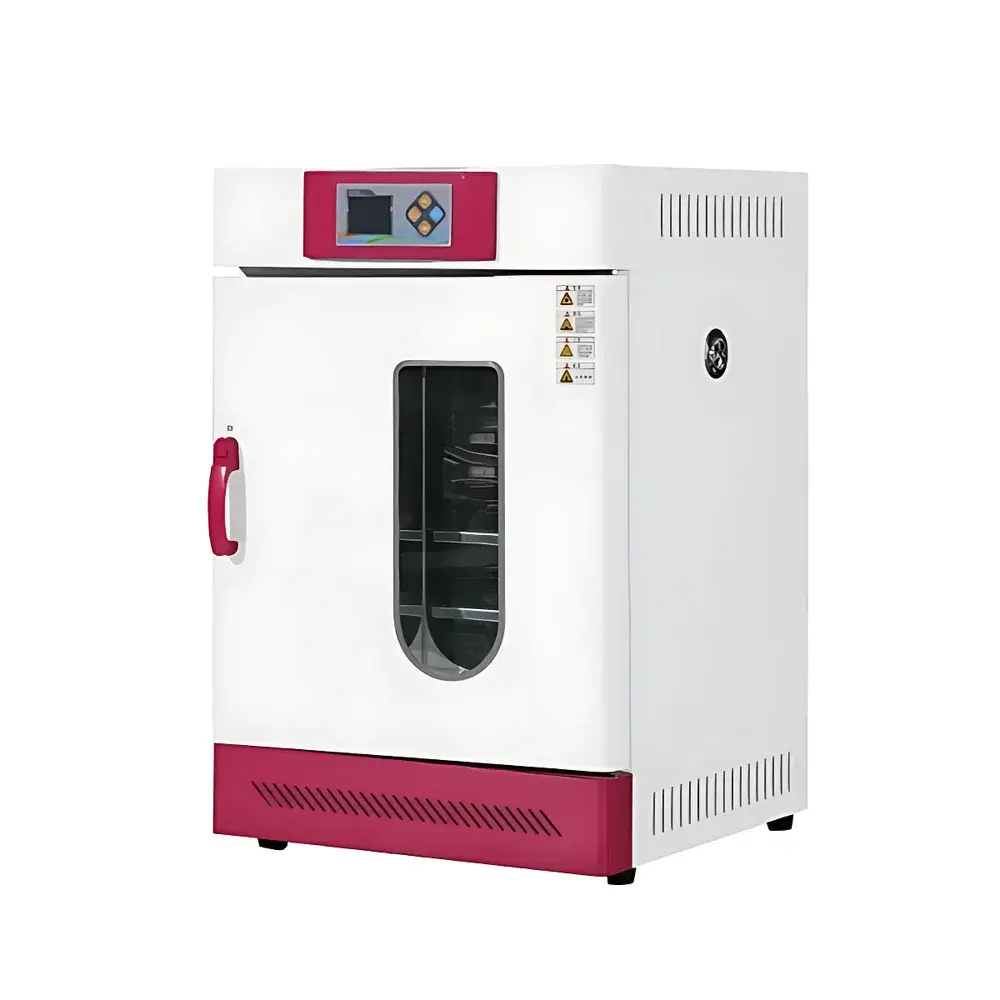
- Environmental Control & Stability: Maintains ±0.3 °C temperature uniformity and ±0.1% CO₂ regulation within the integrated incubation chamber; all fluidic paths are temperature-regulated to prevent thermal shock during media exchange.
- Hardware-Level Audit Trail: Logs timestamped metadata for every actuator movement, sensor reading, and image acquisition—capturing instrument ID, firmware version, calibration status, and environmental parameters per well.
Sample Compatibility & Compliance
The system supports adherent and suspension mammalian cell lines (CHO-K1, HEK293, CAP-T, iPSCs, primary T cells), including CRISPR-edited clones and lentiviral-transduced populations. All liquid handling protocols comply with ISO 8655-7 for gravimetric accuracy verification. Imaging workflows adhere to ASTM E2925-22 for digital microscopy validation. Data integrity meets FDA 21 CFR Part 11 requirements through dual-role electronic signatures, immutable audit logs, and cryptographic hash-based file integrity verification. System validation documentation includes IQ/OQ/PQ protocols aligned with ICH Q5D and USP <1043> for cell line characterization.
Software & Data Management
The proprietary CLD-OS™ software provides role-based access control, GxP-compliant electronic lab notebook (ELN) integration, and native support for FAIR data principles. Image analysis leverages convolutional neural networks trained on >20,000 manually annotated monoclonal growth sequences to classify confluence, morphology deviation, and apoptosis markers. Quantitative outputs include doubling time, clone formation efficiency (CFE), volumetric productivity (VP), and normalized fluorescence intensity (NFI) per well. Raw and processed data export to CSV, HDF5, or vendor-neutral OME-TIFF formats; cloud synchronization uses TLS 1.3–encrypted AWS S3 buckets with configurable retention policies.
Applications
- Biologics Development: Accelerated generation of high-titer CHO pools and clones for mAb, bispecific antibody, Fc-fusion protein, and AAV vector production.
- Cell & Gene Therapy (CGT): Scalable derivation of clinical-grade CAR-T/NK master cell banks; longitudinal monitoring of iPSC differentiation trajectories and genomic stability markers.
- Stable Cell Line Engineering: High-fidelity screening post-CRISPR/Cas9 editing; selection of reporter-tagged clones for pathway activity profiling (e.g., NF-κB, STAT3).
- Preclinical Discovery: Target engagement validation using inducible promoter-reporter systems; cytotoxicity profiling across compound libraries under physiologically relevant culture conditions.
FAQ
Does the system support cryopreservation integration?
Yes—optional robotic cryo-vial handlers and controlled-rate freezers can be interfaced via RS-232/Modbus TCP for fully automated banking of validated clones.
Can legacy instruments be retrofitted into the workflow?
All major OEM liquid handlers, incubators, and imagers with standard API support (RESTful, LabVIEW, or OPC UA) are compatible via the system’s middleware abstraction layer.
How is assay method transfer validated?
CLD-OS™ includes built-in method equivalence testing per ISO/IEC 17025:2017 Annex B, comparing inter-run CVs, recovery rates, and limit-of-detection (LOD) consistency across operators and platforms.
What cybersecurity measures are implemented?
The system operates on an air-gapped network architecture by default; all remote access requires hardware security module (HSM)-based certificate authentication and session-level encryption.
Is GLP/GMP documentation provided?
Yes—comprehensive validation packages (including risk assessments, URS, FMEA, and change control logs) are delivered with each installation and updated per ICH Q9/Q10 guidelines.