
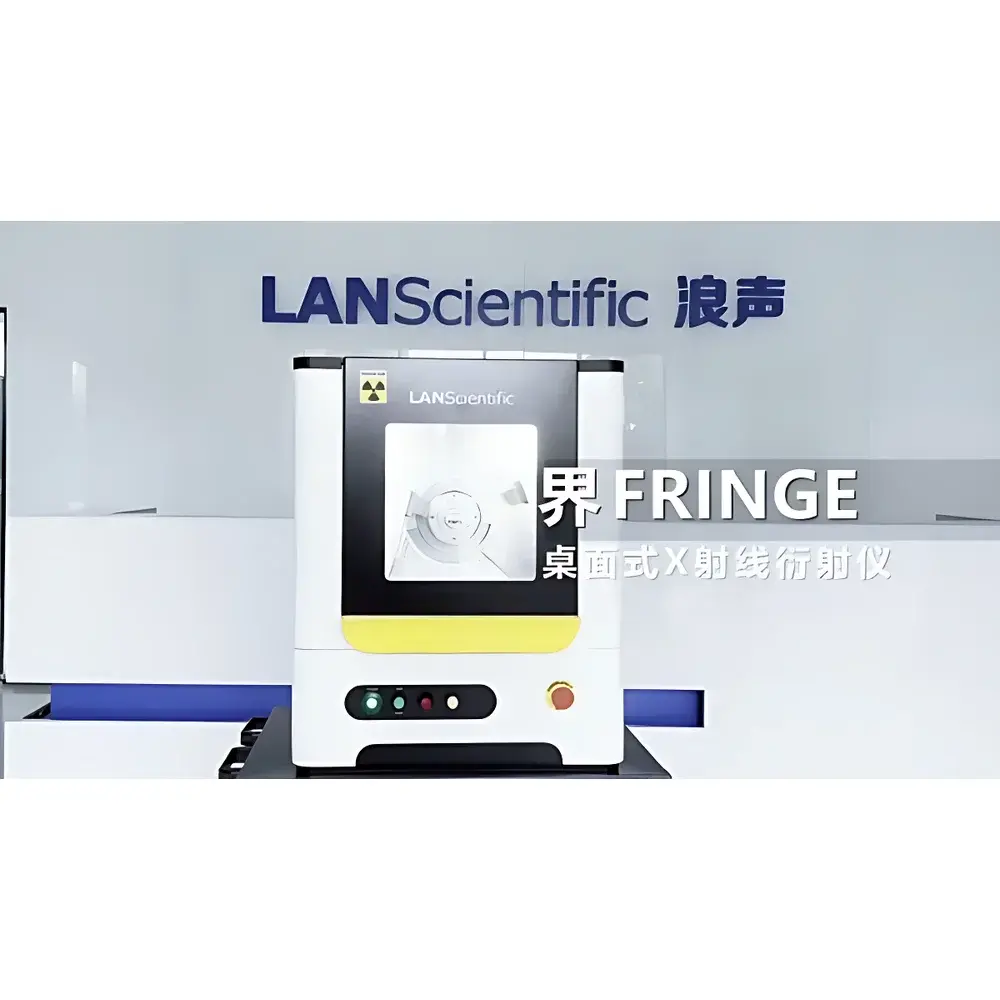
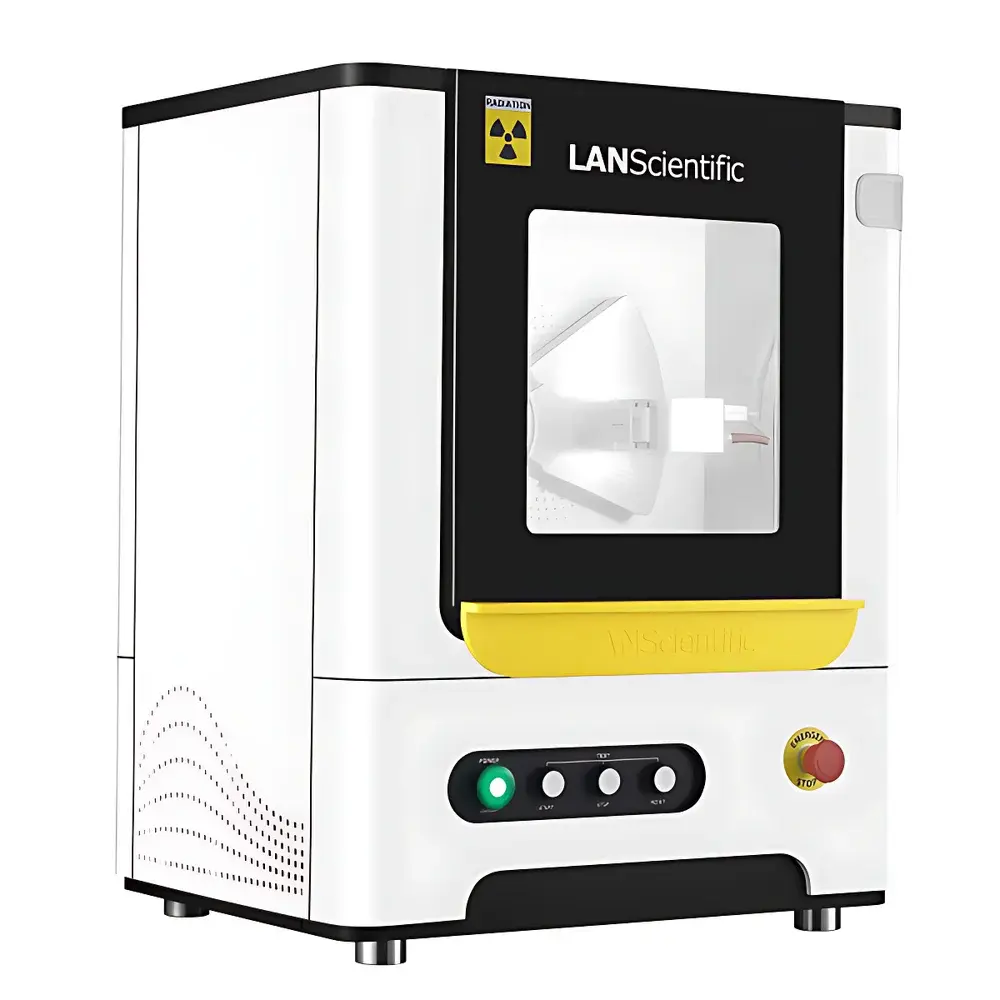
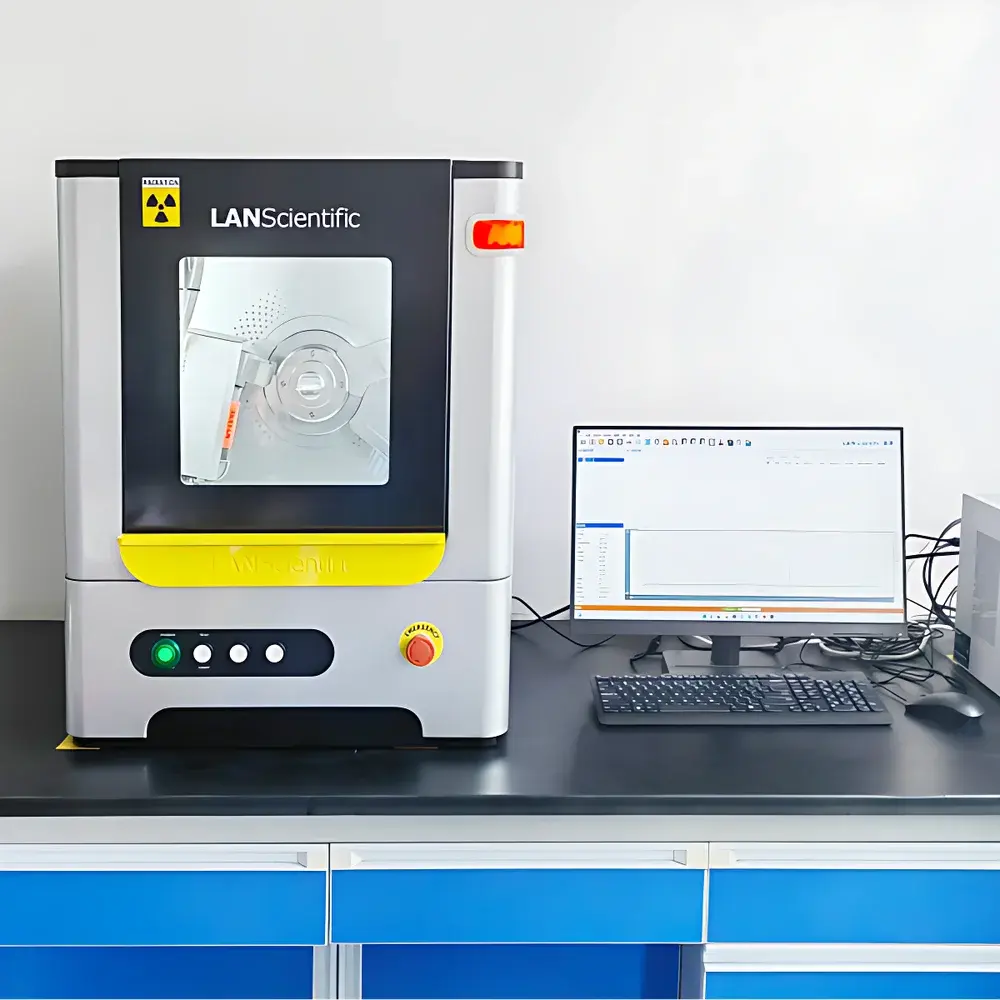
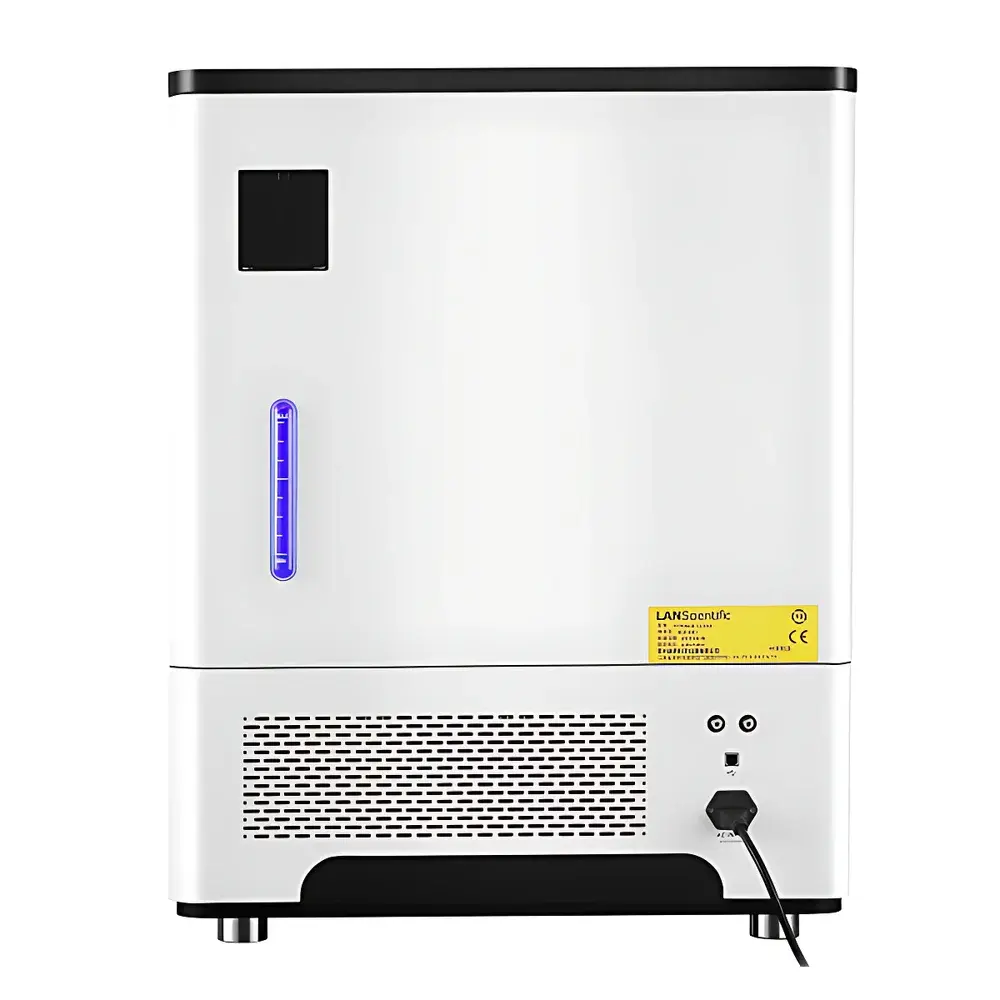
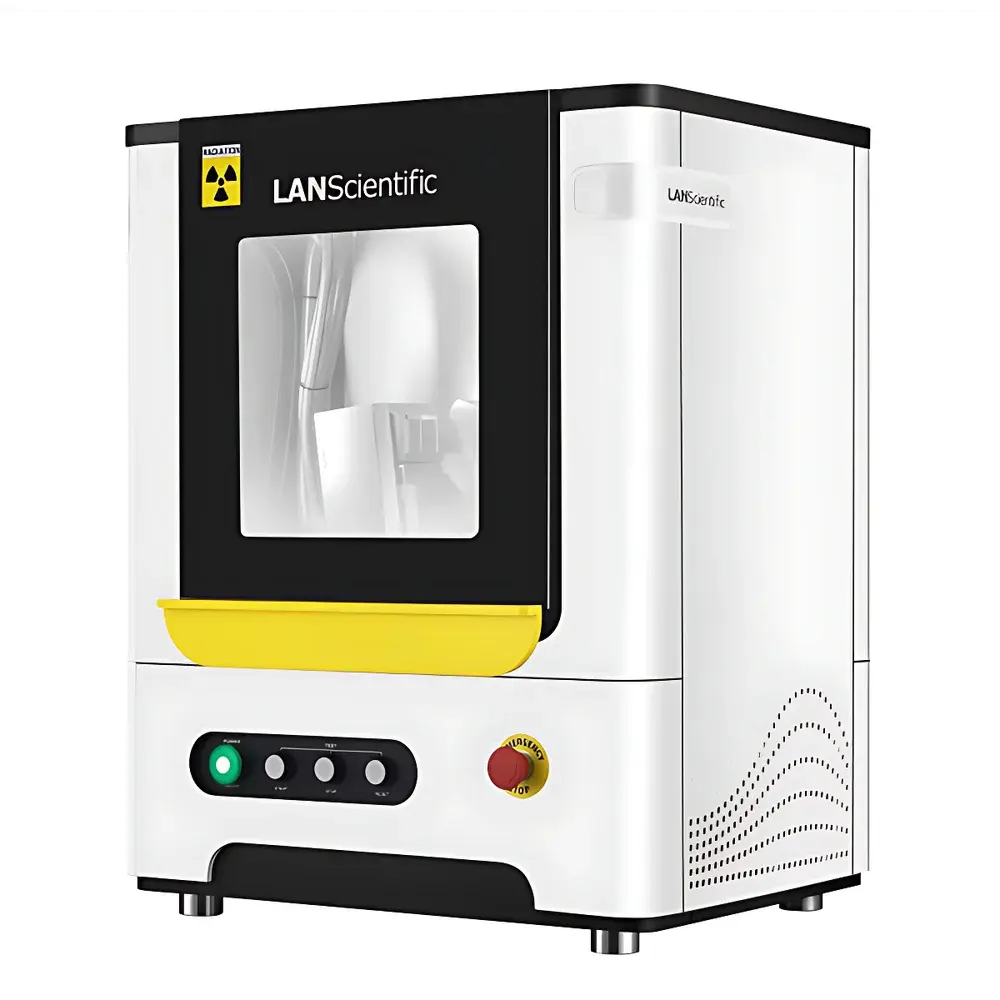
LANScientific FRINGE Series Desktop X-ray Diffractometer for Pharmaceutical Structural Confirmation and Composition Analysis
| Brand | LANScientific |
|---|---|
| Origin | Jiangsu, China |
| Manufacturer Type | Direct Manufacturer |
| Country of Origin | China |
| Model | FRINGE Series |
| Instrument Type | Powder X-ray Diffractometer |
| Power Rating | kW-class (Integrated High-Intensity X-ray Source) |
| Detector | DPPC (Digital Pulse Processing Counter Detector), ≥1×10⁷ cps |
| Optical Configuration | Fixed integrated Soller slits, θ–2θ reflection geometry (Bragg–Brentano), air-spring assisted large-window safety door |
| Software | CrystalX™ — automated phase identification, quantitative Rietveld refinement, crystallinity calculation, and EDXRF co-acquisition capability |
| Compliance | Designed to meet ISO 17025 laboratory requirements |
Overview
The LANScientific FRINGE Series is a benchtop X-ray diffractometer engineered for high-fidelity powder X-ray diffraction (XRD) analysis in regulated and research-intensive environments. Operating on Bragg–Brentano θ–2θ reflection geometry, the system directs a monochromatized Cu Kα X-ray beam—generated by a sealed-tube kW-class source—onto the sample surface mounted at the goniometer center. When interplanar spacings satisfy Bragg’s law (nλ = 2d sinθ), coherent scattering produces intensity maxima detected by the integrated Digital Pulse Processing Counter (DPPC) detector. Unlike conventional scintillation or Si(Li) detectors, the DPPC simultaneously delivers high-count-rate diffraction data (>1×10⁷ counts per second) and energy-dispersive X-ray fluorescence (EDXRF) spectra without requiring secondary monochromators. This dual-mode acquisition enables concurrent crystallographic and elemental characterization—critical for pharmaceutical polymorph screening, excipient compatibility assessment, and counterfeit drug detection.
Key Features
- kW-class microfocus X-ray source with stable thermal management, delivering consistent beam intensity over extended duty cycles—essential for reproducible quantitative phase analysis (QPA) and Rietveld refinement.
- Fixed-integrated Soller slits eliminate mechanical adjustment points, enhancing long-term angular calibration stability and enabling vibration-tolerant deployment—including integration into mobile or车载 (vehicle-mounted) analytical laboratories.
- Air-spring-assisted large-window safety door provides full enclosure during operation, with real-time interlock feedback displayed on the touchscreen interface; automatic beam shutdown triggers upon door opening or loss of vacuum integrity.
- DPPC detector architecture enables simultaneous XRD/EDXRF data collection—supporting correlative structural and compositional verification in a single measurement cycle.
- CrystalX™ software suite includes automated ICDD PDF-4+ database matching, full-pattern Rietveld quantification, crystallinity index calculation (based on Warren–Averbach or Segal methods), and batch-processing workflows compliant with ASTM E1423 and ISO 13126 standards.
Sample Compatibility & Compliance
The FRINGE platform accommodates diverse pharmaceutical sample forms: loose powders (including hygroscopic or low-dose APIs), pressed pellets, coated tablets, thin-film active layers, and bulk crystalline intermediates. Its compact footprint (<0.5 m²) and low-voltage power architecture (208–240 VAC, 50/60 Hz) allow installation in standard analytical labs, QC suites, or ISO Class 7 cleanrooms. The system conforms to IEC 61010-1 (safety of electrical equipment) and IEC 62471 (photobiological safety). Optional configurations include 21 CFR Part 11–enabled audit trail logging, role-based electronic signatures, and instrument qualification documentation (IQ/OQ/PQ protocols) aligned with FDA and EMA guidance for pharmaceutical development and manufacturing.
Software & Data Management
CrystalX™ operates on Windows 10/11 LTS platforms and features a modular architecture supporting three operational tiers: (1) QuickScan mode for rapid fingerprinting against reference libraries; (2) Quantitative mode with internal standard calibration and matrix correction; and (3) Advanced mode for lattice parameter refinement, microstrain analysis, and texture modeling. All raw and processed datasets are stored in vendor-neutral HDF5 format, with metadata embedded per FAIR principles (Findable, Accessible, Interoperable, Reusable). Export options include CIF, XYE, CSV, and ASTM E1361-compliant XML schemas—ensuring seamless integration with LIMS, ELN, and enterprise data warehouses.
Applications
- Pharmaceutical structural confirmation: Polymorph identification, hydrate/solvate differentiation, amorphous content quantification, and solid-state stability monitoring per ICH Q5A and Q6A guidelines.
- API-excipient interaction screening: Detection of co-crystal formation, phase segregation, or degradation-induced crystallinity loss during accelerated stability studies.
- Regulatory submission support: Generation of XRD evidence for patent applications (e.g., composition-of-matter claims) and ANDA/MAA dossiers under USP , Ph. Eur. 2.9.33, and JP 17.
- Raw material verification: Identity testing of lactose monohydrate, microcrystalline cellulose, and magnesium stearate per pharmacopoeial monographs.
- Process analytical technology (PAT): In-line or at-line crystallization endpoint determination using real-time diffraction pattern tracking.
FAQ
Does the FRINGE Series comply with 21 CFR Part 11 for electronic records and signatures?
Yes—when configured with the optional Compliance Package, CrystalX™ provides role-based user authentication, immutable audit trails, electronic signature capture, and secure data encryption aligned with FDA expectations for regulated pharmaceutical environments.
Can the DPPC detector perform elemental analysis without additional hardware?
Yes—the DPPC inherently acquires energy-resolved photon events during diffraction scanning, enabling simultaneous XRD pattern collection and qualitative/semi-quantitative EDXRF spectra without external detectors or beamline reconfiguration.
Is Rietveld refinement supported out-of-the-box?
Yes—CrystalX™ includes built-in Rietveld engine with access to the ICDD PDF-4+ database, allowing full-pattern quantitative phase analysis, lattice parameter optimization, and microstructural parameter extraction without third-party software licensing.
What sample preparation protocols are recommended for tablet analysis?
For intact tablets, side-on mounting with zero-background silicon sample holders is advised; for quantitative analysis, powdered tablets should be homogenized and packed into low-diffraction glass capillaries or spun onto zero-background Si wafers per USP guidance.
Is remote operation and data monitoring supported?
Yes—the system supports secure HTTPS-based web interface access, enabling real-time status monitoring, queue management, and post-acquisition data review from authorized network endpoints within validated IT infrastructure.



