
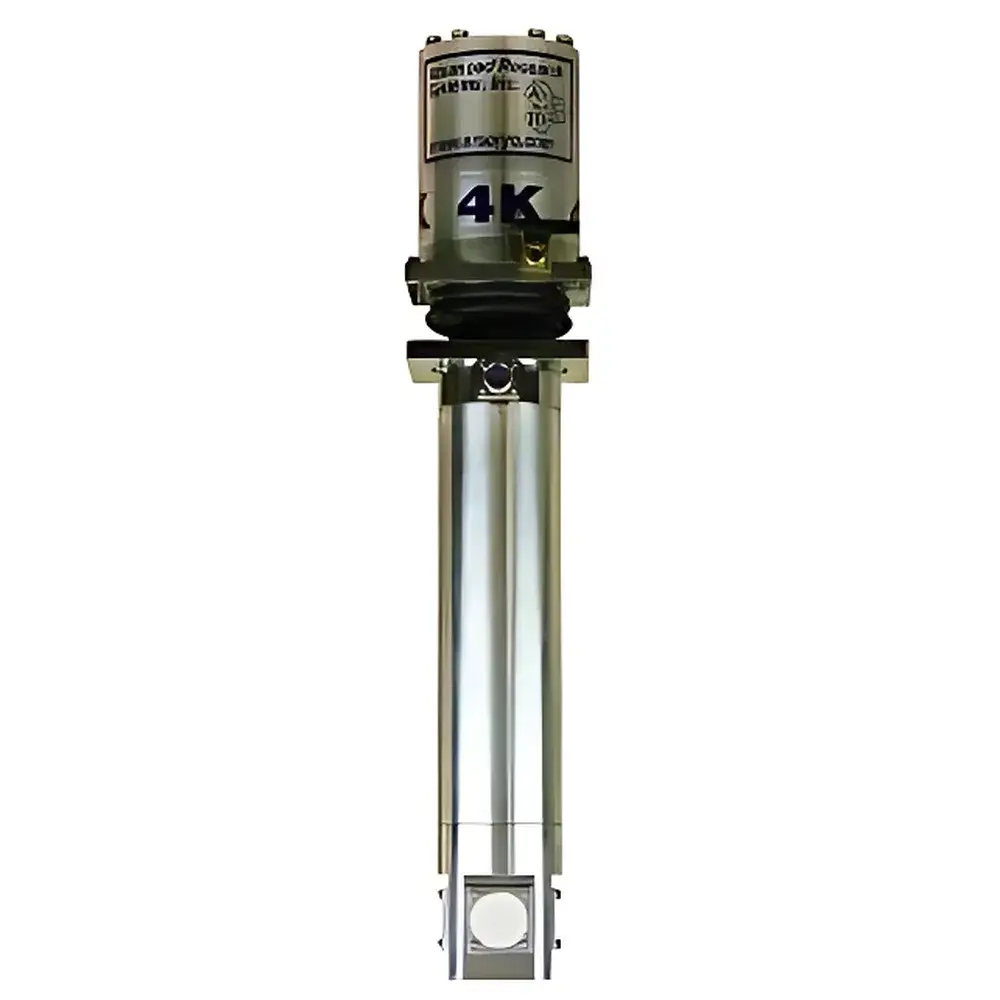
ARS X-20-2 Ultra-Low Vibration, Helium-Free Closed-Cycle Cryogenic Thermostat
| Brand | ARS |
|---|---|
| Origin | USA |
| Model | X-20-2 |
| Configuration | Vertical |
| Cooling Method | Closed-cycle mechanical refrigeration (no liquid helium required) |
| Temperature Range | 2.0 K to 350 K (typical base temperature ≤2.1 K) |
| Vibration Amplitude | <5 nm RMS (at sample stage, 1–100 Hz band) |
| Cooling Power | ≥15 mW at 2.2 K |
| Mounting Interface | Standard CF-63 or custom flange options |
Overview
The ARS X-20-2 is a vertically oriented, helium-free closed-cycle cryogenic thermostat engineered for experiments demanding ultra-low mechanical vibration, exceptional thermal stability, and long-term operational reliability. Unlike conventional liquid-helium cryostats or early-generation pulse-tube systems, the X-20-2 integrates a proprietary low-vibration cold-head design with optimized thermal anchoring, multi-stage passive damping, and rigid monolithic structural architecture. Its core cooling mechanism relies on a two-stage Gifford-McMahon (GM) or high-efficiency pulse-tube refrigerator—configured to minimize conductive and acoustic coupling to the sample stage. The system achieves a base temperature of ≤2.1 K under no-load conditions and maintains sub-millikelvin temperature stability over 24-hour periods when equipped with optional PID-controlled thermal regulation. Designed specifically for quantum-limited measurements, the X-20-2 eliminates the logistical, safety, and cost constraints associated with liquid cryogens while preserving the thermal and mechanical fidelity required for nanoscale spectroscopy and quantum coherence studies.
Key Features
- Helium-free operation: Eliminates dependency on liquid helium supply chains, reducing operational overhead and enabling continuous unattended operation.
- Ultra-low vibration performance: Sample-stage vibration amplitude <5 nm RMS across 1–100 Hz, verified via laser Doppler vibrometry per ISO 20816-1; critical for interferometric, scanning probe, and single-photon detection setups.
- Thermally isolated optical access: Eight radial optical ports (standard Ø25 mm, upgradable to Ø50 mm) with anti-reflection coated fused silica windows; transmission range: 200–2500 nm.
- Modular sample space: Interchangeable cold-finger configurations support diverse mounting schemes—including standard OFHC copper stages, gold-plated heat sinks, and customizable PCB-integrated platforms.
- Integrated thermal shielding: Three-stage radiation shields (40 K, 4 K, and 1 K), actively temperature-regulated to suppress radiative loading and improve cooldown efficiency.
- Comprehensive instrumentation interface: 12-channel analog I/O (±10 V, 16-bit resolution), RS-485 and Ethernet (TCP/IP) connectivity, and native support for LabVIEW™, Python (PyVISA), and MATLAB® drivers.
Sample Compatibility & Compliance
The X-20-2 accommodates samples ranging from sub-millimeter quantum emitters to 75-mm-diameter wafers, with maximum sample mass of 500 g. Its vacuum chamber meets ASTM E595 outgassing specifications (<1.0% TML, <0.1% CVCM), ensuring compatibility with UHV-compatible experimental environments (base pressure <5×10⁻⁸ Torr with turbomolecular pumping). All electrical feedthroughs comply with MIL-STD-202G for hermeticity and thermal cycling endurance. The system adheres to CE marking requirements (EMC Directive 2014/30/EU, Low Voltage Directive 2014/35/EU) and supports GLP/GMP-aligned audit trails when integrated with compliant data acquisition software. Optional features include magnetic shielding (μ-metal enclosure), RF filtering (DC–18 GHz), and bake-out capability (up to 150 °C).
Software & Data Management
The ARS CryoCommand™ control suite provides real-time monitoring of all thermal, vacuum, and mechanical subsystems—including cold-head status, stage temperature gradients, compressor oil pressure, and vibration spectral density (via optional accelerometer input). Data logging occurs at user-defined intervals (10 ms to 1 h resolution) with automatic timestamping and HDF5-compliant binary export. Audit-trail functionality satisfies FDA 21 CFR Part 11 requirements when deployed with network-authenticated user roles, electronic signatures, and immutable log archiving. Remote operation is supported via secure TLS-encrypted web interface or programmable API endpoints (RESTful JSON), enabling integration into automated test sequences and facility-wide cryogenic resource management platforms.
Applications
- Mössbauer spectroscopy: Stable platform for recoil-free nuclear resonance absorption requiring sub-nanometer positional integrity.
- Micro-Raman and micro-photoluminescence: Enables diffraction-limited spatial resolution and spectral linewidth preservation down to natural lifetime limits.
- Quantum dot and defect-center characterization: Supports optically detected magnetic resonance (ODMR) and Hanbury Brown–Twiss (HBT) correlation measurements under stable cryogenic bias.
- Magneto-optic Kerr effect (MOKE): Delivers field-cooled magnetization protocols with simultaneous optical access and <10 µrad angular drift.
- Ellipsometry and reflectance anisotropy spectroscopy: Maintains polarization fidelity through thermally invariant optical path lengths and minimized birefringence in cooled optics mounts.
- Nanoscale transport and scanning gate microscopy: Compatible with commercial SPM controllers and low-noise current preamplifiers (e.g., Femto DLPCA-200).
FAQ
What is the typical cooldown time from 300 K to 2.2 K?
Approximately 14–16 hours under standard vacuum and ambient conditions; accelerated cooldown options (e.g., precooling with LN₂ shroud) reduce this to ~8 hours.
Can the X-20-2 be integrated with existing UHV chambers?
Yes—standard CF-63 conflat flange interface enables direct mounting; custom flanges (CF-100, ISO-KF, or DN200) are available upon request.
Is remote diagnostics and firmware update supported?
Yes—firmware updates are delivered via encrypted HTTPS; diagnostic logs include compressor health metrics, cold-head cycle analysis, and thermal history snapshots.
Does the system meet ISO 14644-1 Class 5 cleanroom compatibility requirements?
The external housing and cabling meet ISO 14644-1 Class 5 particulate limits; internal chamber cleanliness depends on user-installed vacuum practices and bake-out protocol.
What third-party measurement standards does the temperature calibration trace to?
Primary calibration uses NIST-traceable ruthenium oxide (RuO₂) sensors and Cernox™ thermometers, certified per ISO/IEC 17025 by an ILAC-accredited calibration laboratory.



