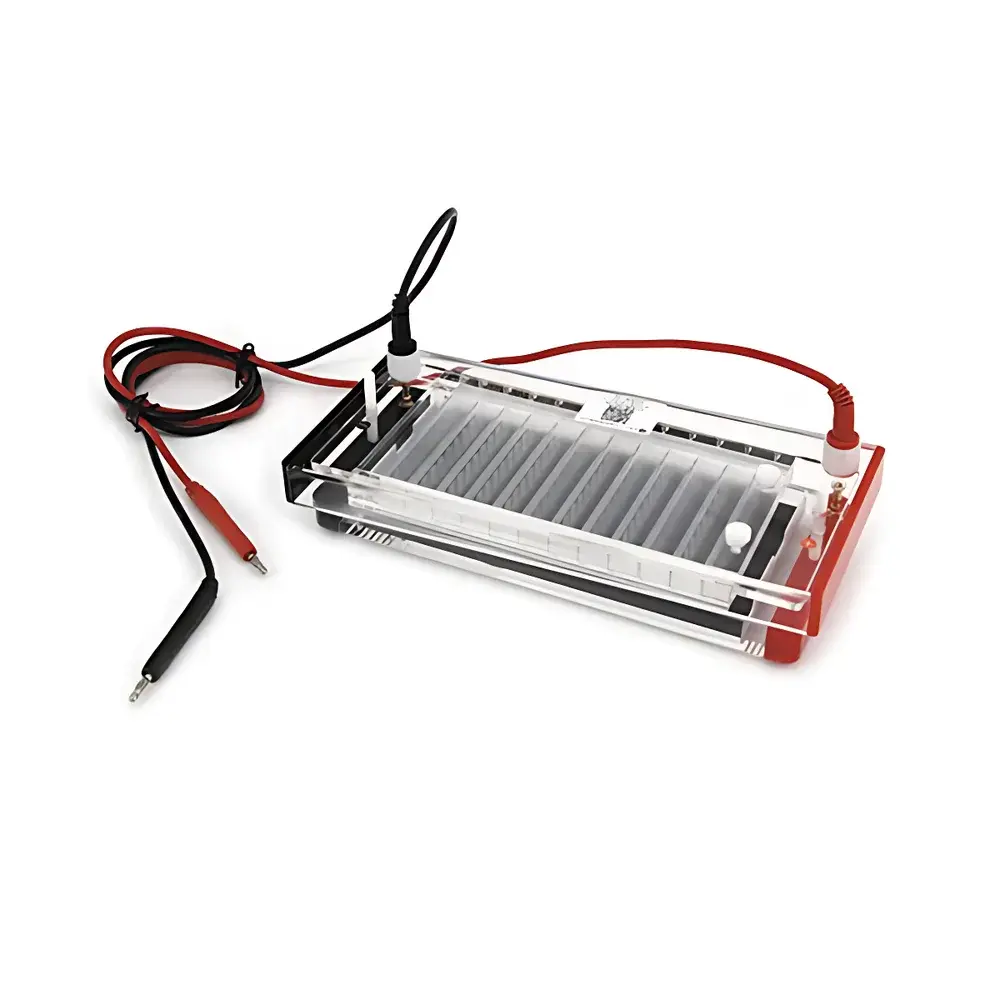
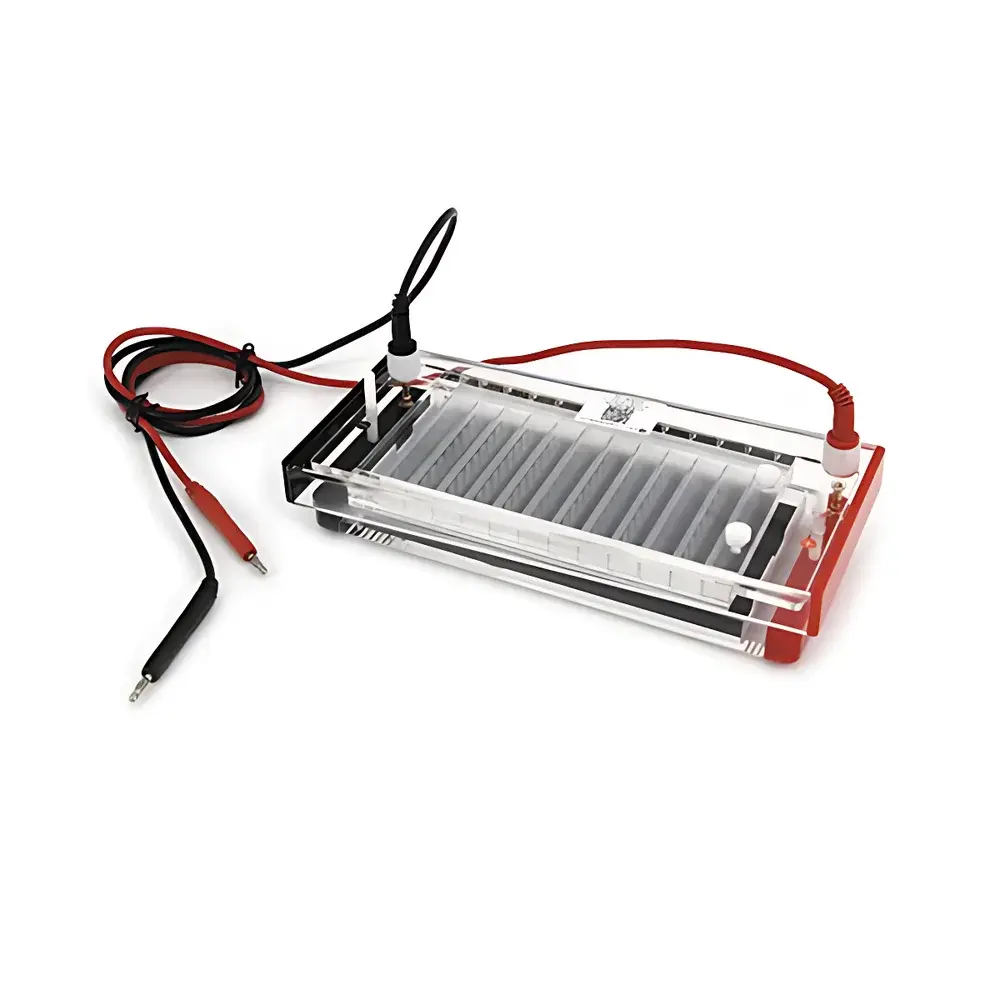
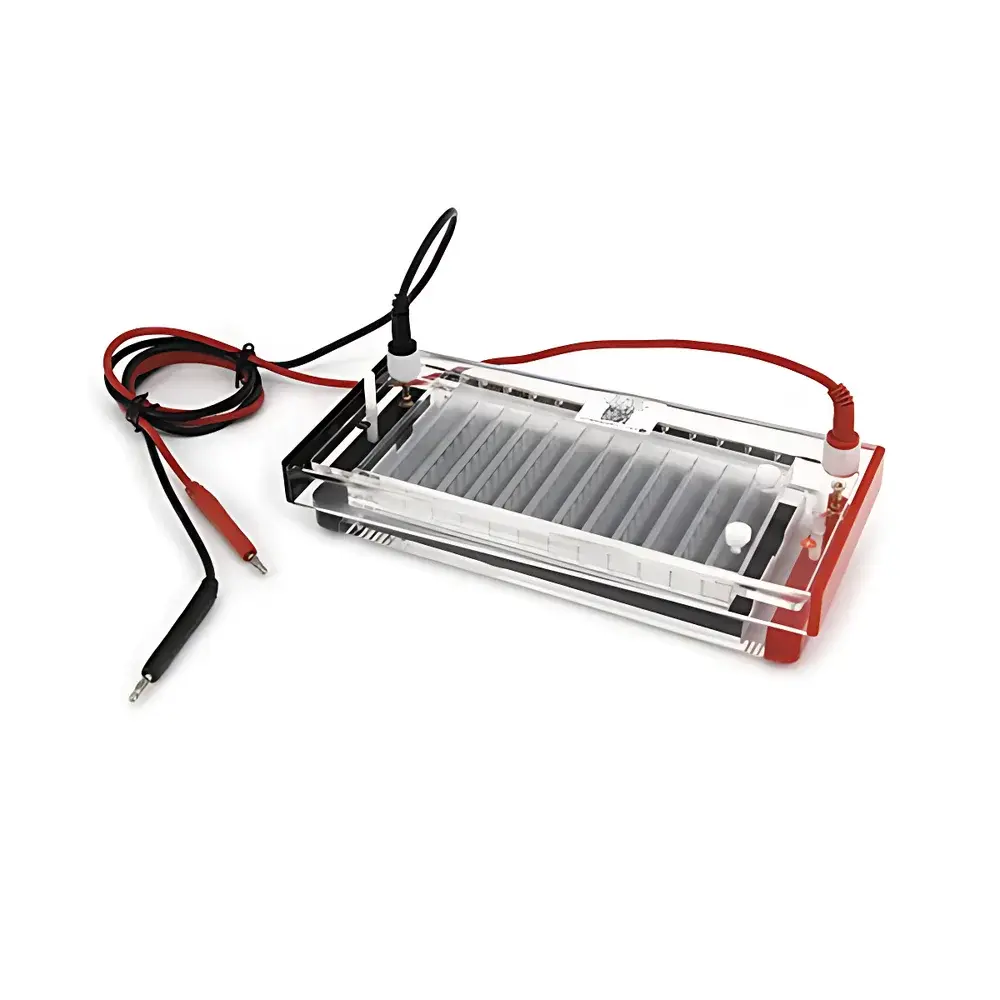
Beijing Liuyi DYCP-44N Fast Gel Electrophoresis Apparatus (Model 122-4480)
| Brand | Beijing Liuyi/LY |
|---|---|
| Origin | Beijing, China |
| Manufacturer Type | Authorized Distributor |
| Product Category | Domestic |
| Model No. | 122-4480 |
| Instrument Type | Nucleic Acid Electrophoresis System |
| Gel Tray Dimensions (L × W) | 200 × 100 mm |
| Sample Wells | 12 × (1+8-tooth combs), 1.5 mm thick |
| External Dimensions (L × W × H) | 260 × 110 × 70 mm |
| Buffer Capacity | 200 mL |
| Weight | 0.5 kg |
Overview
The Beijing Liuyi DYCP-44N Fast Gel Electrophoresis Apparatus (Model 122-4480) is a compact, benchtop nucleic acid electrophoresis system engineered for high-throughput DNA fragment separation and rapid analytical verification in molecular biology laboratories. Based on standard horizontal agarose or polyacrylamide gel electrophoresis principles, the instrument applies a uniform electric field across a submerged gel matrix to separate DNA fragments by molecular weight under controlled buffer conductivity and thermal dissipation conditions. Its optimized chamber geometry and low-profile design minimize buffer volume requirements while maintaining stable current distribution—critical for reproducible band resolution and reduced run time. The system is intended for routine use in PCR product analysis, restriction digest verification, plasmid screening, and genotyping workflows where speed, consistency, and ease of handling are prioritized over ultra-high-resolution applications.
Key Features
- Compact footprint (260 × 110 × 70 mm) with lightweight construction (0.5 kg), enabling flexible placement on crowded lab benches or transport between teaching labs and core facilities.
- Dedicated 200 × 100 mm gel tray accommodates standard mini-gel formats and supports both agarose (0.8–3.0%) and native/polyacrylamide (4–12%) matrices without modification.
- Twelve independent comb positions, each fitted with a (1+8)-tooth sample comb (1.5 mm thickness), allowing simultaneous loading of up to 96 samples per run when used with multichannel pipettes—ideal for high-density screening and educational demonstrations.
- Integrated dual-buffer reservoir design ensures uniform electrode contact and minimizes edge effects; total buffer capacity of 200 mL balances thermal stability with reagent economy.
- Modular component architecture includes removable upper lid, precision-machined gel casting frame, two reusable sealing bars, and twelve interchangeable combs—supporting long-term maintenance and protocol flexibility.
- Electrode terminals conform to standard DC power supply interfaces (e.g., 0–300 V, 0–500 mA), compatible with widely deployed laboratory power supplies meeting IEC 61010-1 safety requirements.
Sample Compatibility & Compliance
The DYCP-44N is validated for electrophoretic separation of double-stranded DNA fragments ranging from 50 bp to >20 kbp, depending on gel concentration and running conditions. It supports common nucleic acid staining protocols—including ethidium bromide, SYBR Safe, GelRed, and GelGreen—and is compatible with post-electrophoresis UV transillumination (254/302 nm) and blue-light imaging systems. While not certified to ISO/IEC 17025 or FDA 21 CFR Part 11, the apparatus meets general laboratory equipment safety standards referenced in GB/T 29875–2013 (Chinese national standard for electrophoresis apparatus) and aligns with fundamental operational expectations outlined in ASTM D5252–21 (Standard Guide for Electrophoretic Separation of Nucleic Acids). Its open architecture allows integration into GLP-compliant workflows when paired with validated power supplies, documentation procedures, and user training records.
Software & Data Management
As a standalone electrophoresis platform, the DYCP-44N does not incorporate embedded firmware or proprietary software. All operational parameters—including voltage, current, and run duration—are externally controlled via connected DC power supplies. Users are expected to record experimental metadata manually or within third-party laboratory information management systems (LIMS). For digital traceability, laboratories may pair the instrument with time-stamped imaging systems equipped with audit trail functionality (e.g., compliant with ALCOA+ principles), ensuring data integrity during regulatory review. No firmware updates, cloud connectivity, or remote diagnostics are supported.
Applications
- Routine verification of PCR amplification products prior to sequencing or cloning.
- Analysis of restriction enzyme digestion patterns for plasmid mapping and construct validation.
- Quality control of synthetic oligonucleotides and gene fragments.
- Teaching laboratory exercises in molecular genetics, biochemistry, and biotechnology curricula.
- Preliminary genotyping assays using co-dominant or dominant marker systems.
- Preparative gel excision for downstream enzymatic processing (e.g., gel extraction, ligation).
FAQ
What gel concentrations are recommended for optimal resolution with this unit?
Agarose gels between 0.8% and 2.0% are typically used for fragments >100 bp; polyacrylamide gels (8–10%) are suitable for resolving fragments <500 bp. Always validate concentration against expected fragment size range.
Can the DYCP-44N be used with TBE or TAE buffer systems?
Yes—both Tris-Borate-EDTA (TBE) and Tris-Acetate-EDTA (TAE) buffers are fully compatible. Use 1× working solutions; avoid excessive ionic strength to prevent overheating.
Is the apparatus suitable for RNA electrophoresis?
It can be used for denaturing RNA gels (e.g., formaldehyde-MOPS or urea-PAGE) provided appropriate gel preparation, buffer composition, and RNase-free handling practices are strictly followed.
Are replacement combs available separately?
Yes—combs with varying tooth counts and thicknesses (including 1.0 mm and 1.5 mm options) are available as consumables under catalog numbers 141-4421 and related variants.
Does the unit include safety interlocks or overcurrent protection?
No. Safety functions must be provided by the external power supply; users are advised to select units with built-in current limiting, voltage regulation, and thermal cutoff features.