
VISION Mantis Ergonomic Stereo Microscope
| Brand | VISION |
|---|---|
| Country of Origin | United Kingdom |
| Model | Mantis |
| Magnification Range | 3×–15× |
Overview
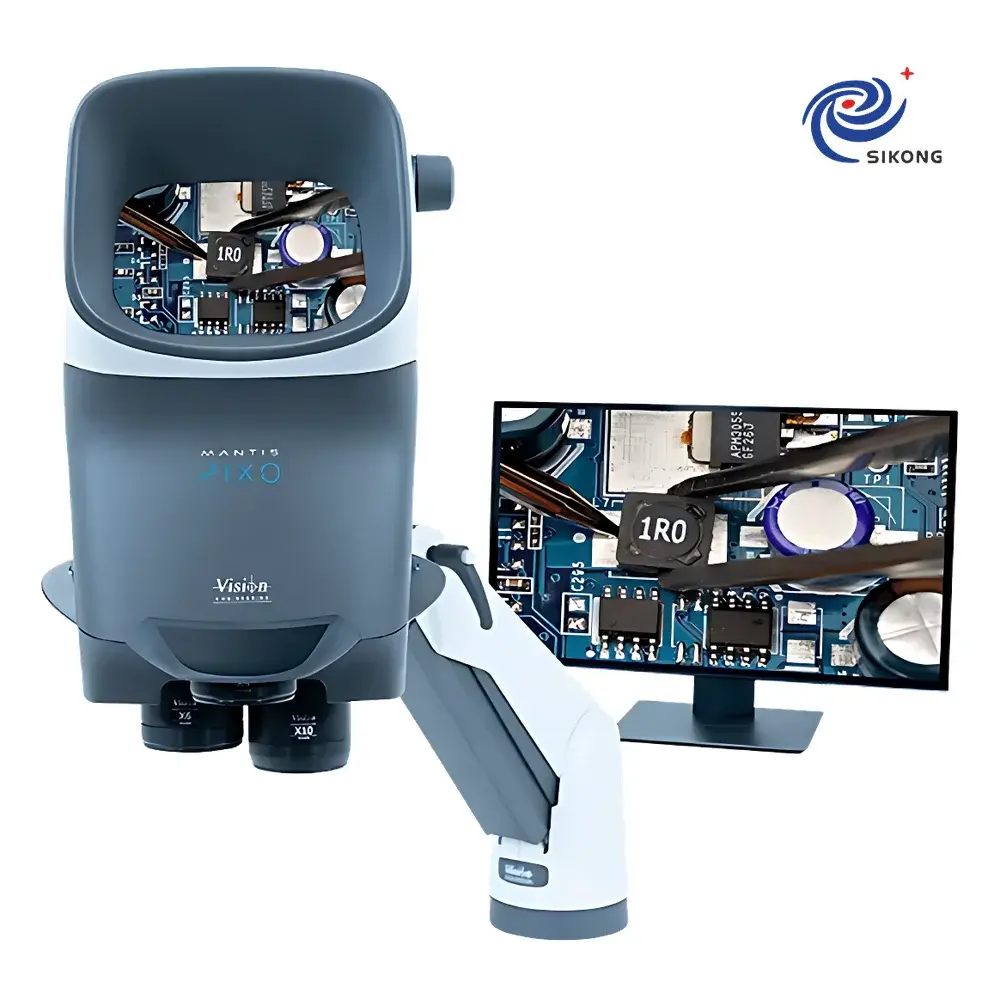
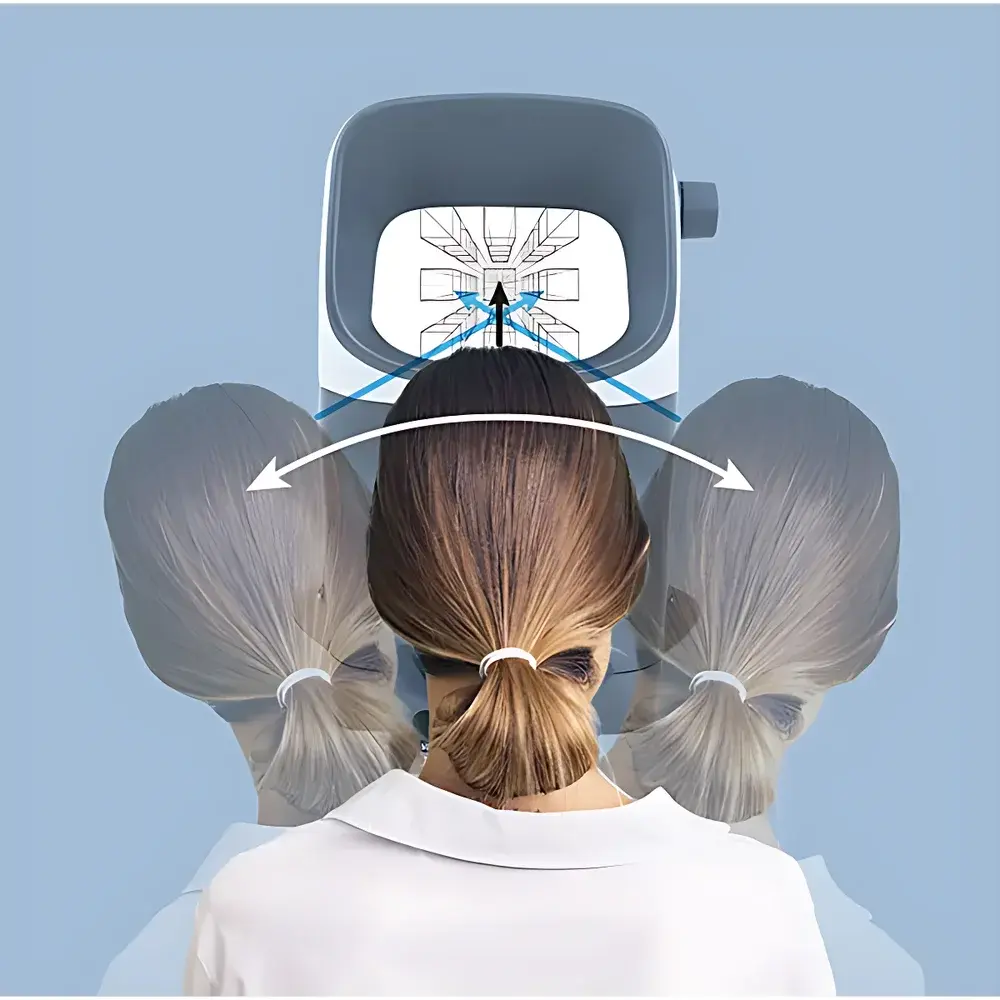
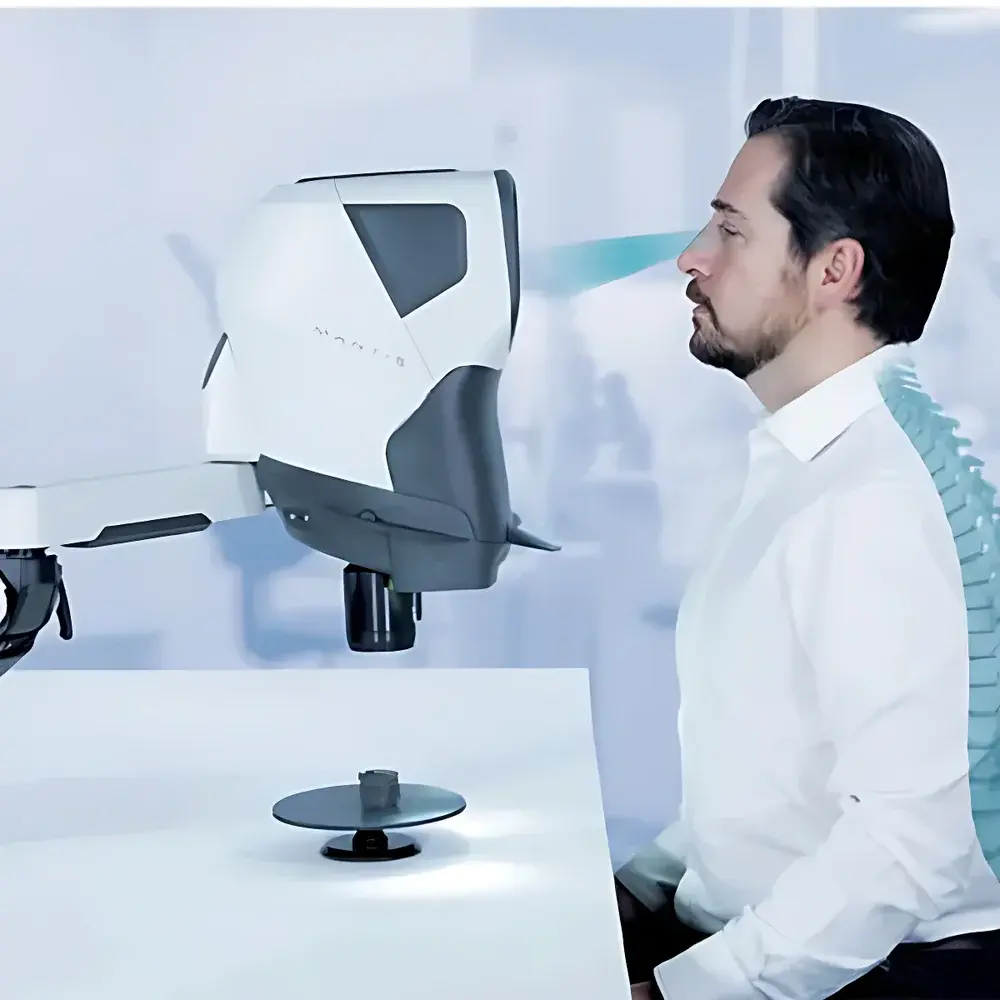
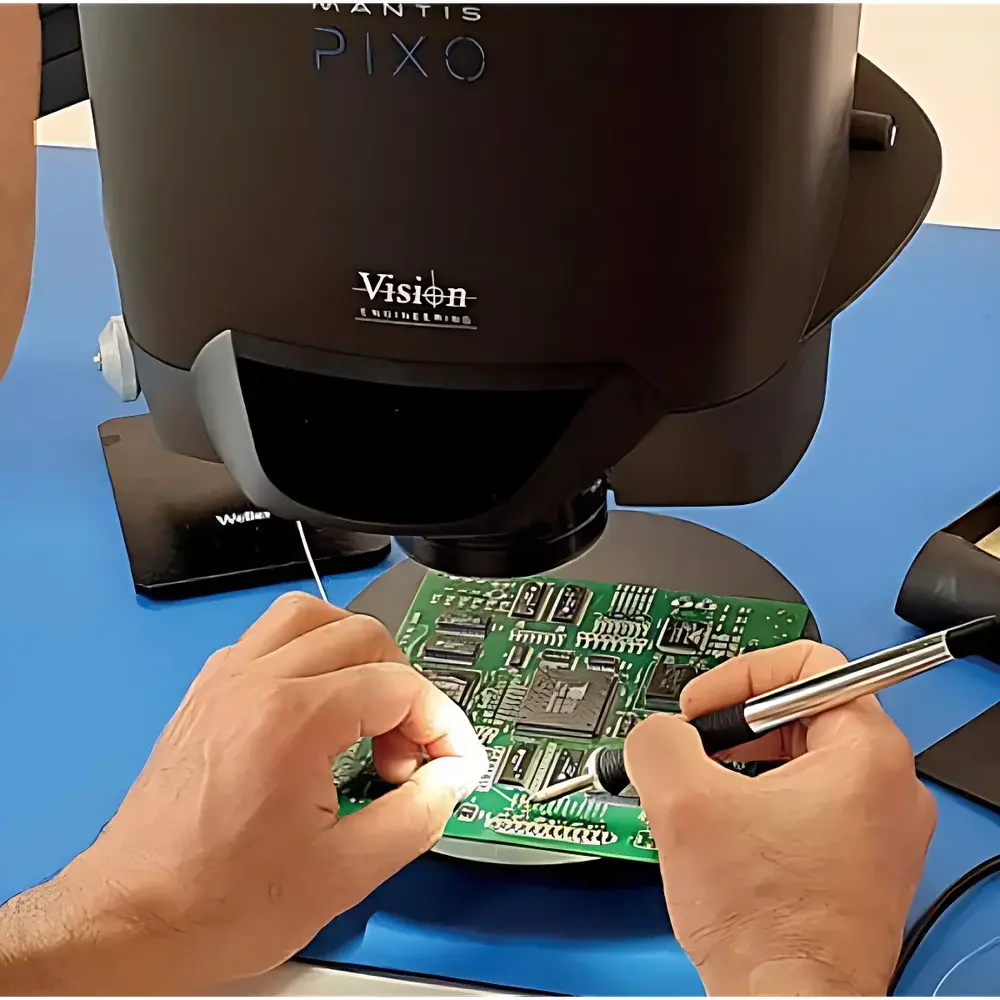
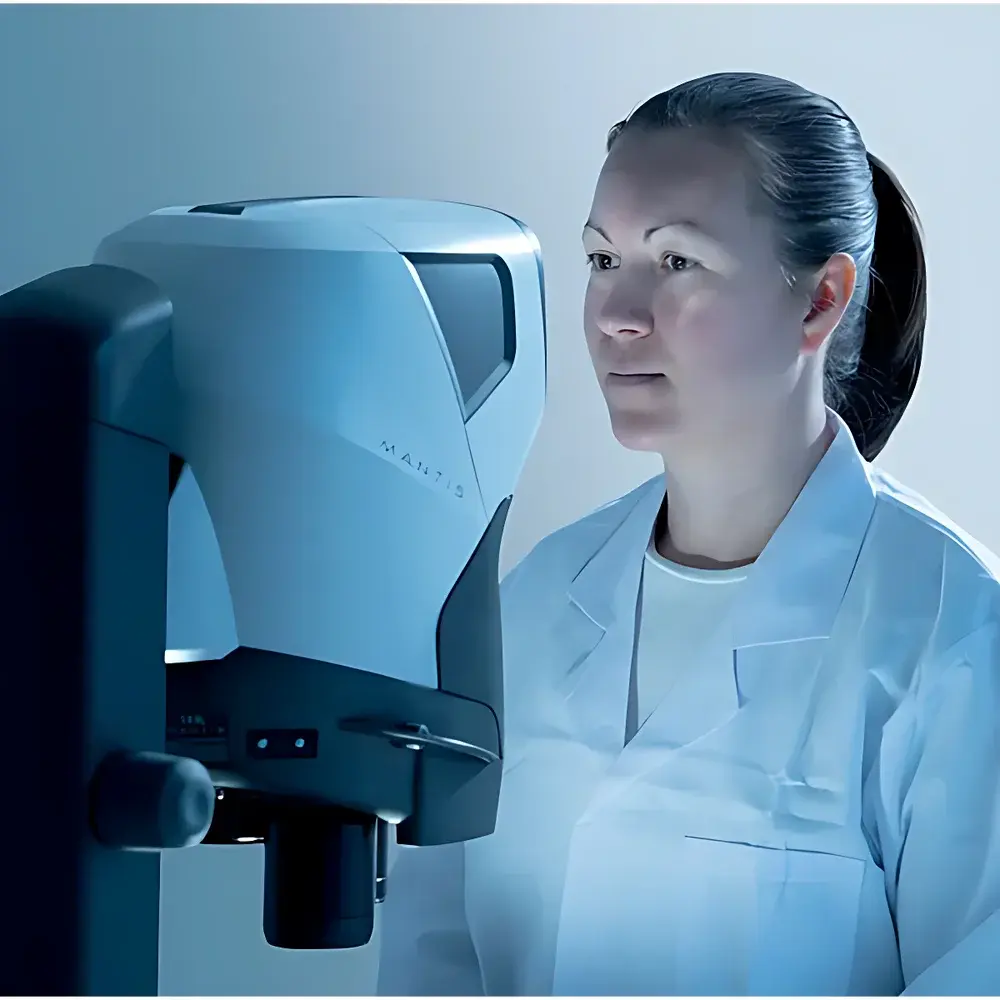
The VISION Mantis Ergonomic Stereo Microscope is an eyepiece-free, human-centered optical imaging platform engineered for precision visual inspection, manual manipulation, and quality assurance in regulated industrial and laboratory environments. Unlike conventional binocular stereo microscopes, the Mantis employs a patented Dynamic Viewing Optics (DVO) system that projects a high-fidelity, real-time stereoscopic image directly onto the user’s retina—without oculars—enabling natural head movement, extended working posture sustainability, and full peripheral vision retention. Its optical architecture is based on coaxial and off-axis dual-path illumination combined with high-NA, multi-coated achromatic objectives, delivering consistent 3D depth perception, exceptional contrast, and resolution across its 3×–15× magnification range. Designed for first-article inspection (FAI), PCB rework, medical device assembly, and life science sample handling, the Mantis eliminates visual fatigue associated with fixed-head positioning and repeated accommodation—critical for operators performing repetitive, high-focus tasks over extended shifts.
Key Features
- Eyepiece-free optical design with expanded pupil zone (EPZ) technology—enables comfortable viewing while wearing prescription glasses or safety goggles without image degradation or vignetting.
- Dynamic Viewing Optics (DVO): Stereoscopic perspective updates in real time as the user moves their head, revealing topography, sidewall features, and spatial relationships inaccessible to static-view systems.
- Integrated PIXO HD digital camera with live streaming, annotation, measurement overlay, and export-compatible file formats (TIFF, JPEG, AVI).
- Three-position objective turret supporting rapid, tool-free magnification switching between 3×, 7.5×, and 15×—each lens optimized for Mantis-specific optical path alignment and field flatness.
- Five programmable illumination modes: adjustable top-ring LED array (with independent left/right control), transmitted base lighting, coaxial incident light, UV/white toggle illumination (365 nm / 450 nm), and pseudo-darkfield contrast enhancement module.
- Ergonomic workstation integration: compatible with Stabila articulated arms, vibration-dampened bases, laminar flow hoods, and ISO Class 5 cleanroom environments.
Sample Compatibility & Compliance
The Mantis accommodates a broad spectrum of sample types—from opaque SMT solder joints and metallic machined components to translucent polymer seals, biological tissues, and fluorescent-labeled specimens. Its long working distance (standard LWD ≥ 120 mm; SLWD options up to 220 mm) supports hands-on manipulation using tweezers, probes, or micro-surgical tools under direct visual guidance. The system meets essential regulatory benchmarks for use in GMP-compliant manufacturing and GLP-aligned laboratories: electromagnetic compatibility per EN 61000-6-3, electrical safety per IEC 61010-1, usability engineering requirements per IEC 62366-1, and biocompatibility validation per ISO 10993-1 for materials in contact with medical devices. Optional audit-trail-enabled software modules support 21 CFR Part 11 compliance for electronic records and signatures in FDA-regulated workflows.
Software & Data Management
Mantis Control Suite provides intuitive, role-based interface navigation with minimal training overhead. Core functions include real-time image capture, geometric measurement (distance, angle, area), calibration traceability (NIST-traceable reference standards), annotation layers, and side-by-side comparison against golden templates or CAD overlays. Image metadata—including timestamp, operator ID, magnification, illumination mode, and objective selection—is embedded automatically. Exported data conforms to DICOM-SR, PDF/A-2, and CSV formats for integration into LIMS, MES, and QMS platforms. Optional cloud-sync capability enables secure cross-site collaboration and remote expert review without compromising data sovereignty.
Applications
- Electronics Manufacturing: FAI of PCB assemblies, solder joint integrity verification, micro-component placement validation, and rework under dynamic 3D visualization—reducing misalignment errors and thermal stress during repair.
- Precision Engineering: Surface defect detection on anodized or hardened alloys, burr removal guidance, thread inspection, and dimensional verification of micron-tolerance mechanical parts.
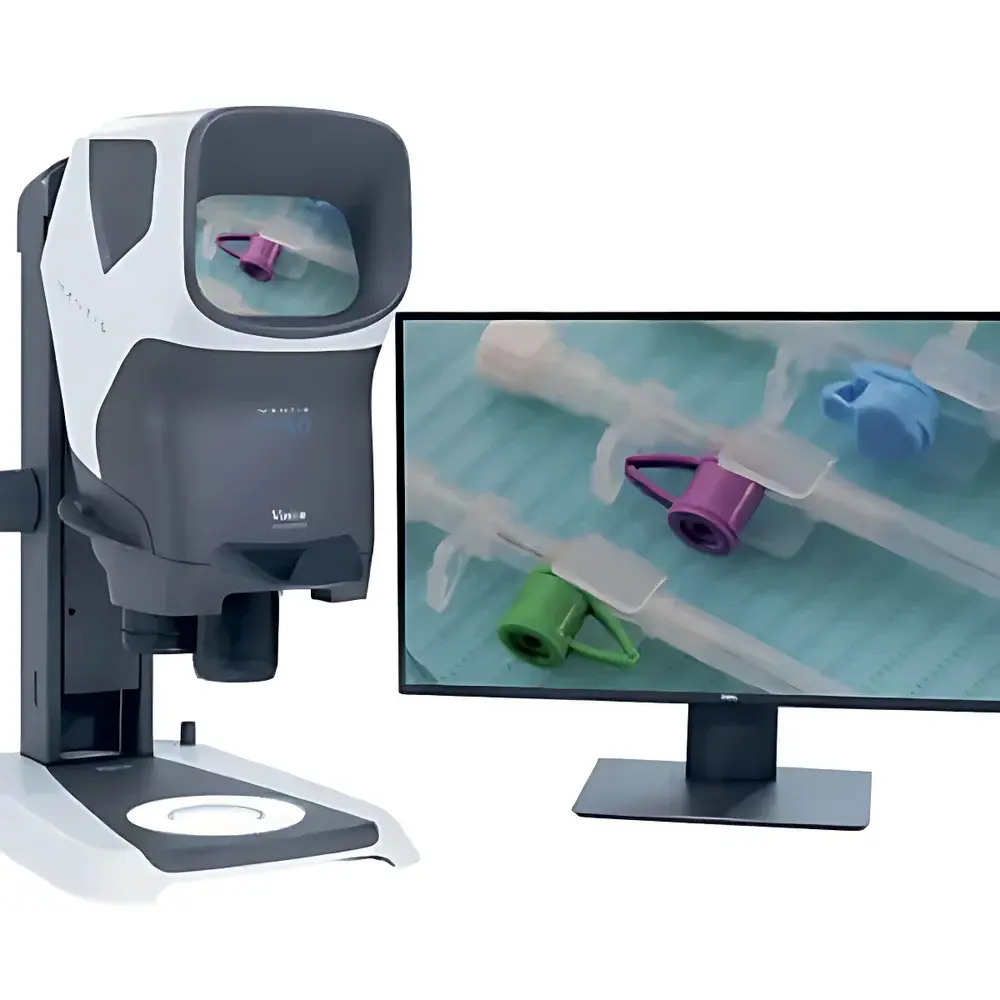
- Medical Device Production: Visual inspection of catheter tip integrity, stent strut uniformity, laser-weld seam continuity, and coating thickness consistency—per ASTM F2457 and ISO 13485 requirements.
- Life Sciences & Histology: Dissection assistance, embryo handling, microinjection setup, and fluorescence-guided tissue sectioning—all while maintaining sterility in biosafety cabinets.
- Dental & Jewelry Fabrication: Shade-matching of restorative composites, gemstone facet alignment, and micro-engraving verification using UV-excited fluorescence markers.
FAQ
Does the Mantis require regular optical recalibration?
No—its fixed optical path and factory-aligned DVO engine eliminate drift-related recalibration needs. Annual performance verification using NIST-traceable resolution targets is recommended for ISO/IEC 17025-accredited labs.
Can the Mantis be integrated into automated inspection workflows?
Yes—via GigE Vision-compliant SDK and GenICam protocol support, enabling synchronization with motion stages, robotic handlers, and AOI software suites.
Is UV illumination suitable for routine use with biological samples?
The 365 nm UV mode is filtered to minimize phototoxicity and complies with IEC 62471 Photobiological Safety standards for Group 1 (exempt) exposure limits under typical operating durations.
How does the Mantis compare to traditional stereo microscopes in terms of depth of field?
At equivalent magnification, Mantis delivers up to 2.3× greater usable depth of field due to its telecentric relay optics and optimized focal plane stacking—particularly advantageous for stepped or layered specimens.
What documentation is provided for regulatory submissions?
VISION supplies a complete Technical Construction File (TCF), Declaration of Conformity (DoC), Risk Management Report (per ISO 14971), and Usability Validation Report—available upon request for audit preparation.




