
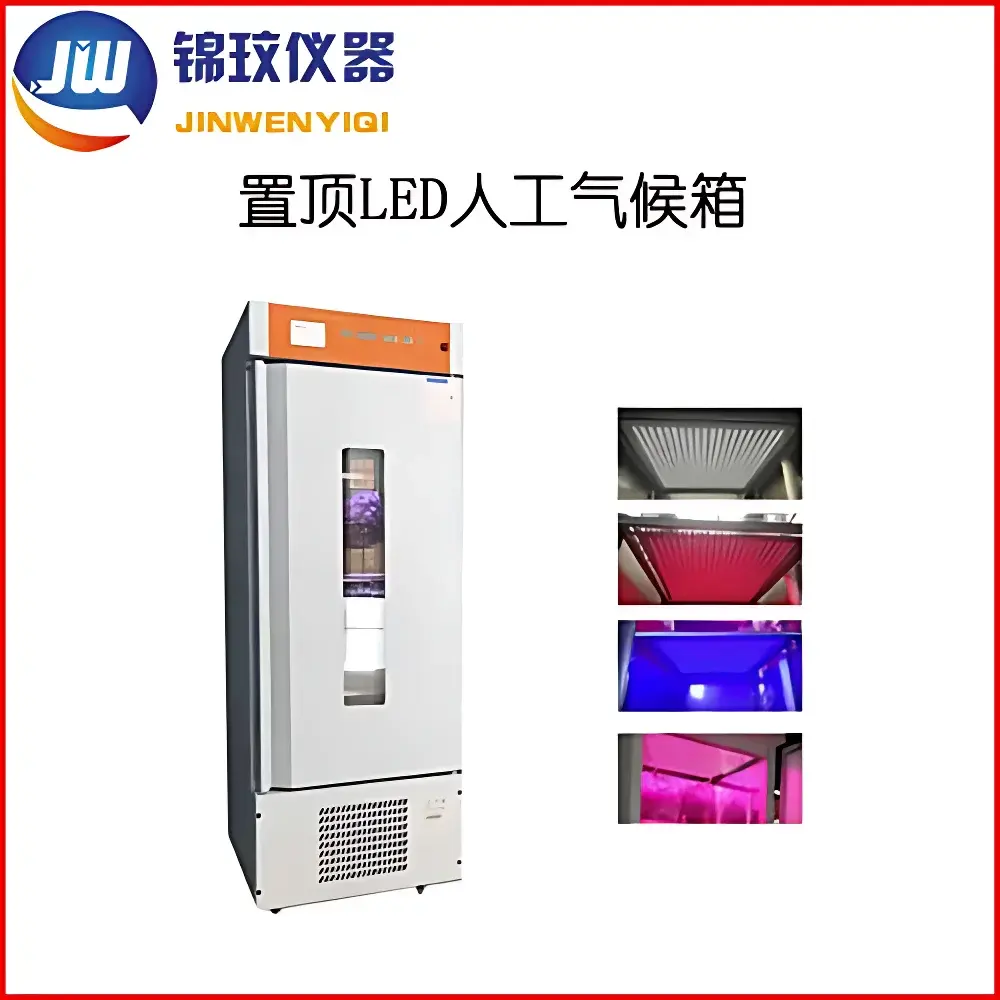
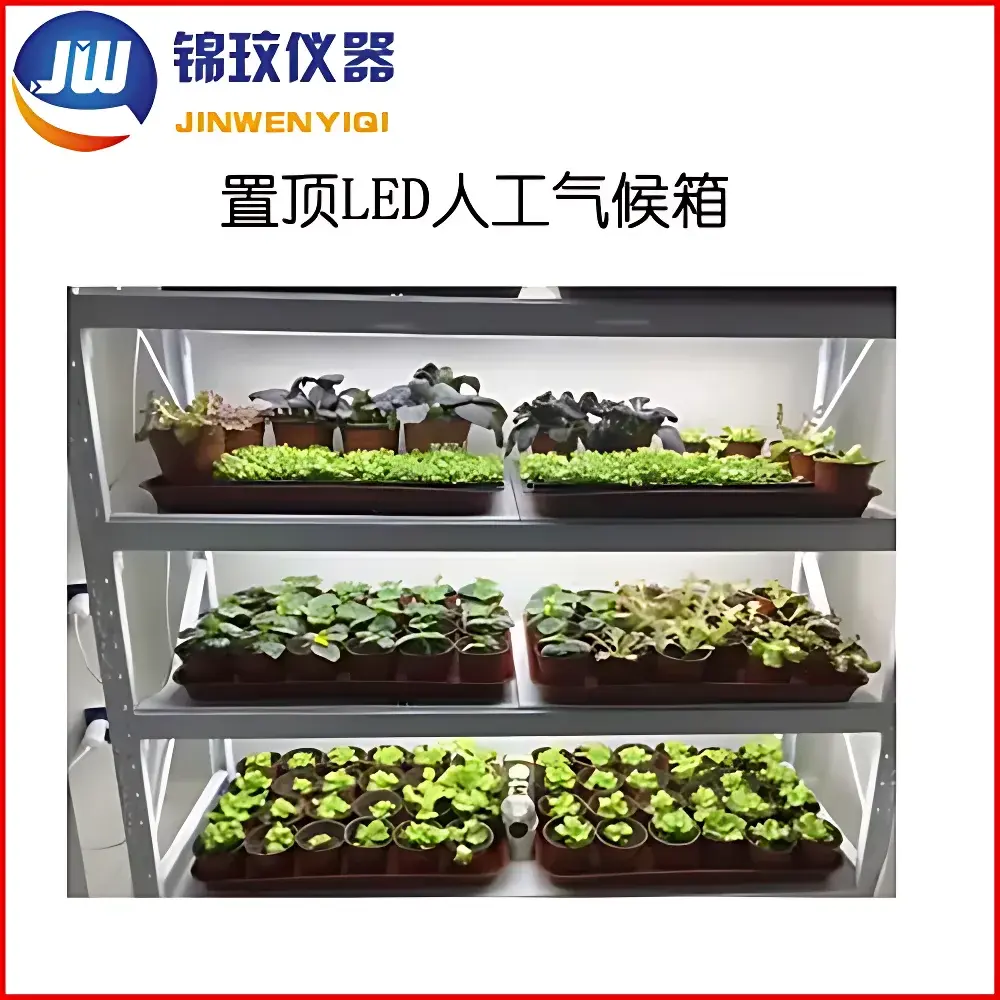
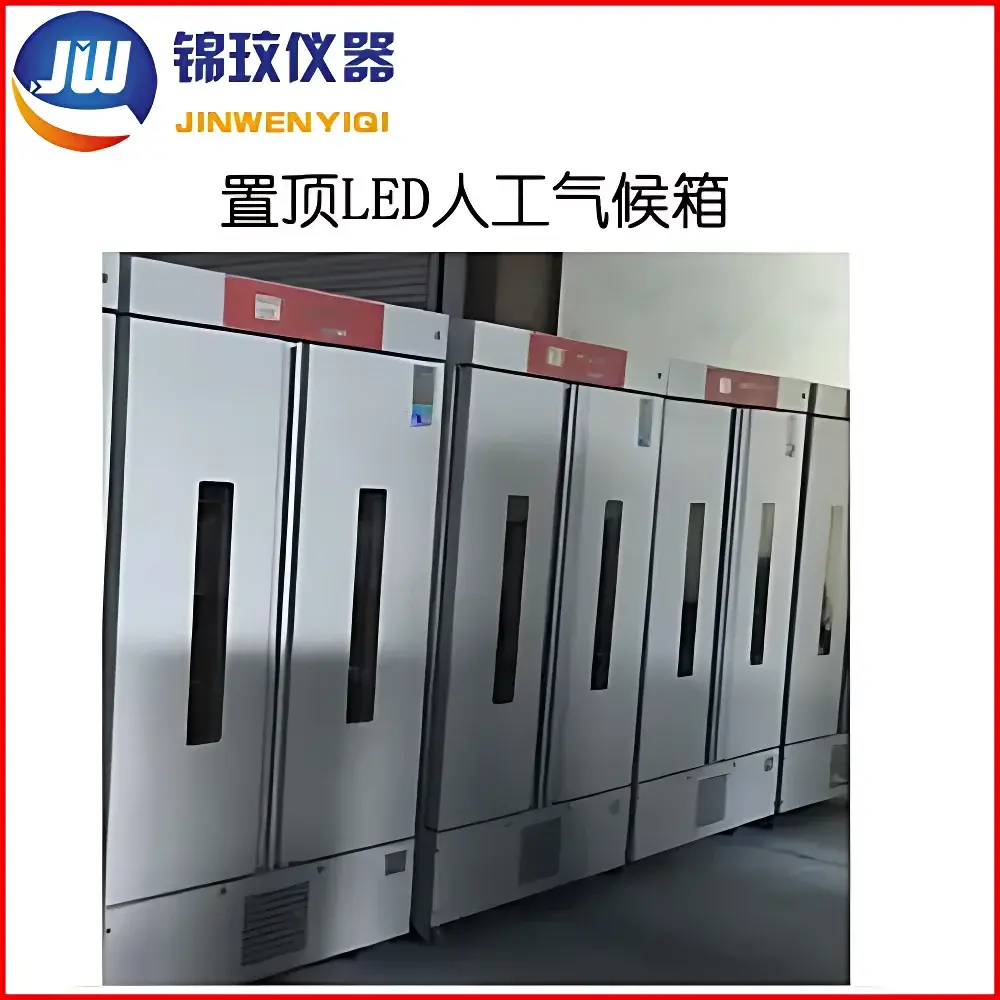
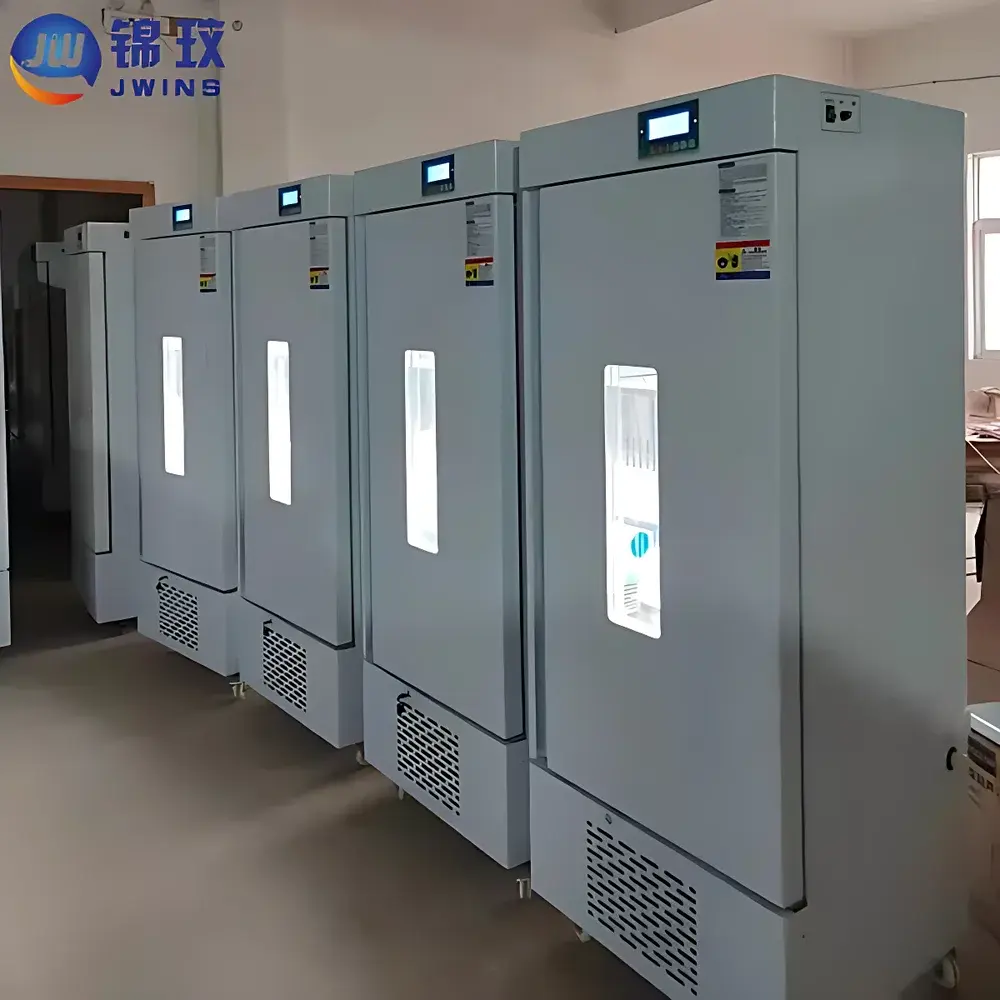
JWINS JMRC-450B-LED LED-Powered Plant Growth Chamber
| Brand | JWINS |
|---|---|
| Origin | Shanghai, China |
| Manufacturer Type | Direct Manufacturer |
| Product Origin | Domestic (China) |
| Model | JMRC-450B-LED |
| Illumination Method | Shelf-Mounted LED Array |
| Light Source | High-Efficiency SMD LED Modules |
| Spectral Range | Visible Spectrum (400–700 nm PAR) |
| Temperature Control Range | 0–50 °C |
| Temperature Fluctuation | ±0.5–1.0 °C |
| Temperature Uniformity | ±0.5 °C |
| Humidity Range | 50–95% RH |
| Illuminance Range | 0–12,000 lux |
| Dimming Method | Continuous (0–100%) Analog/PWM Control |
| Chamber Volume | 450 L |
| External Dimensions | 720 × 670 × 1920 mm |
Overview
The JWINS JMRC-450B-LED is a fourth-generation, microprocessor-controlled plant growth chamber engineered for precise regulation of temperature, relative humidity, and photosynthetically active radiation (PAR). Unlike conventional incandescent or fluorescent growth chambers, this system employs a modular, shelf-integrated LED illumination architecture optimized for photobiological research and controlled-environment agriculture. Its core measurement and control principle relies on closed-loop feedback regulation of Peltier-assisted cooling, resistive heating, ultrasonic humidification, and pulse-width modulated (PWM) LED driver circuits—enabling stable, reproducible environmental profiles across extended operational cycles. Designed specifically for plant morphogenesis, photomorphogenic signaling, tissue culture, seed germination, and physiological stress response studies, the JMRC-450B-LED complies with fundamental requirements outlined in ISO 17025-accredited laboratory practice and supports experimental protocols aligned with ASTM E1311 (Standard Practice for Environmental Chambers Used in Biological Testing) and OECD 208 (Terrestrial Plant Test Guidelines).
Key Features
- Shelf-mounted, replaceable LED light panels featuring independently controllable red (620 nm) and blue (460 nm) diodes—optimized for chlorophyll absorption peaks and phytochrome activation.
- High-efficiency thermal management: Low-heat LED arrays generate <1.2 W/m² radiant heat flux at full output, minimizing convective interference with temperature uniformity.
- Precision climate control: Dual-sensor PID algorithm maintains temperature stability within ±0.5 °C (uniformity) and humidity within ±5–7% RH across all shelves.
- Programmable 30-segment cycle controller (optional): Each segment supports independent setpoints for temperature, humidity, light intensity, and duration (1–99 hours per segment).
- Stainless steel mirror-finish interior (AISI 304), radius-cornered construction, and tool-free adjustable shelving for optimal spatial flexibility and contamination control.
- Energy-efficient architecture: Integrated polyurethane foam insulation (≥60 mm thickness), R134a refrigerant compressor, and LED efficacy >120 lm/W reduce power consumption by ~80% versus halogen-based systems.
- Dual-mode operation: Light panels may be decoupled from climate control—enabling standalone use as an illuminated incubation platform when ambient lab conditions meet experimental requirements.
Sample Compatibility & Compliance
The JMRC-450B-LED accommodates standard tissue culture vessels (e.g., Petri dishes, Magenta boxes, multi-well plates), hydroponic trays, small-scale potting systems (up to 15 cm diameter), and insect rearing cages. Its internal geometry supports vertical stacking of up to two fully illuminated shelves with ≥300 mm inter-shelf clearance—adjustable via telescoping support rails. The chamber meets structural and electrical safety standards per GB 4793.1–2007 (IEC 61010-1 equivalent) and includes optional over-temperature cutoff (independent of main controller) compliant with IEC 60335-1. Humidity control performance adheres to ISO 8573-4 for compressed air–free humidification systems. For GLP-regulated studies, optional RS485 interface enables audit-trail-capable data logging compatible with 21 CFR Part 11–compliant software platforms.
Software & Data Management
The embedded controller provides real-time display of current and setpoint values for temperature, humidity, and illuminance on a backlit LCD interface. Optional RS485 serial communication permits integration with third-party SCADA systems or custom Python/LabVIEW acquisition scripts. Logged parameters include timestamped 1-minute interval records of chamber status, alarm events (e.g., sensor fault, door open, limit exceedance), and cumulative LED operating hours. Data export is supported in CSV format via USB flash drive (not included). Firmware supports user-defined calibration offsets for temperature and humidity sensors—traceable to NIST-traceable reference standards upon request.
Applications
- Photobiology: Quantitative analysis of phototropism, de-etiolation, shade avoidance, and circadian entrainment under spectrally defined lighting regimes.
- Plant tissue culture: Sterile propagation of model species (Arabidopsis, rice, tobacco) and horticultural crops under optimized PAR distribution.
- Seed viability and germination assays: Standardized testing per ISTA Rules (International Seed Testing Association) under controlled thermo-hygrometric conditions.
- Microbial and algal cultivation: Support for photoautotrophic strains requiring defined light spectra and CO₂ supplementation (via optional inlet port).
- Environmental stress simulation: Gradual ramping of temperature/humidity gradients to assess drought, heat, or chilling tolerance phenotypes.
- Preclinical material aging: Accelerated exposure testing of pharmaceutical excipients, botanical extracts, and biodegradable polymers under photostable, low-thermal-load conditions.
FAQ
What spectral composition does the standard LED array provide?
The default configuration delivers peak irradiance at 460 nm (blue) and 620 nm (red), with a combined photosynthetic photon flux density (PPFD) range of 0–350 µmol·m⁻²·s⁻¹ at shelf level (measured at 15 cm distance). Custom spectral blends—including far-red (730 nm), UV-A (385 nm), or white (4000 K CCT) modules—are available as factory-installed options.
Is CO₂ enrichment supported?
Yes—an optional 6 mm stainless steel CO₂ inlet port is provided on the rear panel, compatible with external infrared CO₂ controllers (e.g., Vaisala CARBOCAP®) and mass flow regulators. Integration requires separate calibration and validation per ISO 14644-3 for gaseous environment control.
Can the unit operate continuously for >30 days without maintenance?
Yes—under nominal load (25 °C, 60% RH, 5000 lux), the system demonstrates >99.2% uptime over 720-hour continuous operation tests per IEC 60068-2-64. Compressor duty cycle remains <45%, and LED driver thermal rise stays below 35 K above ambient.
How is light uniformity validated across the chamber volume?
Each unit undergoes factory photometric mapping using a calibrated cosine-corrected silicon photodiode sensor (NIST-traceable, ±2% uncertainty) at 25 spatial points per shelf. Uniformity is reported as coefficient of variation (CV) ≤8% across usable working area (defined per ISO/IEC 17025 clause 7.8.2).
What regulatory documentation is supplied with the instrument?
Standard delivery includes Declaration of Conformity (CE-marking per 2014/30/EU EMC Directive and 2014/35/EU LVD), Factory Calibration Report (temperature/humidity/light), User Manual (EN/ISO 20607-compliant), and Maintenance Logbook template aligned with ISO/IEC 17025 Clause 8.9.




