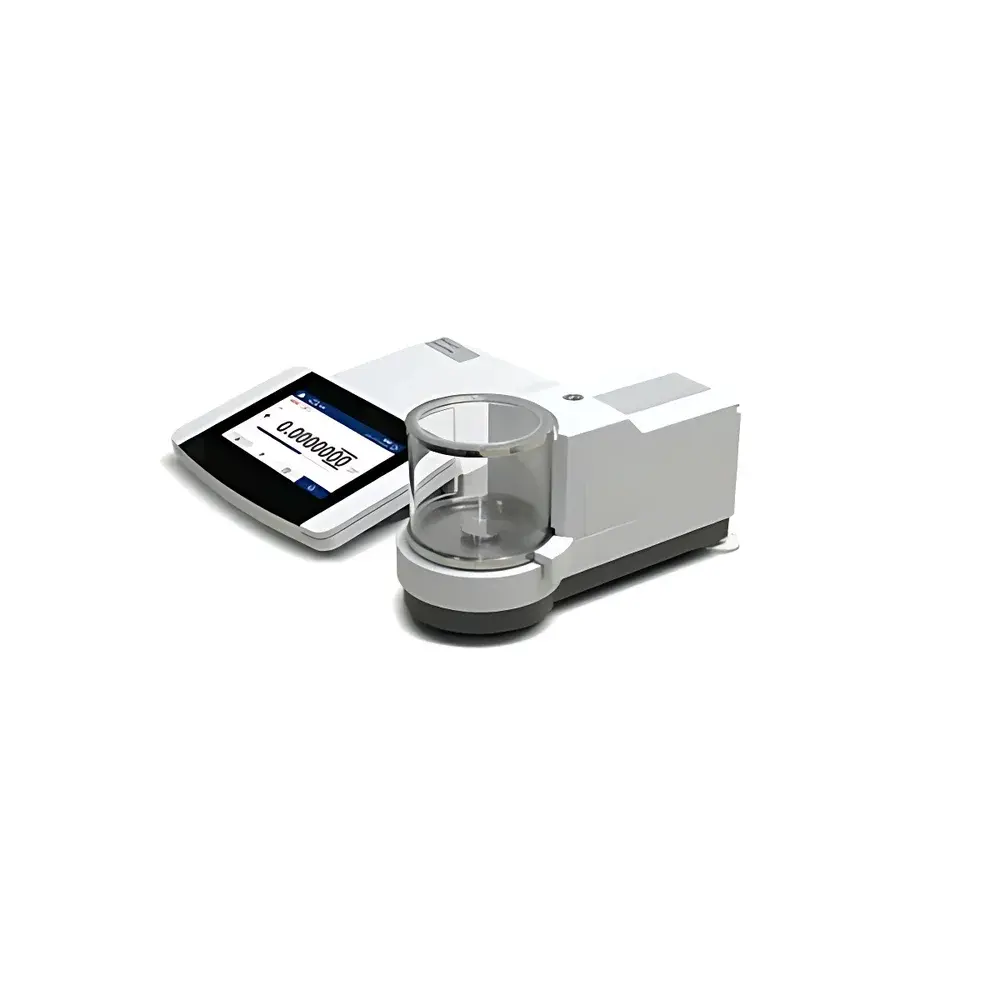
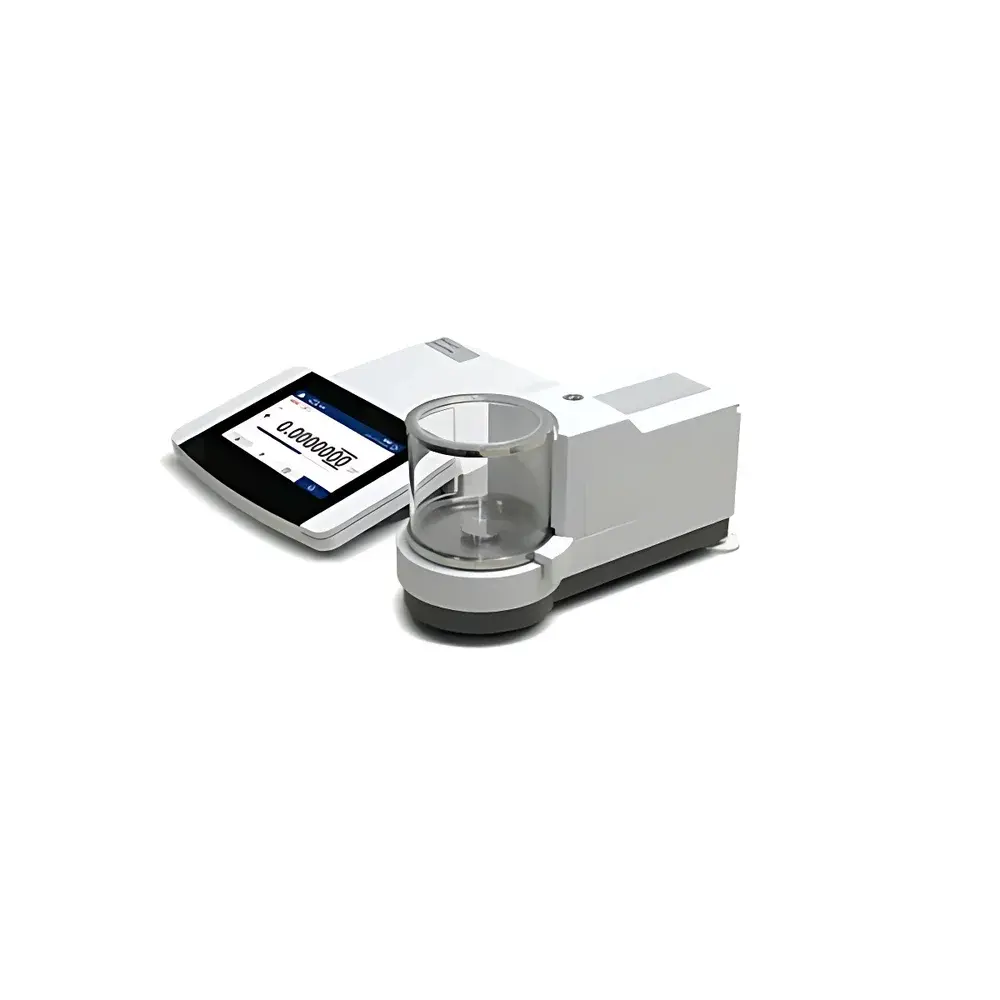
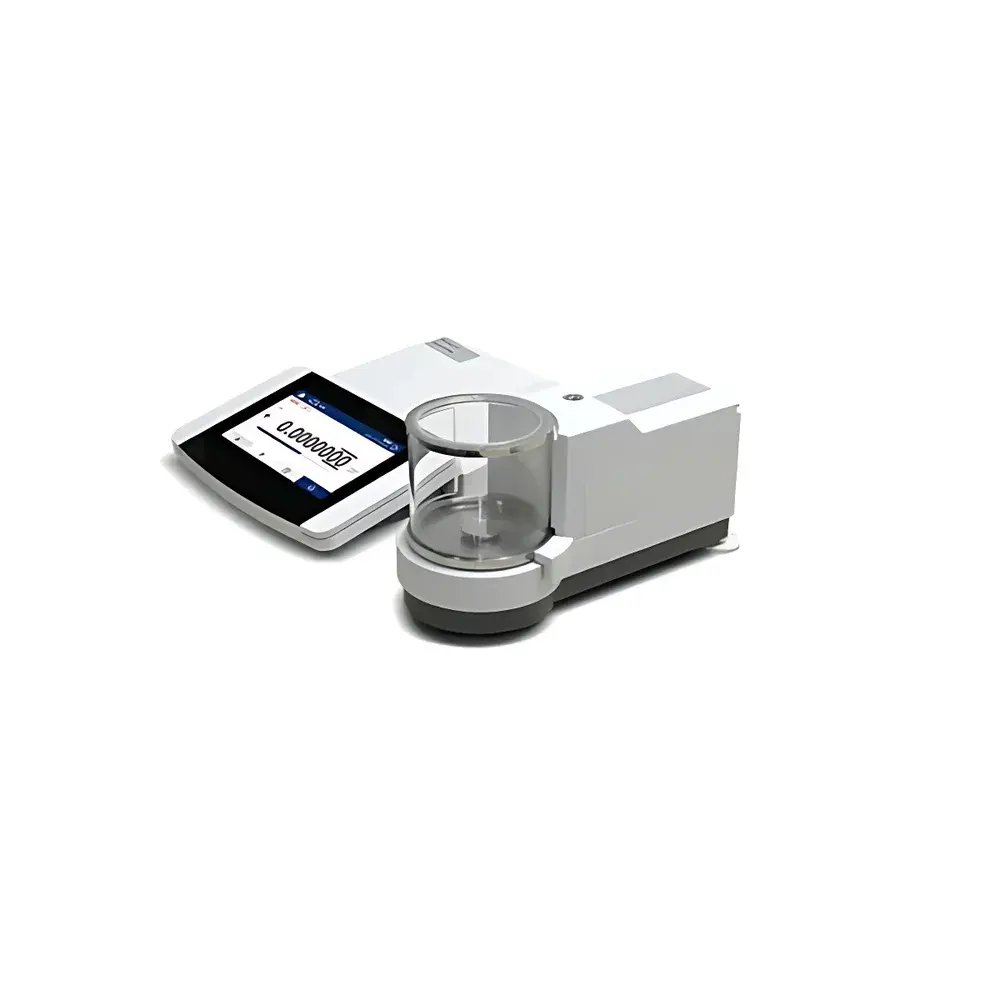
D&TC XE2.7S Ultra-Micro Balance
| Brand | D&T |
|---|---|
| Origin | Tianjin, China |
| Manufacturer Type | Authorized Distributor |
| Regional Classification | Domestic (China) |
| Model | XE2.7S |
| Instrument Type | Ultra-Micro Balance |
| Maximum Capacity | 2.1 g |
| Readability | 0.1 µg |
| Accuracy Class | Class I (per EU Directive 2014/31/EU) |
| Verification Scale Interval (e) | 1 µg |
| Minimum Weight (USP <41>) | 0.82 mg (recommended), 1.3 mg (typical) |
| Sensitivity Drift | 5 ppm/K (10–30 °C) |
| Tare Range | <100% of max capacity |
| Calibration | Internal (IsoCAL™ automatic temperature- and time-controlled calibration) |
| Stabilization Time | 8 s (typical) |
| Measurement Time | 12 s (typical) |
| Pan Diameter | Ø30 mm |
| Chamber Height | 80 mm |
| Dimensions (L×W×H) | 90 mm × 295 mm × 150 mm |
| Net Weight | ~4.7 kg |
| Operating Environment | 18–23 °C, 50–75% RH, temp. drift ≤1 °C/h |
| Power Supply | 100–240 VAC, 50/60 Hz, 0.5–1.0 A |
| Compliance | FDA 21 CFR Part 11 (ALCOA+ principles), GLP/GMP data integrity, OIML R111-1 E1 external calibration standard |
Overview
The D&TC XE2.7S Ultra-Micro Balance is an engineered precision instrument designed for laboratories requiring trace-level mass determination with metrological rigor. Utilizing a monolithic electromagnetic force compensation sensor architecture—distinct from conventional strain-gauge or dual-pan designs—the XE2.7S achieves true ultra-micro readability of 0.1 µg across its 2.1 g maximum capacity. This sensor design eliminates mechanical hysteresis and thermal lag, enabling high reproducibility in dynamic weighing environments where air currents, electrostatic interference, and thermal gradients pose critical challenges. The balance operates on the principle of electromagnetic force restoration: sample mass displaces a precisely suspended coil within a permanent magnetic field; feedback electronics generate a counteracting current to restore equilibrium, with mass derived directly from the proportional current measurement. Its compact footprint (90 × 295 × 150 mm) and integrated draft shield accommodate benchtop integration in analytical, pharmaceutical, and materials science labs—particularly where space-constrained gloveboxes or controlled-environment enclosures are deployed.
Key Features
- Monolithic electromagnetic force compensation sensor with 0.1 µg readability and Class I accuracy per EU Directive 2014/31/EU.
- IsoCAL™ fully automated internal calibration and adjustment system—triggered by time intervals, temperature thresholds (±0.5 °C), or user command—with real-time compensation for thermal drift (5 ppm/K).
- ALCOA+-compliant data integrity architecture: time-stamped, immutable audit trail; role-based three-tier user management; electronic signatures for report finalization; encrypted electronic records compliant with FDA 21 CFR Part 11.
- Optional auto-door mechanism with position memory and contactless operation—designed for ISO Class 5 cleanrooms and sterile compounding workflows.
- Integrated active electrostatic neutralization (optional)—dynamically suppresses surface charge accumulation on samples or containers without manual ionizer intervention.
- Full-touch capacitive interface with intuitive icon-driven navigation, multi-language support, and configurable UI themes—including dark-mode for low-light microscopy integration.
- Real-time environmental monitoring: built-in temperature and humidity sensors feed adaptive filtering algorithms to suppress noise during stabilization.
Sample Compatibility & Compliance
The XE2.7S accommodates a broad range of sample formats—including microvials (1.5 mL), quartz capillaries, MEMS substrates, catalyst powders, and lyophilized APIs—within its Ø30 mm stainless-steel pan and 80 mm-high draft chamber. Its minimum weight performance meets USP requirements: 0.82 mg (statistically validated at k=2, 95% confidence), with typical operational minimums at 1.3 mg under standard lab conditions (18–23 °C, 50–75% RH). All firmware and firmware update logs are digitally signed and version-controlled. The device conforms to OIML R111-1 for E1-class external verification and supports traceable calibration using certified 2 g E1 reference weights. Regulatory documentation—including Design Qualification (DQ), Installation Qualification (IQ), and Operational Qualification (OQ) templates—is provided for GxP validation workflows.
Software & Data Management
Data export adheres to GLP/GMP Annex 11 and ISO/IEC 17025 requirements. Raw measurements, metadata (operator ID, timestamp, environment log), and audit events are stored in encrypted binary format with SHA-256 hash integrity checks. USB-C port enables direct export to FAT32-formatted drives in CSV or PDF report formats; RS232 and native Windows/macOS PC connectivity allow seamless integration with LIMS, ELN, or Excel via D&TC’s certified COM/USB drivers. Printer auto-detection supports D&TC-branded thermal label printers (model DP-200 series) for GMP-compliant label printing with batch ID, operator signature, and digital timestamp. All exported files retain embedded audit trail references for full traceability.
Applications
- Pharmaceutical development: active pharmaceutical ingredient (API) potency assays, reference standard preparation, and nanogram-level formulation QC.
- Materials science: catalyst loading quantification, thin-film deposition mass yield analysis, and nanomaterial dispersion concentration verification.
- Reference laboratory metrology: calibration of secondary standards, gravimetric preparation of certified reference materials (CRMs), and inter-laboratory comparison studies.
- Forensic toxicology: sub-milligram drug metabolite isolation and purity assessment prior to LC-MS/MS analysis.
- Academic research: isotope ratio tracer studies, single-crystal growth mass monitoring, and microfluidic reagent dispensing validation.
FAQ
What regulatory standards does the XE2.7S satisfy for GxP environments?
It complies with FDA 21 CFR Part 11 (electronic records/signatures), EU Annex 11 (computerized systems), ISO/IEC 17025:2017 (clause 7.7), and USP minimum weight requirements.
Is external calibration required if IsoCAL™ is enabled?
Yes—periodic verification using traceable E1-certified weights (e.g., 2 g) remains mandatory per ISO/IEC 17025 and pharmacopoeial guidelines; IsoCAL™ ensures stability between verifications.
Can the audit trail be exported independently of measurement data?
Yes—audit logs are stored separately and exportable as encrypted .bin files with human-readable .csv summaries, retaining cryptographic linkage to original records.
Does the XE2.7S support networked deployment in centralized lab informatics systems?
Via optional Ethernet module (D&TC NET-EX1), it supports OPC UA and MQTT protocols for integration into enterprise SCADA or MES platforms.
How is electrostatic interference mitigated during volatile solvent weighing?
The optional integrated ionizer dynamically adjusts output frequency and polarity based on real-time charge detection—eliminating manual grounding steps while maintaining ±0.02 µg repeatability.