
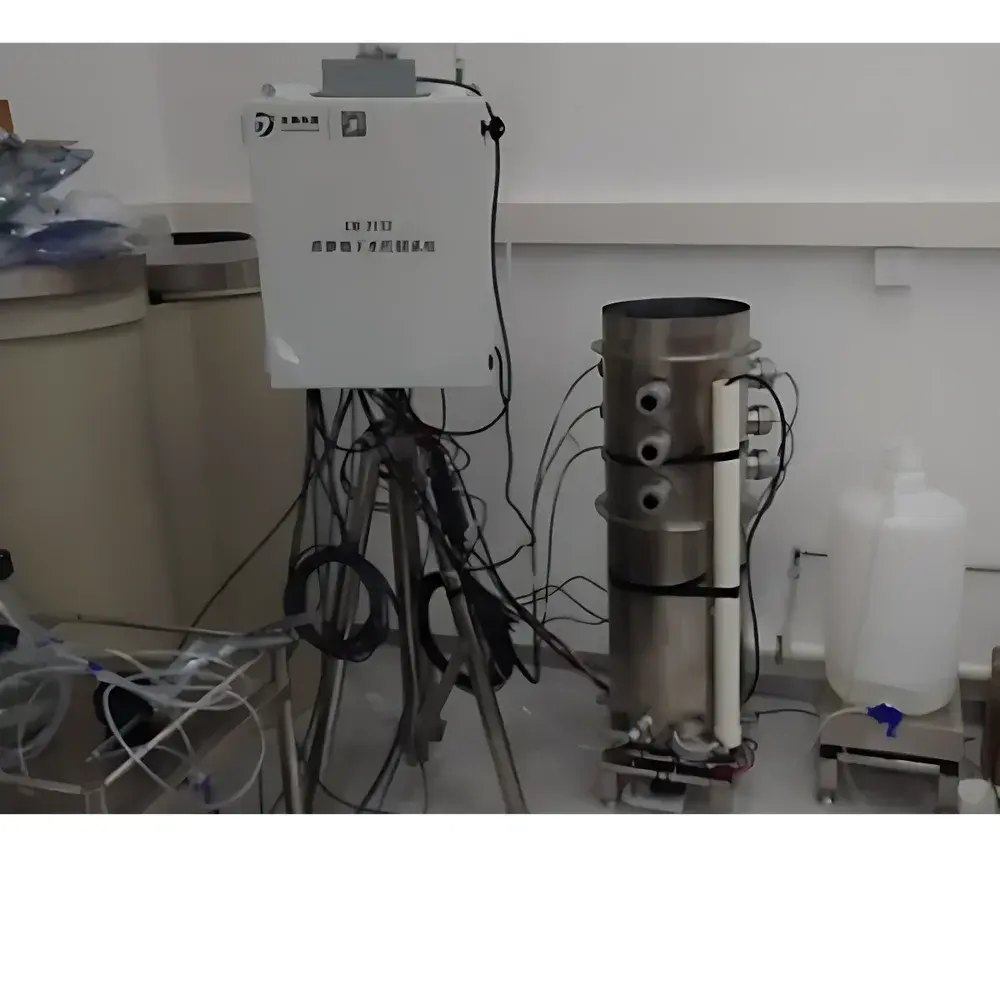
DJ-2132 Dianjiangkeji Groundwater-Controlled Soil Lysimeter System
| Brand | Dianjiangkeji |
|---|---|
| Origin | Shanghai, China |
| Manufacturer Type | Authorized Distributor |
| Country of Origin | China |
| Model | DJ-2132 |
| Pricing | Upon Request |
Overview
The DJ-2132 Dianjiangkeji Groundwater-Controlled Soil Lysimeter System is a precision-engineered environmental research platform designed for controlled simulation and long-term monitoring of groundwater–soil–atmosphere interactions in shallow-water-table ecosystems. Built upon the physical principles of mass balance and hydrostatic equilibrium, the system enables quantitative investigation of evapotranspiration (ET), deep percolation, solute leaching, and soil water potential dynamics under dynamically regulated groundwater levels. Unlike static lysimeters, the DJ-2132 integrates real-time feedback control between field-measured groundwater elevation and laboratory-based lysimeter water table positioning—achieving sub-centimeter synchronization accuracy via closed-loop actuation. This capability is essential for replicating natural hydrologic boundary conditions in wetlands, floodplains, peatlands, and deltaic soils where capillary rise and water table fluctuations govern biogeochemical cycling, root-zone oxygen availability, and greenhouse gas fluxes.
Key Features
- Real-time groundwater level emulation: Automatic dual-directional regulation (recharge/drainage) using a 1.8 L/min brushless diaphragm pump and gravity-assisted overflow drainage, maintaining ≤±0.5 cm deviation from target field water table height.
- High-fidelity weighing subsystem: Stainless-steel load cell (rated 0–1500 kg, C3 accuracy class, 1 g resolution, ±2 g absolute error) with 6-wire compensation, integrated into a SUS304 inner cylinder (Φ300 mm × 900 mm) and PP polymer outer shell to eliminate corrosion-induced drift.
- Multi-depth soil monitoring: Three-tiered TDR-based soil sensors (100 mm, 300 mm, 500 mm depths) measuring volumetric water content (0.88–81.88%), temperature (−40 to +80 °C), and bulk electrical conductivity (0–23,000 µS/cm), all rated IP68 for continuous burial.
- Integrated environmental sensing: Onboard high-accuracy barometric pressure sensor, board temperature monitor, and embedded GPS module (±2.5 m CE95) for georeferenced data alignment and atmospheric correction.
- Autonomous power & telemetry: 12 V/60 W solar panel + 12 V/65 Ah deep-cycle battery (ground-mounted enclosure), enabling year-round operation in remote field stations; LTE CAT1 cellular modem with embedded SIM supports Modbus RTU over RS485/RS232 and SDI-12 protocols.
- Robust data architecture: 32 MB internal flash memory stores up to 64,384 records (7.3 years at 1-hour intervals); 12-bit analog input resolution (±0.1% reading + 2 LSB, −20 to +40 °C), with programmable excitation and channel isolation.
Sample Compatibility & Compliance
The DJ-2132 is optimized for undisturbed or repacked soil monoliths representative of low-permeability, organic-rich, or stratified wetland substrates—including peat, silt-loam floodplain deposits, and mineral-organic mixtures typical of coastal marshes and alpine fens. Its modular stainless-steel column design accommodates custom diameters and heights (standard: Φ300 mm × 900 mm), ensuring mechanical stability during prolonged saturation cycles. All wetted components comply with ISO 9001-certified manufacturing practices; sensor calibration traceability aligns with NIST-traceable reference standards. The system supports GLP-compliant experimental workflows through audit-trail-enabled cloud logging, timestamped metadata embedding, and secure API access for integration into institutional LIMS or FAIR-aligned data repositories.
Software & Data Management
Data acquisition and control are managed by an embedded ARM Cortex-M4 microcontroller running a deterministic real-time scheduler. Raw measurements are time-stamped with GPS-synchronized UTC and transmitted via encrypted TLS 1.2 to the vendor-hosted cloud platform (3-year free tier included). The web interface provides interactive time-series visualization, customizable alert thresholds (e.g., water table deviation >1 cm), and export in CSV/NetCDF formats compliant with CF Metadata Conventions. For regulatory or multi-site studies, private deployment options support direct MQTT/HTTP POST ingestion into on-premise servers or enterprise data lakes. All firmware updates undergo SHA-256 signature verification, and local storage retains full redundancy during network outages.
Applications
- Quantifying ecohydrological feedbacks in restored wetlands under climate-driven water table variability.
- Evaluating nitrogen and phosphorus leaching thresholds in agricultural buffer zones adjacent to groundwater-fed streams.
- Validating vadose zone flow models (e.g., HYDRUS-1D, SWAP) using high-resolution mass-balance constraints.
- Assessing carbon dioxide and methane emissions as functions of water table depth and redox zonation in peat soils.
- Supporting USACE, EPA, or EU Water Framework Directive (WFD) monitoring programs requiring traceable, continuous hydrologic budgets.
FAQ
What groundwater depth range can the DJ-2132 simulate?
The system is calibrated for 0–1 m groundwater depth control, with optional extension kits available for deeper regimes.
Can the lysimeter operate unattended for extended periods?
Yes—autonomous operation exceeds 12 months with standard solar/battery configuration, assuming ≥3.5 kWh/m²/day insolation and routine maintenance every 6 months.
Is raw sensor data accessible without cloud dependency?
Yes—local SD card logging (optional) and direct RS485/Modbus polling enable offline data retrieval and third-party SCADA integration.
How is measurement uncertainty quantified across the system?
Total system uncertainty is propagated per GUM (JCGM 100:2018), combining load cell repeatability (±0.02% FS), TDR volumetric water content RMSE (±0.02 m³/m³), and water level control hysteresis (±0.3 cm).
Does the system meet FDA 21 CFR Part 11 requirements for electronic records?
While not pre-certified for pharmaceutical use, the audit-trail functionality, user-role permissions, and digital signature support provide a foundational framework adaptable to Part 11 compliance via site-specific validation protocols.







