
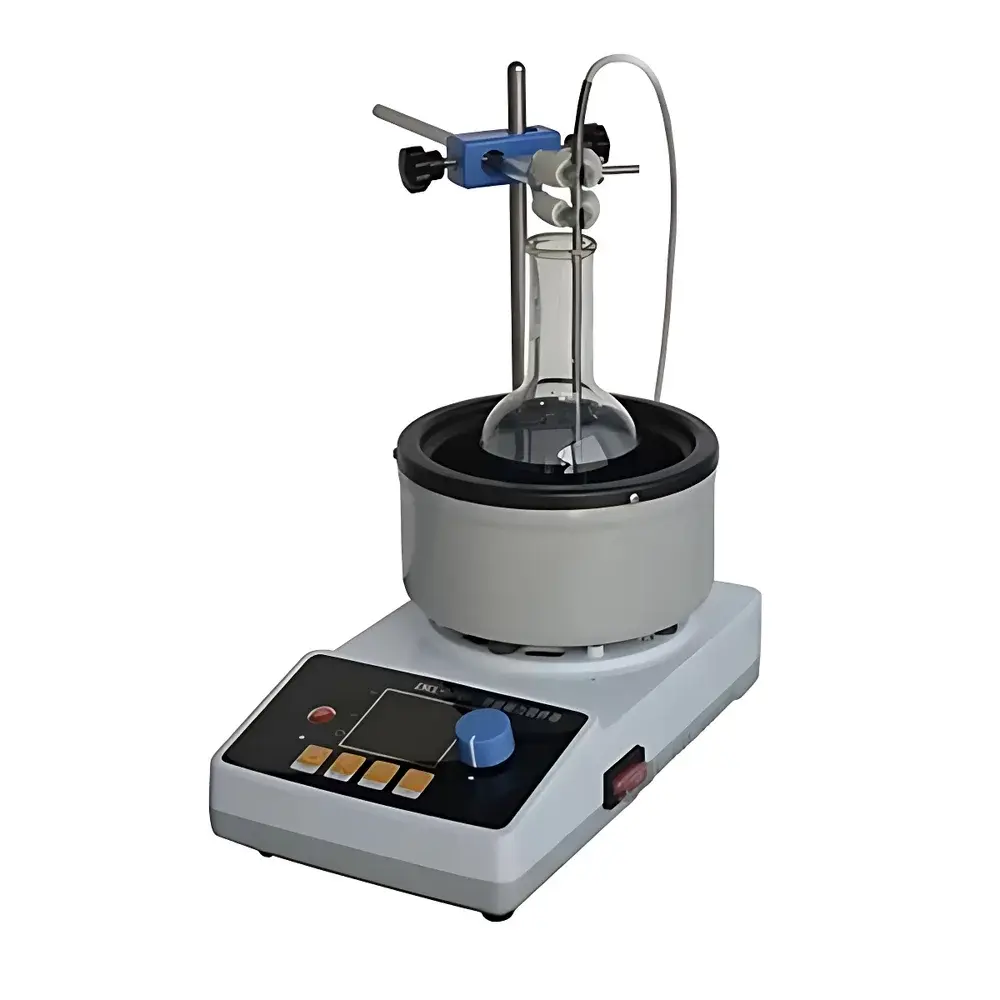
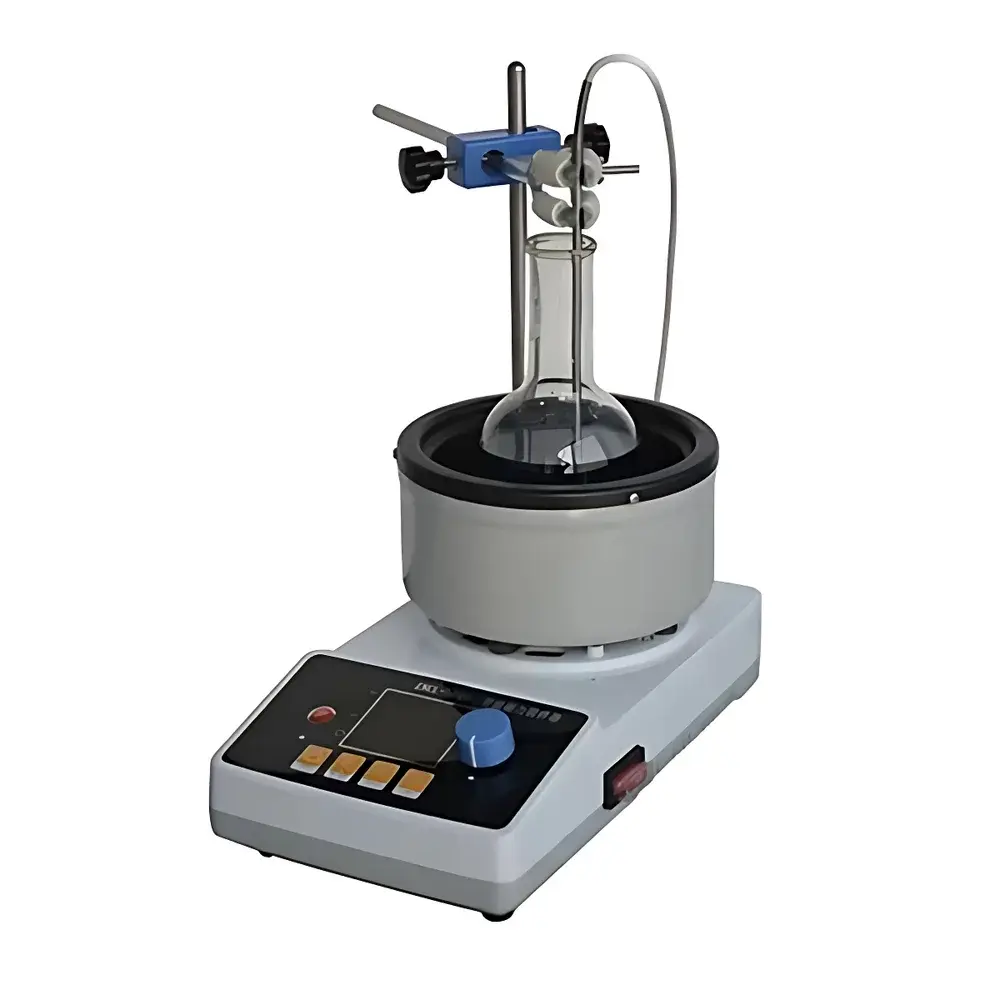
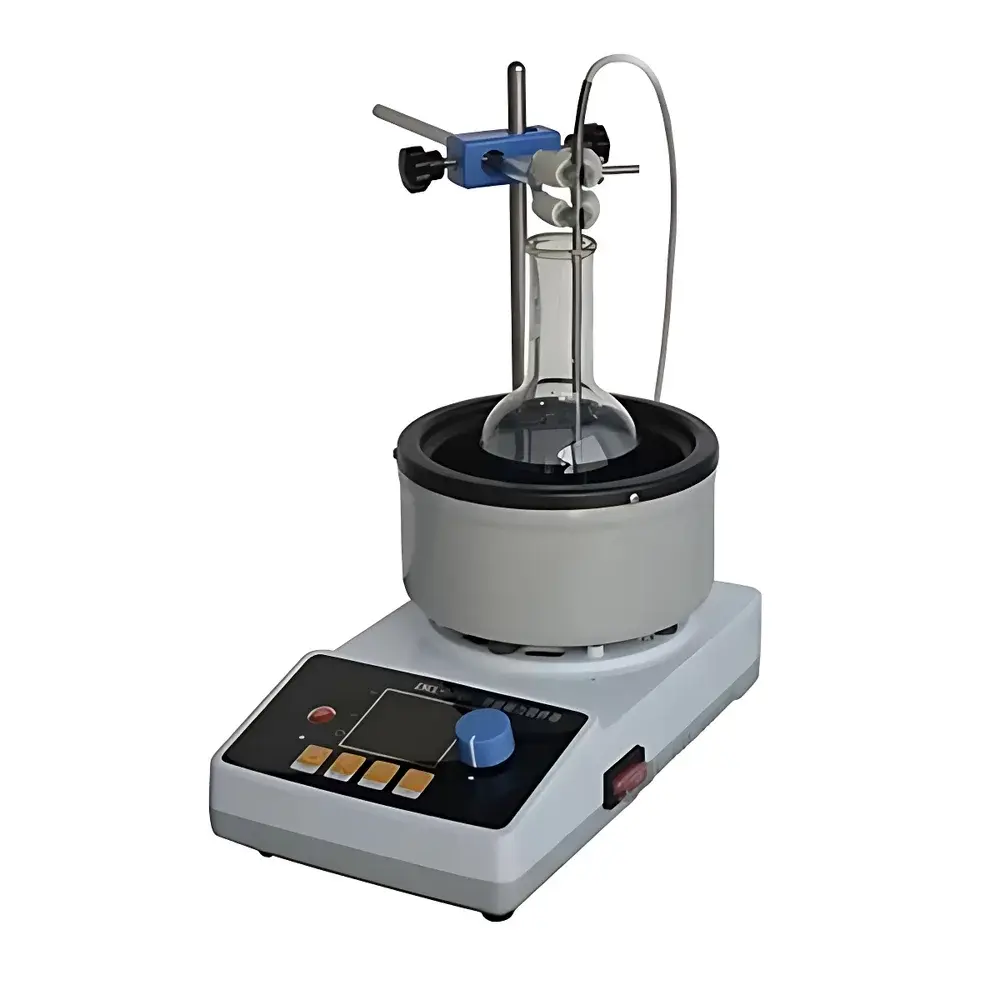
Yuyi Instrument ZNCL-G Series Digital Display Magnetic Hotplate Stirrer
| Brand | Yuyi Instrument |
|---|---|
| Origin | Henan, China |
| Model | ZNCL-G |
| Stirrer Type | Magnetic Hotplate Stirrer |
| Max. Stirring Volume | 50–5000 mL |
| Speed Range | 50–2000 rpm |
| Temperature Control Range | Ambient to 250 °C |
| Temp. Accuracy | ±1 °C |
| Heating Power | 350–2000 W (model-dependent) |
| Control Method | Digital PID with Auto-Tuning, Silicon Controlled Rectifier (SCR) Output |
| Heating Surface | Anodized Aluminum with PTFE Coating |
| Motor | 40 W DC Brushless (PAPST Series) |
| Input Voltage | 220 V AC, 50 Hz (160–240 V wide-range compatible) |
| Compliance | Dual Thermocouple Input (Internal/External), Open-Couple Protection, Continuous Duty Rating |
Overview
The Yuyi Instrument ZNCL-G Series Digital Display Magnetic Hotplate Stirrer is an engineered solution for precise, reproducible heating and magnetic stirring in research laboratories, quality control environments, and pilot-scale synthesis workflows. It operates on the principle of electromagnetic induction—rotating a PTFE-coated magnetic stir bar inside a vessel via a rotating magnetic field generated beneath a thermally conductive aluminum hotplate. Simultaneous temperature regulation is achieved through a closed-loop feedback system utilizing dual thermocouple inputs (internal plate sensor and optional external immersion probe), combined with fuzzy logic-enhanced PID control architecture. This ensures minimal thermal overshoot (<1 °C deviation), rapid stabilization, and robust performance across variable load conditions—from low-viscosity aqueous solutions to high-boiling-point organic solvents or silicone oil baths. Designed for continuous operation under GLP-aligned laboratory conditions, the ZNCL-G series supports method traceability through digital parameter retention and stable setpoint maintenance without manual intervention.
Key Features
- PTFE-coated anodized aluminum heating surface—chemically inert, corrosion-resistant, and suitable for water, oil, and sand bath applications; patented thermal design enables uniform heat distribution and efficient energy transfer.
- Fuzzy PID temperature controller with auto-tuning capability—reduces commissioning time and optimizes response across changing thermal loads; supports both internal plate sensing and external probe-based control (e.g., reaction mixture monitoring).
- Dual-display digital interface—separate LED screens for set temperature and real-time measured temperature; intuitive single-button navigation with tactile feedback for lab personnel wearing gloves.
- German-made PAPST DC brushless motor—40 W rated output, zero sparking, 10,000-hour service life under continuous duty cycles.
- Wide-input voltage compatibility (160–240 V AC)—ensures stable operation in facilities with fluctuating mains supply, common in industrial R&D labs and contract manufacturing organizations (CMOs).
- Integrated open-couple protection—automatically disables heating if thermocouple continuity is lost, displaying “Er2” or “hhhh” to prevent uncontrolled thermal runaway per IEC 61010-1 safety requirements.
- Ergonomic 30° inclined control panel—optimized for seated and standing operator positions; reinforced PBT polymer housing meets UL94 V-0 flame retardancy standards.
Sample Compatibility & Compliance
The ZNCL-G accommodates standard and non-standard glassware from 50 mL vials to 5 L round-bottom flasks, including borosilicate, quartz, and jacketed reactors. Its four platform sizes (130×60 mm to 310×150 mm) allow flexible integration with condensers, reflux setups, and inert atmosphere manifolds. The unit complies with CE marking directives (2014/30/EU EMC, 2014/35/EU LVD), conforms to RoHS 2011/65/EU material restrictions, and supports audit-ready documentation for ISO/IEC 17025-accredited testing laboratories. While not FDA 21 CFR Part 11–certified out-of-the-box, its deterministic control logic, parameter logging capability (via optional RS-232/USB interface), and immutable setpoint display support validation protocols required for GMP-compliant process development.
Software & Data Management
The ZNCL-G operates as a standalone instrument with embedded firmware—no host PC or proprietary software required. All operational parameters (set temperature, actual temperature, speed, elapsed time) are retained in non-volatile memory during power interruption. For extended data capture, optional serial communication modules enable connection to LabVIEW, MATLAB, or custom SCADA systems using ASCII command protocol (e.g., “TEMP?” returns current reading as “+128.4”). Audit trail generation is achievable through external data loggers synchronized to the unit’s analog output (0–5 V proportional to temperature). Firmware updates are performed via UART bootloader—documented in the technical manual for qualified service engineers.
Applications
- Synthesis reaction optimization—precise thermal ramping and agitation control for Grignard, Suzuki, and esterification reactions.
- Standard solution preparation—uniform dissolution of reference standards in pharmaceutical QC (USP , ).
- Environmental sample digestion—EPA Method 3050B acid leaching of soils and sediments under controlled reflux conditions.
- Food emulsion stability testing—viscosity-independent mixing of dressings, sauces, and dairy blends at elevated temperatures.
- Polymerization initiation—temperature-triggered monomer activation in acrylic and epoxy resin systems.
- Calibration of thermometers and RTDs—traceable temperature uniformity verification across ISO/IEC 17025 calibration labs.
FAQ
Does the ZNCL-G support external temperature feedback for jacketed reactor control?
Yes—when the rear rubber plug is removed, the external thermocouple port activates, allowing direct immersion probe input for process-critical temperature measurement.
What is the maximum recommended viscosity for reliable stirring at 2000 rpm?
For optimal torque transmission and stir bar stability, use PTFE-coated stir bars ≥20 mm length with viscosities up to 5000 mPa·s (e.g., 30% w/w glycerol/water at 25 °C); higher viscosities require lower speeds or overhead mechanical stirring.
Can the unit be integrated into a networked lab automation system?
Via optional RS-232 or USB-to-serial adapter, the ZNCL-G supports Modbus RTU or ASCII command sets for centralized monitoring and scheduling within LIMS or ELN environments.
Is calibration certificate included with shipment?
A factory-as-tested report (including temperature accuracy verification at 100 °C and 200 °C, speed linearity check) is provided; NIST-traceable calibration certificates are available upon request with additional lead time.
How does the auto-tuning function behave after changing heating medium (e.g., from water to silicone oil)?
Auto-tuning must be re-executed—press and hold the “Shift” key for 5 seconds during initial heating phase; the controller will perform three thermal cycles to re-characterize system dynamics and update PID constants accordingly.



