
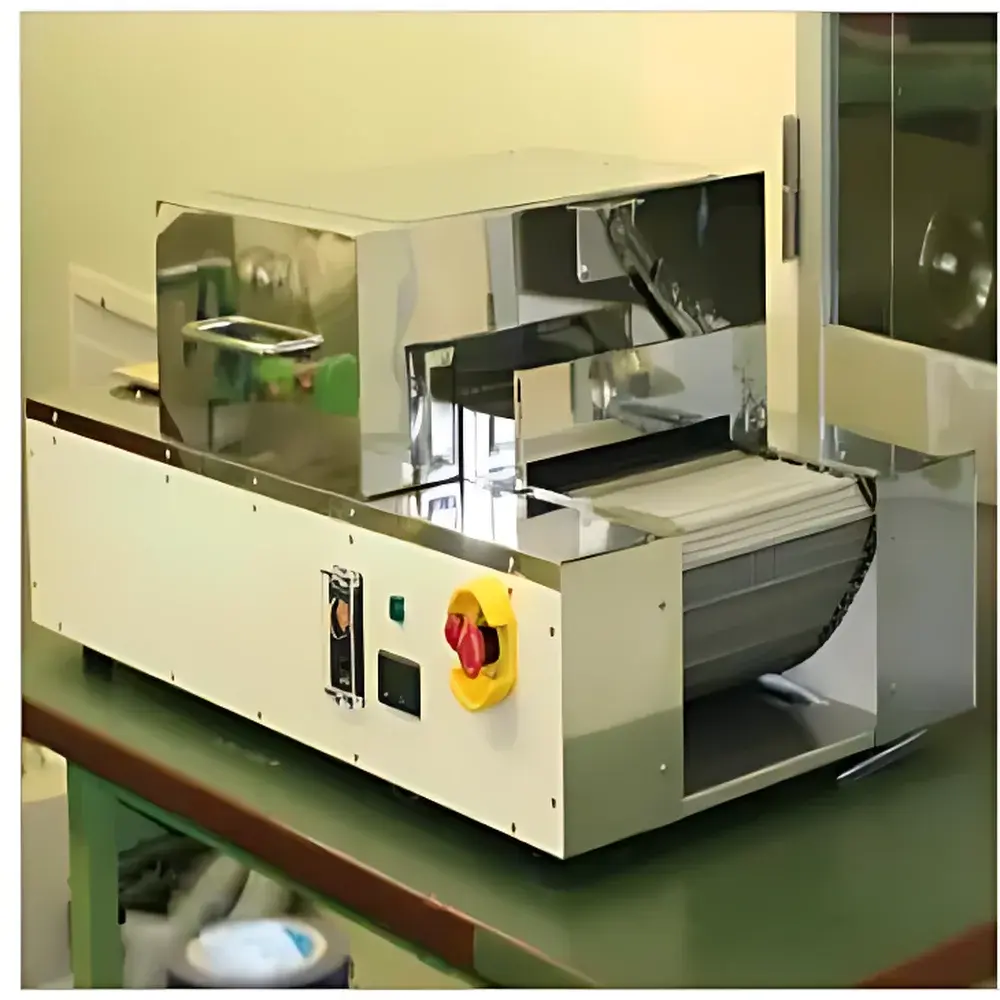
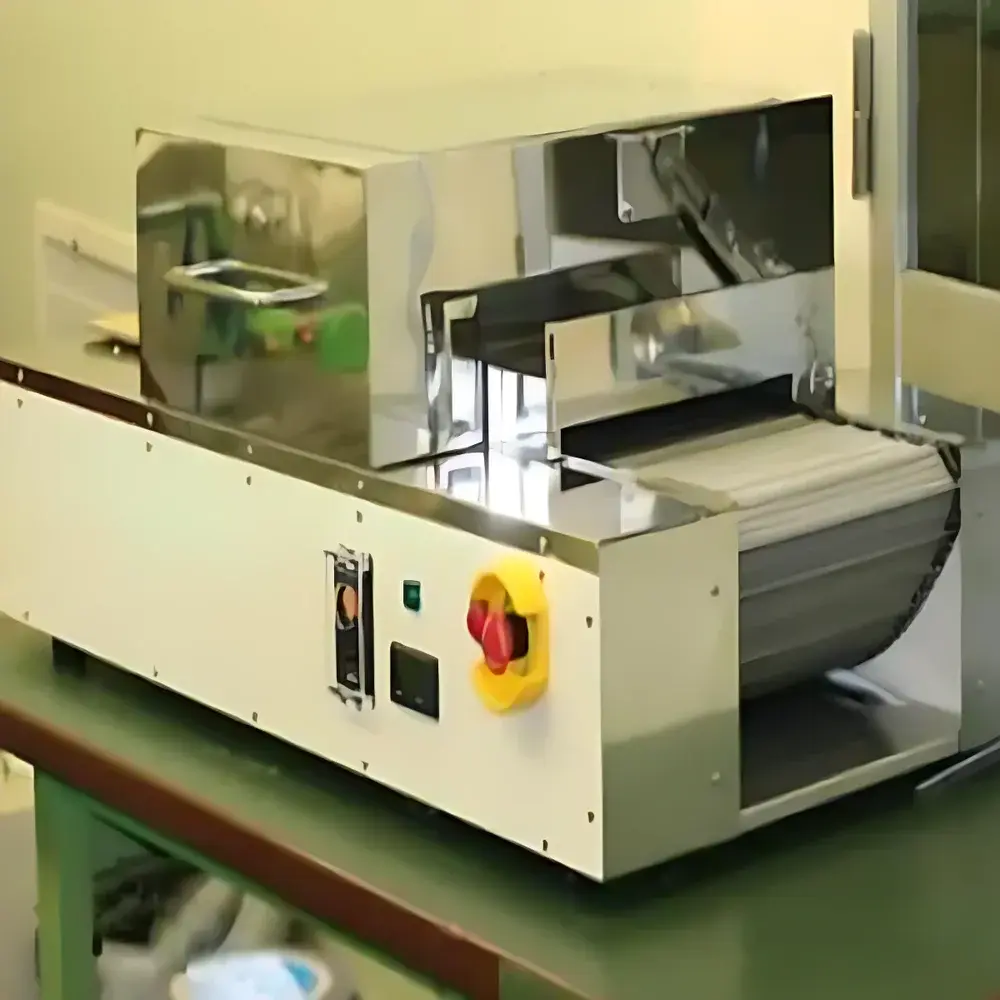
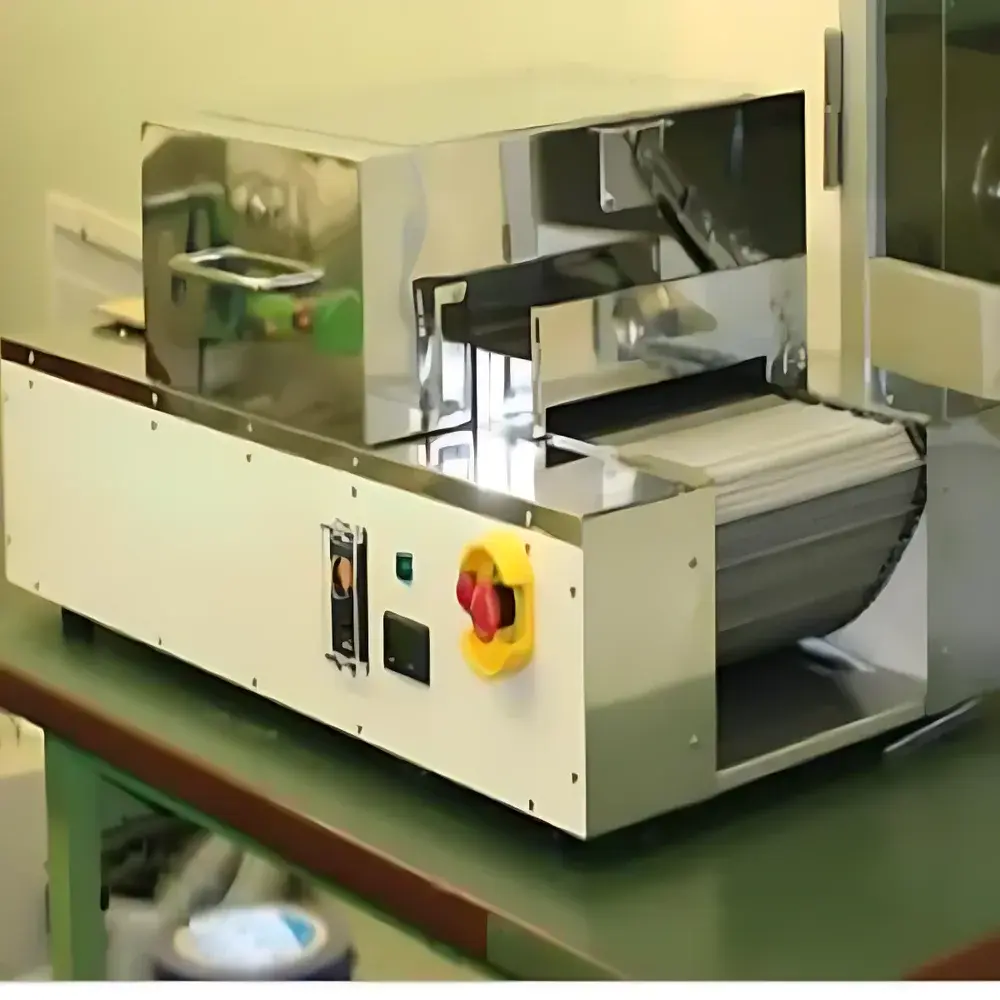
SEN PM1103C UV-Ozone Cleaner
| Brand | SEN |
|---|---|
| Origin | Japan |
| Model | PM1103C |
| Type | Benchtop UV-Ozone Surface Cleaning System |
| Wavelengths | 185 nm and 254 nm |
| Lamp Type | Low-pressure mercury vapor lamp |
| Chamber Material | Stainless steel (electropolished) |
| Standard Chamber Volume | ~11 L |
| Power Supply | AC 100–120 V / 200–240 V, 50/60 Hz |
| Safety Interlock | Door-activated cut-off |
| Compliance | CE-marked, RoHS-compliant |
| Software Interface | Manual operation with analog timer (optional digital controller available) |
Overview
The SEN PM1103C UV-Ozone Cleaner is a precision benchtop surface preparation system engineered for atomic-level cleaning of substrates used in microelectronics, optics, thin-film deposition, and advanced materials research. It operates on the well-established principle of vacuum-ultraviolet (VUV) photochemical oxidation: low-pressure mercury lamps emit dual-wavelength ultraviolet radiation at 185 nm and 254 nm. The 185 nm photons photodissociate molecular oxygen (O₂) in ambient air to generate atomic oxygen (O), which rapidly combines to form ozone (O₃). Concurrently, 254 nm photons photolyze ozone into highly reactive singlet atomic oxygen—capable of cleaving C–H, C–C, and C–O bonds in organic contaminants such as photoresist residues, hydrocarbons, silicones, oils, and adventitious carbon. This cascade yields volatile byproducts (CO₂, H₂O, CO), which desorb under ambient or mild purge conditions. Unlike plasma or solvent-based methods, UV-ozone cleaning introduces no mechanical stress, thermal load, or ionic bombardment—preserving delicate surface topographies, native oxides, and sub-nanometer interfacial integrity.
Key Features
- Benchtop stainless-steel chamber (electropolished interior) ensuring corrosion resistance and minimal particle shedding
- Dual-wavelength low-pressure Hg lamp assembly delivering calibrated 185 nm and 254 nm irradiance profiles
- Integrated safety interlock system that deactivates UV emission immediately upon door opening
- Adjustable exposure time (0–30 min standard analog timer; optional digital controller with programmable sequences)
- No consumables required—operates using ambient air; no gases, solvents, or vacuum pumps needed
- Compact footprint (< 300 mm × 300 mm × 350 mm) suitable for cleanroom Class 100–1000 environments
- CE-marked and RoHS-compliant design meeting IEC 61000-6-3 (EMC) and IEC 62471 (photobiological safety) standards
Sample Compatibility & Compliance
The PM1103C accommodates substrates up to 100 mm × 100 mm × 25 mm (W × L × H), including silicon wafers, fused silica, quartz crystals, ITO-coated glass, chromium photomasks, sapphire, alumina ceramics, and thin-film metal foils (e.g., Ni, Ti, Cu). It is routinely deployed in processes aligned with ASTM F2069 (Standard Guide for UV/Ozone Treatment of Surfaces), ISO 14644-1 (cleanroom particulate control), and SEMI F21 (specifications for semiconductor cleaning equipment). For regulated environments, optional audit-trail-capable digital controllers support 21 CFR Part 11–compliant electronic records when integrated with validated laboratory information management systems (LIMS). No surface etching or stoichiometric alteration occurs—making it compatible with pre-deposition cleaning prior to ALD, PVD, and spin-coating steps under GLP/GMP-aligned workflows.
Software & Data Management
The base PM1103C operates via manual analog timer control, optimized for reproducible batch processing in R&D and pilot-line settings. An optional digital controller (PM1103C-DIG) provides programmable multi-step protocols—including dwell time, lamp duty cycle modulation, and purge delay intervals—with USB data logging (CSV export) and password-protected parameter locking. All firmware adheres to IEC 62304 software lifecycle requirements. Process logs include timestamp, exposure duration, lamp status, and interlock event history—enabling traceability per ISO 9001:2015 clause 8.5.2 (identification and traceability) and supporting internal quality audits.
Applications
- Precision cleaning of silicon wafers and compound semiconductors prior to epitaxy, metallization, or dielectric deposition
- Removal of residual photoresist, polyimide, and epoxy after lithography development—without swelling or undercutting
- Surface activation of ITO, PET, and PI films prior to OLED/TFT backplane fabrication to enhance inkjet-printed electrode adhesion
- Pre-sputtering treatment of quartz crystal microbalances (QCM) and SAW devices to eliminate carbonaceous contamination affecting mass sensitivity
- Ultraclean preparation of optical components (lenses, prisms, AR-coated substrates) before anti-reflective or high-reflective coating
- Surface modification of copper-clad laminates in HDI PCB manufacturing to improve solder mask adhesion and reduce delamination risk
- Cleaning of MEMS packaging substrates and ceramic carriers prior to hermetic sealing in vacuum or inert gas environments
- Atomic-layer cleaning of AFM tips, TEM grids, and X-ray optics where ion beam or wet chemistry would induce damage
FAQ
What is the typical cleaning efficiency for hydrocarbon monolayers?
Under standard operating conditions (15-min exposure, ambient air, room temperature), the PM1103C achieves >99.5% removal of adventitious carbon (as measured by XPS C1s peak intensity reduction), with residual carbon coverage typically <0.1 monolayer.
Can the system be used inside a nitrogen-purged glovebox?
No—the process requires ambient O₂ to generate ozone; operation in inert atmospheres will significantly suppress cleaning efficacy. Optional air-intake filtration modules are available for controlled-humidity or particle-filtered air supply.
Is lamp replacement user-serviceable?
Yes—lamps are standardized G13 base low-pressure Hg tubes with 8,000-hour nominal lifetime; replacement requires only basic torque screwdriver and UV-blocking safety glasses (included).
Does UV-ozone treatment alter surface roughness or crystallinity?
No measurable change in RMS roughness (AFM) or lattice coherence (XRD) has been observed on Si(100), fused silica, or sapphire after repeated exposures—confirming non-destructive surface conditioning.
How does UV-ozone compare to oxygen plasma cleaning?
UV-ozone avoids ion-induced surface damage and charging effects inherent to RF plasma, making it preferable for gate oxide integrity preservation and low-k dielectric compatibility—while achieving comparable organic removal rates for sub-monolayer contamination.



