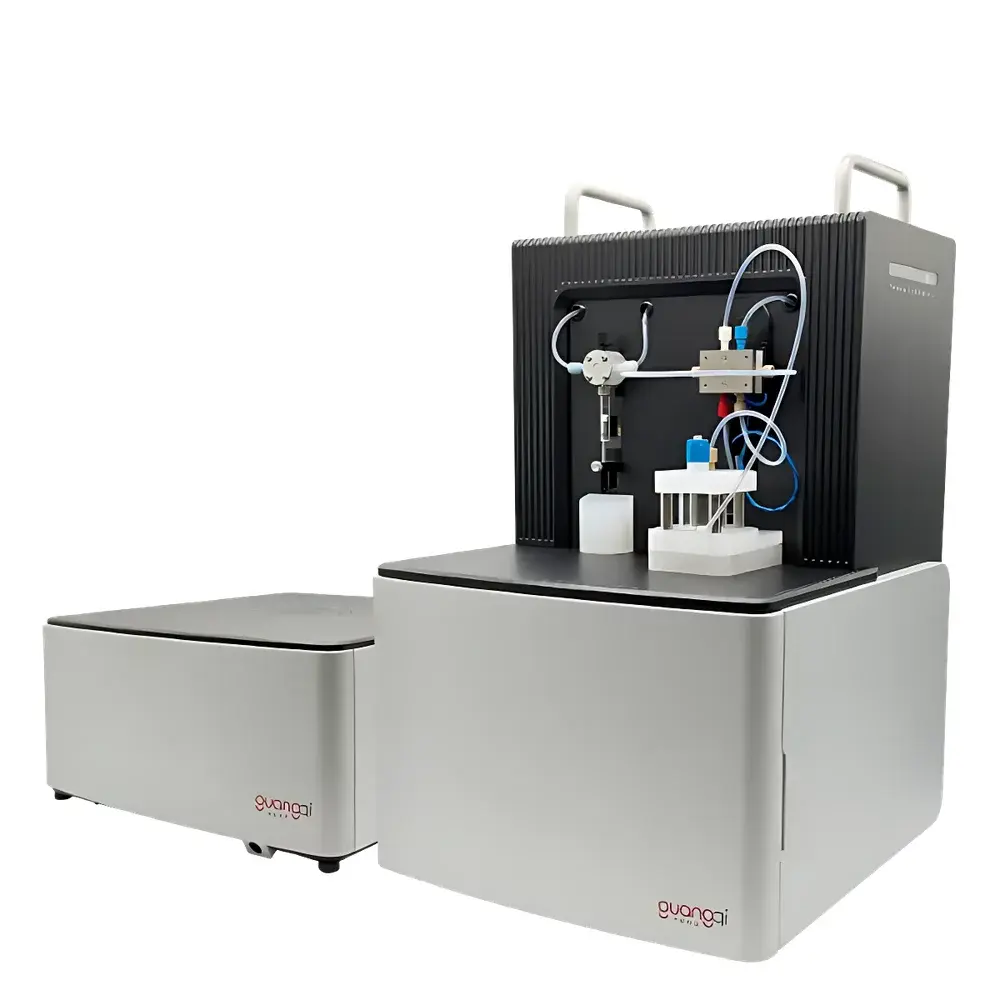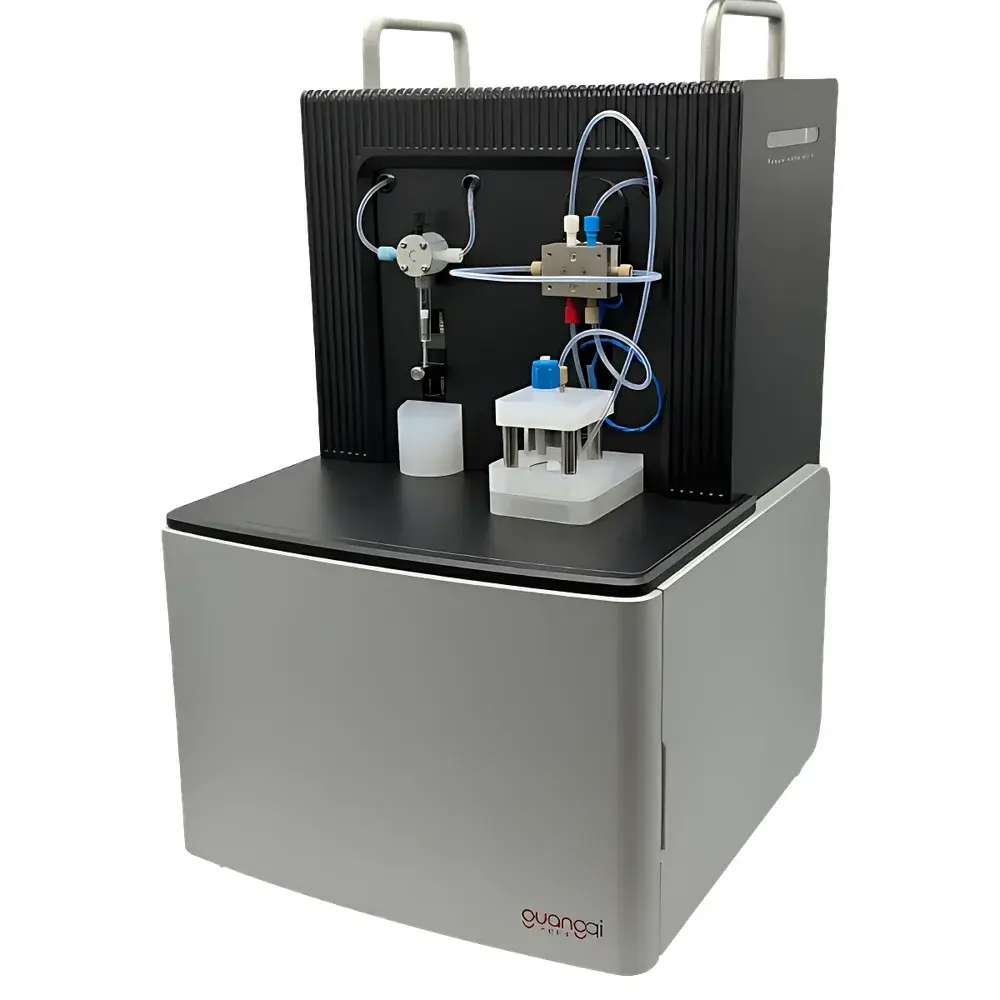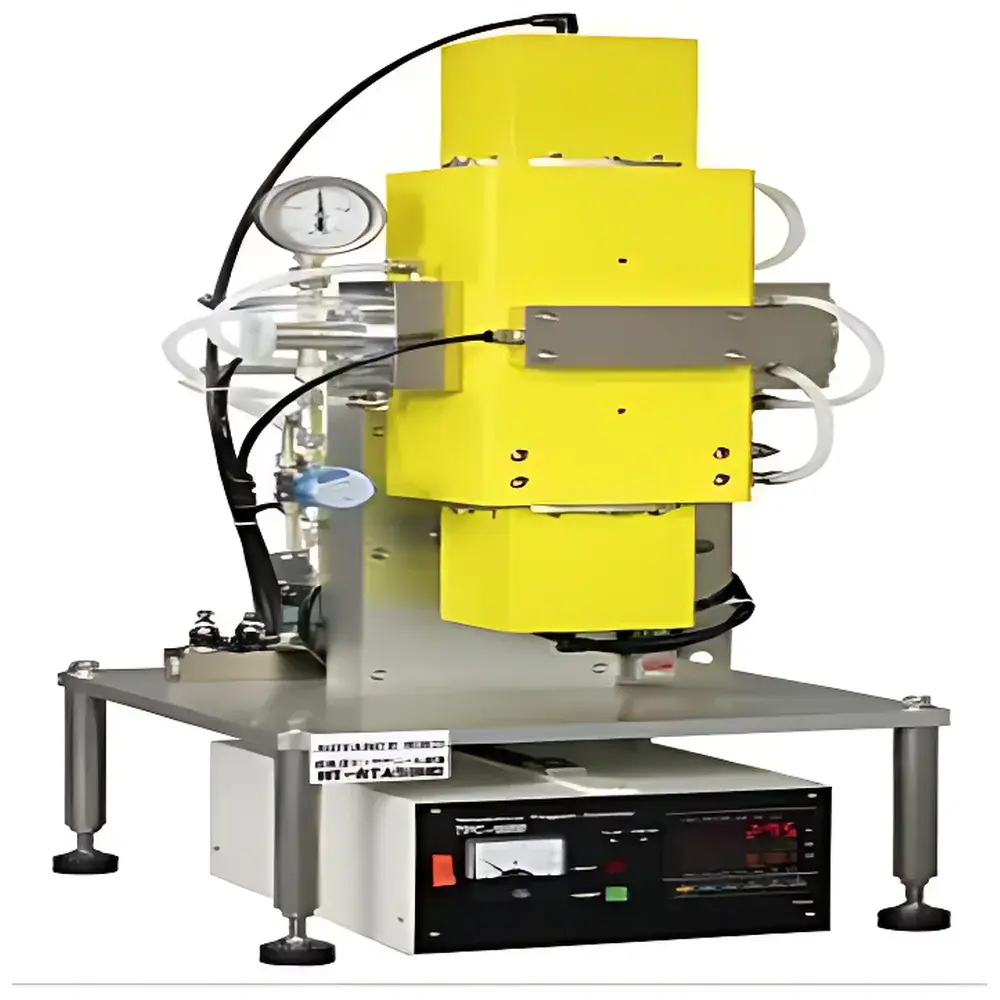
ADVANCE RIKO HT-RTA59HD Desktop High-Temperature Rapid Thermal Annealing Furnace
| Brand | ADVANCE RIKO |
|---|---|
| Origin | Japan |
| Model | HT-RTA59HD |
| Instrument Type | High-Vacuum Rapid Thermal Annealer (RTA) |
| Sample Size | 15 mm × 15 mm × 1 mm |
| Temperature Range | Ambient to 1800 °C |
| Max Heating Rate | ≥1500 °C/s (typical for 15 mm × 15 mm SiC wafer) |
| Cooling Method | Optional integrated water-quench (CAS-59AQ variant) |
| Heating Source | High-power focused infrared halogen lamps |
| Atmosphere Options | Vacuum (≤10⁻⁴ Pa), inert gas (N₂, Ar), or oxidizing (O₂) |
| Thermocouple Compatibility | JIS B standard sheathed thermocouples (W–Re optional) |
| Chamber Liner Material | High-purity alumina or graphite |
| Control Interface | USB-connected PC-based temperature programming and real-time thermal monitoring |
Overview
The ADVANCE RIKO HT-RTA59HD is a compact, desktop-class rapid thermal annealing (RTA) furnace engineered for semiconductor process development, advanced materials research, and high-temperature kinetics studies. It employs high-intensity, spatially focused infrared halogen lamp arrays coupled with a highly reflective cavity architecture to achieve ultrafast, localized heating—enabling ramp rates exceeding 1500 °C/s and peak temperatures up to 1800 °C within ≤10 seconds on standard 15 mm × 15 mm substrates. Unlike conventional resistance-heated furnaces, this system delivers non-contact, radiation-dominated thermal transfer, minimizing thermal mass effects and enabling precise transient thermal profiling essential for studying metastable phase formation, dopant activation, and interfacial reactions in wide-bandgap semiconductors such as silicon carbide (SiC), gallium nitride (GaN), and ultra-refractory ceramics.
Key Features
- Ultrafast thermal response: Achieves 1800 °C on 15 mm × 15 mm samples in ≤10 s via optimized IR lamp power density and cavity reflectivity.
- Integrated water-quench capability (CAS-59AQ configuration): Enables controlled quenching from peak temperature at rates >100 °C/s, critical for trapping high-temperature phases or suppressing grain coarsening.
- Clean thermal environment: Non-contact IR heating eliminates resistive element outgassing and particulate generation—reducing contamination risk in sensitive epitaxial or gate-oxide processing.
- Modular atmosphere control: Supports high vacuum (≤10⁻⁴ Pa), inert (N₂, Ar), or reactive (O₂) ambient operation via integrated gas inlet and pressure regulation.
- Compact footprint: Benchtop design (W × D × H ≈ 450 × 500 × 400 mm) minimizes cleanroom space requirements without compromising thermal performance.
- Digital process control: USB-linked PC interface enables programmable multi-step thermal profiles (ramp/soak/cool), real-time temperature logging, and export of time-temperature data in CSV format.
Sample Compatibility & Compliance
The HT-RTA59HD accommodates rigid planar substrates up to 15 mm × 15 mm × 1 mm, including SiC wafers, sapphire, quartz, fused silica, alumina, silicon nitride, and carbon-based composites. Sample support utilizes high-purity alumina or high-density graphite holders compatible with both inert and reducing atmospheres. The system meets mechanical and electrical safety standards per JIS B 7901 (Industrial Furnaces) and conforms to IEC 61000-6-3 (EMC emission limits). While not certified for GMP production, its repeatable thermal profiles, digital audit trail (via timestamped log files), and parameter traceability support GLP-compliant R&D workflows and pre-fab process qualification under ISO/IEC 17025-accredited laboratories.
Software & Data Management
The proprietary RTA Control Suite runs on Windows-based PCs and provides intuitive graphical setup of thermal cycles—including ramp rate limits, dwell times, and cooling mode selection (natural convection, forced gas, or water-quench). All temperature data are acquired via calibrated JIS B Class 1 thermocouples (standard W–Re optional for >1600 °C stability) with 0.1 °C resolution and ±1.5 °C absolute accuracy at 1800 °C. Software enforces user-level access control, generates PDF reports with embedded metadata (date, operator ID, sample ID), and supports automated backup to network drives—facilitating alignment with FDA 21 CFR Part 11 requirements when deployed in regulated development environments.
Applications
- Silicon carbide device fabrication: Rapid oxide growth (SiO₂ on 4H-SiC), dopant (Al, N) activation, and interface trap passivation.
- Wide-bandgap semiconductor research: Thermal stability assessment of GaN heterostructures, AlN nucleation layers, and h-BN substrates.
- Advanced ceramic processing: Sintering aids activation, grain boundary engineering in ZrO₂/Y₂O₃ systems, and thermal shock resistance evaluation.
- Thin-film metallurgy: Silicide formation kinetics (e.g., NiSi, CoSi₂ on Si), diffusion barrier integrity testing, and contact resistance optimization.
- Materials screening: High-throughput thermal cycling for phase diagram validation and decomposition onset detection in MAX phases and refractory intermetallics.
FAQ
What vacuum level can the HT-RTA59HD achieve?
The base pressure is ≤10⁻⁴ Pa using a turbomolecular pump (pump sold separately); ultimate pressure depends on chamber conditioning and gas load.
Is the system compatible with oxygen ambients for oxide growth?
Yes—equipped with stainless-steel gas lines, mass flow controllers, and O₂-compatible seals; maximum recommended O₂ partial pressure is 100 kPa (1 atm).
Can thermocouple placement be customized for non-standard samples?
Thermocouple ports are fixed per JIS B geometry; however, surface-mounted thin-film thermocouples may be used externally with appropriate signal conditioning.
Does the water-quench option (CAS-59AQ) require external chiller infrastructure?
Yes—a recirculating chiller capable of maintaining ≤15 °C coolant inlet temperature and ≥5 L/min flow rate is required for stable quench performance.
How is temperature uniformity verified across the sample surface?
Uniformity is characterized using calibrated IR pyrometry and multi-point thermocouple mapping; typical radial deviation is ±5 °C over central 10 mm² at 1800 °C under optimized lamp alignment.