
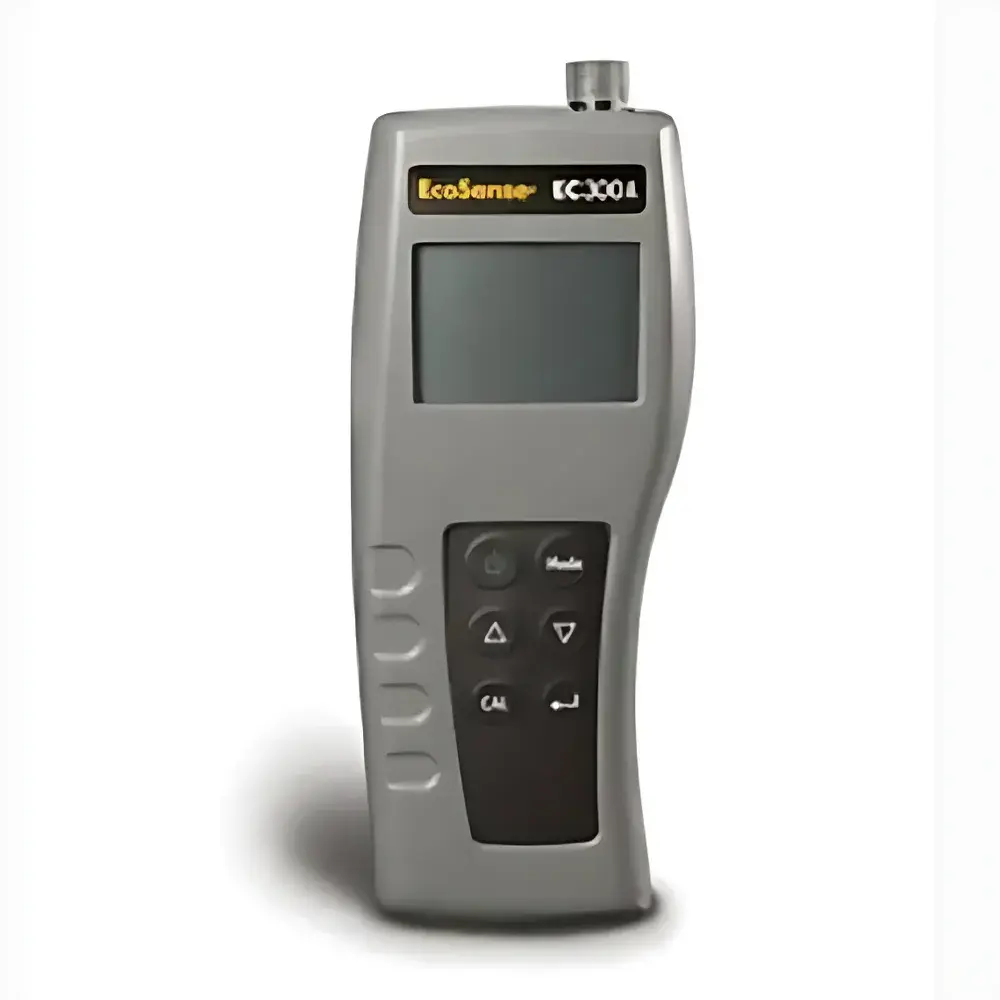
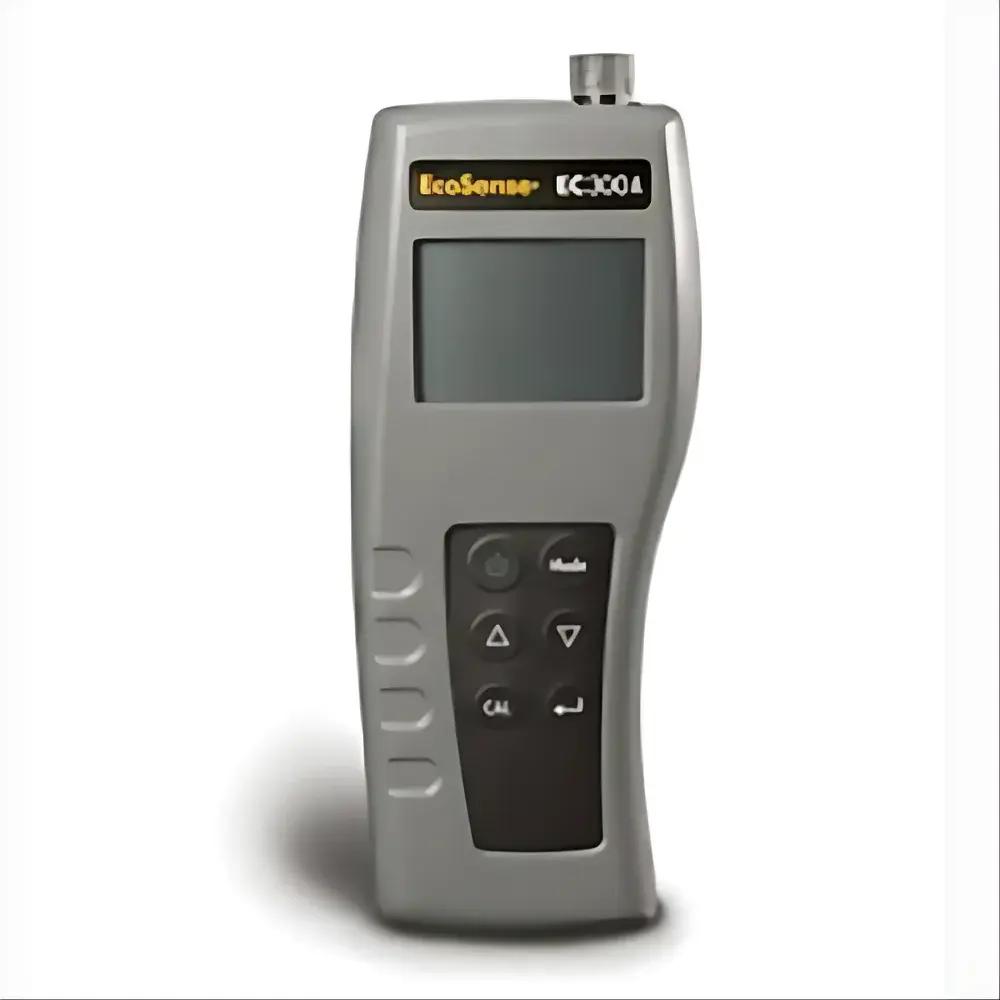
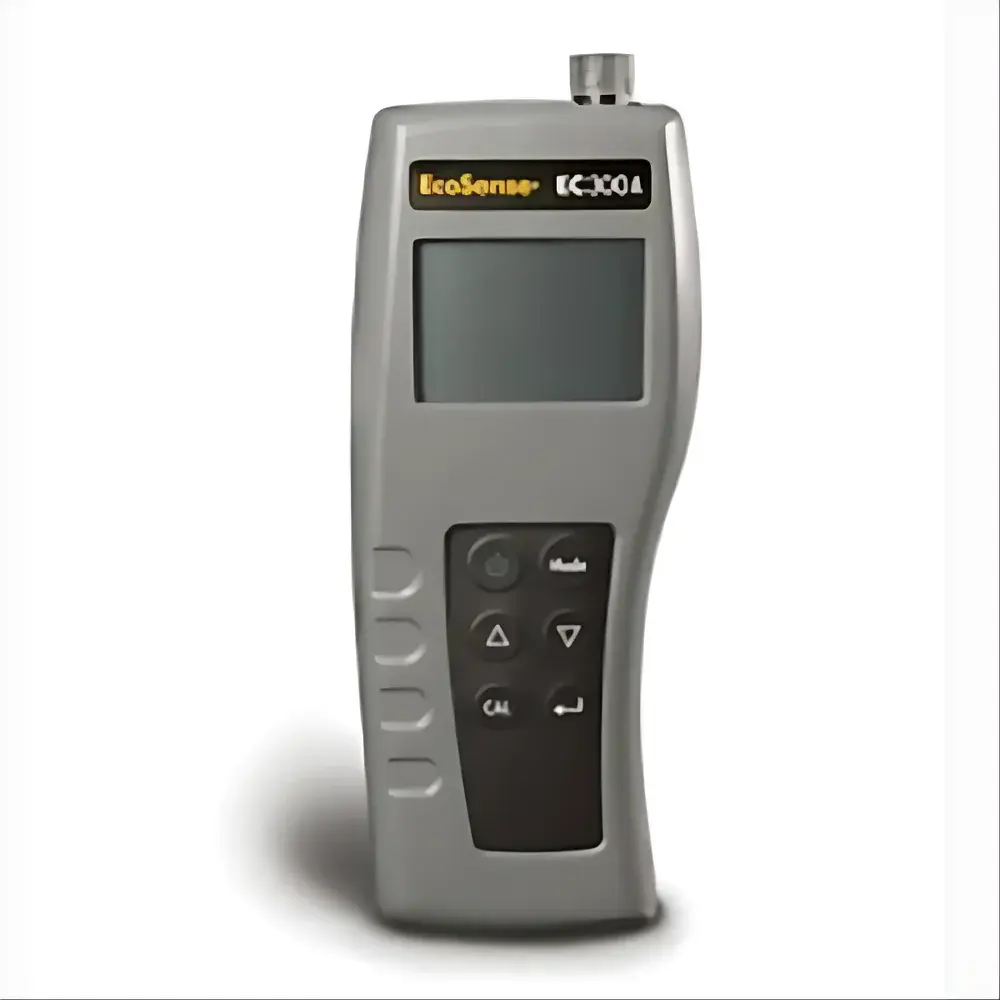
YSI EC300A Portable Conductivity Meter
| Brand | YSI |
|---|---|
| Origin | USA |
| Model | EC300A |
| Portability | Portable |
| Application Environment | Laboratory & Field |
| Conductivity Range | 0–200 mS/cm |
| TDS Range | 0–100 g/L |
| Resistivity Range | 0–10 MΩ·cm |
| Salinity Range | 0–70 ppt |
| Temperature Range | −10°C to +90°C |
| Conductivity Accuracy | ±1% FS (full-scale) or ±1% reading + offset per range |
| Temperature Accuracy | ±0.2°C or ±0.4% of range (whichever is greater) |
| Conductivity Resolution | 0.01 μS/cm (lowest range), 0.1 mS/cm (highest range) |
| Temperature Resolution | 0.1°C |
| Probe Type | Stable 4-electrode conductivity cell |
| Waterproof Rating | IP65 (instrument body) |
| Power Supply | One 9V alkaline battery (≈150 h typical life) |
| Dimensions | 18.6 × 7.0 × 3.7 cm |
| Weight | 430 g (with battery) |
| Warranty | 1 year limited warranty on instrument, probe, and cable |
Overview
The YSI EC300A Portable Conductivity Meter is a field-deployable, laboratory-validated electrochemical instrument engineered for high-reproducibility measurement of electrical conductivity, temperature, salinity, total dissolved solids (TDS), and resistivity in aqueous solutions. Based on four-electrode (tetrapolar) AC conductivity measurement principle, the EC300A eliminates polarization errors and electrode fouling effects common in two-electrode systems—making it especially suitable for samples with variable ionic strength, suspended solids, or biofilm-prone environments. Its integrated temperature sensor enables automatic temperature compensation (ATC) using user-selectable or standard coefficients (default: 1.91%/°C at 25°C), ensuring traceable, thermally corrected conductivity values aligned with ASTM D1125 and ISO 7888 standards. Designed for both benchtop QC workflows and unattended field deployments, the EC300A delivers metrologically sound data without requiring recalibration between measurements under stable conditions.
Key Features
- Four-electrode conductivity sensor with stainless-steel construction and built-in stress-relief cable interface—minimizes mechanical fatigue and extends probe service life in repeated immersion cycles.
- Auto-ranging capability across four conductivity decades (0.01 μS/cm to 200 mS/cm), eliminating manual range selection errors and reducing operator training burden.
- IP65-rated housing provides protection against water splashes and dust ingress—enabling reliable operation in humid laboratories, wastewater treatment facilities, and outdoor monitoring stations.
- Real-time calculation of derived parameters: salinity (ppt), TDS (g/L) using programmable conversion factors (0.30–1.00, default 0.65), and resistivity (MΩ·cm) based on measured conductivity and temperature.
- On-device acoustic feedback for all keypresses—critical for gloved operation or low-visibility field conditions.
- Battery status indicator and low-power warning—ensures uninterrupted data acquisition during extended sampling campaigns.
- Configurable reference temperature (15.0–25.0°C, default 25°C) and temperature coefficient (0.0–4.0%/°C) for compliance with site-specific or regulatory reporting requirements.
Sample Compatibility & Compliance
The EC300A is validated for use with natural waters (freshwater, estuarine, seawater), municipal and industrial effluents, process streams, and calibration standards traceable to NIST SRMs. Its four-electrode geometry ensures stable readings in turbid, colloidal, or mildly fouling matrices where traditional two-electrode meters exhibit drift. The instrument conforms to general requirements for portable electrochemical analyzers under IEC 61000-6-3 (EMC emissions) and IEC 61010-1 (safety). While not certified for hazardous locations, its robust mechanical design supports GLP-compliant documentation when paired with external logging software. Calibration verification protocols align with USP , EPA Method 120.1, and ISO/IEC 17025-accredited quality management systems.
Software & Data Management
The EC300A operates as a standalone instrument with no embedded memory or USB connectivity—intentionally designed for simplicity, reliability, and audit-trail-free operation in routine QA/QC settings. All calibration data, including date/time stamps, standard values, and cell constant (adjustable 4.50–5.50 cm⁻¹, default 5.00 cm⁻¹), are retained in non-volatile memory across power cycles. For regulated environments requiring electronic records, users may manually transcribe readings into LIMS or Excel-based templates compliant with FDA 21 CFR Part 11 (when implemented with appropriate procedural controls). Optional accessories include YSI’s ProQuattro data logger interface for time-series profiling, though the EC300A itself does not generate raw digital logs.
Applications
- Environmental monitoring: river, lake, and coastal salinity mapping; wastewater discharge compliance testing per NPDES permits.
- Drinking water quality assurance: verification of desalination plant output, distribution system integrity checks, and source water characterization.
- Aquaculture and hydroponics: real-time tracking of nutrient solution conductivity and osmotic balance.
- Pharmaceutical manufacturing: purified water (PW) and water-for-injection (WFI) conductivity screening per USP .
- Educational labs: hands-on instruction in solution chemistry, ionic strength theory, and sensor fundamentals.
FAQ
What is the difference between the EC300 and EC300A models?
The EC300A incorporates enhanced firmware stability, updated calibration algorithms, and improved low-conductivity resolution (0.01 μS/cm) compared to earlier EC300 units—while maintaining full backward compatibility with existing YSI 4-electrode probes and accessories.
Can the EC300A be used for high-purity water applications?
Yes—its lowest measurable range (0.01 μS/cm) and resistivity mode (up to 10 MΩ·cm) support deionized water and pharmaceutical-grade PW testing, provided proper probe cleaning and air-saturation correction protocols are followed.
Is the probe interchangeable with other YSI conductivity sensors?
The EC300A accepts all YSI 4-electrode conductivity cells with the standard 5-pin DIN connector, including the 5560, 5561, and 5562 series—enabling optimized performance across ultra-low, mid-range, and high-conductivity applications.
Does the instrument meet GLP or GMP requirements?
While the EC300A lacks electronic audit trails or user access controls, its design supports GLP/GMP workflows when operated within documented SOPs—including daily calibration verification, probe maintenance logs, and manual entry into validated electronic systems.
How often should the probe be calibrated?
Calibration frequency depends on usage intensity and matrix complexity; YSI recommends initial calibration before first use, then daily for critical applications or after every 10–20 field measurements in variable conditions—using at least two certified standards spanning the expected sample range.
Related Products





