
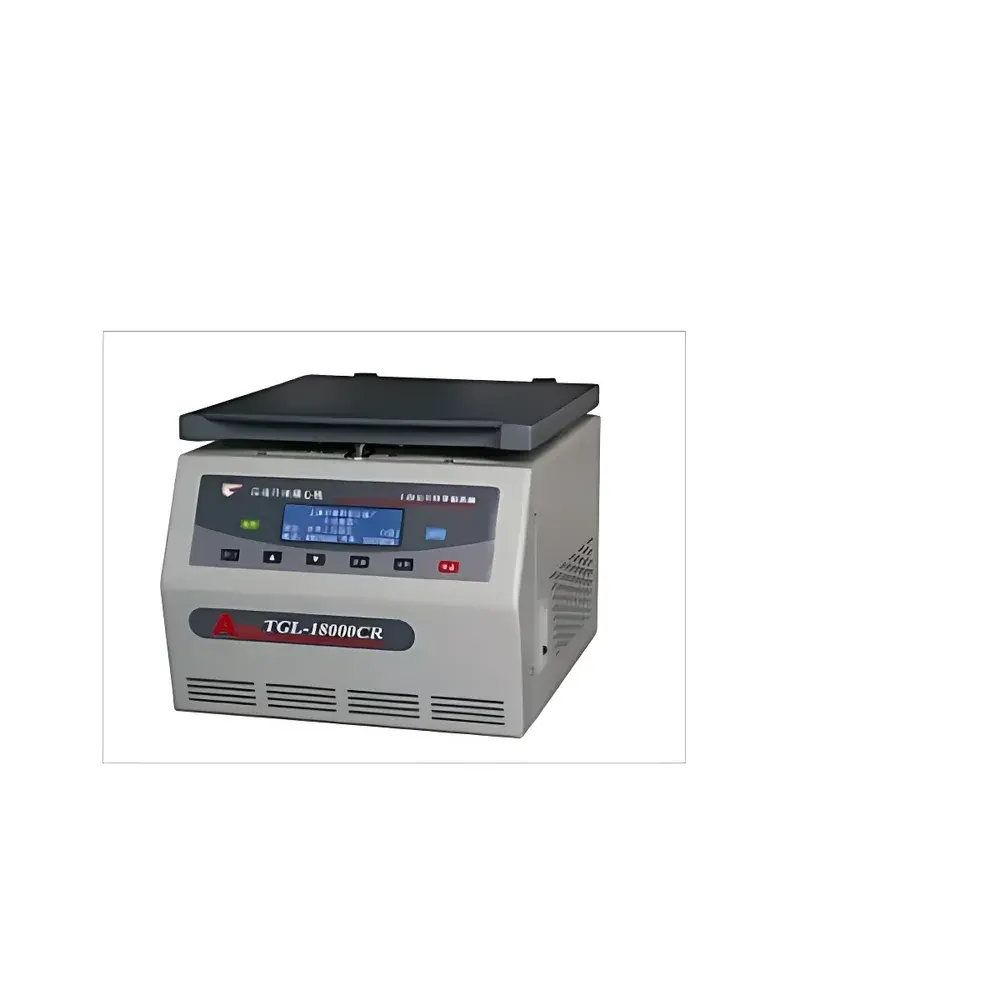
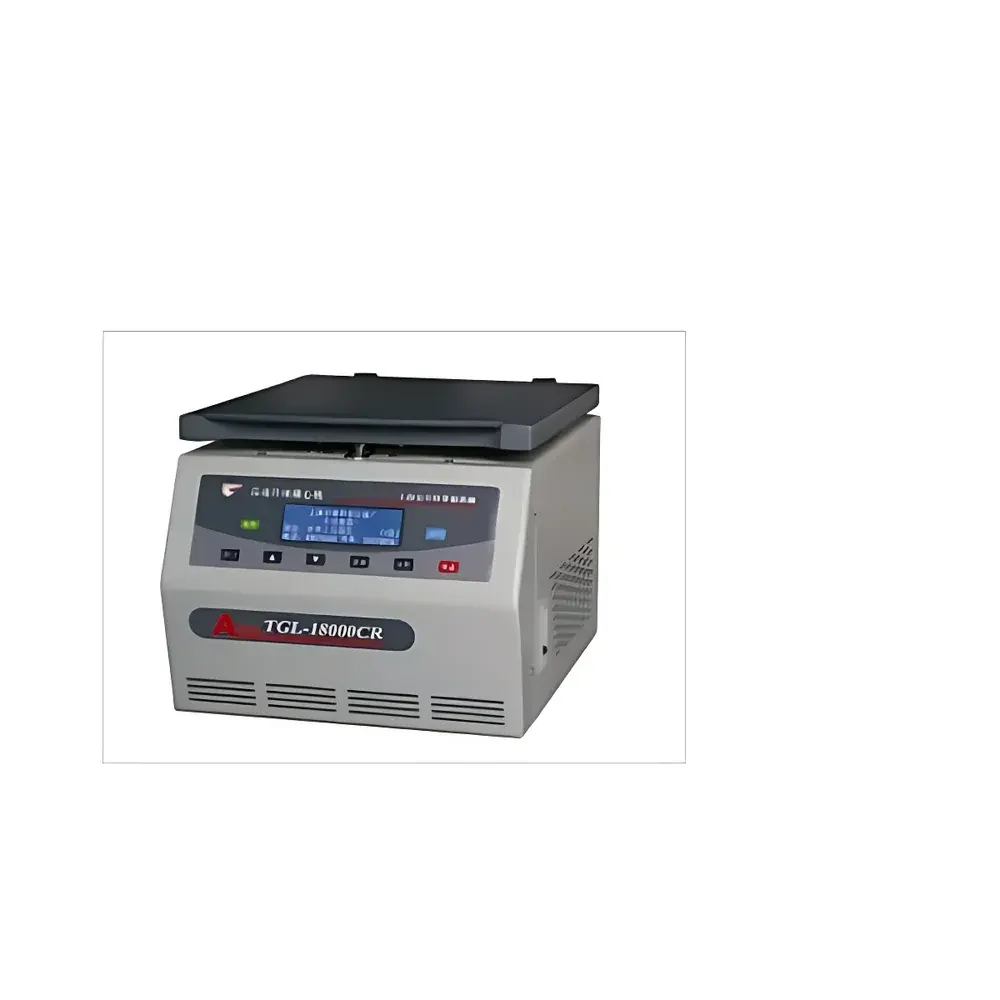
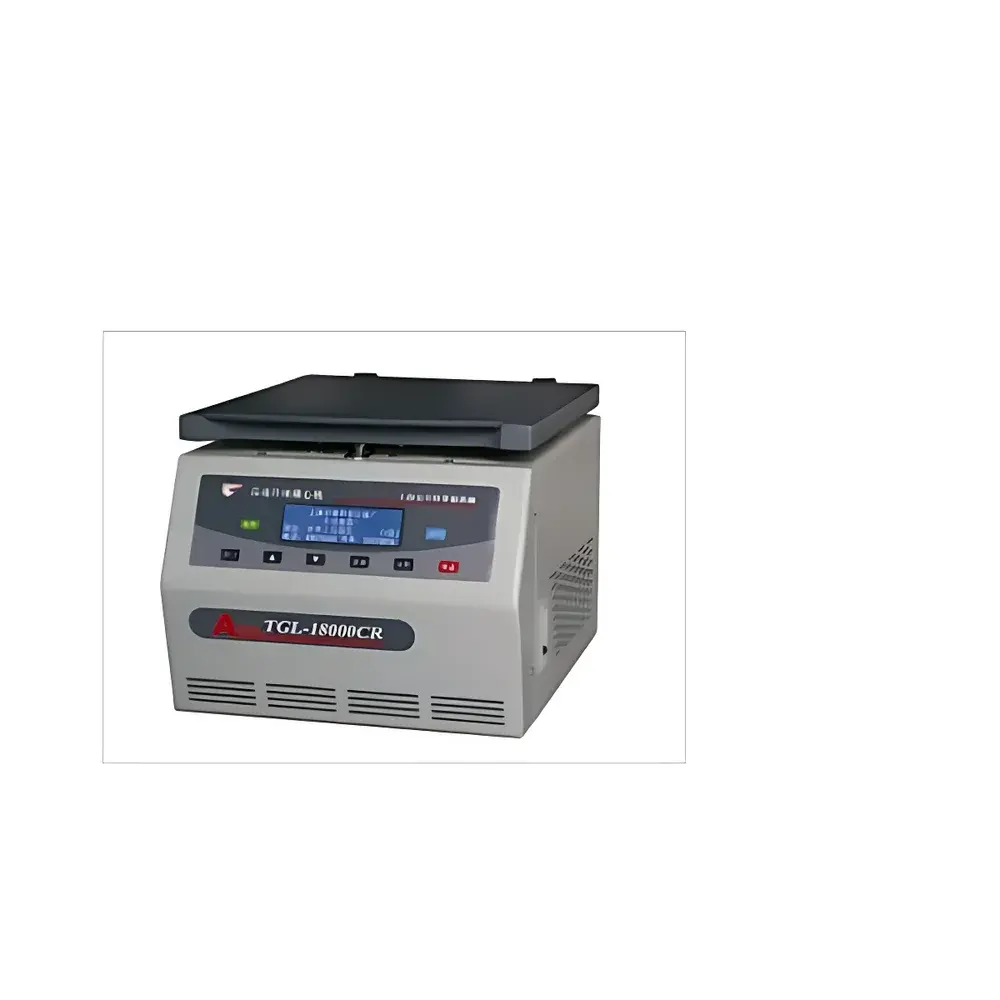
AnTing TGL-18000CR High-Speed Refrigerated Benchtop Centrifuge
| Brand | AnTing |
|---|---|
| Origin | Shanghai, China |
| Model | TGL-18000CR |
| Type | Benchtop Centrifuge |
| Category | High-Speed Refrigerated Centrifuge (10,000–30,000 rpm) |
| Max Speed | 18,000 rpm |
| Max RCF | 23,545 × g |
| Temperature Range | −20 °C to +30 °C |
| Temp. Accuracy | ±2 °C |
| Timer Range | 0–99 min |
| Noise Level | <70 dB(A) |
| Dimensions (L×W×H) | 600 mm × 460 mm × 365 mm |
| Weight | 80 kg |
| Rotor Configurations | 1.5 mL × 12 (at 18,000 rpm) |
| Power Supply | 220 V, 50 Hz, 1.2 kW |
Overview
The AnTing TGL-18000CR is a high-performance benchtop refrigerated centrifuge engineered for precision separation of biological and chemical samples under controlled thermal conditions. Designed around a brushless DC motor and microprocessor-based speed/temperature regulation system, it delivers stable rotational dynamics across its full operational range — from 10,000 to 18,000 rpm — with real-time RCF (Relative Centrifugal Force) calculation and automatic rotor recognition logic. Its refrigeration system maintains chamber temperatures between −20 °C and +30 °C with ±2 °C accuracy, enabling sensitive applications such as nucleic acid purification, protein precipitation, and organelle isolation where thermal stability directly impacts sample integrity and reproducibility. As a Class II benchtop instrument compliant with IEC 61010-1 safety standards, the TGL-18000CR integrates mechanical braking, imbalance detection, and lid interlock mechanisms to ensure operator safety during routine and high-throughput workflows.
Key Features
- Brushless DC drive motor ensuring extended service life, low maintenance, and consistent torque delivery at all speeds
- Active refrigeration system with independent compressor and dual-stage heat exchange for rapid cooling and temperature stabilization
- Microprocessor-controlled digital interface with LCD display showing real-time rpm, RCF, time remaining, and chamber temperature
- Five pre-programmed rotor configurations recognized automatically upon insertion; each optimized for specific tube formats and maximum g-force limits
- Dynamic imbalance compensation algorithm that detects and corrects minor load asymmetries without interrupting operation
- Soft-braking mode to prevent resuspension of pelleted material during deceleration
- Acoustic enclosure design reducing operational noise to <70 dB(A), suitable for shared laboratory environments
Sample Compatibility & Compliance
The TGL-18000CR accommodates standard microcentrifuge tubes (1.5 mL and 2.0 mL), conical-bottom tubes (5 mL, 7 mL, and 10 mL), and compatible swing-out or fixed-angle rotors certified to ISO 15197 and ISO 20943 requirements for clinical and research-grade centrifugation. All rotors are dynamically balanced and validated per ISO 13485 manufacturing protocols. The unit meets electromagnetic compatibility (EMC) requirements per EN 61326-1 and electrical safety standards per EN 61010-1. While not FDA 510(k)-cleared, its operational parameters align with CLIA-waived and GLP-compliant laboratory practices when used with documented SOPs and routine calibration verification.
Software & Data Management
The TGL-18000CR operates via an embedded firmware platform supporting audit-trail-capable parameter logging (speed, temperature, duration, rotor ID, and start/stop timestamps). Optional RS-232 or USB data export enables integration into LIMS environments for traceable recordkeeping. Though no proprietary PC software is bundled, the device supports third-party lab automation interfaces compliant with ASTM E1384 and ISO/IEC 17025 data integrity frameworks. All settings can be saved as user-defined protocols (up to 10 memory slots), facilitating repeatable method execution across shifts and operators.
Applications
- Purification of plasmid DNA, genomic DNA, and RNA from bacterial lysates and mammalian cell suspensions
- Isolation of exosomes, microvesicles, and extracellular particles via differential ultracentrifugation protocols
- Clarification of cell culture supernatants prior to HPLC or ELISA analysis
- Preparation of enzyme fractions and subcellular organelles (e.g., mitochondria, nuclei) using density gradient-compatible rotors
- Routine QC testing in pharmaceutical development labs requiring temperature-controlled pelleting of protein formulations
- Environmental microbiology workflows involving sedimentation of waterborne pathogens and biofilm fragments
FAQ
What is the minimum temperature achievable during operation?
The chamber can reach and maintain −20 °C under standard ambient conditions (25 °C, 50% RH); cooling time to −20 °C from room temperature is approximately 15 minutes.
Can this centrifuge accommodate 0.5 mL microtubes?
Yes, when used with optional adapter inserts for the 1.5 mL rotor configuration; adapters must be validated for balance and RCF tolerance prior to use.
Is rotor certification documentation available for regulatory submissions?
Certificate of Conformance (CoC) and rotor balancing reports are provided with each shipment; additional ISO 17025-accredited calibration certificates may be requested at time of order.
Does the unit support continuous run mode beyond 99 minutes?
No — the built-in timer is capped at 99 minutes; for extended protocols, users must implement external timing control or sequential program triggering.
What maintenance intervals are recommended for optimal performance?
Compressor oil inspection every 12 months; rotor cleaning and visual inspection after each use; full preventive maintenance (including refrigerant pressure check and motor brush assessment) every 24 months or 2,000 operating hours, whichever occurs first.



