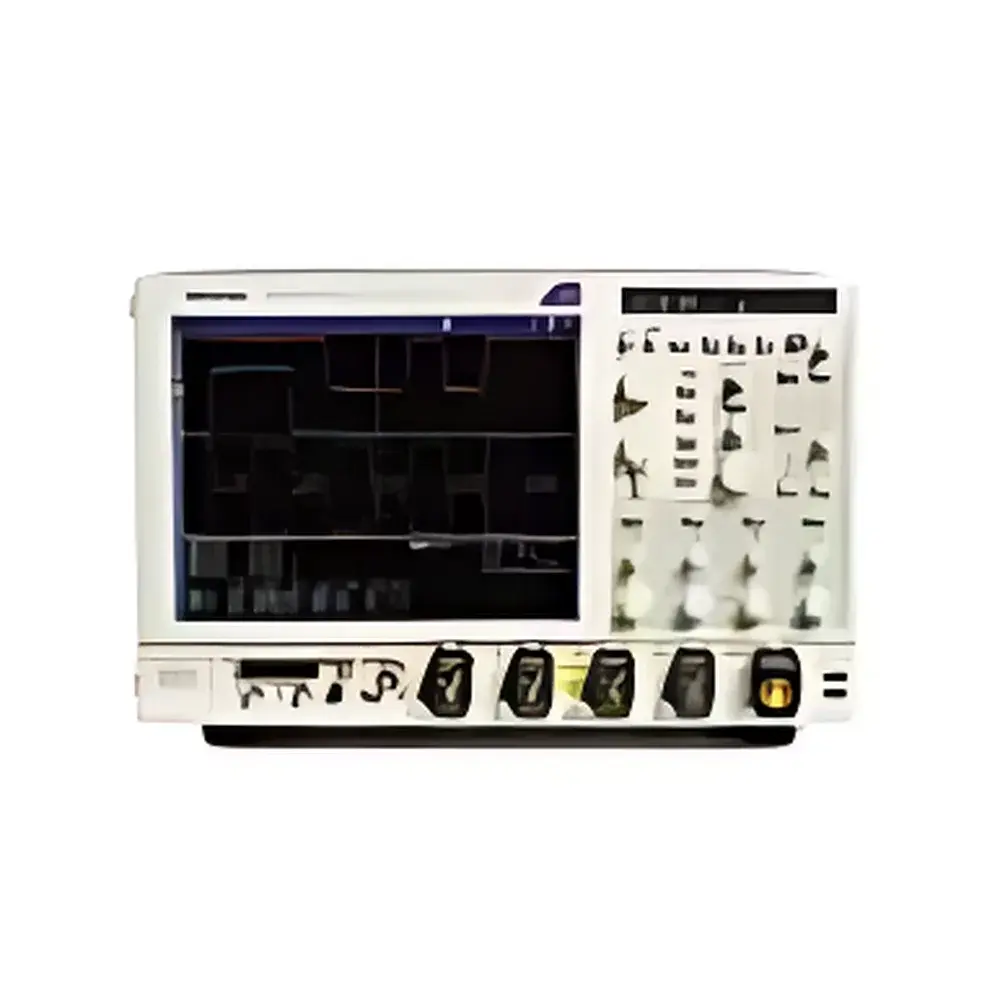
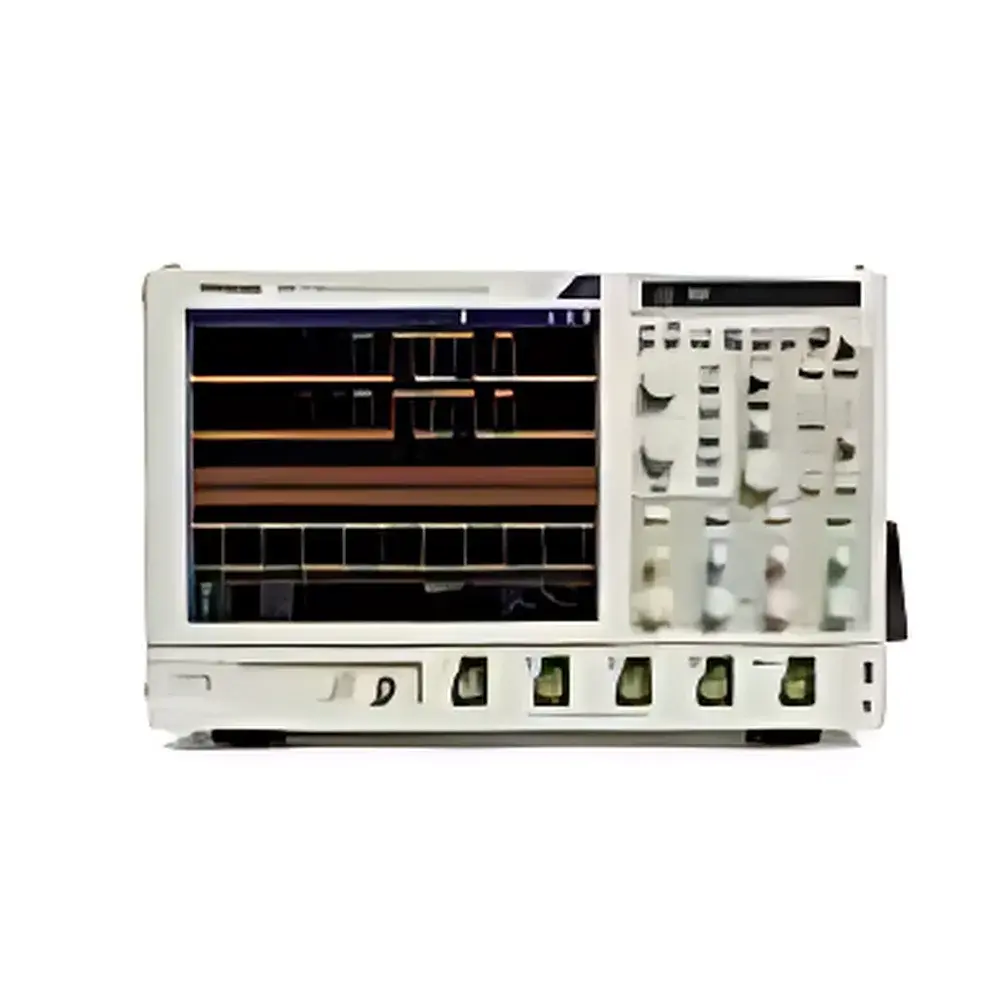
Tektronix DPO7000C and DPO70000 Series Digital Phosphor Oscilloscopes (DPO) / Mixed Signal Oscilloscopes (MSO)
| Brand | Tektronix |
|---|---|
| Origin | USA |
| Model | DPO7000C Series / MSO/DPO70000 Series |
| Analog Bandwidth | 500 MHz – 3.5 GHz (DPO7000C) |
| Sample Rate | 10 GS/s – 40 GS/s (DPO7000C) |
| Analog Channels | 4 |
| Digital Channels | 16 (MSO models) |
| Maximum Record Length | 500 Mpts (DPO7000C) |
Overview
The Tektronix DPO7000C and DPO70000 Series represent the high-performance tier of digital phosphor oscilloscopes engineered for demanding signal integrity, high-speed serial compliance, and complex embedded system validation. Leveraging real-time digital phosphor architecture, these instruments deliver deep memory acquisition, high-fidelity signal reconstruction, and deterministic trigger response—critical for capturing transient anomalies in multi-gigabit communication links, power electronics, RF-modulated baseband signals, and mixed-signal embedded designs. The DPO7000C Series targets mid-to-high bandwidth applications up to 3.5 GHz with scalable record depth and comprehensive serial protocol analysis, while the DPO70000 Series extends capabilities into millimeter-wave adjacent domains with analog bandwidths up to 33 GHz, supporting advanced R&D in 5G FR2, optical interconnects, PCIe 6.0, and DDR5/6 memory subsystems. Both platforms utilize proprietary ASIC-based acquisition engines to ensure low jitter, high effective number of bits (ENOB), and consistent waveform fidelity across full bandwidth.
Key Features
- Real-time digital phosphor display engine enabling intensity-graded waveform accumulation for anomaly detection and statistical behavior visualization
- Precision-triggering architecture with Pinpoint™ technology supporting over 30 trigger types—including edge, glitch, pulse width, timeout, setup/hold, slew rate, window, and state-based triggers—with sub-picosecond timing resolution
- High-resolution acquisition: up to 100 GS/s real-time sampling (DPO70000), 12.5 GS/s on digital channels with 80 ps timing resolution, and hardware-accelerated de-skew calibration
- Scalable memory depth: standard 500 Mpts (DPO7000C), expandable to 1 Gpts (DPO70000), enabling long-duration capture at maximum sample rate without interpolation artifacts
- Integrated 4-channel analog + 16-channel digital (MSO variants) acquisition with per-channel independent vertical scaling, offset control, and probe deskew compensation
- LXI Class C-compliant 10/100/1000BASE-T Ethernet interface, five USB 2.0 host ports, GPIB, eSATA, DVI-D, and VGA outputs for flexible remote control, data export, and multi-display configuration
Sample Compatibility & Compliance
- Designed for laboratory, manufacturing test, and R&D environments requiring traceable measurement uncertainty and audit-ready documentation
- Fully supports industry-standard compliance test suites including USB 2.0/3.x, PCI Express (Gen3–Gen6), DDR4/5, MIPI D-PHY/M-PHY, HDMI 2.1, Thunderbolt 3/4, 10GBASE-KR/KR4, BroadR-Reach, and MIL-STD-1553
- Software options such as SR-AERO, SR-AUTO, SR-ENET, SR-USB, and SR-PCIE provide protocol-aware triggering, decode, and automated pass/fail reporting aligned with IEEE, JEDEC, USB-IF, PCI-SIG, and MIPI Alliance specifications
- Compliant with FDA 21 CFR Part 11 requirements when used with optional TekScope Anywhere™ and validated instrument firmware; supports GLP/GMP-aligned audit trails via secure user authentication and electronic signature workflows
Software & Data Management
- TekScope Anywhere™ enables remote waveform analysis, collaborative annotation, and cross-platform data sharing via web browser or desktop client—supporting secure HTTPS, SFTP, and TLS 1.2 encrypted transfers
- On-instrument analysis includes 53 parametric measurements with statistical aggregation (min/max/mean/std dev), FFT spectral analysis (up to 128 Mpoint), histogram-based jitter decomposition, and waveform-level limit testing with customizable pass/fail overlays
- Optional application software modules—such as DPOJET (jitter and eye diagram analysis), PWR (power integrity), ET3 (Ethernet compliance), BRR (BroadR-Reach), and SignalVu (vector signal analysis)—are validated against industry reference waveforms and certified for use in ISO/IEC 17025-accredited labs
- All measurement results, screen captures, and setup files are stored in vendor-neutral formats (CSV, PNG, MATLAB .mat, HDF5) to ensure long-term archival and third-party interoperability
Applications
- Signal integrity validation of high-speed serial links (PCIe, SATA, SAS, USB, HDMI, DisplayPort)
- Power electronics design: switching loss analysis, ripple measurement, and EMI pre-compliance using time-domain and frequency-domain correlation
- Mixed-signal embedded debugging: simultaneous observation of analog sensor inputs, digital control buses (I²C, SPI, UART), and processor activity across multiple clock domains
- Radar and communications systems development: modulation analysis of wideband IF/RF signals using optional SignalVu-PC integration
- Automotive ECUs and ADAS validation: CAN FD, LIN, FlexRay, and Automotive Ethernet (100BASE-T1, 1000BASE-T1) protocol conformance and timing margin verification
- Memory subsystem characterization: DDR4/5 write-leveling, read training, and command bus timing analysis with automated setup/hold violation detection
FAQ
What is the difference between DPO7000C and DPO70000 Series?
The DPO7000C Series offers analog bandwidths from 500 MHz to 3.5 GHz with up to 40 GS/s sampling and 500 Mpts record length, optimized for general-purpose high-speed digital and mixed-signal debugging. The DPO70000 Series delivers 4–33 GHz analog bandwidth, 25–100 GS/s real-time sampling, and 1 Gpts memory, targeting advanced R&D in optical interconnects, mmWave communications, and next-generation memory interfaces.
Can I upgrade a DPO7000C to DPO70000 Series functionality?
No—these are distinct hardware platforms with different front-end architectures, ADCs, and acquisition ASICs. However, DPO7000C users may trade in eligible units for up to 50% credit toward a new DPO70000 Series instrument under Tektronix’s Trade-In Program.
Are serial protocol decoders included by default?
Basic trigger support for common protocols (I²C, SPI, UART, USB 2.0) is built-in. Full decode, analysis, and compliance test capabilities require separately licensed application modules (e.g., SR-EMBD, SR-USB, SR-PCIE), each validated per relevant industry standards.
Does the oscilloscope support automated compliance testing?
Yes—when configured with certified application software (e.g., ET3 for Ethernet, DDR Analysis for memory buses, USB2 for USB 2.0), the instrument executes standardized test plans, generates PDF reports with pass/fail status, and stores raw data for regulatory review in accordance with ISO/IEC 17025 and FDA 21 CFR Part 11 guidelines.
How is waveform data archived and shared across teams?
Using TekScope Anywhere™, engineers can export waveforms, measurements, and annotations in open formats (CSV, PNG, HDF5), synchronize projects via cloud storage integrations, and maintain version-controlled archives with timestamped metadata and user attribution—all without proprietary runtime dependencies.