
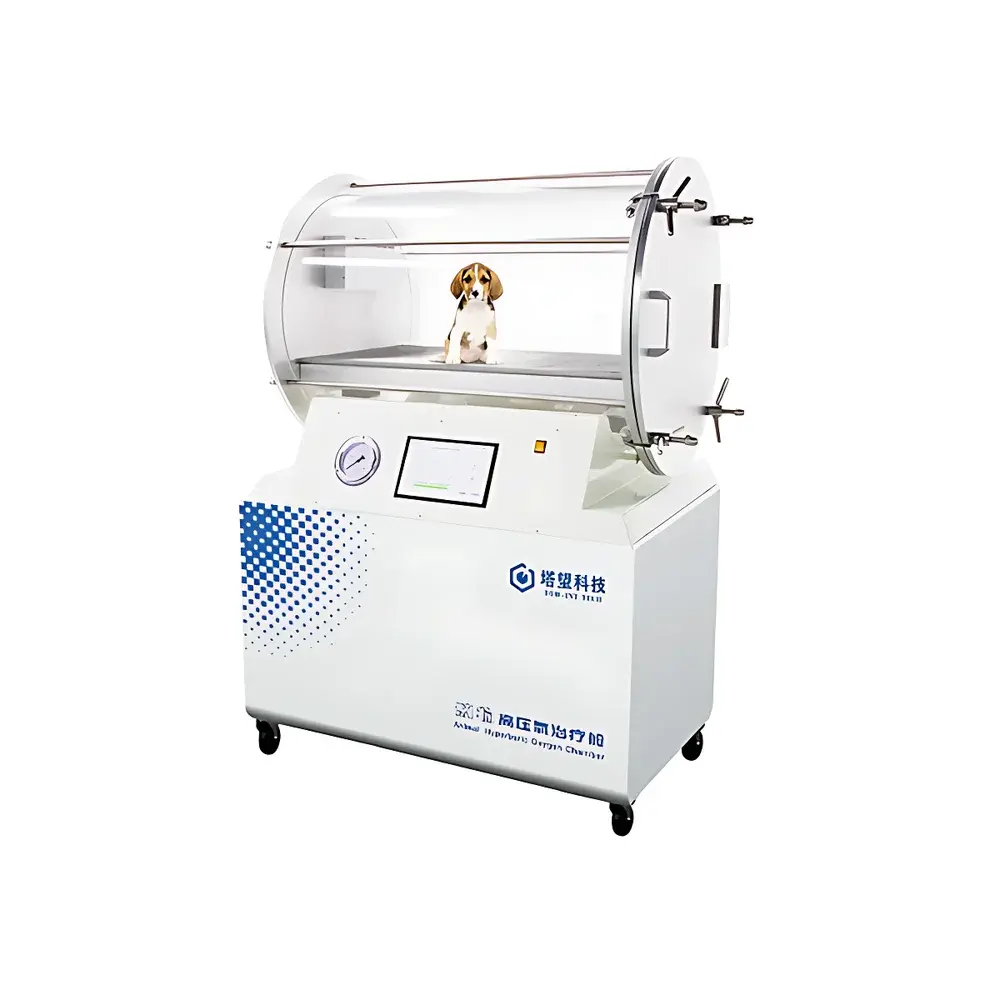
TOW-INT ProOx-820V Animal Hyperbaric Oxygen Chamber (Classic Model)
| Brand | TOW-INT |
|---|---|
| Origin | Shanghai, China |
| Manufacturer Type | Direct Manufacturer |
| Country of Origin | China |
| Model | ProOx-820V |
| Instrument Category | Veterinary Rehabilitation Therapy System |
| Operating Pressure Range | 1.5–2.0 ATA |
| Internal Dimensions | 1000 mm (L) × Φ610 mm (D) |
| External Dimensions | 1500 × 1100 × 810 mm (L×H×W) |
| Net Weight | 250 kg |
| Oxygen Concentration Control Range | 21–95% (reaches ≥60% within 10 min) |
| Oxygen Sensor | High-Precision Zirconia-Based O₂ Sensor |
| CO₂ Monitoring Range | 0–5% |
| Temperature Display Range | 0–50 °C |
| Humidity Display Range | 0–100% RH |
| Oxygen Flow Rate | 20 L/min (compatible with medical-grade oxygen generators) |
| Touchscreen Interface | 10-inch HD capacitive touchscreen |
| Power Supply | 220 V / 50 Hz |
| Total Power Consumption | 1500 W |
| Acoustic Noise Level | ≤50 dB(A) |
| Safety Features | Dual-redundant pressure relief valves, manual emergency depressurization, mechanical door locking with torque-limited screw actuation, integrated hair/fiber filtration on gas inlets and exhaust ports |
| Compliance | Designed per ISO 13485 principles for veterinary medical device manufacturing |
Overview
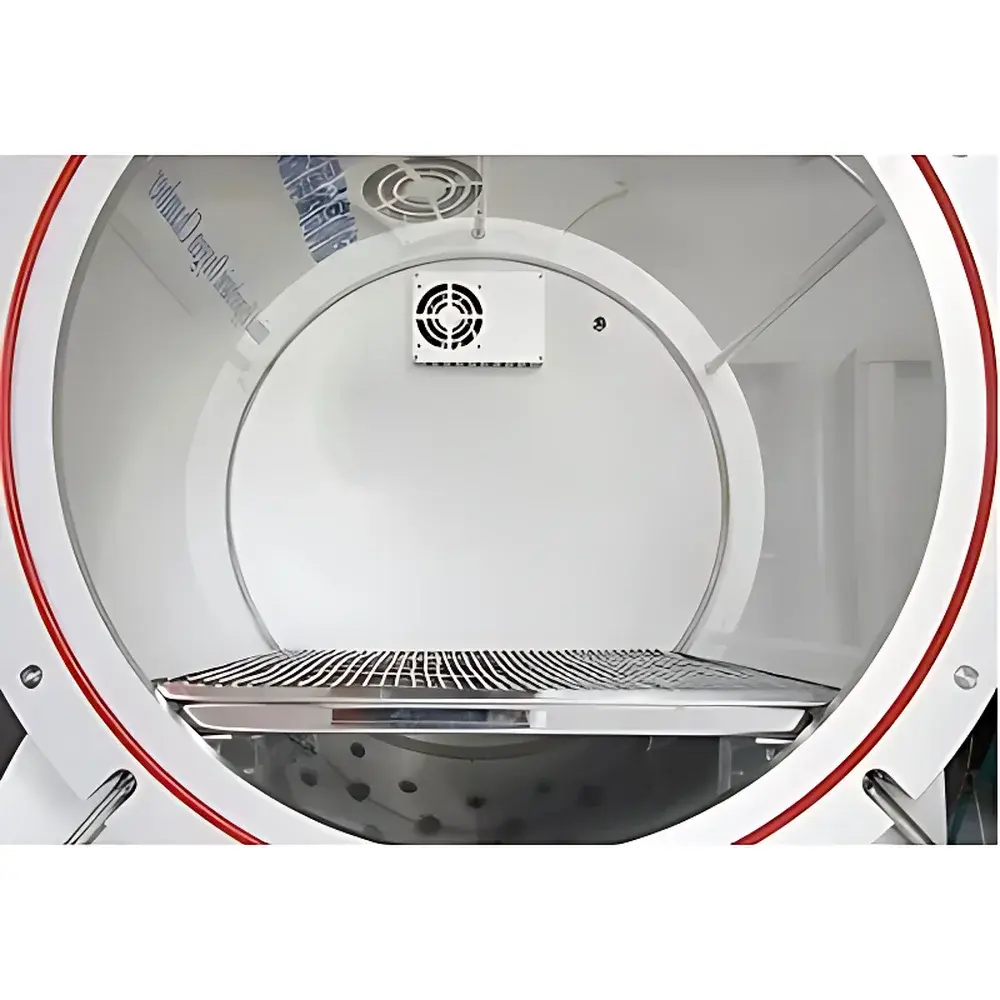
The TOW-INT ProOx-820V Animal Hyperbaric Oxygen Chamber (Classic Model) is an engineered Class II veterinary medical device designed for controlled delivery of hyperbaric oxygen therapy (HBOT) to small- to medium-sized laboratory and companion animals. It operates on the physiological principle that elevated ambient pressure—within the clinically validated range of 1.5 to 2.0 atmospheres absolute (ATA)—increases the partial pressure of oxygen dissolved physically in plasma, thereby enhancing oxygen diffusion gradients across capillary membranes and into hypoxic tissues. This mechanism supports evidence-based applications in ischemia-reperfusion injury mitigation, anaerobic infection control, neuroprotective intervention post-traumatic brain injury, and adjunctive wound healing. The chamber integrates a robust stainless steel structural base with a transparent acrylic cylindrical chamber body—optimized for visual monitoring, optical accessibility, and non-invasive behavioral observation during treatment sessions.
Key Features
- Intelligent dual-mode control system: Fully programmable automatic operation with manual override capability; all therapeutic parameters—including pressure ramp rate, dwell time, O₂ concentration profile, and cycle count—are configurable via a 10-inch high-resolution capacitive touchscreen interface.
- Structural integrity and biocompatibility: Main chamber constructed from optically clear, medical-grade acrylic (≥25 mm thickness); load-bearing base fabricated from electropolished 304 stainless steel with corrosion-resistant surface finish for repeated disinfection cycles.
- Real-time environmental monitoring: Integrated zirconia-based electrochemical oxygen sensor (±1.5% full-scale accuracy), piezoresistive pressure transducer (0.1% FS repeatability), and NDIR CO₂ sensor enable continuous closed-loop feedback for oxygen concentration regulation and safety interlock validation.
- Multi-layered safety architecture: Mechanical door locking mechanism with calibrated torque-limiting screws prevents inadvertent opening under pressure; redundant spring-loaded pressure relief valves (set at 2.1 ATA) provide fail-safe overpressure protection; manual emergency depressurization valve accessible externally without tooling.
- Gas handling optimization: Inlet and exhaust lines equipped with multi-stage particulate filters (≤10 µm retention) to prevent hair, dander, or bedding debris from compromising sensor performance or flow dynamics; compatible with hospital-grade 20 L/min oxygen supply systems.
- Modular transport design: Chamber and base are separable units secured by standardized flange interfaces, enabling disassembly for passage through standard laboratory doorways and reassembly without recalibration.
Sample Compatibility & Compliance
The ProOx-820V accommodates single or paired subjects up to 15 kg total mass (e.g., adult rats, rabbits, cats, or small dogs), with adjustable internal restraint platforms and optional thermal regulation add-ons. All materials contacting the animal environment comply with USP Class VI biocompatibility standards. While not FDA-cleared for human use, the system is manufactured under a quality management system aligned with ISO 13485:2016 requirements for veterinary medical devices. Its operational logging capability—including timestamps, pressure traces, O₂% setpoints, and alarm events—supports audit readiness for GLP-compliant preclinical studies. Data export formats (CSV/JSON) facilitate integration into institutional electronic lab notebooks (ELNs) and regulatory submission packages.
Software & Data Management
The embedded firmware logs all critical process variables at 1-second intervals to non-volatile memory, with optional USB export for offline analysis. No cloud connectivity or remote access functionality is included—ensuring data sovereignty and alignment with institutional IT security policies. Audit trails record operator ID (via login prompt), parameter changes, and safety event triggers (e.g., overpressure activation, O₂ deviation >±3%). The system supports 21 CFR Part 11–compliant user authentication when deployed with third-party ELN integrations requiring electronic signature validation. Firmware updates are performed locally via encrypted USB drive with SHA-256 checksum verification.
Applications
This chamber is routinely employed in translational research settings investigating: cerebral ischemia models (MCAO, cardiac arrest–induced global hypoxia); traumatic spinal cord injury recovery kinetics; chronic wound healing in diabetic rodent models; radiation-induced tissue damage mitigation; gas embolism reversal protocols; and antibiotic synergy studies against Clostridium perfringens and other obligate anaerobes. Its precise pressure and oxygen control enables replication of clinical HBOT protocols used in veterinary hospitals treating CO poisoning, necrotizing fasciitis, and post-surgical flap compromise. Published studies utilizing comparable systems have demonstrated statistically significant improvements in neuronal survival (p < 0.01), microvascular perfusion density (+37% vs. controls), and collagen deposition rates in granulation tissue.
FAQ
What is the maximum safe operating pressure for the ProOx-820V?
The chamber is rated for continuous operation at 2.0 ATA, with mechanical safety margins verified to 2.5 ATA per ASME BPVC Section VIII Division 1 design criteria.
Can this chamber be used for longitudinal studies requiring repeated treatments?
Yes—its low-noise (<50 dB) operation, non-invasive monitoring port, and programmable multi-cycle scheduling support daily or twice-daily dosing regimens over weeks without habituation artifacts.
Is calibration of the oxygen sensor required by the user?
The zirconia sensor is factory-calibrated and drift-compensated; annual verification using certified 21% and 95% O₂ gas standards is recommended per ISO 8573-7 for medical gas analyzers.
Does the system include documentation for regulatory submissions?
A comprehensive Technical File (per MDR Annex II) and Design History File summary are available upon request for IACUC, ethics committee, or funding agency review.
How is temperature stability maintained during pressurization?
Adiabatic heating during compression is offset by passive thermal mass and optional external chiller loop integration (not included); internal temperature remains within ±1.5 °C of setpoint during steady-state operation.




