TOW-INT ProOx-810 Hypobaric Hypoxia Chamber for Animal Research
| Brand | TOW-INT |
|---|---|
| Origin | Shanghai, China |
| Manufacturer Type | OEM/ODM Manufacturer |
| Country of Origin | China |
| Model | ProOx-810 |
| Instrument Type | Hypobaric Hypoxia Chamber |
| Max Simulated Altitude | 12,000 m |
Overview
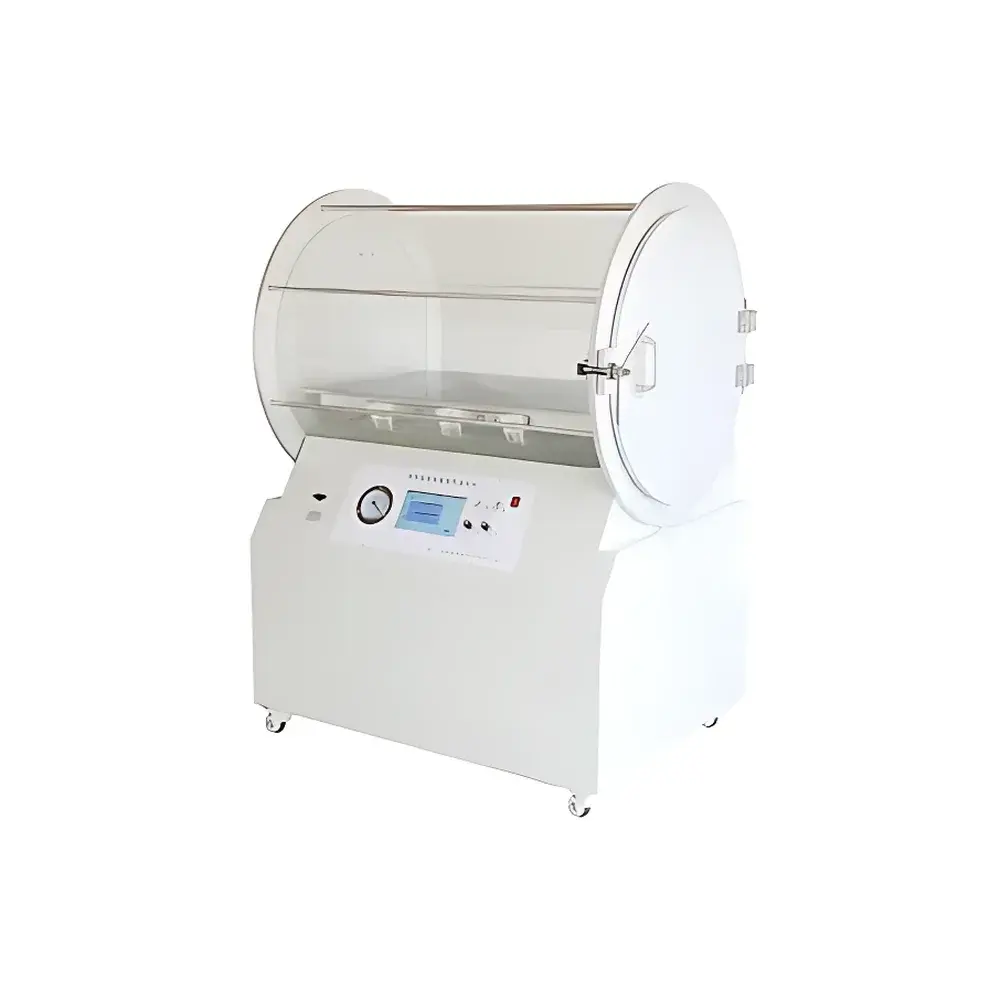
The TOW-INT ProOx-810 Hypobaric Hypoxia Chamber is an engineered platform for preclinical simulation of high-altitude environmental conditions in rodent and small-to-medium-sized mammalian models (e.g., mice, rats, rabbits, dogs, and non-human primates). It operates on the principle of controlled hypobaric hypoxia—reducing ambient pressure to lower partial pressure of oxygen (pO₂) while maintaining normoxic gas composition—thereby replicating physiological stressors encountered at elevations up to 12,000 meters above sea level. Unlike normobaric hypoxia systems that dilute oxygen with nitrogen, the ProOx-810 achieves true altitude fidelity by dynamically regulating chamber pressure via precision vacuum control and redundant safety-critical pressure compensation. This enables accurate modeling of systemic hypoxemia, pulmonary vasoconstriction, erythropoietic response, and neurovascular adaptation—key endpoints in cardiovascular, respiratory, metabolic, and neuroscience research.
Key Features
- Integrated dual-pump gas delivery system: Medical-grade silent high-pressure and low-pressure pumps ensure stable pressure ramping and maintenance across wide operational ranges (10–760 mmHg absolute pressure), with real-time feedback control.
- Robust chamber construction: 25-mm-thick optical-grade acrylic cylinder with aluminum and stainless-steel structural frame; fully transparent for continuous visual monitoring without disturbing experimental conditions.
- Gas conditioning architecture: Multi-stage filtration (HEPA + activated carbon + coalescing filters) removes particulates, moisture, oil vapor, and hydrocarbons—critical for fire safety in elevated O₂ environments and long-term animal welfare.
- Uniform gas distribution design: Patented buffer tank and laminar-flow diffuser array eliminate turbulent micro-jets, ensuring spatial homogeneity of pO₂ and minimizing localized stress responses in conscious or restrained subjects.
- Fail-safe engineering: Dual independent emergency venting valves, hardware-triggered rapid depressurization circuit, and redundant pressure transducers compliant with IEC 61508 SIL2 functional safety requirements.
- Modular mobility: Locking casters with load-rated brakes support repositioning within vivarium corridors or shared core facilities without requiring permanent installation.
Sample Compatibility & Compliance
The ProOx-810 accommodates standard caging systems (e.g., ventilated IVC cages, metabolic cages, telemetry-compatible enclosures) and supports both acute and chronic exposure protocols—including intermittent hypoxia (IH), sustained hypobaric hypoxia (SHH), and stepwise altitude acclimatization regimens. All internal surfaces are autoclavable or compatible with veterinary-grade disinfectants (e.g., Virkon®, 70% ethanol). The system meets ISO 13485:2016 design control requirements for medical device manufacturing and incorporates design elements aligned with AAALAC International accreditation standards for animal housing and environmental enrichment. Pressure control algorithms adhere to ASTM F2953-14 (Standard Practice for Hypobaric Testing of Aerospace Equipment), and data logging complies with ALCOA+ principles for GLP/GCP-compliant studies.
Software & Data Management
The embedded ProOx Control Suite (v4.2) provides intuitive GUI-based protocol programming, real-time multichannel visualization (pressure, temperature, relative humidity, O₂%, CO₂%), and automated alarm escalation (email/SMS via optional gateway). All sensor data—including timestamped setpoints and deviations—are recorded at ≤1 Hz resolution with cryptographic hash integrity verification. Audit trails comply with FDA 21 CFR Part 11 requirements: electronic signatures, role-based access control, and immutable record retention. Export formats include CSV, HDF5, and MATLAB-compatible .mat files for integration into downstream analysis pipelines (e.g., Python/Pandas, R, MATLAB). Optional API support enables synchronization with third-party telemetry platforms (DSI, Ponemah) or LIMS systems.
Applications
The ProOx-810 serves as a validated tool across multiple translational domains: pulmonary hypertension modeling (e.g., chronic hypobaric hypoxia-induced RV remodeling); ischemic preconditioning studies; high-altitude cerebral edema (HACE) and sleep-disordered breathing mechanisms; mitochondrial bioenergetics under low pO₂; gut-microbiota axis modulation in hypoxia; pharmacokinetic evaluation of altitude-adapted drug formulations; and validation of anti-hypoxia therapeutics (e.g., HIF stabilizers, antioxidants, ferroptosis inhibitors). Its reproducible environmental control has supported peer-reviewed work published in Cell Metabolism, Advanced Science, Chemical Engineering Journal, and European Journal of Pharmacology, among others—demonstrating utility in mechanistic discovery and regulatory-grade efficacy testing.
FAQ
What is the maximum simulated altitude, and how is it validated?
The ProOx-810 achieves 12,000 m equivalent altitude (≈190 mmHg absolute pressure) per ISO 2533:2023 atmospheric model; calibration is traceable to NIM (National Institute of Metrology, China) certified pressure standards.
Can the system operate unattended for extended durations?
Yes—designed for continuous 30-day operation with redundant power supplies, thermal runaway protection, and automated fault recovery; includes remote monitoring via Ethernet/Wi-Fi.
Is integration with physiological telemetry possible?
Yes—the chamber features standardized analog/digital I/O ports (0–5 V, RS-485) and TTL triggers for synchronized acquisition of ECG, SpO₂, core temperature, BP, and respiration from commercial telemetry systems.
Does the system support custom gas mixtures beyond air?
Optional configuration includes mass flow controllers for precise O₂/N₂/CO₂ blending, enabling hybrid normobaric-hypobaric protocols or hypercapnic hypoxia modeling.
What regulatory documentation is provided?
Each unit ships with Factory Acceptance Test (FAT) report, CE Declaration of Conformity (per Machinery Directive 2006/42/EC), RoHS compliance certificate, and full electrical safety test records (IEC 61010-1).