
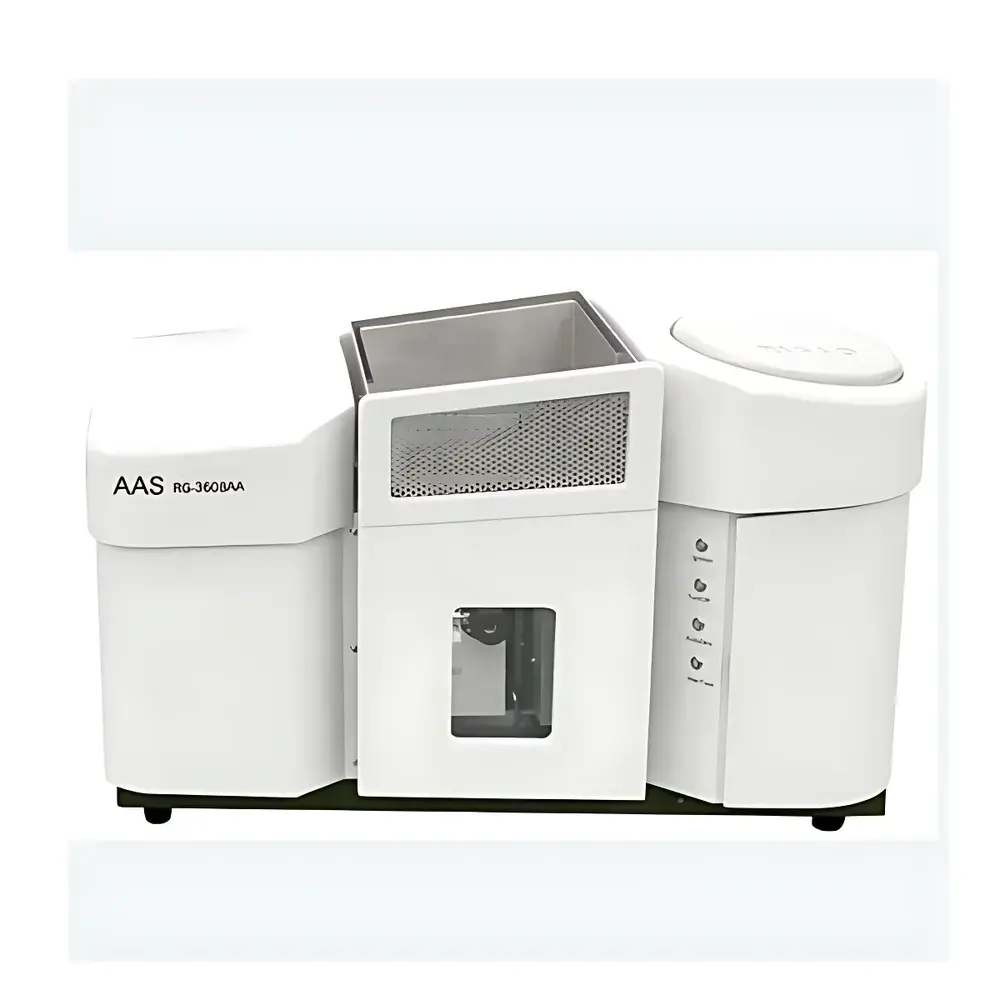
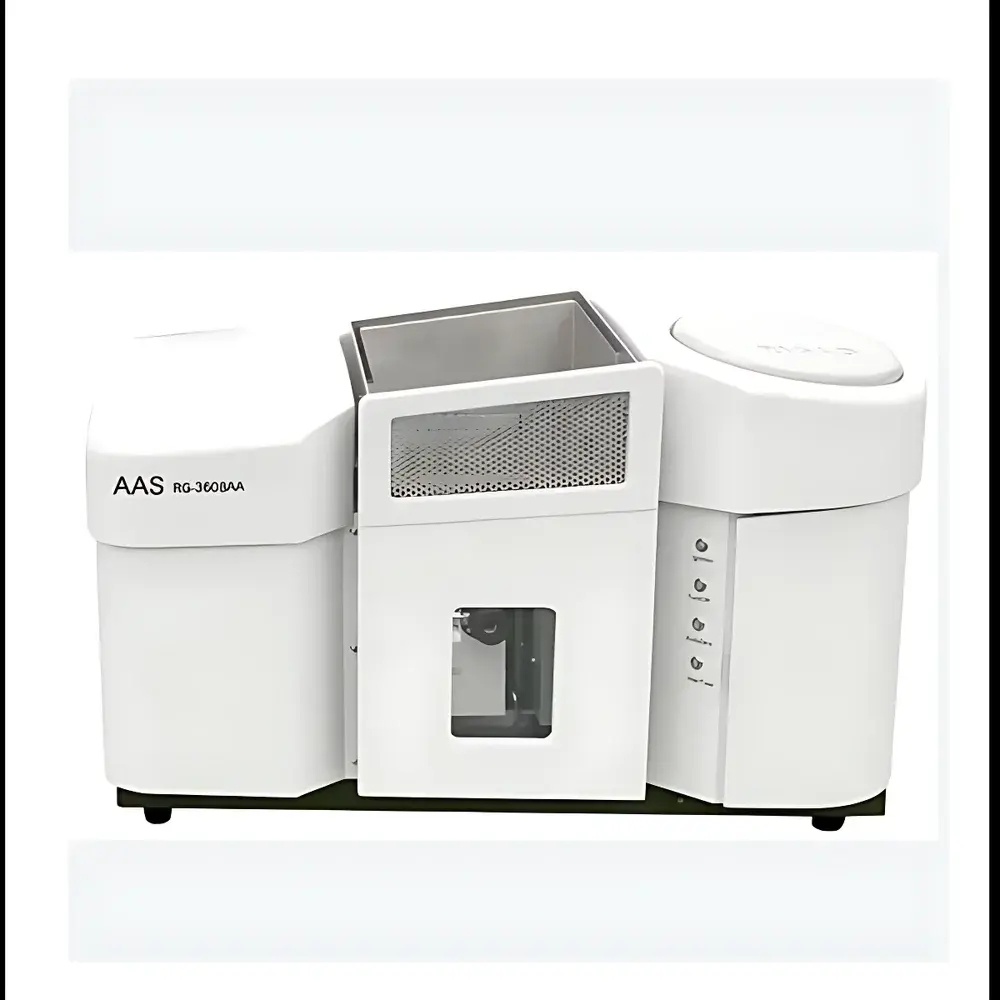
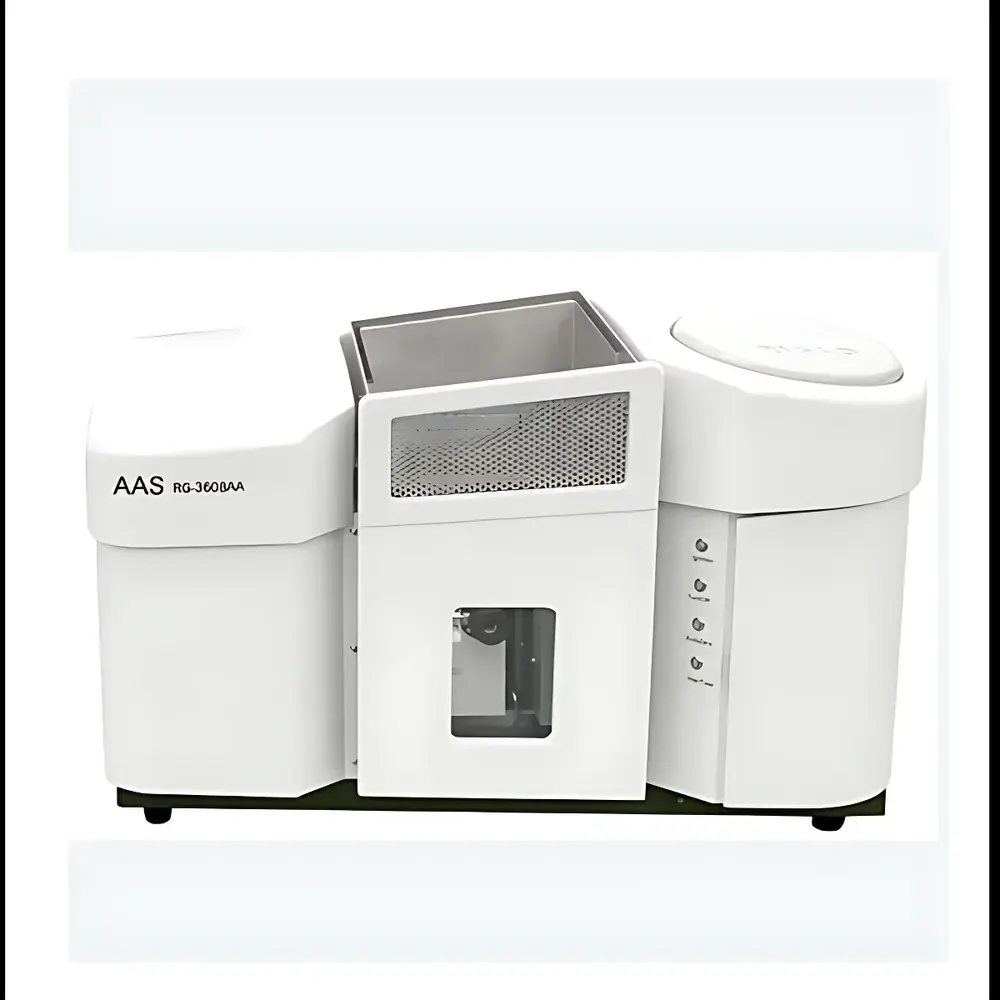
Shanghai Youke RG-3628AA Graphite Furnace Atomic Absorption Spectrometer
| Brand | Shanghai Youke |
|---|---|
| Origin | Shanghai, China |
| Instrument Type | Graphite Furnace AAS |
| Optical System | Single-beam |
| Background Correction | Deuterium Lamp + Self-reversal (SR) Dual-mode |
| Resolution | 0.2 nm |
| Characteristic Mass (for Graphite Furnace) | 0.05 pg for 1% absorption (Ag) |
| Repeatability (RSD) | ≤3% |
| Lamp Positions | 8-position motorized rotatable turret |
| Software Platform | RG-WinAAS for Windows OS |
| Compliance Context | Designed to support GLP-compliant workflows with audit-ready data logging and instrument parameter traceability |
Overview
The Shanghai Youke RG-3628AA is a dedicated graphite furnace atomic absorption spectrometer engineered for ultra-trace elemental quantification in complex matrices. It operates on the fundamental principle of atomic absorption spectroscopy (AAS), where analyte atoms—generated in a high-temperature graphite tube atomizer—are exposed to element-specific hollow cathode lamp (HCL) radiation. Absorption of this narrow-line radiation at characteristic wavelengths enables quantitative determination based on the Beer–Lambert law. As a graphite furnace system (GFAAS), the RG-3628AA excels in achieving sub-picogram detection limits—particularly critical for environmental water analysis, clinical trace metal testing, and food safety monitoring—where sample volume is limited and matrix interferences are pronounced. Its single-beam optical architecture is optimized for stability and long-term baseline reproducibility, while the integrated thermal management and precision gas control ensure consistent atomization efficiency across replicate runs.
Key Features
- High-efficiency single-beam optical path with all-reflective optics, minimizing chromatic aberration and maximizing signal-to-noise ratio (SNR) across the 190–900 nm spectral range.
- Dual-mode background correction combining deuterium arc lamp continuum source and self-reversal (SR) technique—enabling accurate compensation for both structured and non-structured molecular absorption over the full wavelength range.
- Motorized 8-lamp turret with 360° rotational positioning and automatic lamp identification; supports standard and high-intensity hollow cathode lamps as well as electrodeless discharge lamps (EDLs) for volatile elements.
- Intelligent graphite furnace control module with programmable temperature ramping (drying, ashing, atomization, cleaning), real-time temperature monitoring via integrated pyrometer, and argon/nitrogen dual-gas selection with flow regulation.
- Automated sample introduction system with programmable autosampler compatibility (optional), precise micro-volume pipetting (1–100 µL), and platform-assisted stabilized temperature platform furnace (STPF) operation.
- RG-WinAAS software suite running natively on Windows OS, providing method development wizards, calibration curve fitting (linear, quadratic, weighted least squares), QC flagging, and raw absorbance/time profile visualization.
Sample Compatibility & Compliance
The RG-3628AA accommodates liquid samples—including aqueous standards, digested biological tissues, acid-leached soils, and filtered wastewater—with optional hydride generation or cold vapor accessories for As, Se, Hg, and Cd speciation workflows. Its graphite furnace design allows direct analysis of viscous or particulate-containing samples following appropriate dilution or matrix modifiers (e.g., Pd-Mg nitrate). The instrument meets core functional requirements aligned with ISO 7159:2021 (AAS performance verification), ASTM D3559 (lead in water), and USP (heavy metals in pharmaceuticals). While not pre-certified for 21 CFR Part 11, RG-WinAAS supports configurable user access levels, electronic signature prompts, and immutable audit trails—facilitating internal validation for GLP and GMP environments.
Software & Data Management
RG-WinAAS provides a validated, intuitive interface for method setup, sequence definition, real-time spectral monitoring, and post-run evaluation. All instrument parameters—including lamp current, slit width, furnace program steps, and background correction mode—are logged with timestamps and operator IDs. Data export conforms to ASTM E1382-compliant ASCII formats (.txt, .csv) and includes metadata headers for LIMS integration. Optional database modules enable centralized storage, trend analysis of QC samples, and automated reporting per ISO/IEC 17025 clause 7.8 requirements.
Applications
- Environmental laboratories quantifying Pb, Cd, Cr, Ni, and As in drinking water per EPA Method 200.9 and ISO 11885.
- Clinical research labs measuring Cu, Zn, Fe, and Mn in serum and whole blood using matrix-matched calibration.
- Food testing facilities validating compliance with EU Commission Regulation (EC) No 1881/2006 for Cd in rice and chocolate.
- Geochemical labs analyzing trace REEs in leachates from mining tailings using Zeeman-corrected SR background subtraction.
- Pharmaceutical quality control for catalyst residue testing (e.g., Pd in active pharmaceutical ingredients) per ICH Q2(R2).
FAQ
What is the characteristic mass specification referenced in the technical documentation?
The RG-3628AA achieves a characteristic mass of ≤0.05 pg for silver (Ag) at 328.1 nm—defined as the absolute mass of analyte required to produce 1% absorption (absorbance = 0.0044) under standardized STPF conditions.
Does the instrument support Zeeman-effect background correction?
No—the RG-3628AA employs deuterium lamp and self-reversal dual-mode correction only; Zeeman systems require separate magnet-equipped optics and are not implemented in this model.
Can RG-WinAAS be validated for 21 CFR Part 11 compliance?
Yes—though the software does not ship with out-of-the-box Part 11 configuration, its role-based access control, electronic signature fields, and audit trail generation meet foundational technical controls required for laboratory validation.
Is the graphite furnace compatible with platform atomization and integrated modifier addition?
Yes—standard tungsten-coated graphite tubes with integrated platforms are supported, and the furnace program allows discrete modifier injection steps prior to ashing.
What maintenance protocols are recommended for long-term optical stability?
Monthly alignment verification using a holmium oxide reference filter, quarterly cleaning of the monochromator entrance slit with lint-free swabs and spectroscopic-grade ethanol, and annual lamp intensity calibration using NIST-traceable standards.





