
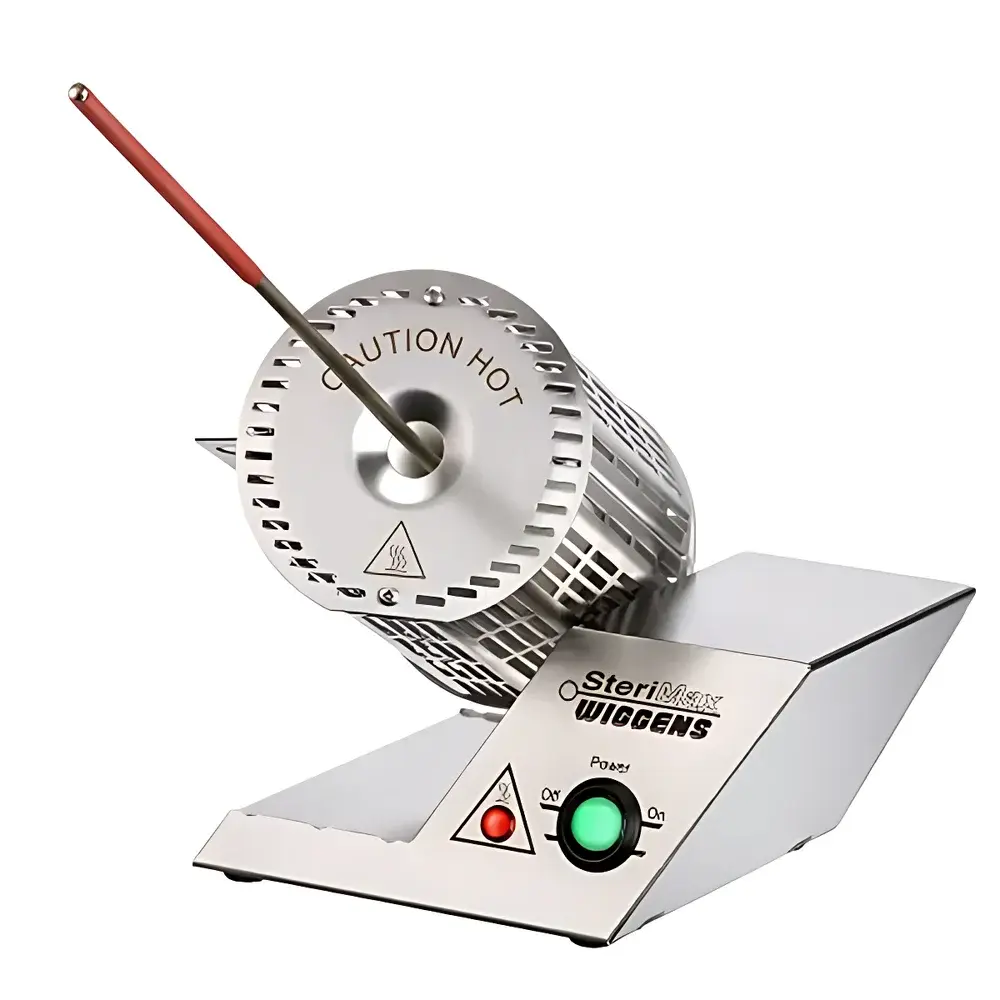
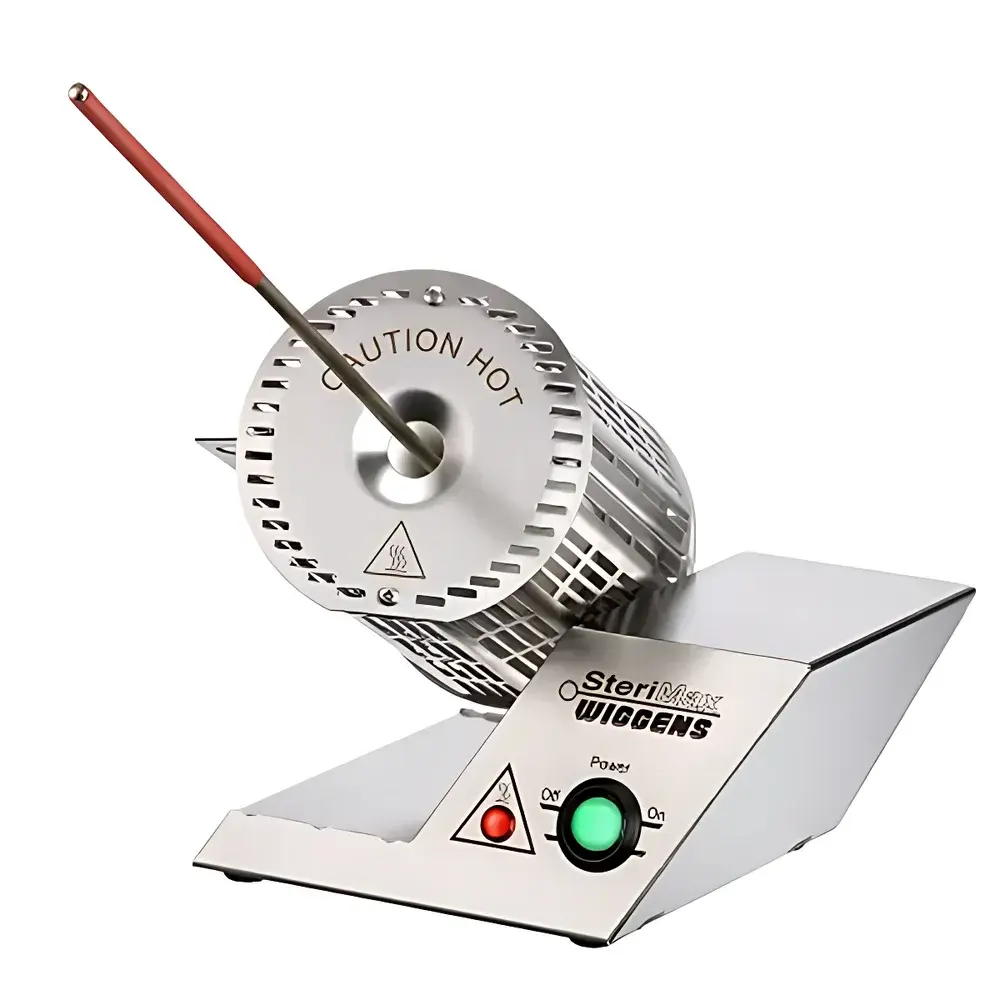
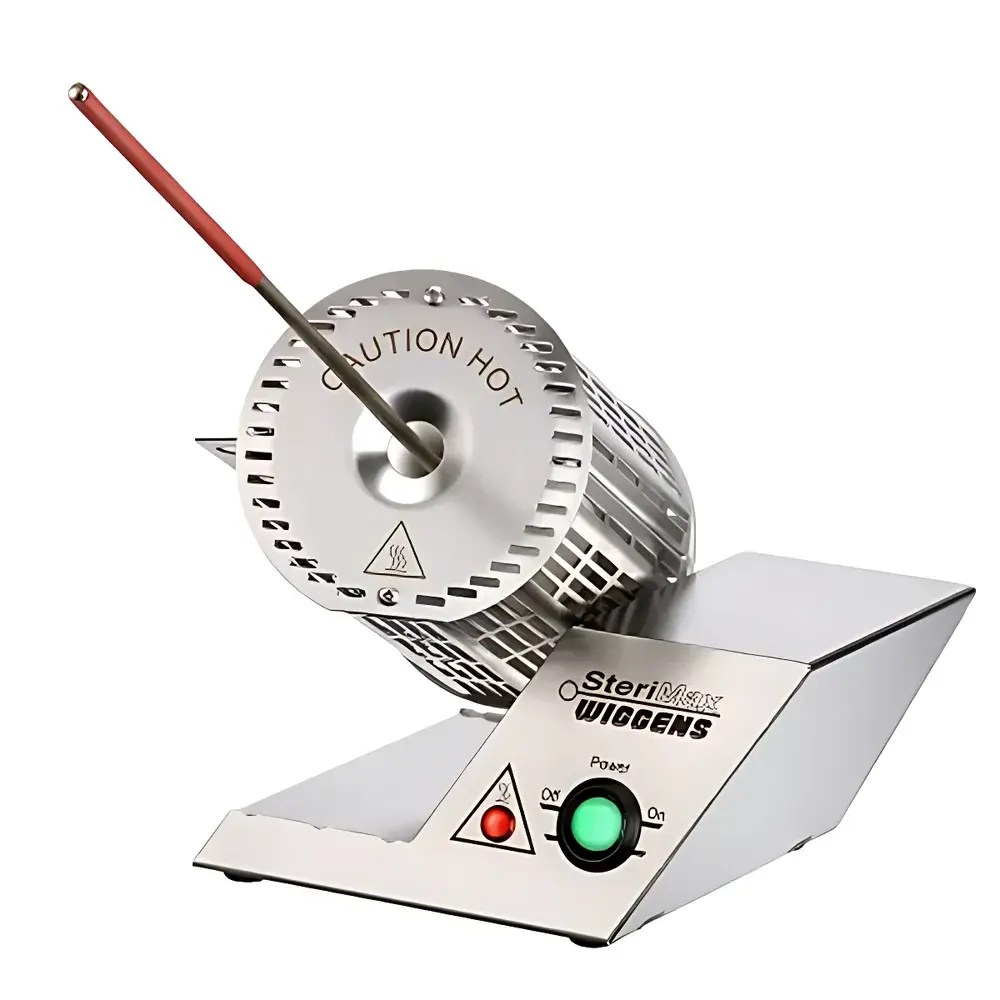
WIGGENS SteriMax Electric Incinerator for Microbiological Loop and Needle Sterilization
| Brand | WIGGENS |
|---|---|
| Origin | Germany |
| Manufacturer Type | Authorized Distributor |
| Origin Category | Imported |
| Model | SteriMax |
| Quotation | Upon Request |
| Sterilization Temperature | 900–950 °C |
| Quartz Tube Dimensions | Ø15 mm × 118 mm |
| Power Consumption | 160 W |
| Heating Time to Operating Temperature | 10–16 min |
| Sterilization Cycle Duration | 5–7 s |
| Housing Material | Stainless Steel |
| Net Weight | 960 g |
| External Dimensions (W×H×D) | 175 × 129 × 139 mm |
| Certifications | CE (EN 61326-1, EN 61000-3-2, EN 61010), EEC Directives 89/336/EWG & 73/23/EWG |
Overview
The WIGGENS SteriMax Electric Incinerator is a precision-engineered, flame-free sterilization solution designed specifically for microbiological laboratories requiring rapid, reliable, and safe decontamination of inoculation loops, needles, wire tools, and other small metallic instruments. Unlike traditional Bunsen burners or gas-based flame sterilizers, the SteriMax operates on resistive heating principles—utilizing a high-purity fused quartz tube heated to 900–950 °C via embedded tungsten-alloy heating elements. This thermally stable architecture ensures consistent thermal output with negligible thermal lag, enabling full microbial inactivation—including spores—within 5–7 seconds of instrument insertion. Its design eliminates reliance on flammable gases, open flames, or volatile combustion byproducts, making it compliant with stringent laboratory safety protocols in biosafety level 1–2 (BSL-1/2) environments and suitable for use inside laminar flow hoods or biosafety cabinets where ignition hazards must be strictly controlled.
Key Features
- High-temperature quartz sterilization chamber (Ø15 mm × 118 mm) fabricated from optical-grade fused silica, offering exceptional thermal shock resistance and chemical inertness.
- Seven-step adjustable tilt angle mechanism for ergonomic positioning—optimized for right- and left-handed users and varying benchtop configurations.
- Integrated splash guard unit that physically isolates the hot zone during operation, minimizing aerosol dispersion when handling pathogenic samples per ISO 15190:2020 laboratory safety guidelines.
- Automatic post-cycle thermal warning system: LED indicator and audible signal activate upon shutdown to alert users of residual surface temperatures exceeding 60 °C, supporting compliance with EN 61010-1 safety requirements for operator protection.
- Stainless steel housing (AISI 304 grade) with smooth, non-porous surfaces for easy decontamination and long-term corrosion resistance in humid or chemically exposed lab environments.
- Low-power, energy-efficient operation (160 W nominal) with rapid thermal ramp-up (10–16 minutes to reach 900 °C), reducing standby energy consumption compared to continuously operated flame sources.
Sample Compatibility & Compliance
The SteriMax accommodates standard microbiological tools up to 3.5 mm in diameter—including platinum/iridium loops, stainless steel needles, forceps tips, and micro-spatulas. It is not intended for sterilization of plastic, coated, or heat-sensitive materials. The device conforms to key international electrical safety and electromagnetic compatibility standards: EN 61010-1 (Safety Requirements for Electrical Equipment for Measurement, Control, and Laboratory Use), EN 61326-1 (EMC for Laboratory Instruments), and EN 61000-3-2 (Harmonic Current Emissions). It also fulfills essential requirements under the EU Electromagnetic Compatibility Directive (89/336/EEC) and Low Voltage Directive (73/23/EEC), bearing the CE marking for unrestricted placement within the European Economic Area. While not classified as a medical device under MDR 2017/745, its performance aligns with CLSI M22-A3 recommendations for non-flame loop sterilization in clinical microbiology workflows.
Software & Data Management
The SteriMax is a stand-alone electromechanical instrument with no embedded firmware, touchscreen interface, or digital connectivity. As such, it does not generate electronic records, store operational logs, or support audit trail functionality. This analog architecture eliminates validation complexity associated with FDA 21 CFR Part 11 compliance—making it particularly suitable for GLP- and GMP-aligned laboratories where simplicity, traceability through physical logbooks, and minimal qualification burden are prioritized. Users are advised to document sterilization cycles manually in accordance with internal SOPs referencing ISO/IEC 17025:2017 clause 7.7 (Control of Records).
Applications
- Routine sterilization of inoculation loops and needles in bacteriology, mycology, and environmental microbiology labs.
- Decontamination of tools prior to and between sample transfers in diagnostic microbiology workflows (e.g., urine culture streaking, blood agar isolation).
- Supporting aseptic technique training modules where flame-free alternatives reduce fire risk and improve procedural consistency.
- Use in shared core facilities or teaching laboratories where gas infrastructure is unavailable or prohibited by institutional fire codes.
- Complementary sterilization step in antibiotic susceptibility testing (AST) workflows requiring repeated loop flaming between dilution steps.
FAQ
Is the SteriMax suitable for sterilizing plastic or coated instruments?
No. The SteriMax is engineered exclusively for metal instruments capable of withstanding >900 °C. Plastic, rubber, or polymer-coated tools will melt or decompose and must never be inserted.
Does the device require calibration or periodic verification?
While no formal calibration is mandated, laboratories should perform routine temperature verification using a calibrated infrared thermometer or contact thermocouple probe at the center of the quartz tube annually—or after any mechanical impact—to ensure continued conformance with stated operating range (900–950 °C).
Can the SteriMax be used inside a Class II biological safety cabinet?
Yes—provided adequate clearance (≥10 cm) is maintained from cabinet walls and airflow paths. Its flameless, low-emission operation avoids disruption of inward face velocity or HEPA filter integrity.
What maintenance is required?
Routine cleaning of the quartz tube exterior with lint-free ethanol wipes; inspection for microfractures or clouding; and periodic removal of carbonized residue using cerium oxide polishing paste if surface opacity develops.
Is the optional three-position loop holder autoclavable?
No—the loop holder is constructed from anodized aluminum and is not rated for steam sterilization. Surface disinfection with 70% ethanol or quaternary ammonium solutions is recommended.



