
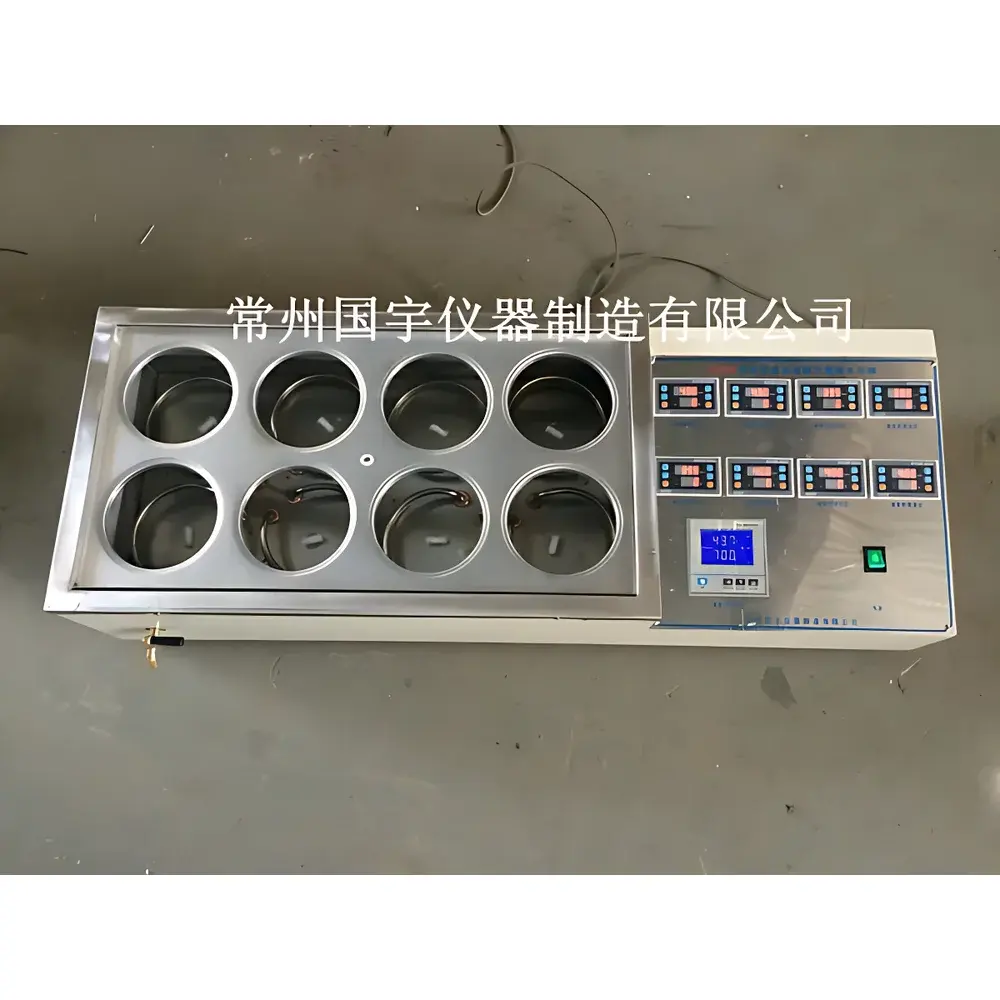
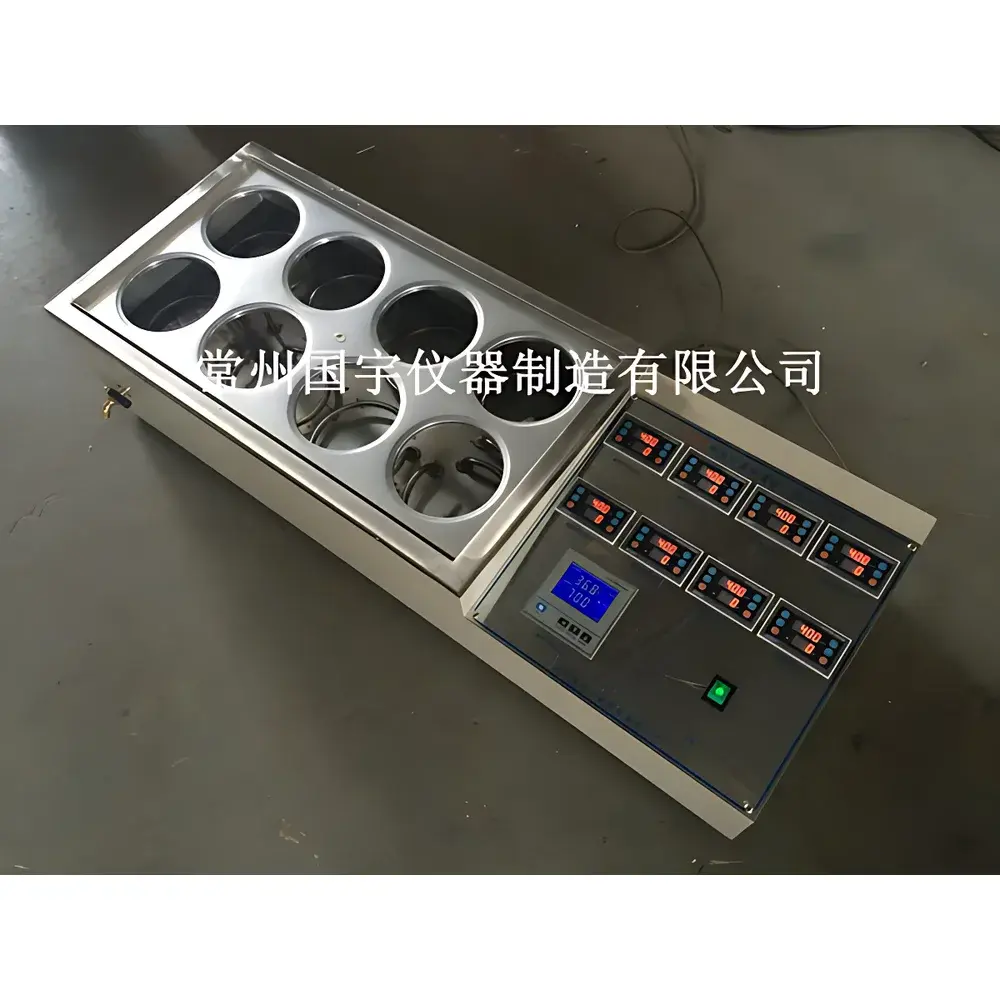
CZGY HH-S8 Digital Constant-Temperature Magnetic Stirring Water Bath
| Brand | CZGY |
|---|---|
| Origin | Jiangsu, China |
| Manufacturer Type | Direct Manufacturer |
| Product Category | Domestic |
| Model | HH-S8 (Brushless Motor) |
| Instrument Type | Water Bath / Oil Bath |
| Circulation Function | None |
| Temperature Control | Heating-Only |
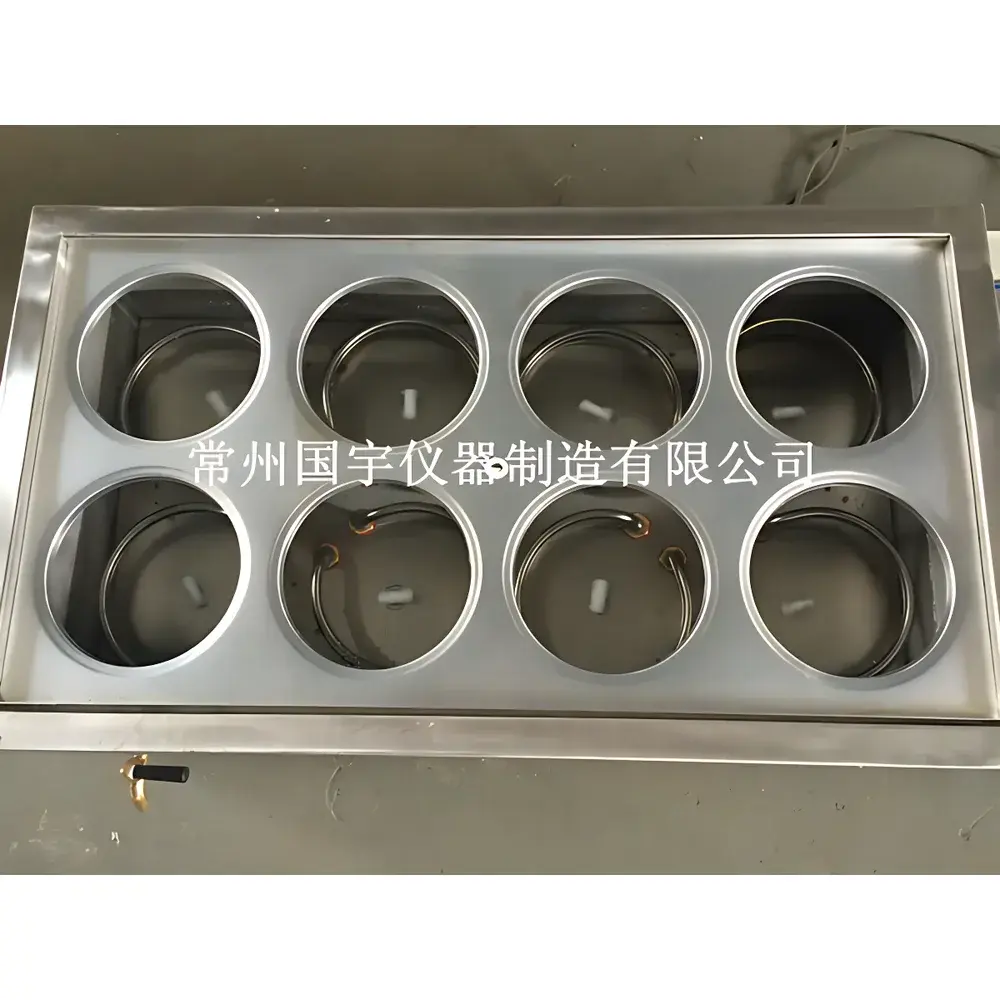
| Bath Chamber Dimensions | 605 × 310 × 120 mm |
| Temperature Range | Ambient +5°C to 100°C |
| Temperature Stability | ±0.5°C |
| Power Supply | 220 VAC, 50 Hz |
| Heating Power | 2000 W |
| Total Stirring Power | 45 W (8× brushless motors) |
| Speed Range | 0–2400 rpm |
| Speed Accuracy | ±1 rpm |
| Temperature Timer Range | 0–9999 min |
| Stirring Timer per Channel | 0–999 min × 8 channels |
| Construction | Stainless steel inner tank, cold-rolled steel outer shell with epoxy coating |
Overview
The CZGY HH-S8 Digital Constant-Temperature Magnetic Stirring Water Bath is an engineered laboratory platform designed for simultaneous, independent thermal and mechanical control across eight sample positions. It operates on the principle of resistive heating combined with permanent-magnet-driven magnetic stirring—eliminating mechanical shaft seals and enabling continuous, low-maintenance agitation in aqueous or low-viscosity organic media. Unlike recirculating bath systems, the HH-S8 employs a static water/oil bath configuration with localized heating elements beneath each well, ensuring rapid thermal response and minimizing cross-contamination risk between samples. Its primary operational domain includes dissolution testing, enzyme kinetics, reagent pre-warming, buffer equilibration, and multi-vial parallel synthesis under controlled thermal conditions up to 100°C. The device complies with general electrical safety requirements per IEC 61010-1 and meets standard laboratory environmental operating conditions (IEC 60721-3-3 Class 3K3).
Key Features
- Eight independent brushless DC motor modules—each driving a magnetic stirrer with digital speed feedback, supporting continuous operation without thermal derating or brush wear.
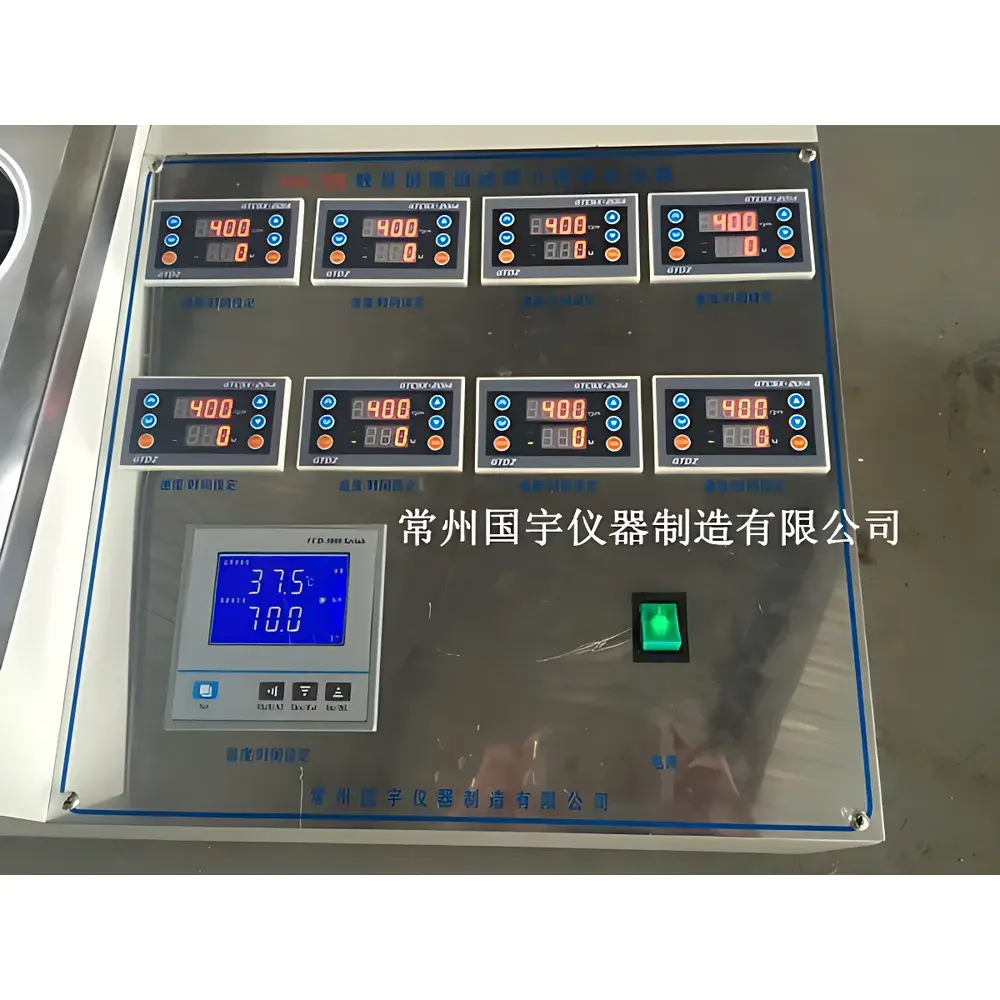
- Dual-parameter digital control interface featuring segmented LCD display for simultaneous monitoring of temperature setpoint, actual bath temperature, speed setpoint, and real-time RPM per channel.
- Fuzzy PID temperature regulation algorithm delivering ±0.5°C stability over full operating range (ambient +5°C to 100°C), validated using traceable PT100 reference probes.
- Stainless steel 304 inner bath chamber (605 × 310 × 120 mm) welded for leak integrity and corrosion resistance; outer enclosure fabricated from cold-rolled steel with electrostatic epoxy powder coating.
- Independent timer control for both heating (0–9999 minutes) and stirring (0–999 minutes per channel), with non-volatile memory retention after power interruption.
- No external circulation pump or tubing required—reducing maintenance complexity and eliminating fluid path contamination vectors typical in recirculating baths.
Sample Compatibility & Compliance
The HH-S8 accommodates standard laboratory glassware including 50–500 mL beakers, Erlenmeyer flasks, and reaction vials placed directly into designated wells. Each well supports magnetic stir bars up to 40 mm in length and 8 mm in diameter. The system is compatible with water, glycerol-water mixtures, silicone oil, and other non-corrosive heat-transfer fluids rated for ≤100°C. While not certified to ISO/IEC 17025 or GLP-specific validation protocols out-of-the-box, its deterministic control architecture supports user-defined IQ/OQ documentation. Temperature and speed outputs are stable under ambient lab conditions (15–30°C, <80% RH, non-condensing). Electrical design conforms to IEC 61010-1:2010 for laboratory electrical equipment, including double insulation and protective earth grounding.
Software & Data Management
The HH-S8 operates as a standalone instrument with no embedded firmware-based data logging or USB/RS232 connectivity. All parameter inputs and status outputs occur via front-panel membrane keys and segmented LCD. For regulated environments requiring audit trails (e.g., pharmaceutical QC labs compliant with FDA 21 CFR Part 11), users must integrate external calibrated data loggers—such as those compliant with NIST-traceable thermistors and tachometric sensors—to record time-stamped temperature and RPM values. The unit’s deterministic timer logic ensures reproducible endpoint triggering for timed heating/stirring sequences, supporting SOP-driven workflows in GMP-aligned laboratories when paired with documented calibration records.
Applications
- Dissolution rate studies of solid dosage forms in pharmacopeial buffers (USP Apparatus I/II analog setups).
- Parallel enzymatic assays requiring uniform thermal activation across multiple reaction vessels.
- Pre-equilibration of mobile phase solvents prior to HPLC injection.
- Controlled hydrolysis or esterification reactions in teaching and research laboratories.
- Cell culture reagent warming at physiological temperatures without overshoot or gradient formation.
- Calibration support for viscometers, pH meters, and conductivity probes requiring thermostated immersion.
FAQ
What is the maximum recommended liquid fill level?
The water or oil level must fully submerge all heating elements—minimum 3 cm above the top surface of the heater—and must remain below the upper rim of the bath chamber to prevent overflow during boiling or expansion.
Can the HH-S8 be used with oil as a heat-transfer medium?
Yes, provided the oil has a flash point >120°C and viscosity suitable for magnetic coupling (e.g., silicone oil, mineral oil); verify compatibility with stainless steel and avoid chlorinated or acidic oils.
Is remote monitoring or control possible?
No—the HH-S8 lacks digital communication interfaces; integration with SCADA or LIMS requires third-party analog signal converters and external data acquisition hardware.
How often should calibration verification be performed?
Per ISO/IEC 17025 guidance, temperature accuracy should be verified before each critical experiment series using a NIST-traceable thermometer; speed calibration may be confirmed biannually with an optical tachometer.
Does the unit include overtemperature or dry-run protection?
It features thermal cutoff fuses on each heating zone but does not incorporate level-sensing circuitry; users must manually ensure adequate fluid volume prior to operation.



