
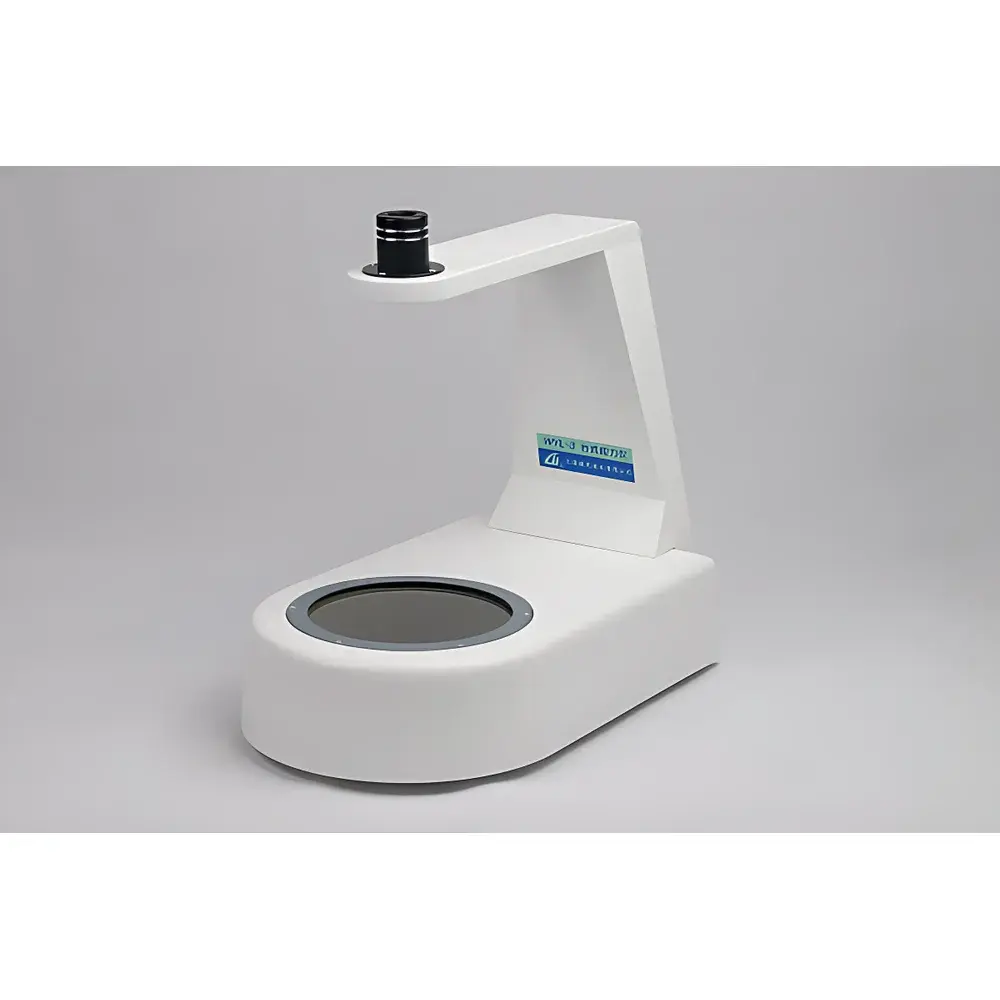
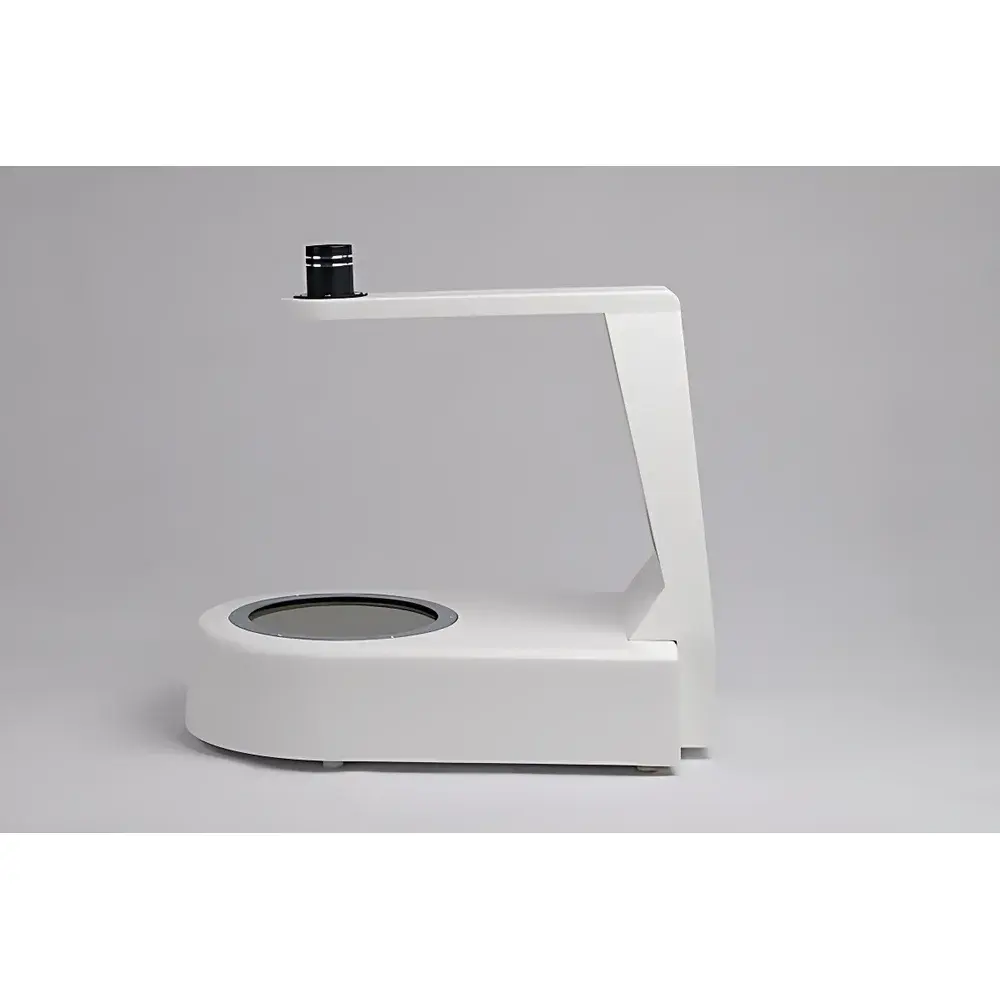
Lengguang Tech. WYL-3 Desktop Stress Analyzer
| Brand | Lengguang Tech. |
|---|---|
| Origin | Shanghai, China |
| Manufacturer Type | Direct Manufacturer |
| Regional Classification | Domestic (China) |
| Model | WYL-3 |
| Price Range | USD 1,400 – 7,000 |
| Stress Measurement Range | 0–560 nm |
| Full-Wave Retardation Plate | 560 nm |
| Max Sample Dimensions | Width ≤ 440 mm, Height ≤ 240 mm, Length ≤ 440 mm |
Overview
The Lengguang Tech. WYL-3 Desktop Stress Analyzer is a compact, polarimetric instrument engineered for quantitative assessment of residual stress-induced birefringence in transparent optical materials. Based on the principle of plane-polarized light interference through crossed polarizers, the system visualizes and measures optical path difference (OPD) via calibrated retardation plates—enabling direct correlation between observed fringe patterns and internal mechanical stress distribution. Unlike automated digital polarimeters, the WYL-3 employs a manual, visual interpretation methodology optimized for routine quality control in optical component manufacturing, glassware fabrication, and precision lens assembly. Its design prioritizes operational stability under ambient laboratory conditions without requiring temperature-controlled enclosures or vibration isolation tables, making it suitable for integration into ISO 9001-certified production QA labs and academic optics teaching facilities.
Key Features
- Diffused illumination source ensuring uniform field brightness and minimized glare-induced measurement artifacts
- High-contrast polarization optics with precisely aligned crossed Nicol prisms and calibrated 560 nm full-wave plate for reproducible retardation reference
- Compact benchtop footprint (≤ 440 mm × 240 mm × 440 mm envelope) compatible with standard lab benches and cleanroom workstations
- Manual rotational stage with vernier scale for precise angular alignment of sample orientation relative to polarization axis
- Robust mechanical architecture with aluminum alloy housing and anti-reflective coated optical components for long-term dimensional stability
- No external power supply required for core optical function—illumination unit operates on standard 220 V AC input with integrated thermal cutoff protection
Sample Compatibility & Compliance
The WYL-3 accommodates flat or gently curved transparent specimens including optical crown and flint glasses, fused silica blanks, borosilicate tubing, tempered display cover glass, and polymer-based optical substrates (e.g., PMMA, polycarbonate). Maximum specimen dimensions are constrained by the observation aperture: width ≤ 440 mm, height ≤ 240 mm, length ≤ 440 mm—permitting full-field evaluation of large-format optical windows and small-volume molded lenses. The instrument supports qualitative and semi-quantitative stress grading per ASTM C1353-18 (Standard Test Method for Determination of Residual Stress in Glass by Polariscopic Examination) and aligns with ISO 10110-5:2018 (Optics and photonics — Preparation of drawings for optical elements and systems — Part 5: Surface form tolerances), particularly for birefringence classification of Grade 0–3 optical blanks. While not FDA 21 CFR Part 11 compliant due to absence of electronic audit trail functionality, its analog operation satisfies GLP documentation requirements when paired with controlled logbook procedures.
Software & Data Management
The WYL-3 operates as a standalone optical instrument without embedded firmware or proprietary software. All measurements are recorded manually using standardized reporting templates aligned with ISO/IEC 17025 documentation frameworks. Users may integrate digital documentation workflows by coupling the instrument with calibrated CCD cameras (e.g., Basler acA2000-50gm) and third-party image analysis tools such as ImageJ with the “Polarization Analysis” plugin suite. For regulated environments, laboratories routinely validate photographic capture protocols—including lighting consistency, pixel-to-nanometer calibration, and inter-operator repeatability—as part of their method validation package per ICH Q2(R2). No driver installation, cloud connectivity, or subscription licensing is involved.
Applications
- Routine screening of annealing efficacy in optical glass blanks prior to grinding and polishing
- Root-cause analysis of stress-related coating delamination in AR/HR multilayer thin-film stacks
- In-process verification of thermal stress profiles during glass molding and hot-forming operations
- Educational demonstration of photoelasticity principles in undergraduate physics and materials science curricula
- Pre-shipment inspection of smartphone cover glass and automotive HUD combiner substrates
- Verification of stress-free mounting conditions for high-precision interferometer reference flats
FAQ
Does the WYL-3 provide quantitative numerical output (e.g., MPa or nm/mm)?
No—the instrument delivers semi-quantitative stress grading based on fringe order counting against the 560 nm reference plate. Conversion to mechanical stress units requires material-specific stress-optic coefficients and is performed offline using established photoelastic equations.
Can it measure stress in curved or non-planar samples?
Yes, within geometric limits: convex surfaces with radius ≥ 150 mm and minimal edge distortion are observable; concave geometries introduce interpretive ambiguity and are not recommended.
Is calibration traceable to NIST or other national metrology institutes?
The 560 nm full-wave plate is factory-calibrated against certified quartz standards; full system verification follows internal SOPs aligned with JJG 1041-2008 (Chinese national verification regulation for polarimeters).
What maintenance is required?
Annual cleaning of polarizer surfaces with spectroscopic-grade methanol and lint-free wipes; no recalibration is needed unless optical components are physically replaced.
Is technical support available in English for international users?
Yes—Lengguang Tech. provides English-language application notes, ASTM/ISO cross-reference guides, and remote troubleshooting via secure email correspondence with qualified optical engineers.





