
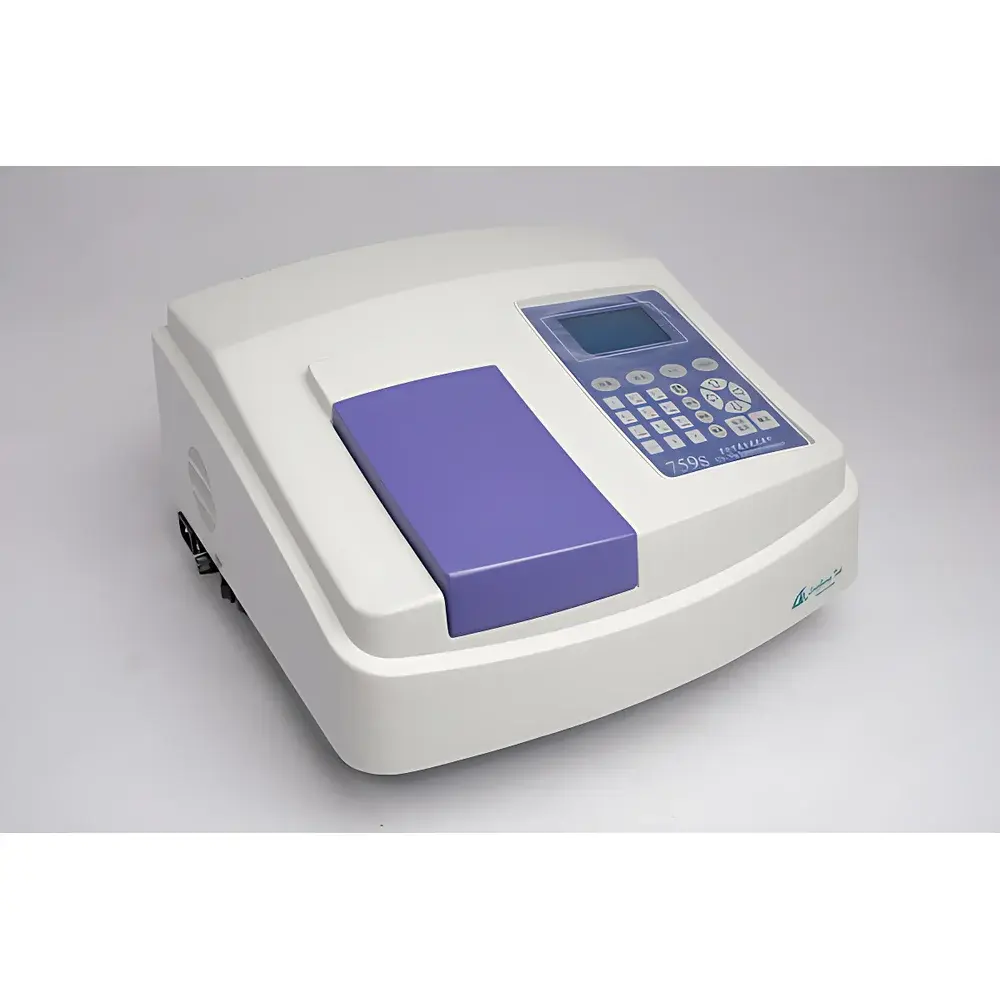
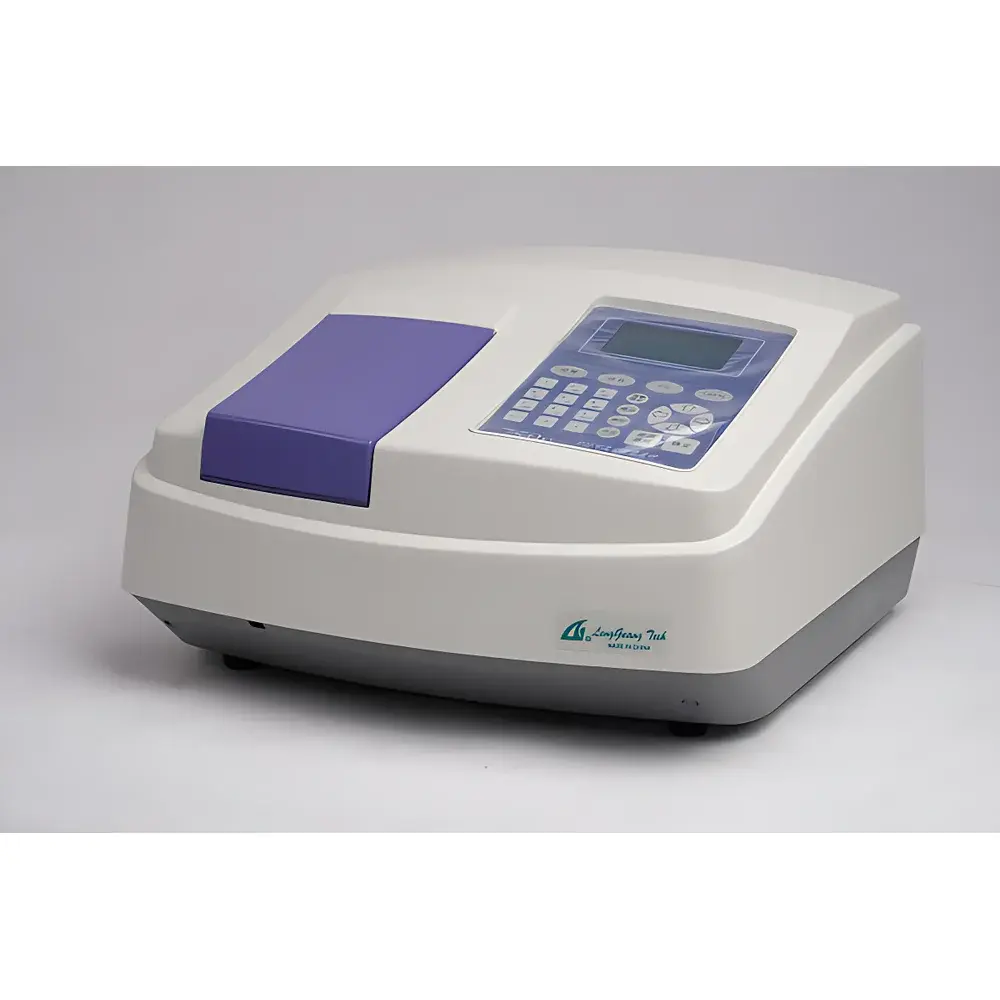
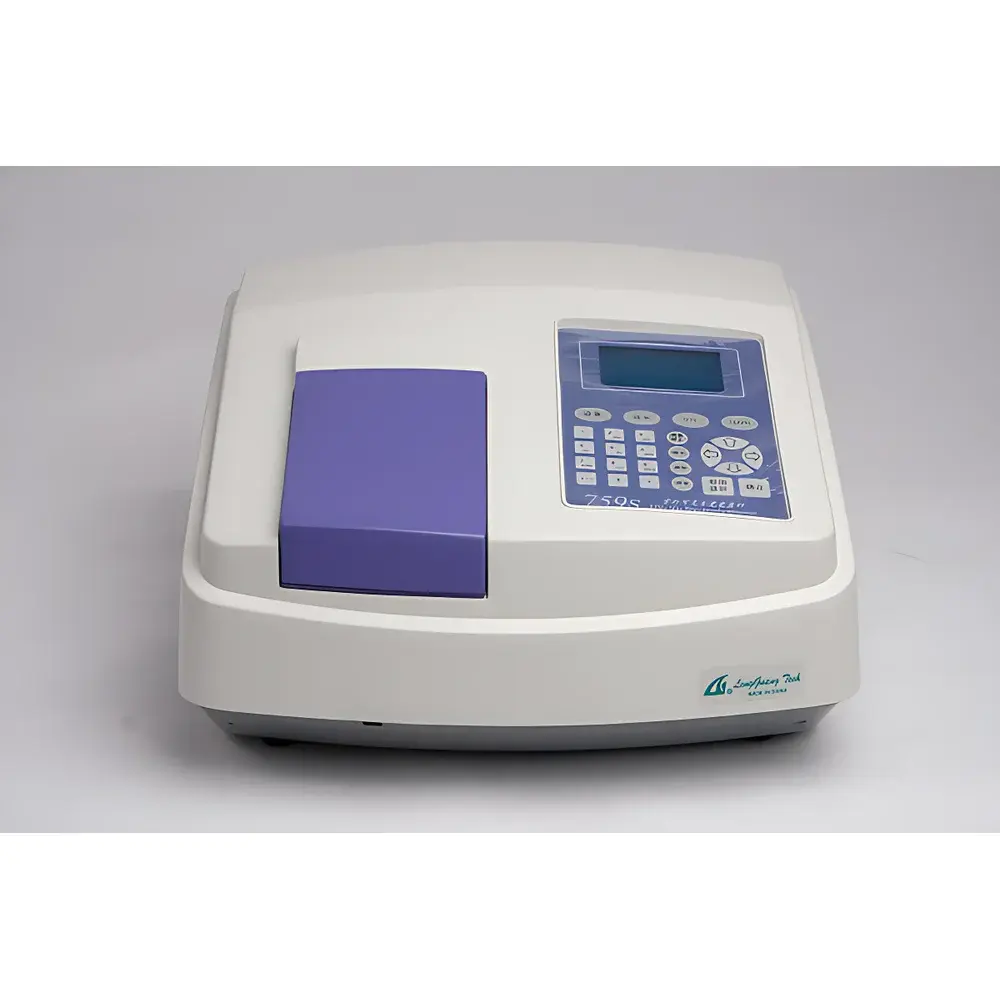
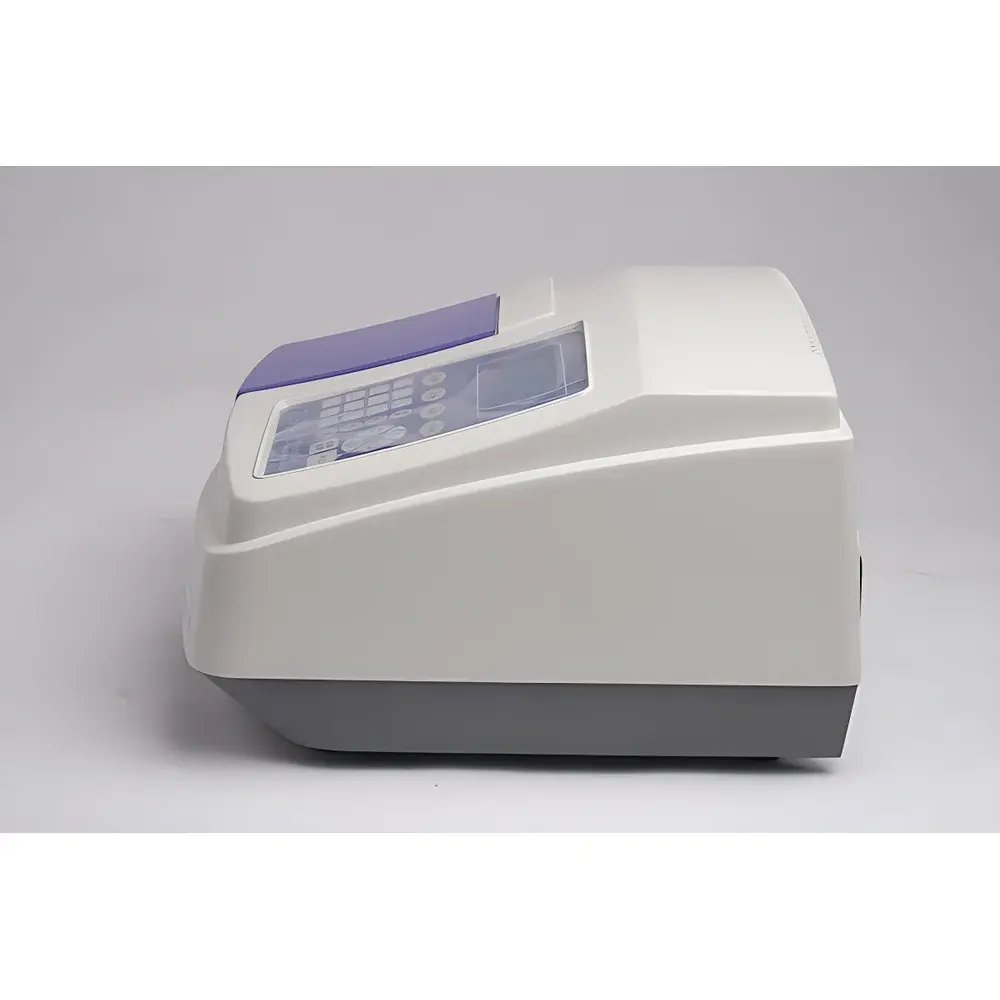
Lengguang Tech. 759S Ultraviolet-Visible Spectrophotometer
| Brand | Lengguang Tech. |
|---|---|
| Origin | Shanghai, China |
| Manufacturer Type | Original Equipment Manufacturer (OEM) |
| Product Origin | Domestic (China) |
| Model | 759S |
| Optical System | Czerny-Turner monochromator with holographic diffraction grating |
| Light Source | Hamamatsu deuterium lamp (2000 h lifetime) + tungsten-halogen lamp |
| Wavelength Range | 190–1100 nm |
| Wavelength Accuracy | ±0.5 nm |
| Wavelength Repeatability | ≤0.2 nm |
| Spectral Bandwidth | 2 nm |
| Stray Light | ≤0.05% T (at 220 nm, using NaI solution) |
| Photometric Accuracy | ±0.3% T |
| Photometric Repeatability | ≤0.15% T |
| Baseline Flatness | ±0.002 A |
| Drift | ≤0.0008 A/h |
| Noise | ≤0.3% T (100% T), ≤0.1% T (0% T) |
| Photometric Range | 0.0–200% T, –0.3–4.0 A |
| Scan Speed | up to 7000 nm/min (wavelength scanning), 10000 nm/min (wavelength movement) |
| Display | 128×64 dot-matrix LCD |
| Data Interface | USB-A (U-disk storage), USB-B (PC connectivity), RS-232 (printer) |
| Dimensions | 370 × 357 × 220 mm |
| Net Weight | 9 kg |
Overview
The Lengguang Tech. 759S Ultraviolet-Visible Spectrophotometer is a single-beam scanning instrument engineered for precision quantitative and qualitative analysis across academic, pharmaceutical, environmental, clinical, and food safety laboratories. It operates on the fundamental principle of Beer-Lambert law-based absorbance measurement, utilizing a Czerny-Turner monochromator equipped with a holographic diffraction grating to deliver high-resolution spectral separation. Dual light sources—a Hamamatsu deuterium lamp for the UV region (190–350 nm) and a tungsten-halogen lamp for the visible and near-infrared range (350–1100 nm)—ensure stable, broadband irradiance with extended operational lifetime (up to 2000 hours for the D2 lamp). The instrument’s optical path is constructed from precision-cast aluminum alloy components, minimizing thermal drift and mechanical misalignment to sustain photometric integrity over extended operation cycles.
Key Features
- High wavelength fidelity: Internal spectral reference calibration enables automatic wavelength verification and correction at predefined characteristic lines (e.g., holmium oxide or didymium filters), ensuring long-term accuracy within ±0.5 nm and repeatability better than 0.2 nm.
- Ultra-low stray light performance: Optimized optical train design—including high-efficiency coated mirrors, precision-aligned slits, and graded grating geometry—achieves ≤0.05% T stray light at 220 nm (measured per ASTM E275 and ISO 9022-11), enabling reliable measurement of highly absorbing samples (A > 3.0) without deviation.
- Enhanced photometric stability: Baseline flatness of ±0.002 A and drift ≤0.0008 A/h support reproducible kinetic and time-scan experiments over multi-hour durations.
- High-speed spectral acquisition: Adjustable scan rates up to 7000 nm/min allow rapid full-spectrum capture (e.g., 190–1100 nm in <10 s), facilitating transient reaction monitoring and high-throughput screening workflows.
- Embedded 32-bit ARM processor with 128×64 LCD interface enables standalone operation: users perform multi-point calibration, polynomial standard curve fitting (linear, quadratic, cubic), coefficient equation entry/storage, concentration calculation, and direct printout without PC dependency.
- USB-A port supports plug-and-play U-disk data export in CSV and Excel-compatible formats; no proprietary software required for basic data retrieval or archiving.
Sample Compatibility & Compliance
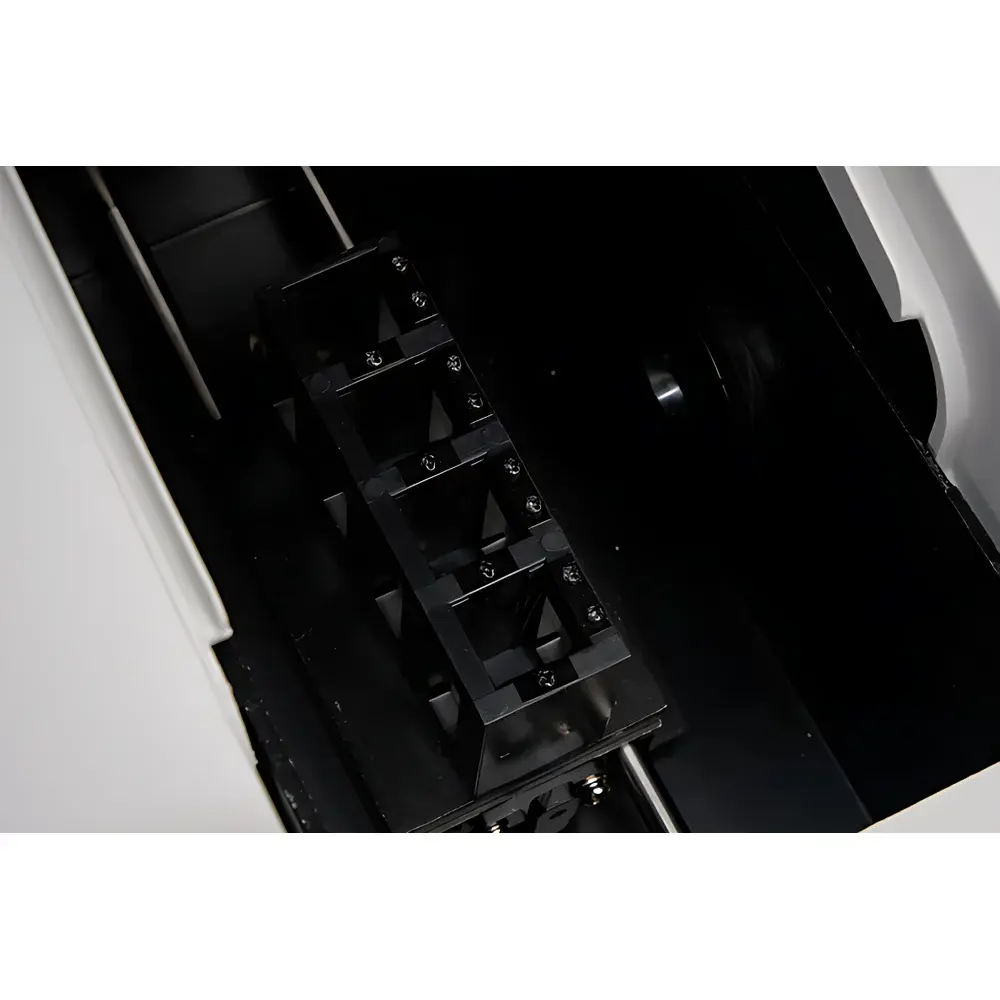
The 759S accommodates standard 10-mm square cuvettes (quartz, glass, or plastic), as well as optional micro-volume adapters and flow cells for specialized applications. Its optical design complies with core international performance standards including ISO 8579 (spectrophotometer specifications), ASTM E275 (stray light measurement), and USP (UV-Vis spectrophotometers for pharmaceutical analysis). While not inherently 21 CFR Part 11 compliant in standalone mode, audit-trail-enabled software packages (available separately) support GLP/GMP environments through electronic signatures, user access control, and immutable method/data logging.
Software & Data Management
The optional PC-based application provides comprehensive functionality: spectrum scanning, time-based kinetics, multi-wavelength quantitation, DNA/RNA purity assessment (A260/A280, A260/A230), peak/valley detection, baseline correction with polynomial interpolation, and instrument validation protocols (e.g., wavelength accuracy check, photometric linearity test per NIST SRM 930e). All raw and processed data are stored in open-format files (.csv, .txt, .jdx), ensuring interoperability with LIMS, ELN, and statistical analysis platforms. Calibration files and user-defined methods can be encrypted and password-protected for secure transfer between instruments.
Applications
This spectrophotometer serves routine and research-grade applications including: quantification of nucleic acids and proteins in molecular biology labs; assay development and QC testing of active pharmaceutical ingredients (APIs) per ICH Q2(R2); heavy metal speciation in wastewater via colorimetric complexation (e.g., Cr(VI) with diphenylcarbazide); enzyme kinetics (e.g., NADH oxidation at 340 nm); pigment analysis in food matrices (e.g., anthocyanins, chlorophylls); and polymer degradation studies via carbonyl index tracking (1710 cm⁻¹ equivalent in UV-Vis proxy bands). Its robustness and cost-performance ratio make it suitable for teaching laboratories requiring ISO-aligned instrumentation without enterprise-tier complexity.
FAQ
Is the 759S compliant with pharmacopeial requirements for UV-Vis testing?
Yes—the instrument meets key performance criteria outlined in USP , EP 2.2.25, and JP 2.05 for wavelength accuracy, photometric linearity, and stray light, provided periodic verification using certified reference materials (e.g., holmium oxide filter, potassium dichromate solution).
Can the 759S perform kinetic measurements without a PC?
No—time-scan and kinetic modes require the PC software; however, single-timepoint multi-wavelength readings and concentration calculations are fully supported in standalone mode.
What cuvette materials are recommended for UV measurements below 220 nm?
Fused silica or high-quality quartz cuvettes with UV-grade transmission (>80% at 190 nm) are mandatory; standard glass or plastic cuvettes absorb strongly in this region and must be avoided.
Does the instrument support external trigger inputs for synchronized measurements?
No—the 759S lacks TTL or analog trigger interfaces; synchronization with external devices (e.g., reaction initiators, HPLC detectors) requires post-acquisition alignment in software.
How often should wavelength calibration be performed?
We recommend verification before each analytical session when traceability is critical; full recalibration using certified reference standards is advised quarterly or after mechanical shock, lamp replacement, or significant ambient temperature shifts.
Related Products



