
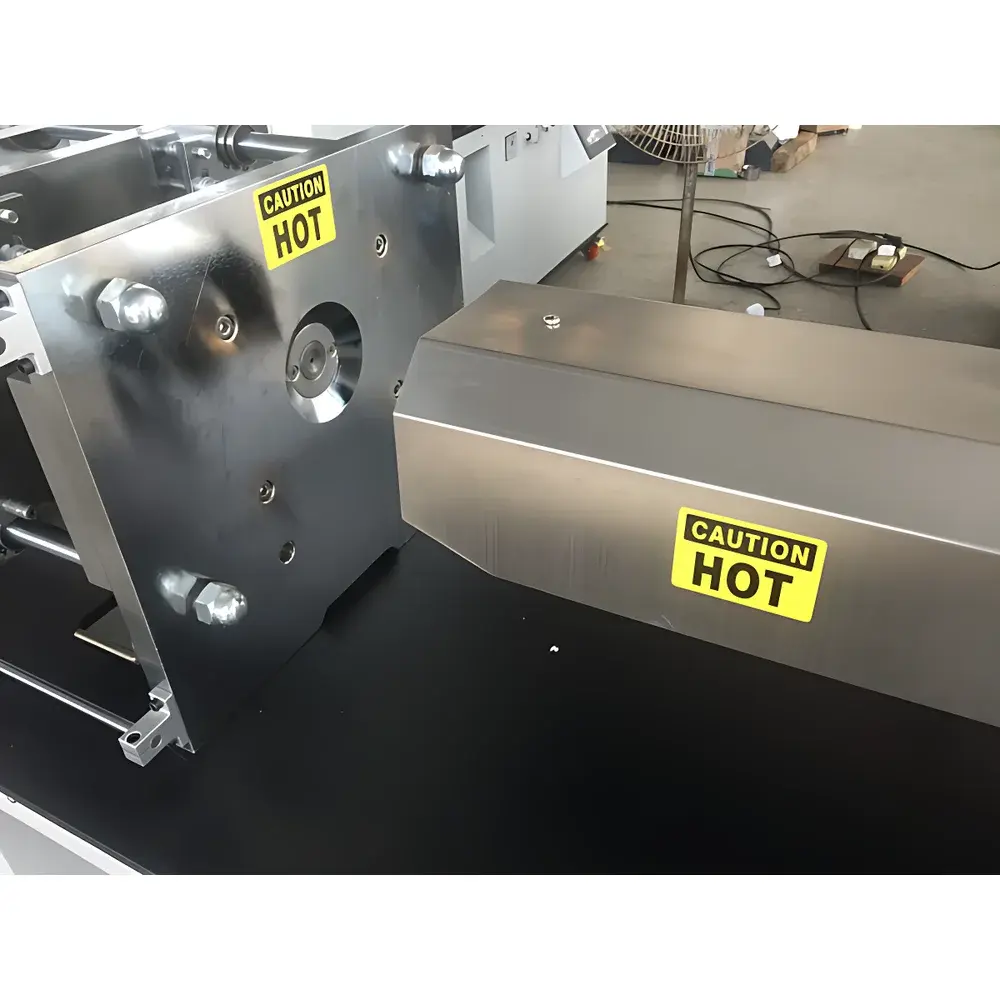
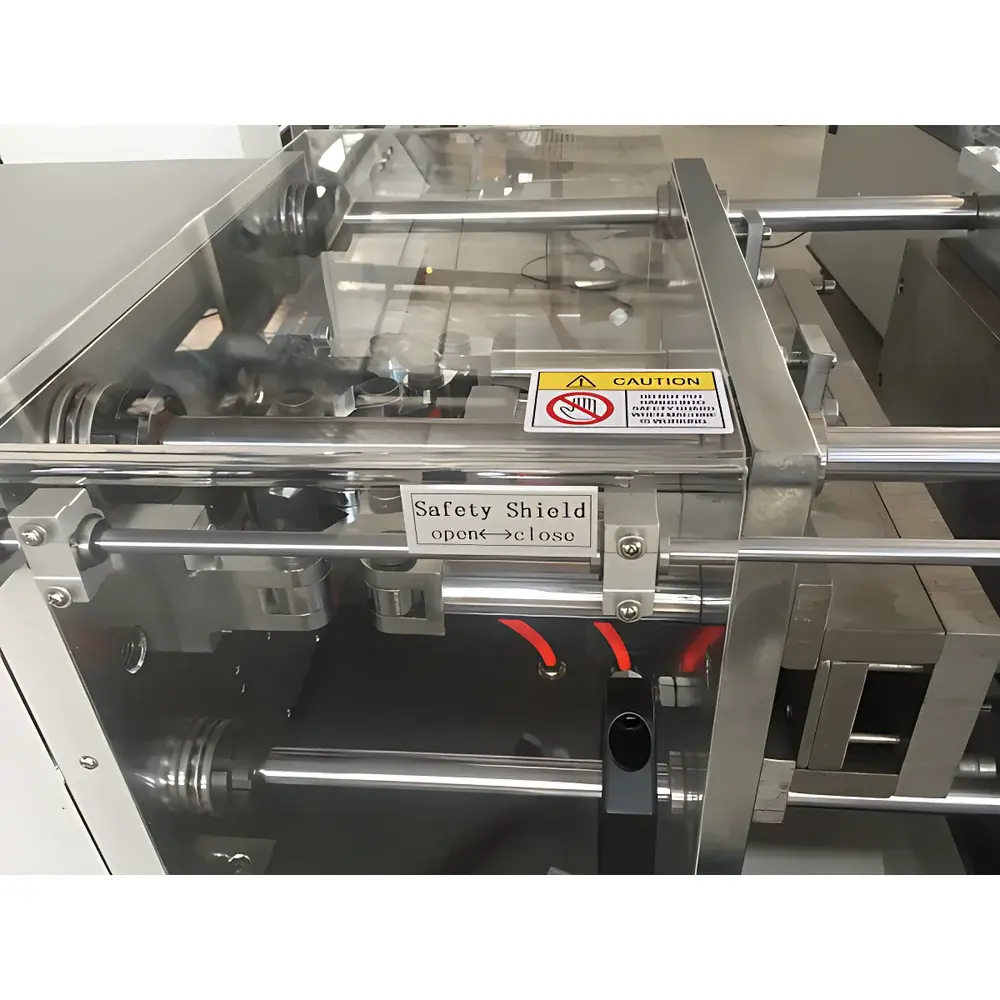
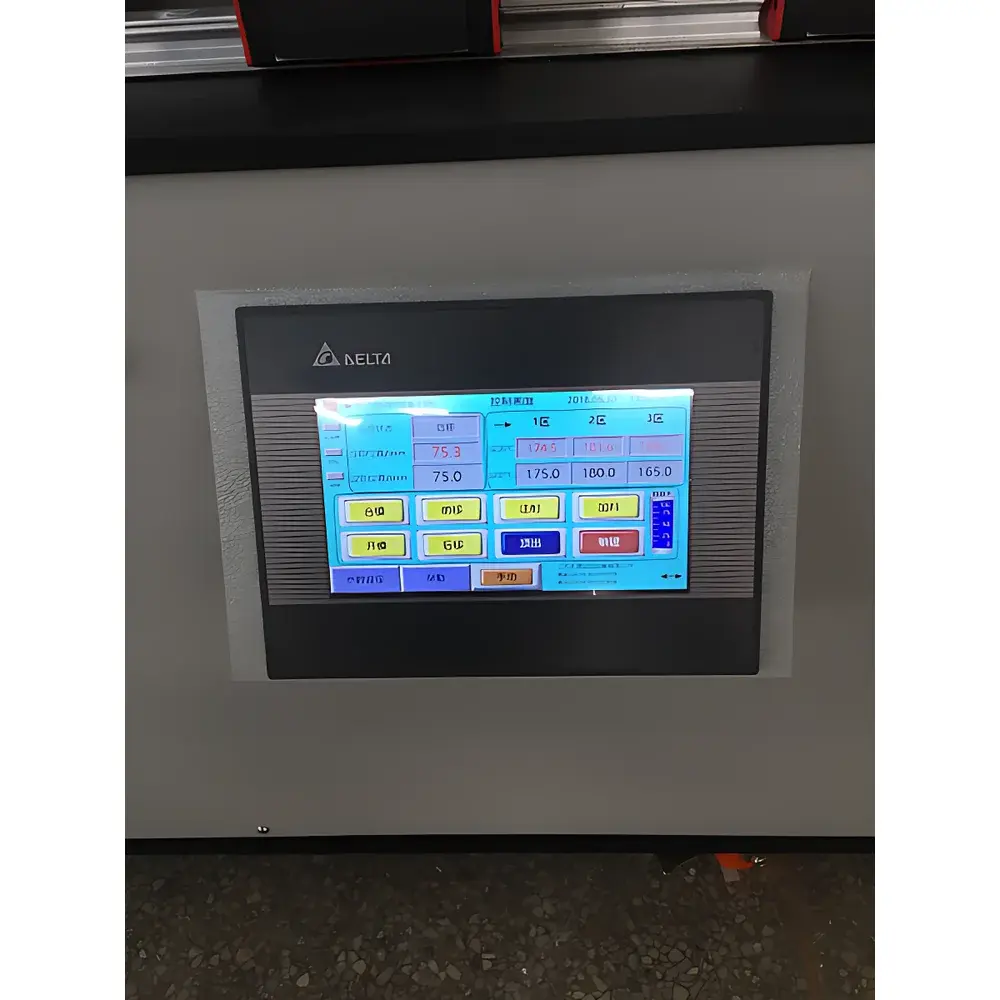
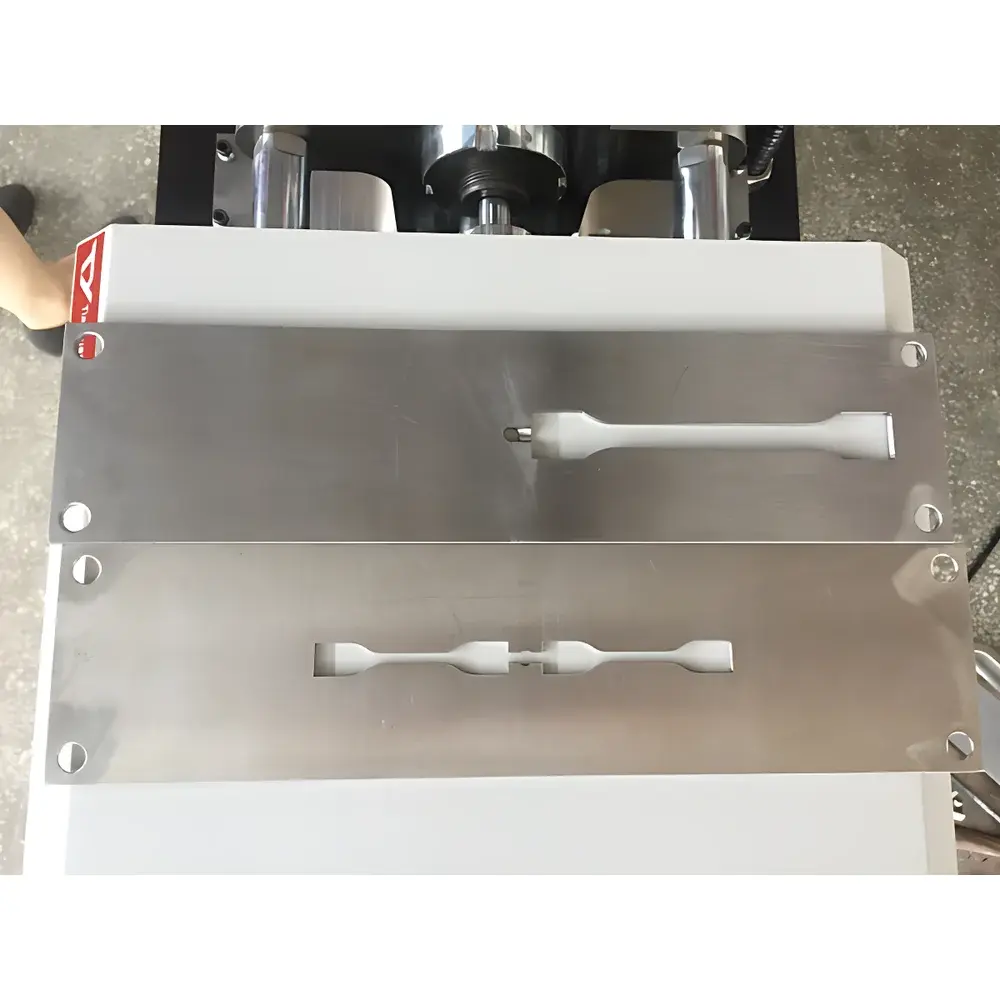
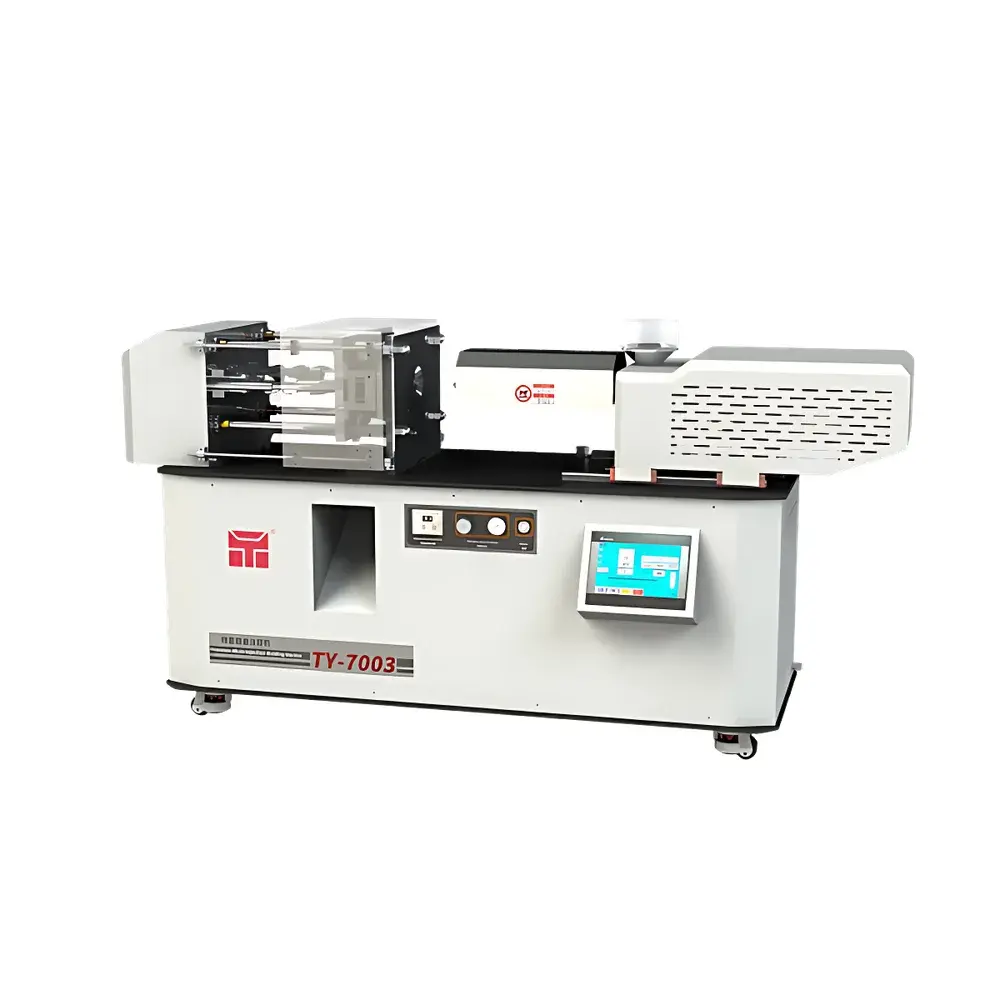
TianYuan TY-7003W Miniature Horizontal Injection Molding Machine
| Brand | TianYuan |
|---|---|
| Origin | Jiangsu, China |
| Manufacturer Type | Direct Manufacturer |
| Regional Category | Domestic (China) |
| Model | TY-7003W |
| Price Range | USD 7,000 – 14,000 (FOB China) |
| Screw Diameter | 20 mm |
| Overall Dimensions | 1700 × 500 × 950 mm |
| L/D Ratio | 20:1 |
| Clamping Force | 3 metric tons |
| Maximum Shot Volume | 25 cm³ |
| Heating Zone Max Temp | 360 °C |
| Temperature Control Accuracy | ±0.5 °C (steady state) |
| Power Supply | Single-phase AC 220 V ±10%, 50 Hz, 2.2 kW |
| Injection Pressure | Up to 57 MPa |
| Injection Stroke | 0–80 mm (0.1 mm resolution) |
| Hopper Capacity | 0.2 L |
| Feeding Speed | 0.1–60 rpm (up to 100 rpm with torque reduction) |
| Mold Opening Stroke | 70 mm (excluding mold) |
| Tie-Bar Spacing | 280 × 186 mm |
| Fixed Platen Ring OD | 50 mm |
| Mold Cavity Dimensions (max) | 360 × 90 × 72 mm (L×W×H) |
| Mold Thickness Range | 0–25 mm |
| Machine Weight (net/gross) | 380 / 420 kg |
Overview
The TianYuan TY-7003W Miniature Horizontal Injection Molding Machine is an engineering-grade laboratory-scale injection molding system designed specifically for material development, formulation screening, academic research, and small-batch prototype production in polymer science and plastics engineering laboratories. Unlike industrial-scale machines, the TY-7003W implements a scaled-down yet fully functional architecture based on conventional reciprocating screw injection principles—featuring plasticization via a 20 mm diameter screw with a 20:1 length-to-diameter ratio, precise temperature-controlled barrel zones (three independently regulated zones up to 360 °C), and servo-driven injection with real-time stroke control (0–80 mm at 0.1 mm resolution). Its horizontal layout, compact footprint (1700 × 500 × 950 mm), and single-phase 220 V power requirement enable deployment in standard university labs, QC rooms, or R&D facilities without dedicated three-phase infrastructure. The machine operates under controlled pneumatic actuation (≥0.8 MPa) combined with a planetary servo motor system—eliminating hydraulic oil contamination risks while maintaining repeatable shot-to-shot performance across thermoplastic resins including PP, PE, PA, ABS, TPU, and PLA.
Key Features
- Compact horizontal configuration with cast aluminum structural frame and integrated caster-based mobility for flexible lab repositioning.
- Dual-safety interlock system: mechanical limit switches plus electronic sensing—machine halts immediately when the acrylic safety guard is opened.
- PLC-based human-machine interface (HMI) with full-color touchscreen; intuitive one-touch operation mode for cycle initiation, parameter recall, and fault diagnostics.
- High-precision temperature control: ±0.5 °C stability across three independently PID-regulated heating zones, validated under steady-state conditions per ASTM D3641.
- Low-inertia planetary servo drive for feeding and injection—enabling fine-tuned control of screw rotation (0.1–60 rpm, extendable to 100 rpm) and injection pressure (up to 57 MPa).
- Modular mold mounting system: standardized fixed platen ring (50 mm OD) and tie-bar spacing (280 × 186 mm) compatible with custom-designed plate-type molds (max 360 × 90 × 72 mm).
- Noise-optimized design (<65 dB(A) at 1 m distance) and zero hydraulic fluid usage—compliant with ISO 14001 environmental operating guidelines.
Sample Compatibility & Compliance
The TY-7003W supports consistent sample preparation for ISO 294-1, ASTM D955, and ISO 178-compliant test specimens—including tensile bars (Type I), flexural bars, and impact coupons—when paired with certified cavity molds. It accommodates hygroscopic and heat-sensitive polymers requiring pre-drying (e.g., PA6, PBT) through user-defined drying protocols prior to loading. All thermal and mechanical parameters are traceable and loggable for GLP/GMP-aligned documentation workflows. While not FDA 21 CFR Part 11-certified out-of-the-box, audit-ready data export (CSV/Excel) and operator ID tagging support validation pathways for regulated environments. The system meets CE machinery directive requirements (2006/42/EC) and complies with IEC 60204-1 for electrical safety.
Software & Data Management
The embedded PLC firmware records all critical process variables—including melt temperature profiles, injection pressure curves, screw position vs. time, and cycle timing—into internal non-volatile memory. Data export is supported via USB port in timestamped CSV format, enabling post-processing in MATLAB, Python (Pandas), or statistical analysis platforms (JMP, Minitab). Optional Ethernet connectivity allows remote monitoring and centralized logging in multi-unit lab deployments. All parameter changes are automatically logged with operator ID, timestamp, and reason code (if entered), satisfying basic ALCOA+ data integrity criteria for research reproducibility. Firmware updates are delivered via secure USB flash drive with version-controlled release notes.
Applications
- Rapid screening of polymer blends, fillers (glass fiber, carbon black), and flame retardants under controlled shear and thermal histories.
- Teaching core injection molding concepts—including viscosity-temperature relationships, gate freeze-off behavior, and weld line formation—in undergraduate polymer engineering curricula.
- Pre-validation of mold designs and gate locations before committing to full-scale tooling investment.
- Production of ISO-standardized test specimens for mechanical, thermal, and rheological characterization (e.g., tensile strength per ISO 527, HDT per ISO 75).
- Development of biodegradable polymer formulations (e.g., PLA, PHA) where precise thermal history control is essential to avoid chain scission.
- Material qualification for medical device prototyping (non-sterile applications), adhering to ISO 10993-12 extraction protocols using molded specimen sets.
FAQ
What power supply is required for stable operation?
Single-phase AC 220 V ±10%, 50 Hz, with a dedicated 10 A circuit breaker and minimum 2.2 kW capacity. No three-phase or industrial-grade power is needed.
Is compressed air mandatory—and what specifications apply?
Yes. A clean, dry air source delivering ≥0.17 m³/min at 0.8–1.3 MPa is required. An oil-free scroll compressor with 60 L tank is recommended for lab use.
Can the machine process filled or abrasive compounds?
Standard configuration supports unfilled and low-filler-content thermoplastics. For glass- or mineral-filled grades, optional hardened screw/barrel (HRC 58–62) must be specified at order stage.
How is temperature calibration verified?
Each heating zone includes dual PT100 sensors—one for control, one for independent verification. Calibration certificates (traceable to NIM China) are provided with initial commissioning.
What maintenance intervals are recommended for daily lab use?
Daily: mold surface cleaning and light anti-rust oil application. Weekly: hopper and feed throat inspection. Quarterly: screw/barrel visual inspection and grease replenishment on tie-bar bushings.
Does the system support automated data archiving to network drives?
Not natively—but exported CSV logs can be ingested into third-party LIMS or ELN systems via scheduled scripts or manual upload. Custom API integration is available under OEM agreement.





