
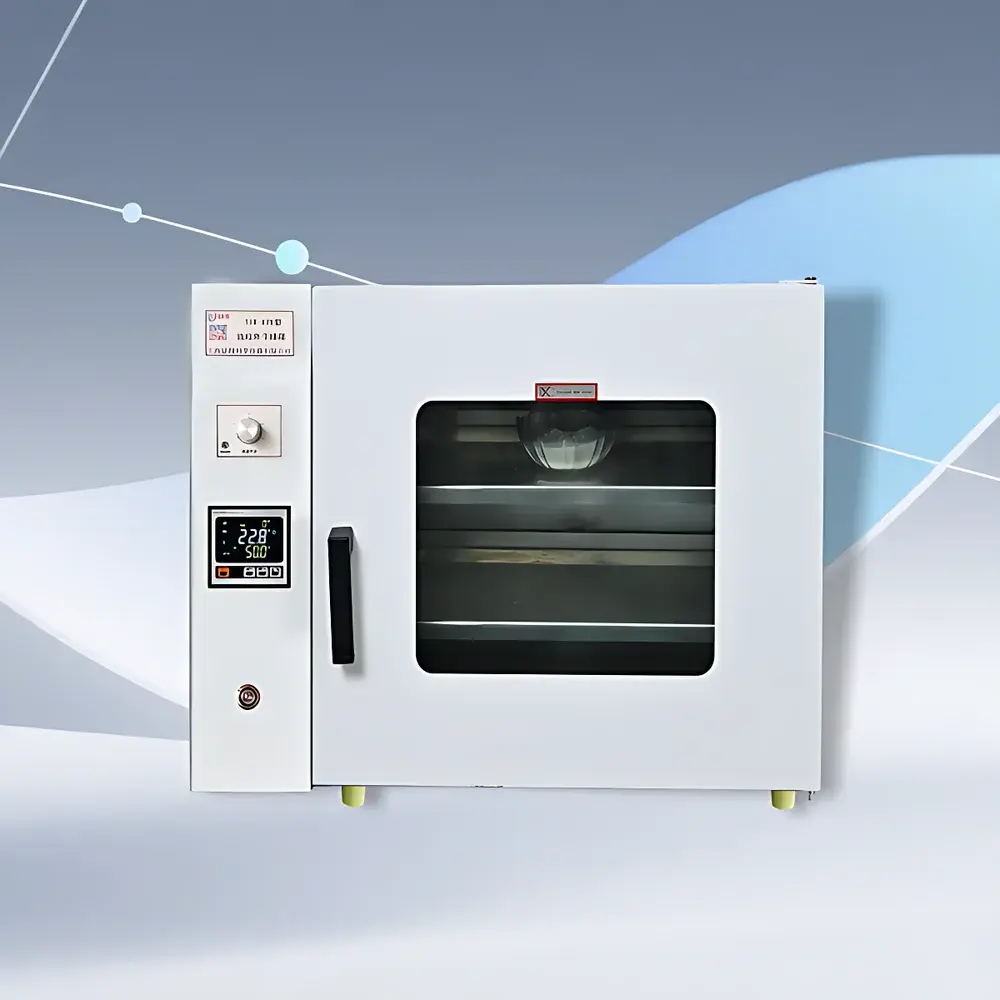
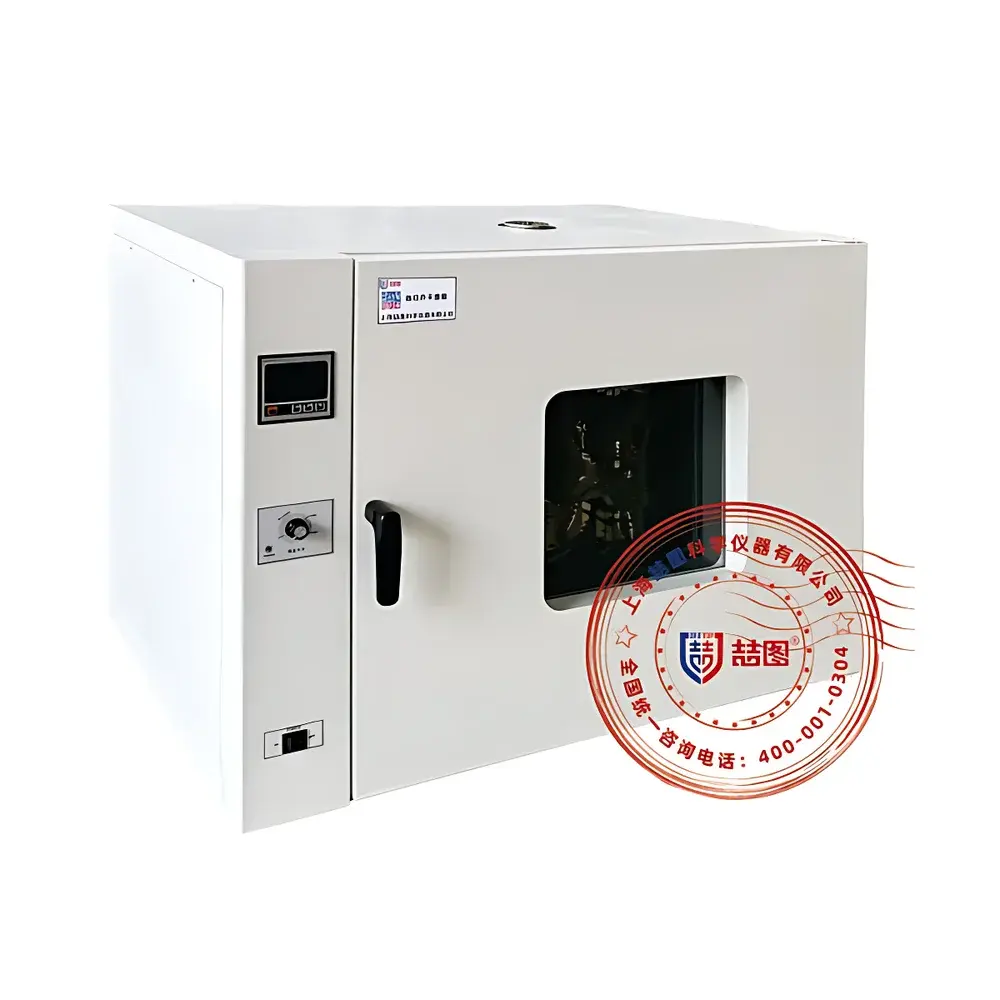
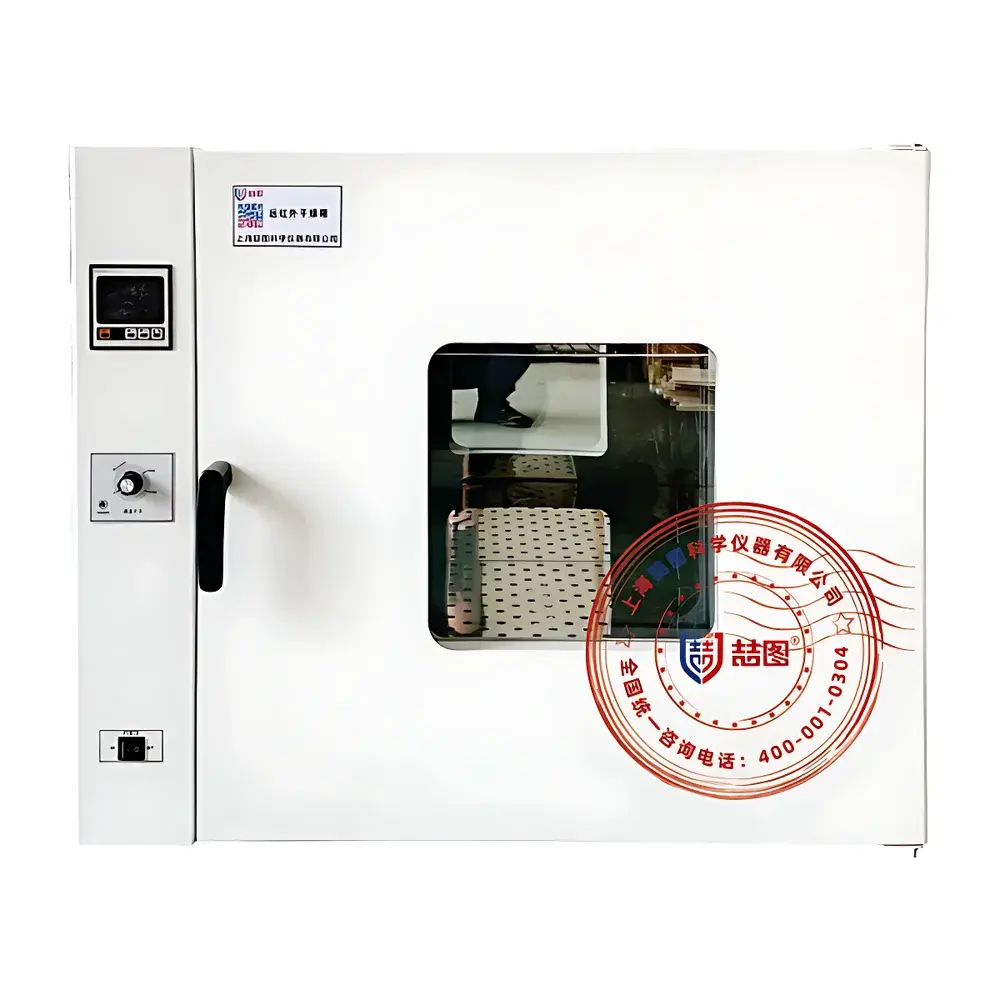
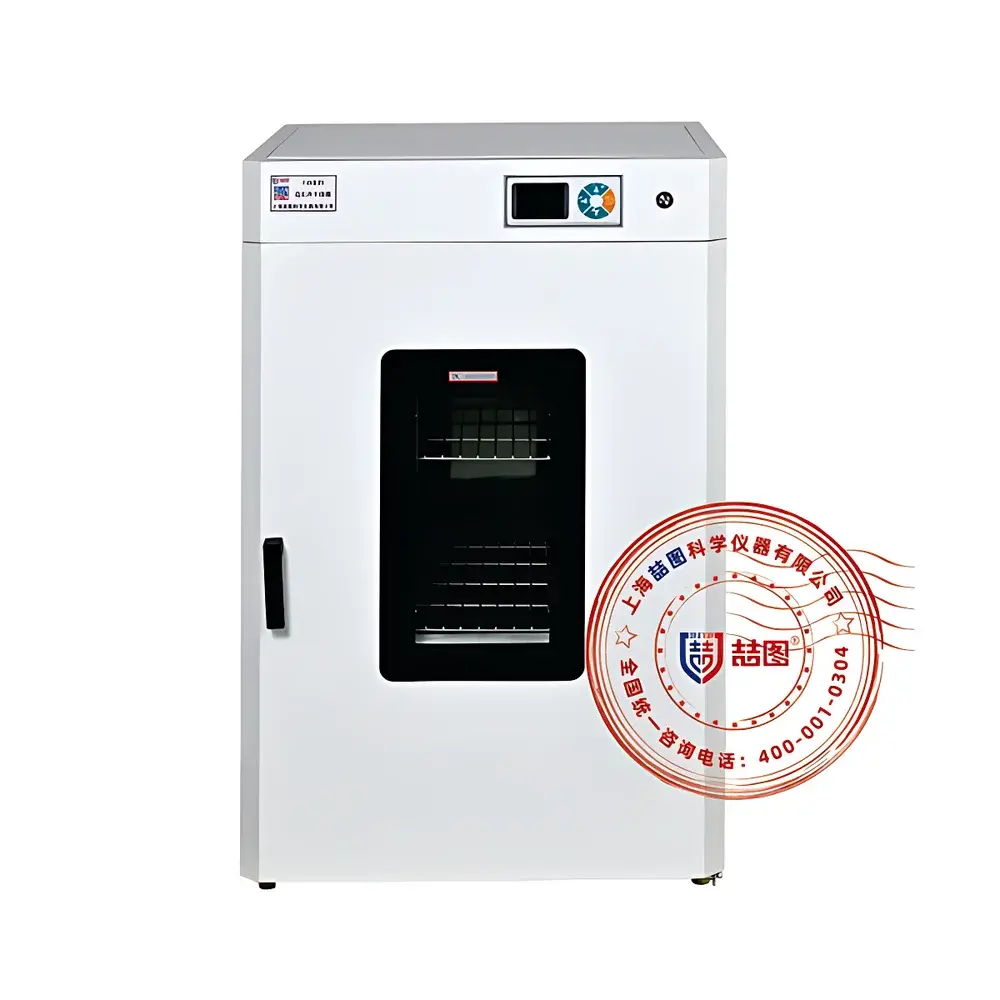
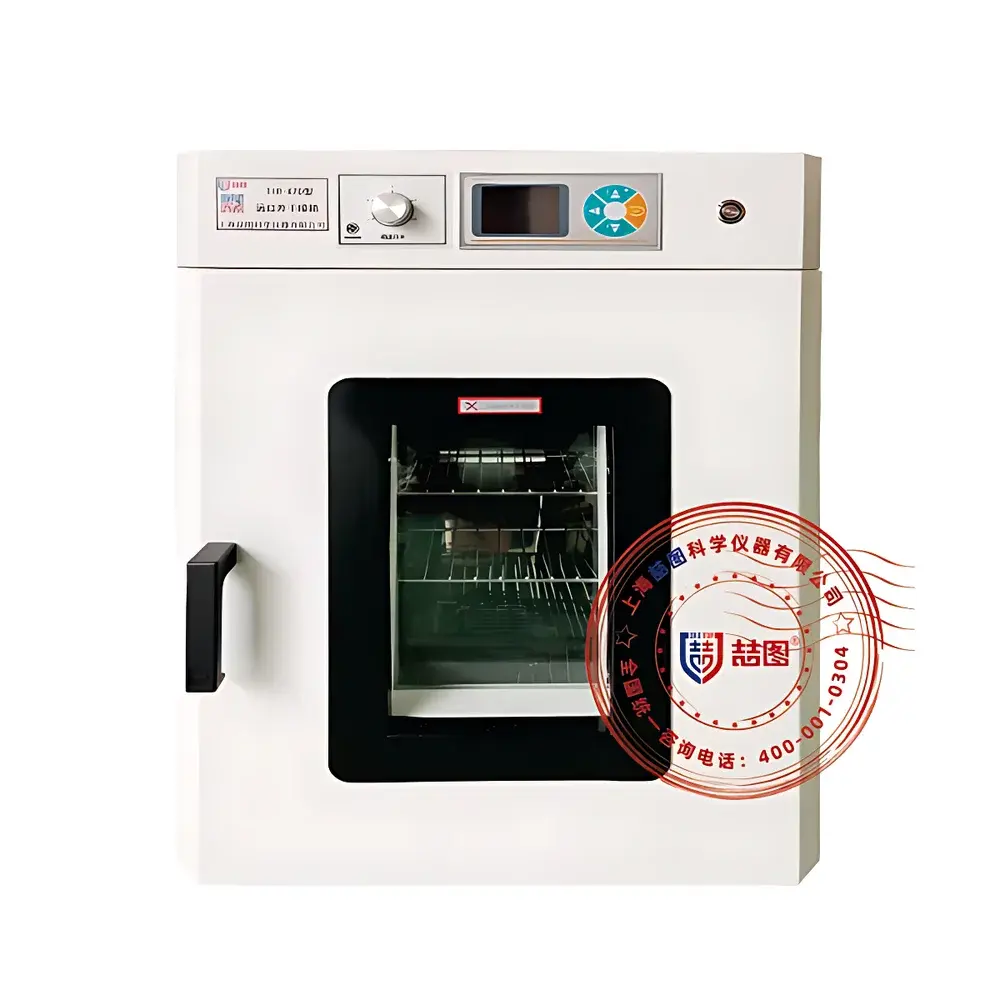
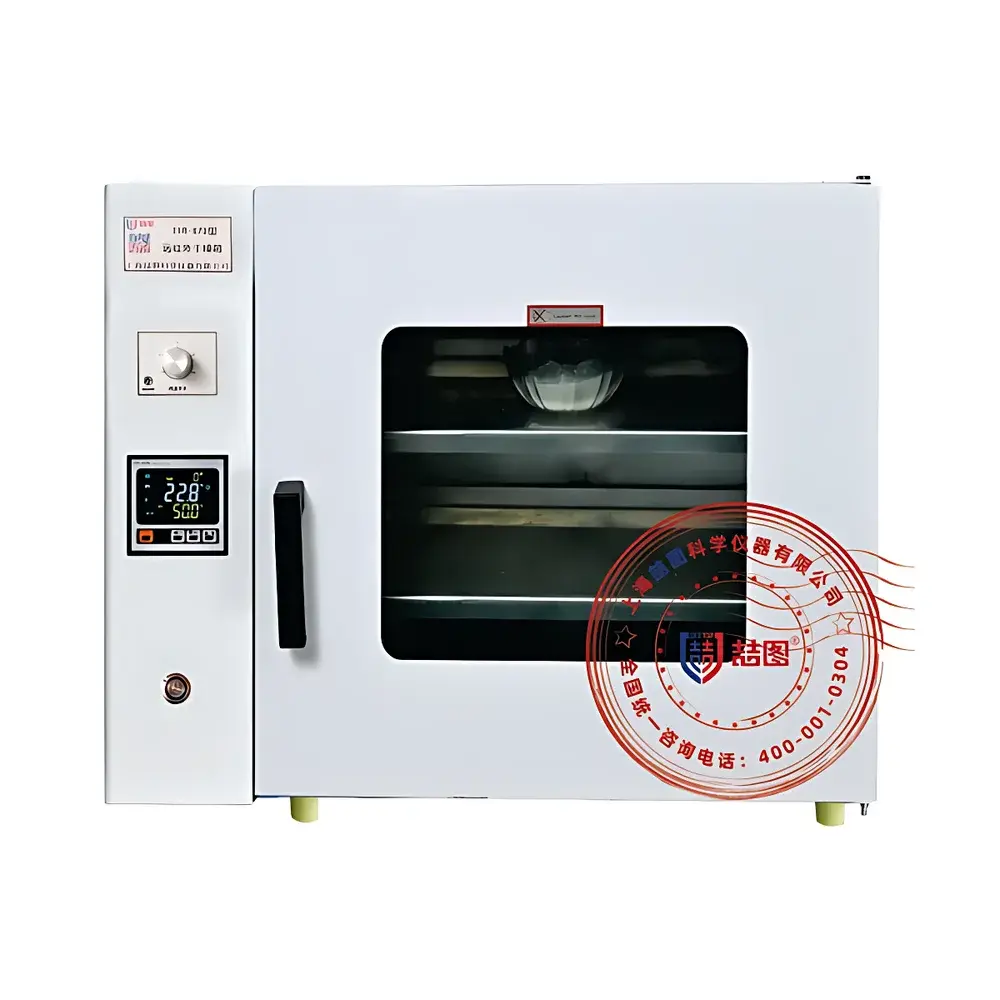
DRETOP TIR-78B Far-Infrared Drying Oven
| Brand | DRETOP |
|---|---|
| Origin | Shanghai, China |
| Manufacturer Type | Direct Manufacturer |
| Product Category | Domestic |
| Model | TIR-78B |
| Instrument Type | General-Purpose Drying Oven |
| Temperature Range | RT + 10°C to 300°C |
| Temperature Uniformity | ±2.5°C (at 100°C, with forced air circulation) |
| Temperature Fluctuation | ±1°C |
| Temperature Resolution | 0.1°C |
| Internal Chamber Dimensions (W×D×H) | 500 × 350 × 450 mm |
| Construction Material | Stainless Steel Interior |
| Heating Method | Far-Infrared Radiant Heating |
| Airflow Control | Continuously Adjustable Fan Speed (including off position) |
| Operating Ambient Temperature | 5–45°C |
| Power Supply | AC 220 V, 50 Hz |
| Input Power | 2550 W |
| Nominal Volume | 78 L |
| Standard Shelving | 2 Adjustable Stainless Steel Trays |
| Safety Features | Overtemperature Cut-off, Leakage Protection, Short-Circuit Protection, Thermal Overload Protection, Parameter Memory on Power Failure |
| Optional Accessories | USB Data Export Interface, Programmable Controller, RS-485 Communication Port, Thermal Printer Output, Color Touchscreen Upgrade, Calibration Test Port |
Overview
The DRETOP TIR-78B Far-Infrared Drying Oven is a precision-engineered laboratory drying system designed for applications requiring rapid, uniform thermal processing without mechanical disturbance to delicate or particulate samples. Unlike conventional convection ovens that rely solely on forced-air circulation—often causing displacement of powders, granules, or thin-film specimens—the TIR-78B integrates far-infrared (FIR) radiant heating as the primary thermal energy source. FIR radiation (wavelength range ~3–10 µm) enables direct molecular excitation within materials, resulting in faster heat penetration, reduced thermal inertia, and minimized surface turbulence. A separately controllable axial fan provides optional low-velocity air movement to enhance temperature homogeneity when required, while remaining fully deactivatable for static drying protocols. This dual-mode architecture—radiant-dominant with selectable convection support—makes the TIR-78B suitable for moisture content determination (per ASTM D2216, ISO 11465), pre-weighing sample conditioning, polymer film annealing, pharmaceutical tablet drying, and botanical sample stabilization where structural integrity must be preserved.
Key Features
- Far-infrared heating elements with silicon-controlled rectifier (SCR) or solid-state relay (SSR) power regulation ensure precise, responsive temperature control and extended heater service life.
- Microprocessor-based PID temperature controller with digital LCD display (three-color backlight), real-time parameter visualization, and self-diagnostic fault code reporting (e.g., E01 = sensor open circuit, E02 = overtemperature).
- 3D-refractive thermal field design: strategically angled internal reflectors and optimized cavity geometry distribute infrared energy across multiple incident angles, improving spatial temperature uniformity beyond standard radiant oven performance.
- Double-layer insulated stainless steel chamber (SUS304 interior) with high-temperature silicone rubber door gasket (rated to 350°C), ensuring long-term sealing integrity and minimal thermal leakage.
- Adjustable airflow system featuring continuously variable fan speed control—from zero airflow (pure radiant mode) to calibrated low-velocity circulation—enabling method-specific optimization per ISO 17025-compliant SOPs.
- Integrated safety architecture: independent mechanical overtemperature limiter, ground-fault circuit interrupter (GFCI), thermal cut-out fuse, and non-volatile memory retention for setpoints and timer values during unexpected power loss.
Sample Compatibility & Compliance
The TIR-78B accommodates a broad spectrum of sample formats—including Petri dishes, weighing boats, crucibles, glass vials, aluminum pans, and custom trays—within its 78 L stainless steel chamber (500 × 350 × 450 mm). Its ability to operate without forced convection preserves morphology of friable materials such as activated carbon, catalyst powders, lyophilized proteins, herbal extracts, and ceramic precursors. The unit complies with general electrical safety requirements per IEC 61010-1 and meets electromagnetic compatibility (EMC) standards under EN 61326-1. While not certified for Class I Div 1 hazardous locations, it supports GLP/GMP-aligned workflows through configurable alarm thresholds, audit-ready event logging (when equipped with RS-485 or USB interface), and traceable calibration procedures compatible with ISO/IEC 17025 accreditation frameworks.
Software & Data Management
The base configuration includes a standalone microcontroller with embedded firmware supporting programmable ramp-hold cycles (via optional programmable controller add-on), timer-based operation (1–9999 minutes), and deviation alarms. For enhanced data governance, users may integrate the TIR-78B with external systems via its RS-485 port (Modbus RTU protocol) or USB interface (mass storage class), enabling automated export of time-stamped temperature logs to CSV files on removable media. When paired with optional color touchscreen or PC-based software, the oven supports electronic record generation compliant with FDA 21 CFR Part 11 requirements—including user authentication, audit trails, electronic signatures, and data immutability controls. All configurations maintain timestamped operational history, including start/stop events, temperature excursions, and fault resets.
Applications
- Moisture analysis in soil, feed, and food samples per AOAC 950.46 and USP <731>
- Drying of filter papers post-gravimetric filtration in environmental water testing (EPA Method 160.1)
- Pre-conditioning of reference standards prior to Karl Fischer titration
- Thermal stabilization of chromatography columns and GC vials
- Curing of solvent-based coatings and adhesives in materials R&D labs
- Desiccation of biological tissues prior to histological embedding
- Accelerated aging studies of polymers and packaging films (ASTM D3045)
FAQ
What distinguishes far-infrared heating from conventional convection heating in drying applications?
Far-infrared radiation transfers thermal energy directly to molecular bonds via resonant absorption, reducing reliance on convective heat transfer and minimizing particle displacement—critical for powders, nanomaterials, and fragile specimens.
Can the TIR-78B be validated for GxP-regulated environments?
Yes—when configured with optional data logging, user access control, and electronic signature modules, it supports IQ/OQ/PQ documentation and aligns with ALCOA+ data integrity principles.
Is the chamber volume verified per ISO 27878 for volumetric accuracy?
Chamber dimensions are factory-measured and documented; volumetric calibration certificates are available upon request for metrological traceability.
Does the unit support multi-step temperature programming?
Standard configuration includes single-setpoint operation with timer; multi-segment ramp-and-soak profiles require the optional programmable controller module.
What maintenance intervals are recommended for optimal thermal performance?
Biannual verification of temperature uniformity (per ISO 17025 Annex C) and annual inspection of door seal integrity and heating element resistance are advised.



