
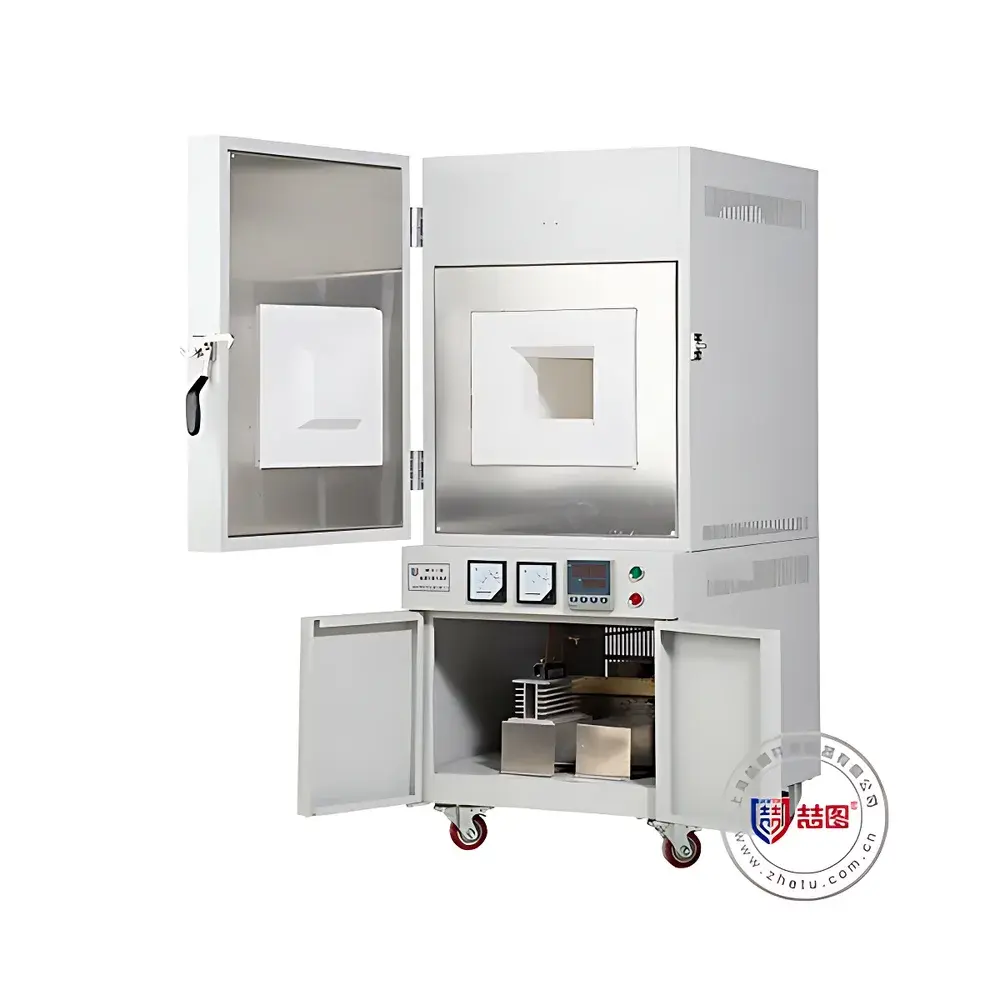
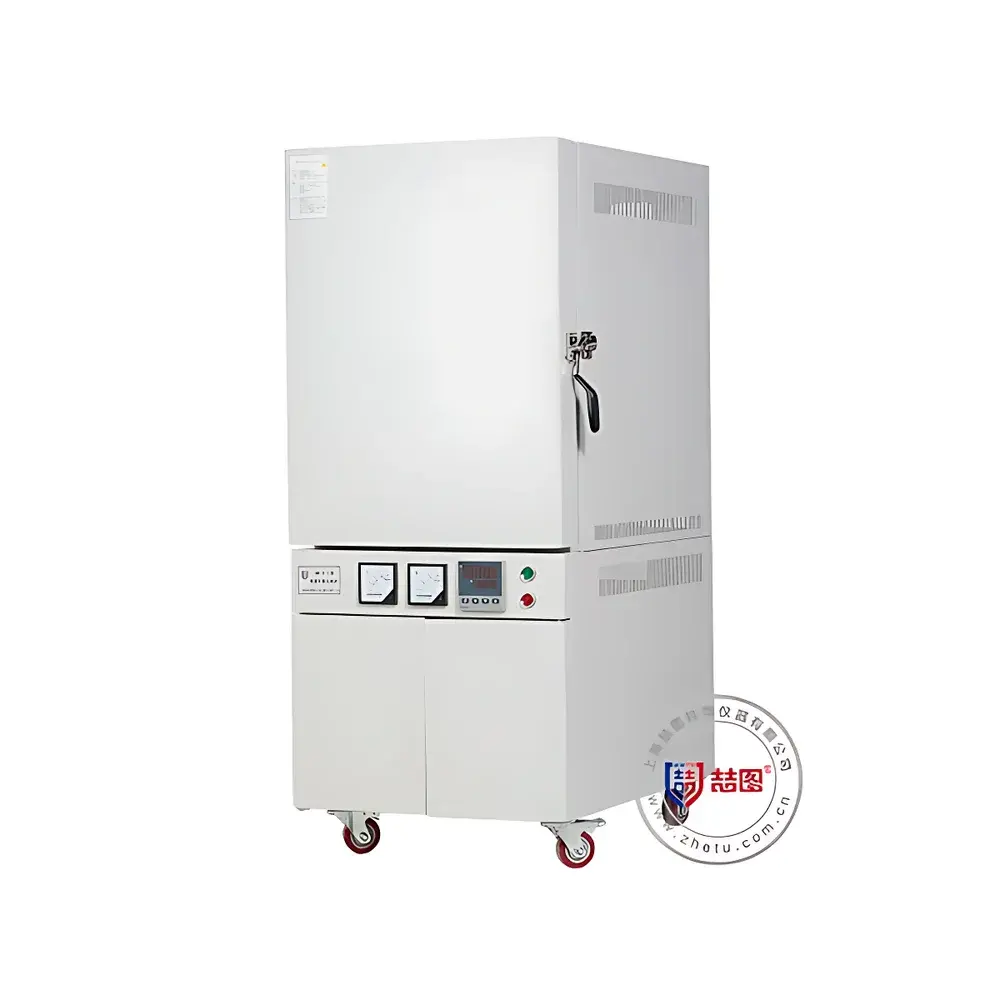
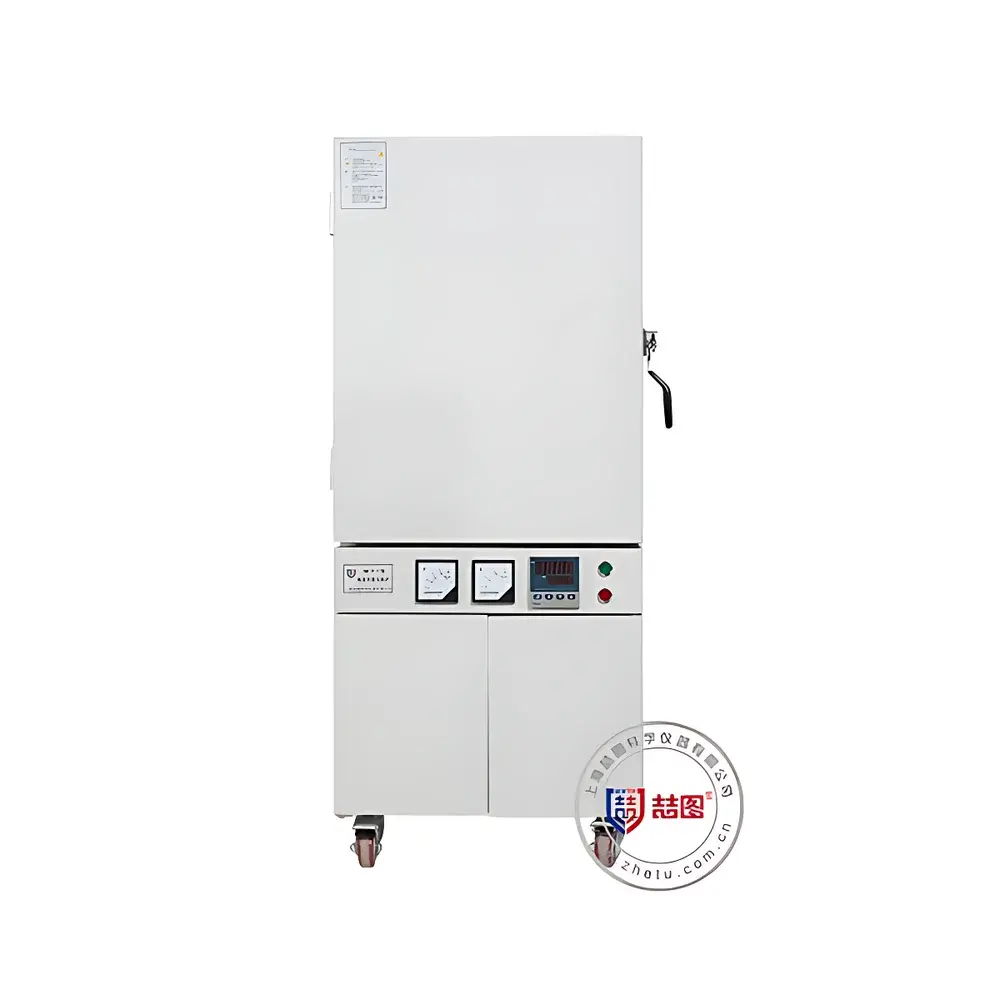
DRETOP TMF-36-17TP Ceramic Fiber Muffle Furnace
| Brand | DRETOP |
|---|---|
| Origin | Shanghai, China |
| Manufacturer Type | Direct Manufacturer |
| Product Category | Domestic |
| Model | TMF-36-17TP |
| Instrument Type | Box-Type Muffle Furnace |
| Maximum Temperature | 1700 °C |
| Temperature Control Accuracy | ±1 °C |
| Rated Power | 18 kW |
| Heating Time to Max Temp | 80 min |
| Heating Element | Silicon Molybdenum (MoSi₂) Rods |
| Internal Chamber Dimensions | 300 × 400 × 300 mm |
| Control System | Programmable LCD Controller |
| Nominal Volume | 36 L |
Overview
The DRETOP TMF-36-17TP is a high-temperature box-type muffle furnace engineered for precision thermal processing in research laboratories, materials science departments, and quality control environments. Designed around a lightweight, high-efficiency ceramic fiber insulation architecture, it replaces traditional refractory brick furnaces with significantly reduced thermal mass—enabling rapid heating, improved energy efficiency, and superior temperature uniformity across the 36 L working chamber. Its operational range extends from ambient +50 °C to 1700 °C, making it suitable for demanding applications including sintering of advanced ceramics, heat treatment of refractory metals, ashing of geological or biological samples per ASTM E1755, and controlled-atmosphere annealing of optical glasses and crystalline substrates. The furnace employs B-type thermocouples (Pt/Rh–Pt) for high-temperature measurement stability and integrates MoSi₂ heating elements—known for their oxidation resistance above 1500 °C and minimal resistance drift over extended service life.
Key Features
- High-density vacuum-formed ceramic fiber insulation, achieving surface temperatures <45 °C at 1700 °C operation—compliant with IEC 61000-3-2 harmonic emission limits and reducing facility cooling load.
- Robust dual-stage overtemperature protection: primary PID controller with independent secondary limit switch (mechanical cut-off), both certified to UL 1278 and EN 60519-2 safety standards.
- Programmable 30-segment temperature profile controller with linear ramp/soak capability, slope correction, and auto-stop functionality—supports GLP-compliant thermal protocols.
- Front-loading side-hinged door with stainless steel inner frame and integrated ceramic fiber gasket, ensuring gas-tight sealing during inert or reducing atmosphere operations.
- Integrated cold-rolled steel housing with phosphate conversion coating and electrostatic powder coating (computer gray, RAL 7035), providing corrosion resistance and structural rigidity.
- Intelligent ambient temperature compensation algorithm—automatically adjusts initial ramp rate based on real-time chamber base temperature, minimizing overshoot and improving repeatability.
- Dual-layer thermal barrier: outer ceramic fiber board + inner high-purity alumina-silica lining—optimized for thermal shock resistance and long-term dimensional stability.
Sample Compatibility & Compliance
The TMF-36-17TP accommodates standard crucibles (alumina, zirconia, silicon carbide) and custom fixtures up to 280 mm wide × 380 mm deep × 280 mm high. It supports atmospheric, inert (N₂, Ar), and mildly reducing (5% H₂/N₂) environments when equipped with optional gas inlet valves and exhaust chimney (recommended for organic matrix ashing per ISO 11885 or EPA Method 3050B). All electrical components meet CE marking requirements under the Low Voltage Directive (2014/35/EU) and EMC Directive (2014/30/EU). The control system architecture complies with data integrity principles outlined in FDA 21 CFR Part 11 when used with optional RS485 interface and validated third-party SCADA software—enabling audit trails, electronic signatures, and secure data export (CSV/Excel).
Software & Data Management
While the base TP-series controller features a monochrome LCD with real-time display of setpoint, actual temperature, segment number, and elapsed time, optional AI-series upgrades include a 7-inch capacitive touchscreen with embedded data logging (10,000-point memory), graphical temperature curve visualization, and USB export capability. Firmware supports configurable alarm thresholds, password-protected parameter editing, and automatic power-loss recovery with memory retention. For integration into centralized lab networks, the RS485 Modbus RTU interface enables bidirectional communication with LIMS or MES platforms—supporting scheduled start/stop commands, remote calibration verification, and synchronized timestamping aligned to NTP servers.
Applications
- Thermal analysis of advanced ceramics: sintering of Si₃N₄, ZrO₂, and Al₂O₃ compacts under controlled dwell profiles (ISO 2738).
- Metallurgical testing: annealing and stress-relieving of Ni-based superalloys and titanium alloys per AMS 2750E pyrometry requirements.
- Geochemical preparation: loss-on-ignition (LOI) and total carbon determination in soils and sediments (ASTM D7348).
- Pharmaceutical excipient validation: residual solvent removal and polymorph stabilization studies under GMP-aligned thermal protocols.
- Nanomaterial synthesis: calcination of metal oxide precursors (e.g., TiO₂, Fe₃O₄) with precise ramp-rate control to govern crystallite size distribution (Scherrer equation validation).
- Quality assurance: heat treatment verification of aerospace fasteners and turbine blade coatings per Nadcap AC7101/4.
FAQ
What is the recommended maintenance schedule for MoSi₂ heating elements?
MoSi₂ rods require no periodic replacement under normal oxidizing atmosphere operation up to 1700 °C. Annual visual inspection for surface pitting or warping is advised; element resistance should remain within ±5% of nominal value at room temperature.
Can this furnace be operated continuously at 1700 °C?
Yes—rated for continuous duty at maximum temperature per IEC 60519-2 Annex B, provided ambient temperature remains ≤30 °C and ventilation clearance ≥150 mm on all sides.
Is the 30-segment programmable controller included as standard?
Yes—the “TP” suffix denotes factory-installed programmable LCD controller with full 30-segment capability; no additional configuration required.
What safety certifications does the TMF-36-17TP hold?
CE-marked to EN 61000-6-2 (immunity) and EN 61000-6-4 (emissions); mechanical design conforms to EN 60519-2 for industrial electroheating equipment.
How is temperature uniformity validated across the chamber?
Uniformity is characterized per ASTM E2203 using nine thermocouple mapping points (3×3 grid at center plane); typical deviation is ≤±5 °C at 1600 °C, confirmed by factory calibration report shipped with each unit.



