
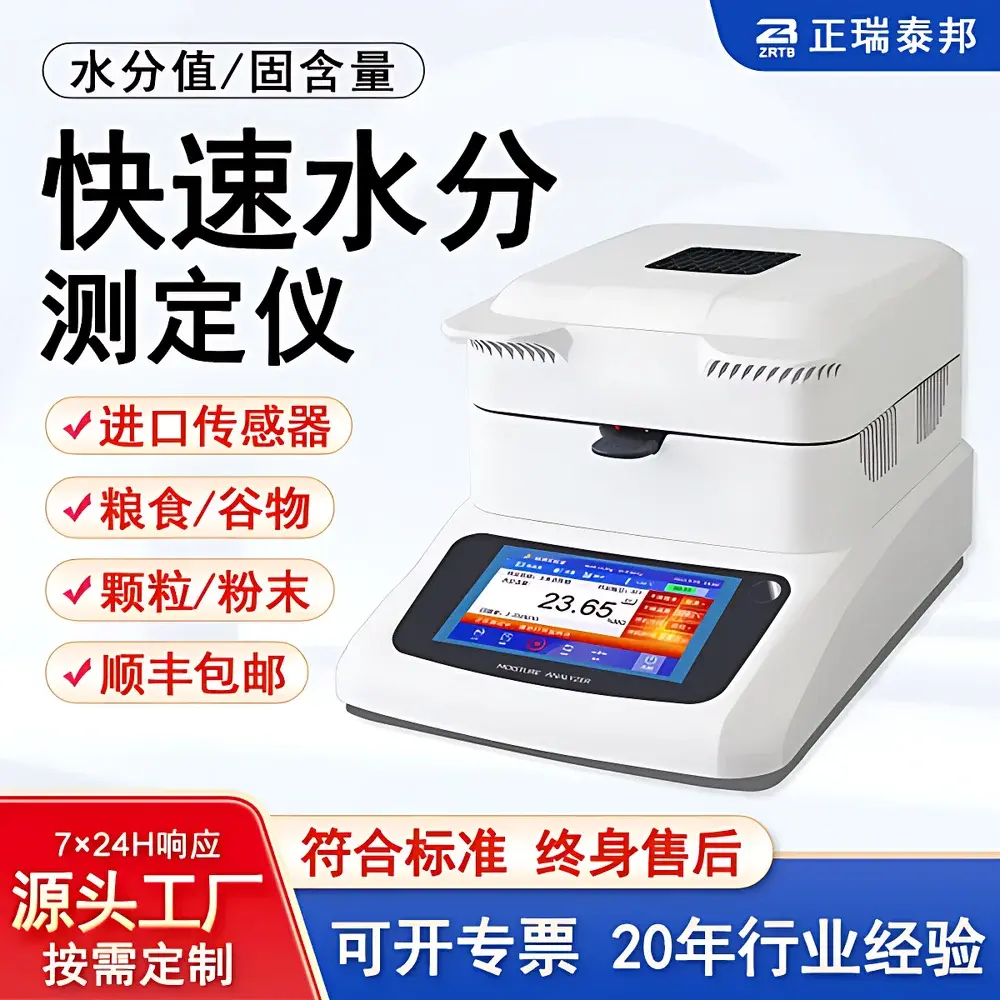
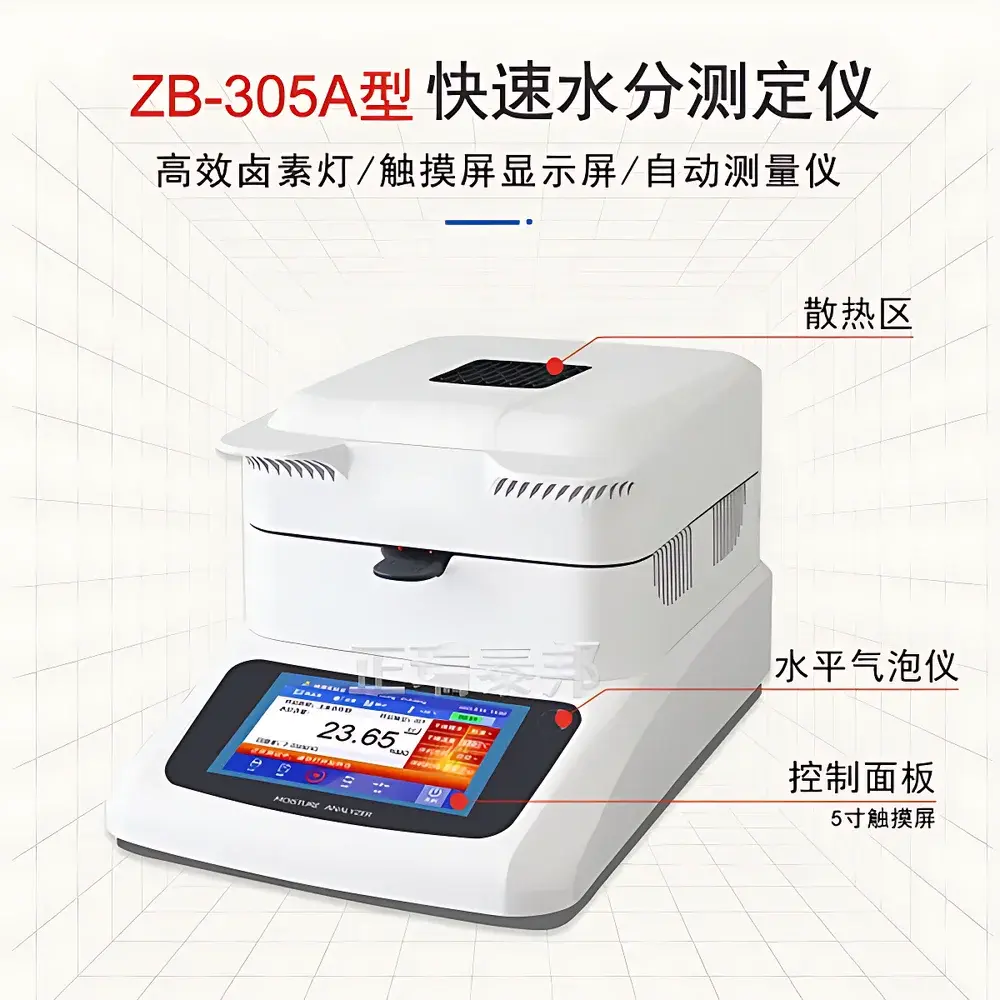
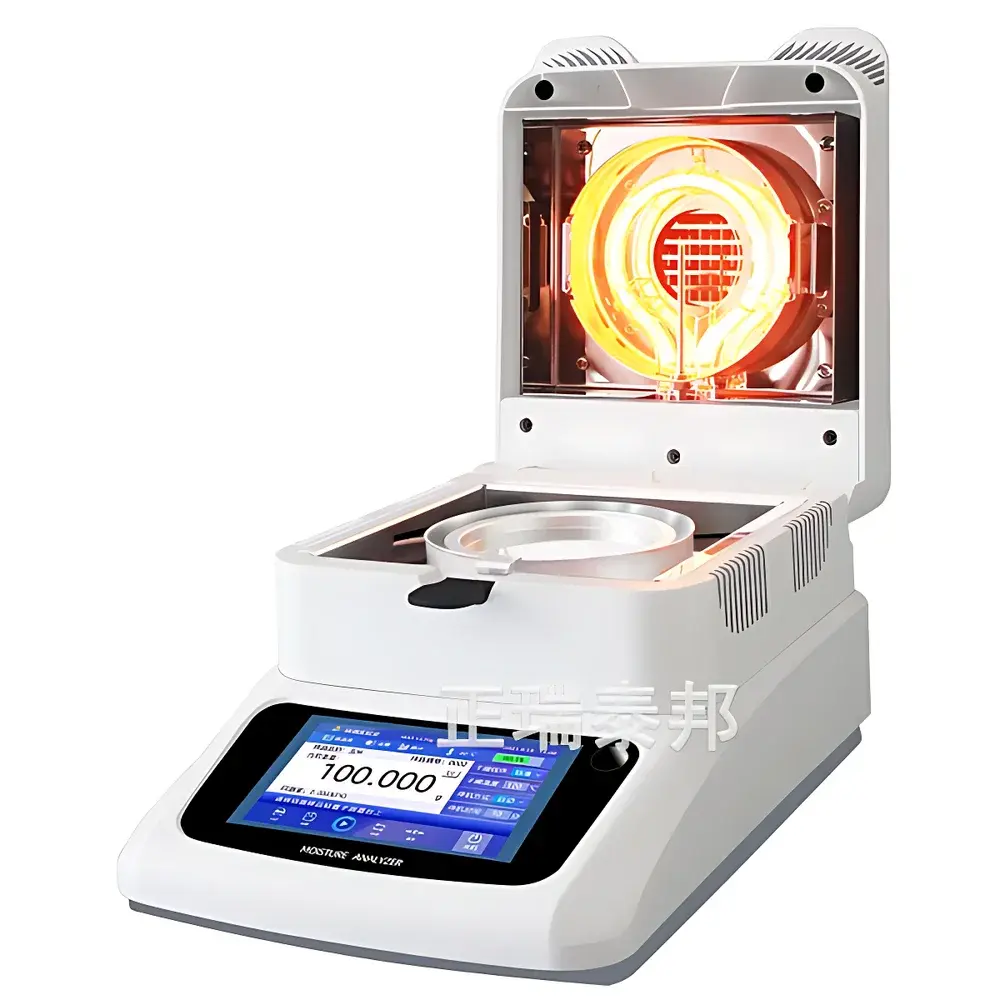
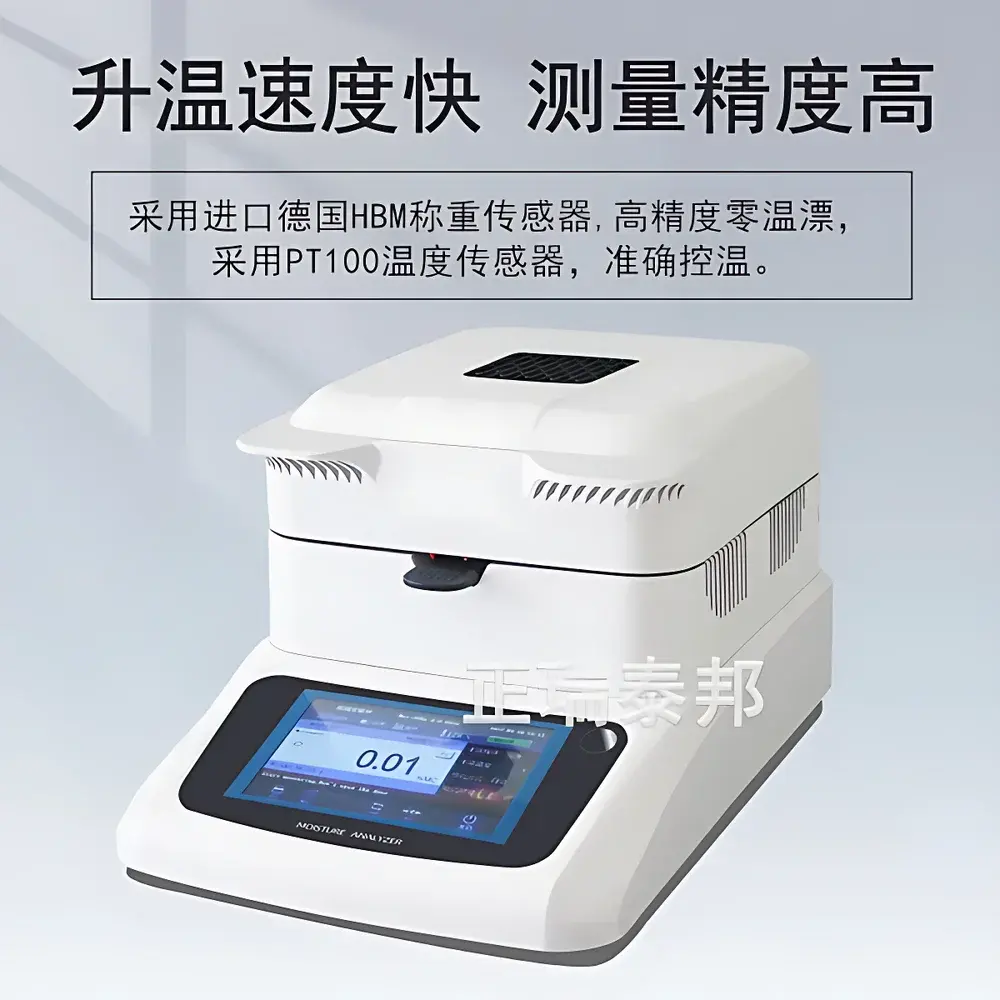
ZRTB ZB-305A Capacitance-Based Rapid Moisture Analyzer for Plastic Granules
| Brand | ZRTB |
|---|---|
| Origin | Jiangsu, China |
| Manufacturer Type | Direct Manufacturer |
| Country of Origin | China |
| Model | ZB-305A |
| Maximum Capacity | 120 g |
| Readability | 0.001 g |
| Moisture Resolution | 0.01% |
| Heating Source | Halogen Lamp (Room Temp–180 °C, 1 °C Increments) |
| Drying Modes | Standard / Rapid / Gentle |
| Termination Modes | Auto-Stop / Timed Stop / Manual Stop |
| Weighing Sensor | HBM (Germany) |
| Processor | ARM (UK) |
| Calibration Weight | 100 g |
| Pan Diameter | φ110 mm |
| Interface | RS232 |
| Dimensions (L×W×H) | 330 × 205 × 165 mm |
| Application | Multi-industry moisture determination in plastics, polymers, pharmaceuticals, food, and chemicals |
Overview
The ZRTB ZB-305A Capacitance-Based Rapid Moisture Analyzer is a dedicated benchtop instrument engineered for rapid, non-destructive moisture quantification in hygroscopic solid materials—particularly plastic granules, polymer pellets, and thermoplastic resins. Unlike loss-on-drying (LOD) analyzers that rely solely on thermal mass loss, the ZB-305A integrates capacitance-based dielectric sensing with precisely controlled halogen heating to provide real-time correlation between dielectric permittivity shifts and bound/free water content. This hybrid approach enhances measurement specificity for polymeric matrices where surface evaporation kinetics and internal diffusion rates vary significantly across resin types (e.g., PET, PA6, PC, ABS). The instrument operates under ISO 15512 and ASTM D6980 principles for polymer moisture analysis, delivering repeatable results within 2–8 minutes per sample—critical for inline QC checks prior to extrusion or injection molding.
Key Features
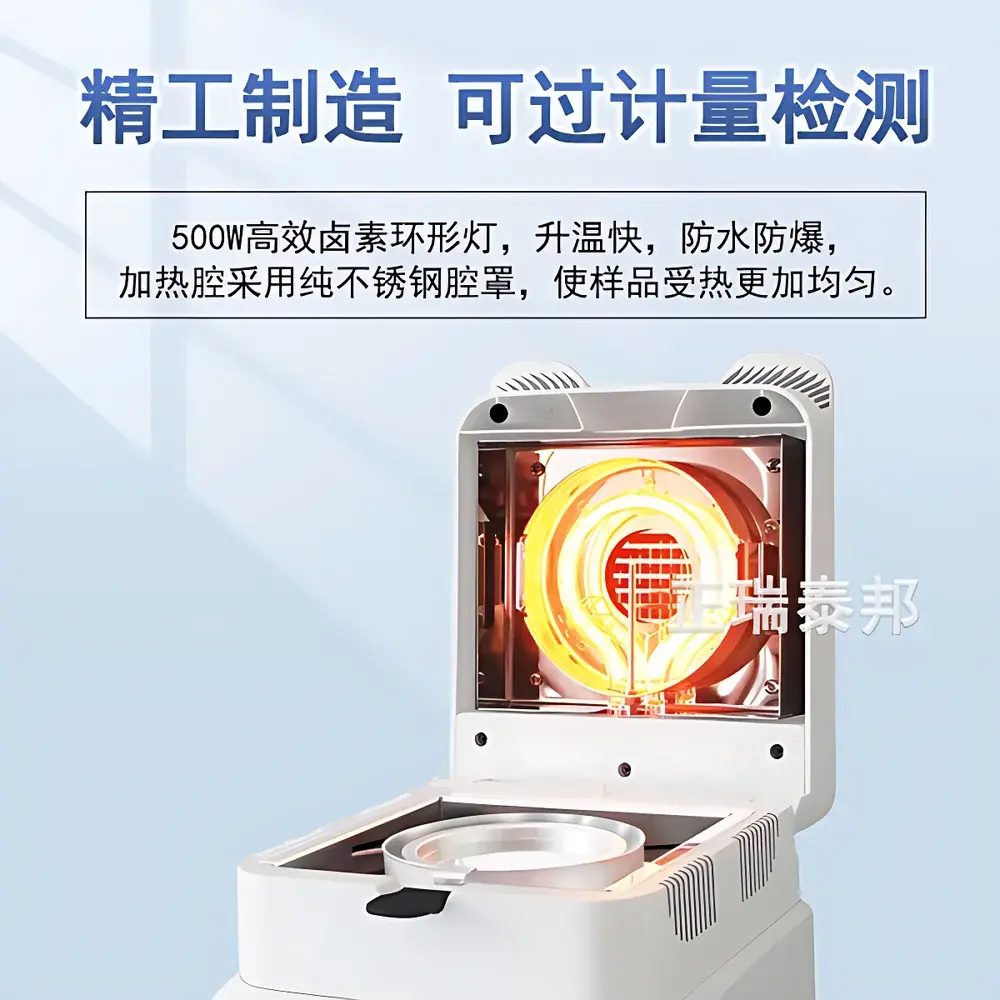
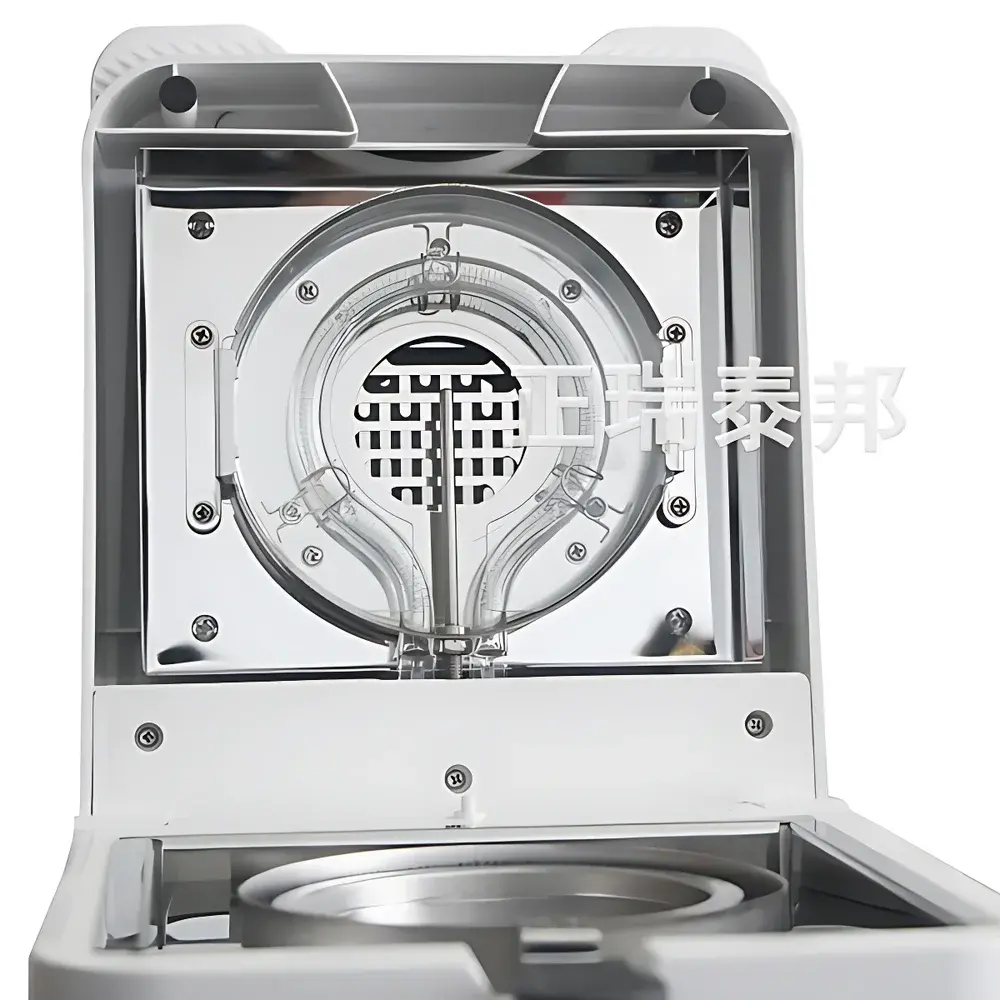
- Halogen heating system with programmable temperature control (ambient to 180 °C, 1 °C resolution) ensures uniform thermal energy distribution across heterogeneous granular samples.
- High-stability weighing module featuring HBM strain-gauge load cells (certified to OIML R76 Class II) delivers 0.001 g readability and long-term drift resistance under continuous thermal cycling.
- ARM-based embedded controller enables deterministic response timing, multi-stage drying profiles, and robust electromagnetic interference (EMI) immunity in industrial lab environments.
- Stainless-steel heating chamber (AISI 304) resists corrosion from halogen byproducts and facilitates residue-free cleaning after testing additives-laden compounds.
- Optimized draft shield design minimizes air turbulence during weighing—essential for maintaining ±0.01% repeatability in low-mass granule samples (e.g., 2–10 g).
- Simultaneous calculation of moisture content (%MC), dry solids (%DS), and residual weight—output compliant with GLP documentation requirements.
Sample Compatibility & Compliance
The ZB-305A accommodates granular, flake, and powder-form specimens with particle sizes ranging from 0.2 mm to 8 mm—ideal for virgin polymer pellets, regrind, masterbatches, and compounded resins. It complies with key regulatory frameworks governing quality assurance in regulated industries: USP <921>, ISO 15512:2021 (plastics—determination of water content), ASTM D6980-22 (standard test method for moisture in plastics by thermogravimetric analysis), and EU GMP Annex 11 (for electronic record integrity when connected via RS232 to validated LIMS systems). All firmware operations support audit trail generation—including user ID, timestamp, method name, raw weight data, and final %MC—meeting FDA 21 CFR Part 11 requirements when deployed with appropriate system validation.
Software & Data Management
The analyzer supports direct RS232 serial communication for integration with laboratory information management systems (LIMS), statistical process control (SPC) platforms, or custom QA databases. Output includes ASCII-formatted records containing pre-dry mass, post-dry mass, elapsed time, set temperature, and calculated %MC/SS. No proprietary software installation is required; standard terminal emulators (e.g., Tera Term, PuTTY) or Excel-compatible data loggers can capture and parse outputs. Internal memory stores up to 99 method configurations—each defining ramp rate, target temperature, hold duration, and termination logic—enabling rapid switching between material-specific protocols without recalibration.
Applications
- Pre-processing verification of hygroscopic engineering plastics (e.g., nylon 6/6, PBT, PET) prior to melt processing—ensuring moisture remains below critical thresholds (<0.02% for optical-grade polycarbonate).
- Batch release testing of pharmaceutical excipients (microcrystalline cellulose, lactose monohydrate) per ICH Q5C stability guidelines.
- Moisture mapping in food-grade polymer packaging films to assess barrier integrity and shelf-life modeling inputs.
- Routine QC in rubber compounding labs for carbon-black-loaded SBR or EPDM formulations where water interferes with vulcanization kinetics.
- Educational use in polymer science laboratories for comparative drying kinetics studies across resin families.
FAQ
Does the ZB-305A require daily calibration?
No—routine calibration is performed only at startup using the included 100 g certified weight. Drift monitoring is supported via built-in linearity verification routines traceable to national metrology institutes.
Can it measure moisture in conductive or metallic-filled composites?
Yes—capacitance compensation algorithms mitigate signal distortion from carbon-fiber or metal-powder additives, though validation against Karl Fischer titration is recommended for new composite formulations.
Is the halogen lamp replaceable by the user?
Yes—the lamp assembly is tool-free and field-replaceable with OEM-specified 24 V/500 W units; average service life exceeds 5,000 hours.
What safety certifications does the unit hold?
CE marked per EN 61010-1:2019 (electrical safety) and EN 61326-1:2013 (EMC); conforms to RoHS 2011/65/EU and REACH SVHC compliance declarations.
How is method validation documented for regulated environments?
Each method file exports a full parameter log including sensor ID, firmware version, calibration history, and environmental ambient readings—sufficient for IQ/OQ/PQ protocol alignment in GMP audits.
Related Products





