
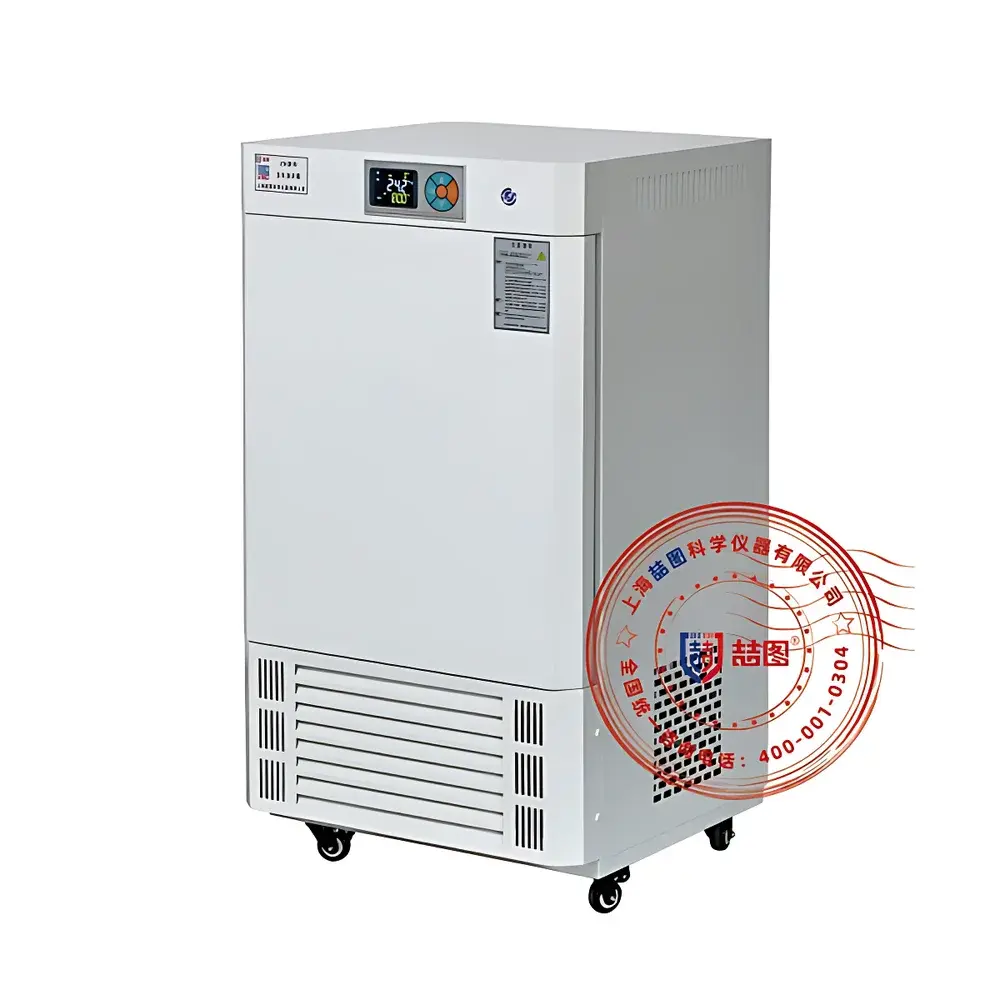
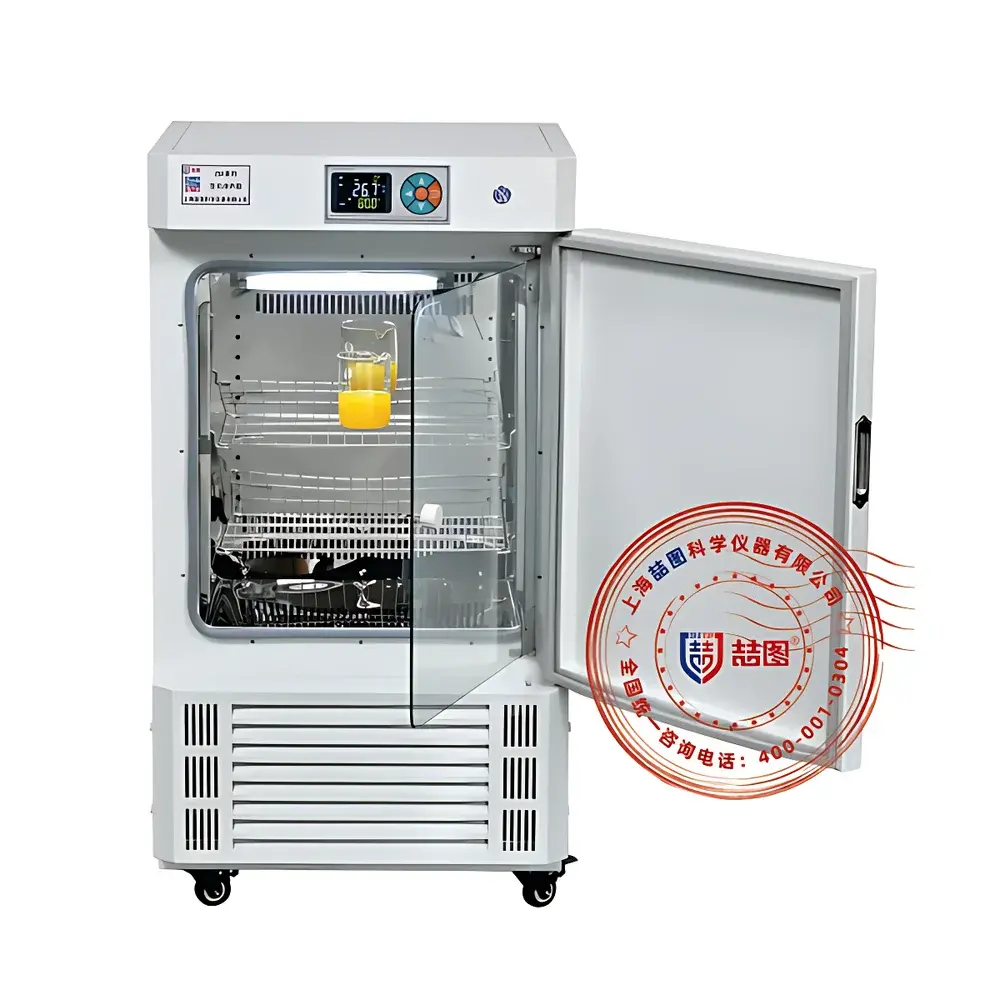
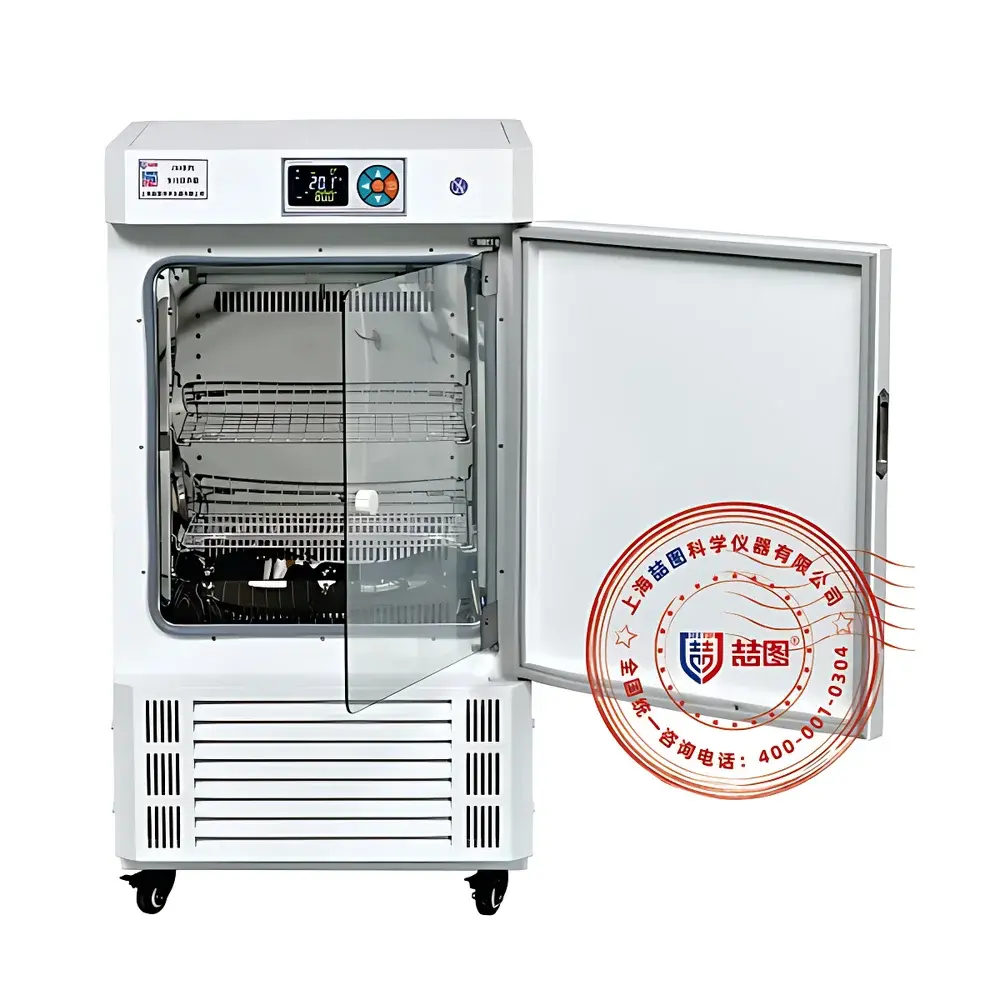
DRETOP ZSH-D1000P Dual-Door Biochemical Incubator
| Brand | DRETOP |
|---|---|
| Origin | Shanghai, China |
| Manufacturer Type | Direct Manufacturer |
| Model | ZSH-D1000P |
| Heating Method | Air-Jacketed |
| Cooling Method | Compressor-Based Refrigeration |
| Air Circulation | Forced Convection |
| Temperature Range | 0–70 °C |
| Temperature Fluctuation | ±0.5 °C |
| Temperature Uniformity | ±2 °C (empty chamber @ 25 °C) |
| Capacity | 1000 L |
| External Dimensions | 1410 × 890 × 1950 mm |
Overview
The DRETOP ZSH-D1000P Dual-Door Biochemical Incubator is a high-capacity, dual-compartment environmental control system engineered for precision temperature maintenance across life science laboratories. It operates on a dual-mode thermoregulation principle—integrating air-jacketed heating with compressor-based refrigeration—to deliver stable, bidirectional thermal control from 0 °C to 70 °C. Unlike single-chamber incubators, its dual-door architecture enables independent access to left and right compartments without compromising thermal integrity in the unopened section—a critical advantage for multi-project workflows requiring simultaneous but isolated incubation conditions. Designed for BOD testing, microbial culture, enzymatic assays, cell viability studies, and long-term stability trials, the unit meets foundational requirements for ISO/IEC 17025-compliant laboratories and supports GLP-aligned experimental protocols where traceable, reproducible environmental conditions are mandatory.
Key Features
- Air-jacketed heating system ensures rapid thermal response and minimal internal gradient formation during warm-up cycles.
- Hermetically sealed, high-efficiency compressor with self-monitoring start-stop logic extends service life and maintains consistent cooling performance under continuous operation.
- Forced convection airflow via optimized axial ducting and laminar flow distribution achieves ±2 °C uniformity (empty, at 25 °C), validated per ASTM E167–22 guidelines for incubator qualification.
- Dual independent doors with magnetic door seals and tempered glass inner panels minimize heat loss and enable real-time visual monitoring without thermal disruption.
- Stainless steel interior chamber (304 grade) with fully removable, height-adjustable shelves facilitates CIP/SIP-compatible cleaning and eliminates microbial harborage points.
- Microprocessor-based P.I.D. temperature controller with 0.1 °C resolution, programmable alarm thresholds, and automatic power recovery after interruption ensures operational continuity and data integrity.
- Integrated safety architecture includes over-temperature cut-off, compressor delay protection, and parameter memory retention—even during unexpected power loss.
Sample Compatibility & Compliance
The ZSH-D1000P accommodates standard laboratory vessels—including Petri dishes, flasks, multi-well plates, BOD bottles, and serum vials—across both chambers simultaneously. Its 1000 L total volume (two 500 L compartments) supports large-scale cultivation, parallel environmental stress testing, or segregated QC/QA sample sets. The unit complies with IEC 61010-1:2010 for electrical safety and incorporates R-134a or R-600a refrigerant options (F-series models), satisfying EU F-Gas Regulation (EU) No 517/2014 and EPA SNAP program criteria for low-global-warming-potential (GWP) alternatives. Optional BOD-rated sockets (IPX4 rated) provide dedicated, moisture-resistant power outlets within the chamber—enabling in-situ electrochemical oxygen monitoring per APHA Standard Methods 5210B.
Software & Data Management
While the base configuration features a high-contrast LCD interface with tactile membrane keys, optional RS485 serial communication enables integration into centralized lab management systems (LIMS) or SCADA platforms. Data logging—via external USB-connected recorders or third-party DAQ hardware—is supported through standardized Modbus RTU protocol. For regulated environments, optional audit-trail-enabled controllers (P- and T-series variants) comply with FDA 21 CFR Part 11 requirements when paired with electronic signature validation modules. All firmware updates follow secure signed-binary deployment protocols, and calibration logs may be exported in CSV format for QA archival.
Applications
- Biochemical Oxygen Demand (BOD5) analysis per ISO 5815-1:2019 and EPA Method 405.1.
- Microbial growth kinetics studies (e.g., E. coli, S. aureus, yeasts) under controlled thermal stress.
- Enzyme activity profiling across temperature gradients in pharmaceutical excipient stability testing.
- Plant tissue culture and seed germination assays requiring diurnal temperature cycling (when paired with optional programmable controllers).
- Environmental simulation for ecotoxicology endpoints, including algal growth inhibition (OECD 201) and daphnia immobilization (OECD 202).
- Long-term storage of temperature-sensitive reagents, antibodies, and reference standards in clinical and diagnostic labs.
FAQ
What is the maximum ambient temperature rating for continuous operation?
The ZSH-D1000P is rated for uninterrupted use at ambient temperatures up to 30 °C, provided adequate ventilation clearance (≥100 mm on all sides) and relative humidity ≤80% RH non-condensing.
Can the two compartments operate at different setpoints simultaneously?
No—the dual-door design shares a common thermal control system; both compartments maintain identical setpoint temperatures. Independent temperature zones require multi-chamber configurations (e.g., ZSH2-150 or ZSH4-100 series).
Is validation documentation available for IQ/OQ/PQ protocols?
Yes. DRETOP provides a Factory Acceptance Test (FAT) report, as-built drawings, and a comprehensive User Requirement Specification (URS) template. On-site OQ execution support and certified temperature mapping services are available upon request.
Does the unit support external temperature probe input for chamber monitoring?
Standard configuration does not include external probe ports; however, optional test port kits (Φ30 mm, silicone-gasket sealed) can be installed to accommodate PT100 or thermocouple feedthroughs for independent verification.
What maintenance intervals are recommended for compressor and fan assemblies?
Compressor oil inspection every 24 months; condenser coil cleaning every 6 months in dust-prone environments; fan bearing lubrication annually. Full preventive maintenance checklist is included in the Operation & Maintenance Manual (OMM-INC-ZSH-D1000P Rev. 3.1).





