
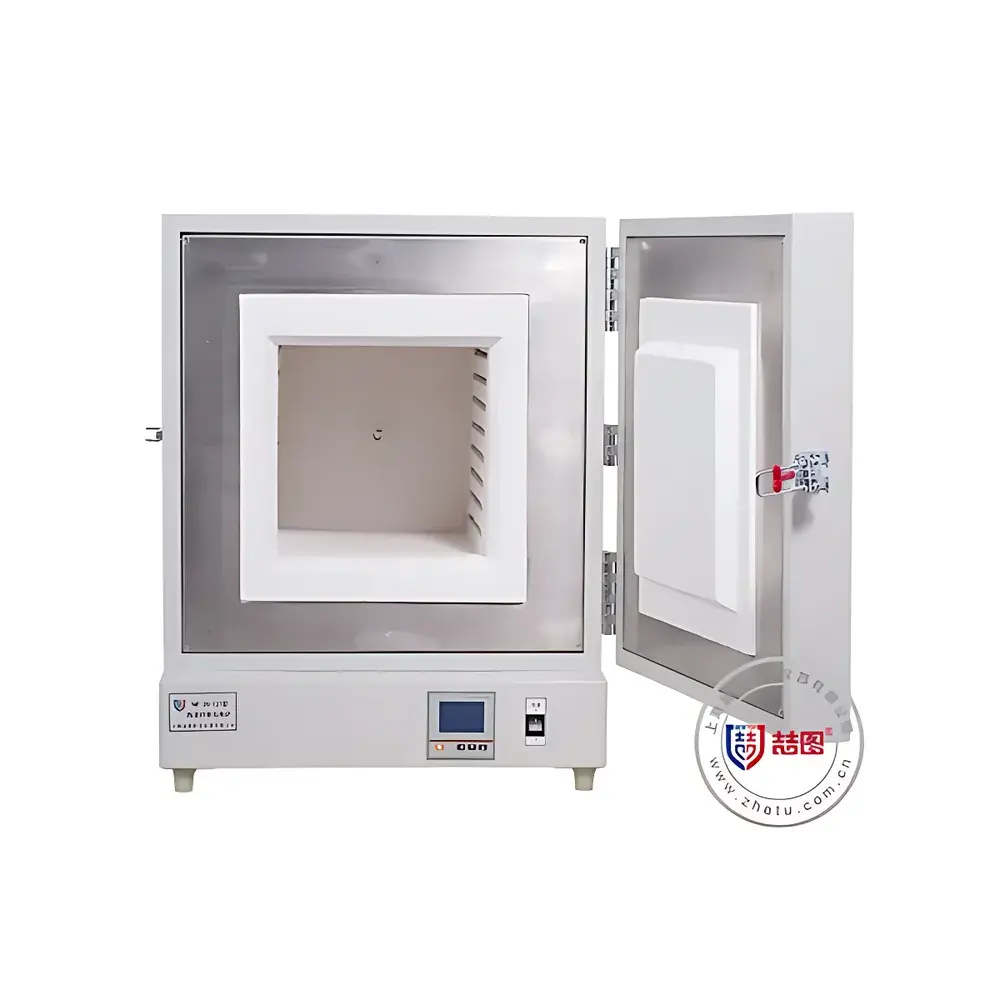
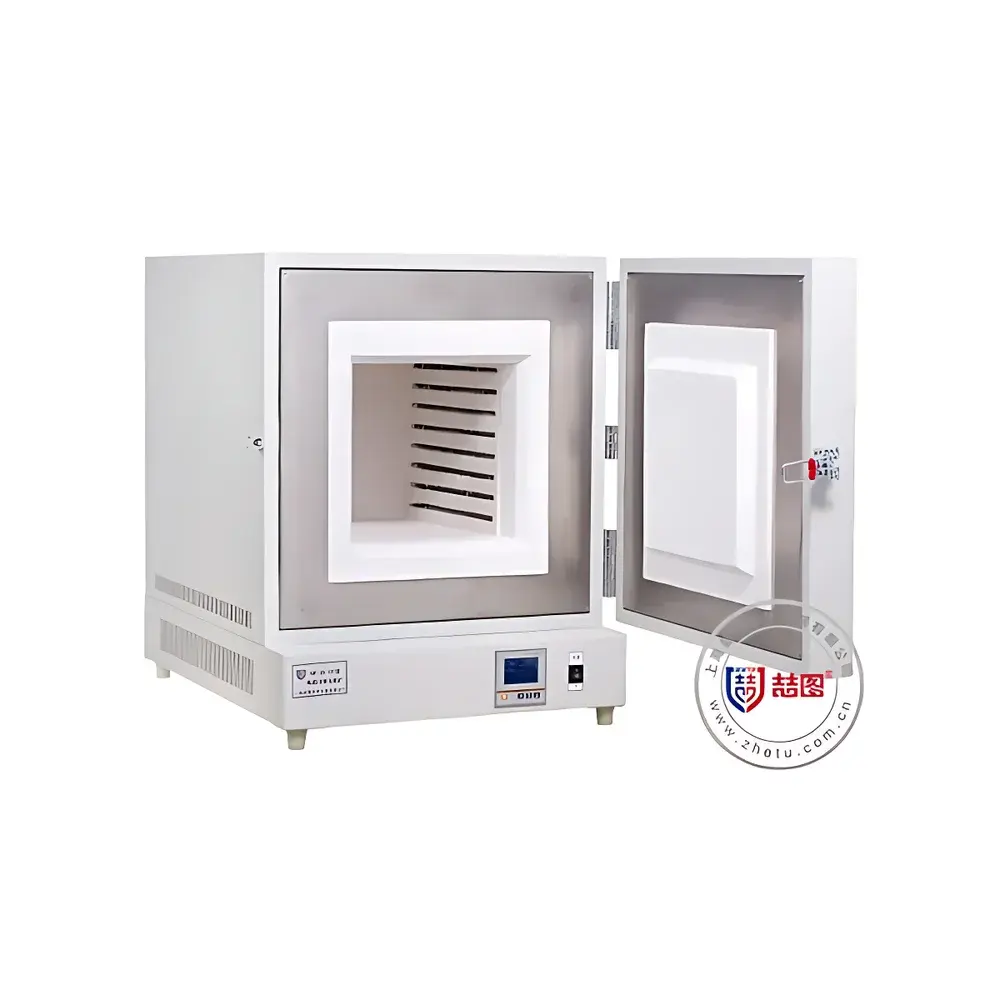
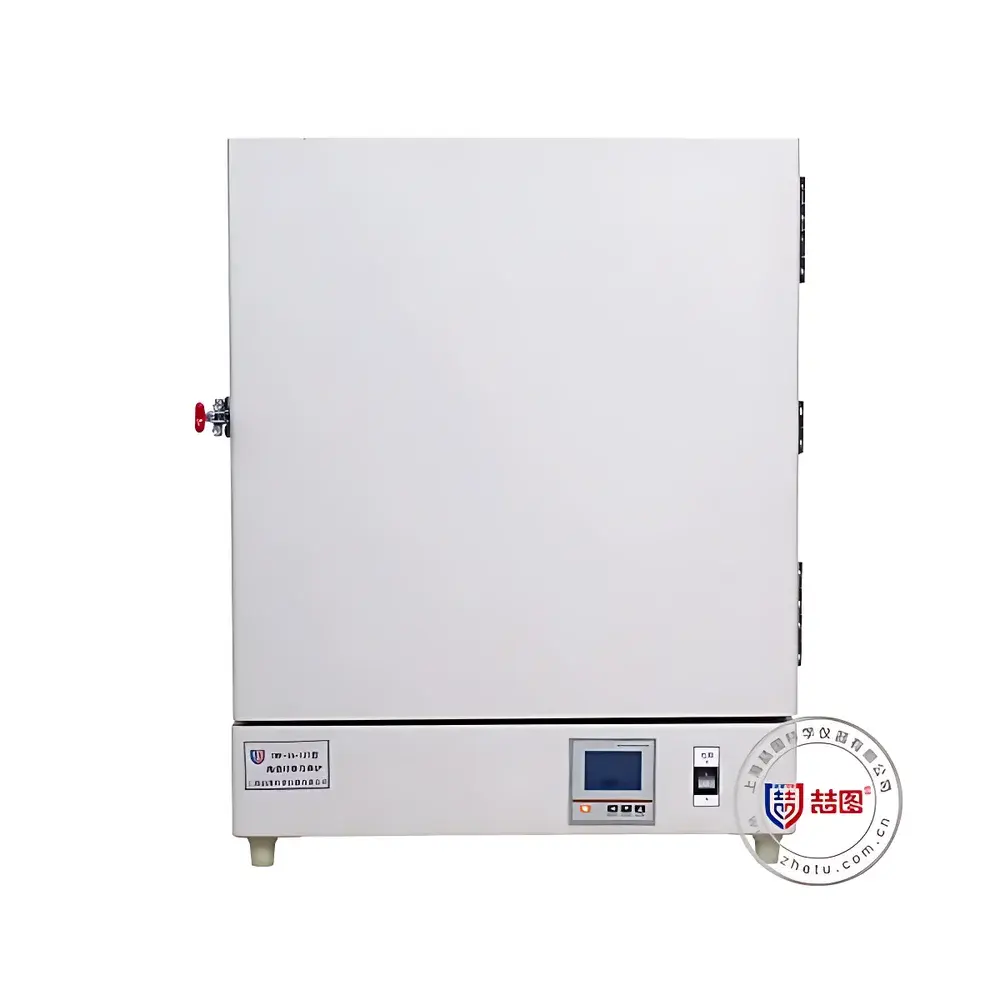
DRETOP TMF-120-13TP Ceramic Fiber Muffle Furnace
| Brand | DRETOP |
|---|---|
| Origin | Shanghai, China |
| Manufacturer Type | Direct Manufacturer |
| Product Category | Domestic |
| Model | TMF-120-13TP |
| Instrument Type | Box-Type Muffle Furnace |
| Maximum Temperature | 1300 °C |
| Temperature Control Accuracy | ±1 °C |
| Rated Power | 22 kW |
| Heating Time to Max Temp | 50 min |
| Heating Element | Silicon Carbide Rods |
| Internal Chamber Dimensions | 450 × 600 × 450 mm |
| Control System | Programmable LCD Controller |
| Nominal Volume | 120 L |
Overview
The DRETOP TMF-120-13TP Ceramic Fiber Muffle Furnace is a high-performance, laboratory-grade box-type thermal processing system engineered for precision heat treatment applications requiring rapid heating, exceptional temperature uniformity, and long-term operational stability. Utilizing advanced vacuum-microporous ceramic fiber insulation and high-efficiency silicon carbide (SiC) heating elements, this furnace achieves a maximum operating temperature of 1300 °C with a certified control accuracy of ±1 °C across its full working range (RT + 50 °C to 1300 °C). Its 120 L nominal chamber volume—measured at internal dimensions of 450 × 600 × 450 mm—supports large-scale sample batches while maintaining radial and axial temperature homogeneity within ±3 °C at 1200 °C (per ASTM E220 calibration methodology). Designed for continuous-duty operation in QC labs, materials research centers, and R&D facilities, the TMF-120-13TP complies with IEC 61000-6-3 (EMC emissions) and IEC 61000-6-2 (immunity), and meets structural safety requirements per EN 61000-1-2 for industrial electrical equipment.
Key Features
- High-density ceramic fiber insulation with vacuum-microporous board construction—ensures surface temperature ≤45 °C at 1300 °C operation, minimizing energy loss and enhancing operator safety.
- Double-layer SiC heating rods arranged in symmetrical horizontal/vertical arrays—provides uniform radiant heat distribution and eliminates cold zones; resistance stability over time mitigates thermal drift during extended dwell cycles.
- Integrated 30-segment programmable PID controller with auto-tuning capability—enables precise ramp-soak-cool profiles, slope correction, and memory retention after power interruption (with automatic resume function).
- Robust chassis fabricated from phosphated and epoxy-powder-coated cold-rolled steel (computer gray finish)—resists corrosion, reduces weight by ~35% vs. traditional brick-lined furnaces, and improves thermal inertia management.
- Dual-stage overtemperature protection: primary limit via independent S-type thermocouple circuit; secondary hardware cutoff at 1350 °C—fully compliant with IEC 60519-2 safety standards for industrial electroheating equipment.
- Front-loading door with stainless-steel inner frame and refractory fiber gasket—ensures gas-tight sealing and facilitates rapid cleaning post-ceramic sintering or ashing procedures.
- Intelligent ambient temperature compensation algorithm—automatically adjusts initial setpoint based on real-time chamber base temperature, reducing preheat time by up to 18% compared to fixed-offset controllers.
Sample Compatibility & Compliance
The TMF-120-13TP accommodates diverse sample formats including crucibles (alumina, quartz, graphite), ceramic green bodies, metal alloys (Fe, Ni, Ti-based), powder compacts, geological specimens, and combusted organic matrices. It supports standardized test methods such as ASTM C865 (sintering shrinkage), ISO 11468 (ceramic phase analysis), USP (heavy metals residue testing), and EPA Method 3050B (acid digestion ash residue quantification). The furnace’s inert atmosphere compatibility—via optional N₂/Ar inlet valve—enables controlled oxidation studies and prevents surface decarburization during annealing. All electrical and thermal subsystems conform to CE marking directives (2014/35/EU Low Voltage Directive and 2014/30/EU EMC Directive), and documentation supports GLP audit readiness per 21 CFR Part 58 requirements.
Software & Data Management
Equipped with an embedded RS485 interface (Modbus RTU protocol), the TMF-120-13TP enables seamless integration into centralized lab data acquisition networks. Optional communication software provides real-time temperature logging, CSV export, alarm event timestamping, and configurable digital signature workflows for electronic records under FDA 21 CFR Part 11 Annex 11 compliance. The programmable controller stores up to 10 user-defined profiles with full audit trail metadata—including operator ID, start/stop timestamps, deviation flags, and firmware version—accessible via USB port or optional built-in thermal printer (model TP-MINI-USB). No cloud dependency: all data remains on-device unless explicitly exported.
Applications
This furnace serves critical roles in academic and industrial laboratories performing ceramic sintering (e.g., ZrO₂, Al₂O₃, SiC), metallurgical heat treatment (annealing, tempering, solutionizing of stainless steels and superalloys), ash content determination per AOAC 942.05, catalyst calcination, glass nucleation studies, lithium-ion battery cathode precursor synthesis, and thermal gravimetric method validation. Its rapid 50-minute ramp to 1300 °C makes it especially suitable for time-sensitive protocols such as rapid thermal processing (RTP) qualification, intermetallic diffusion kinetics, and high-throughput screening of refractory composite formulations.
FAQ
What is the recommended maintenance schedule for the silicon carbide heating elements?
Silicon carbide rods require no routine replacement under normal use; however, visual inspection every 200 operating hours is advised. Replace only if cracking, warping, or localized blackening exceeds 15% of rod length.
Can the furnace operate continuously at 1300 °C?
Yes—rated for continuous duty at ≤1300 °C with proper ventilation and ambient temperature 8 hrs), reduce maximum power output to 90% to extend element service life.
Is the controller compatible with SCADA systems?
Yes—Modbus RTU implementation allows direct integration with Siemens SIMATIC, Rockwell Automation Logix, or Ignition SCADA platforms using standard serial-to-Ethernet gateways.
Does the unit include calibration certification?
A factory-assembled NIST-traceable temperature calibration report (at 600 °C, 900 °C, and 1200 °C) is included with shipment; on-site verification per ISO/IEC 17025 is available as an optional service.
What safety certifications does the TMF-120-13TP hold?
CE-marked per EN 61000-6-2/-3 and EN 60519-2; conforms to RoHS 2011/65/EU and REACH SVHC regulations; full technical file available upon request for EU Authorized Representative review.



