
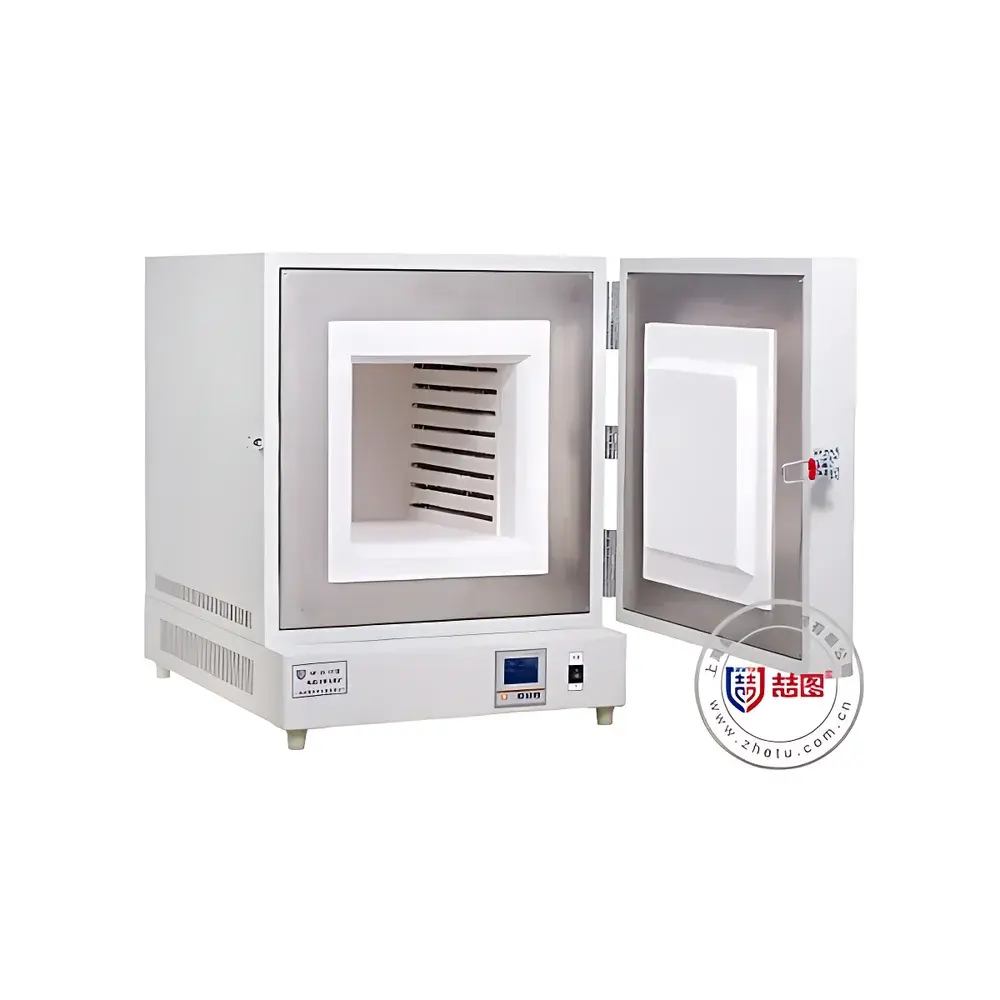
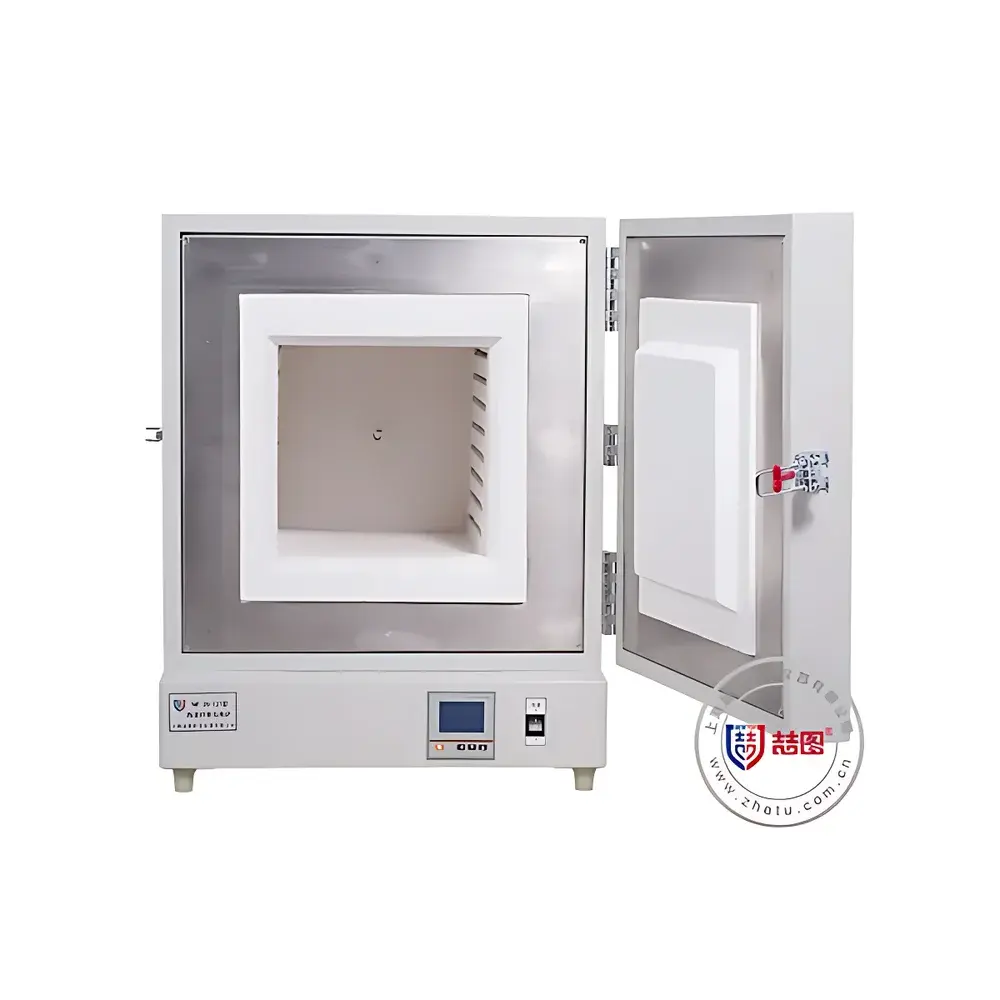
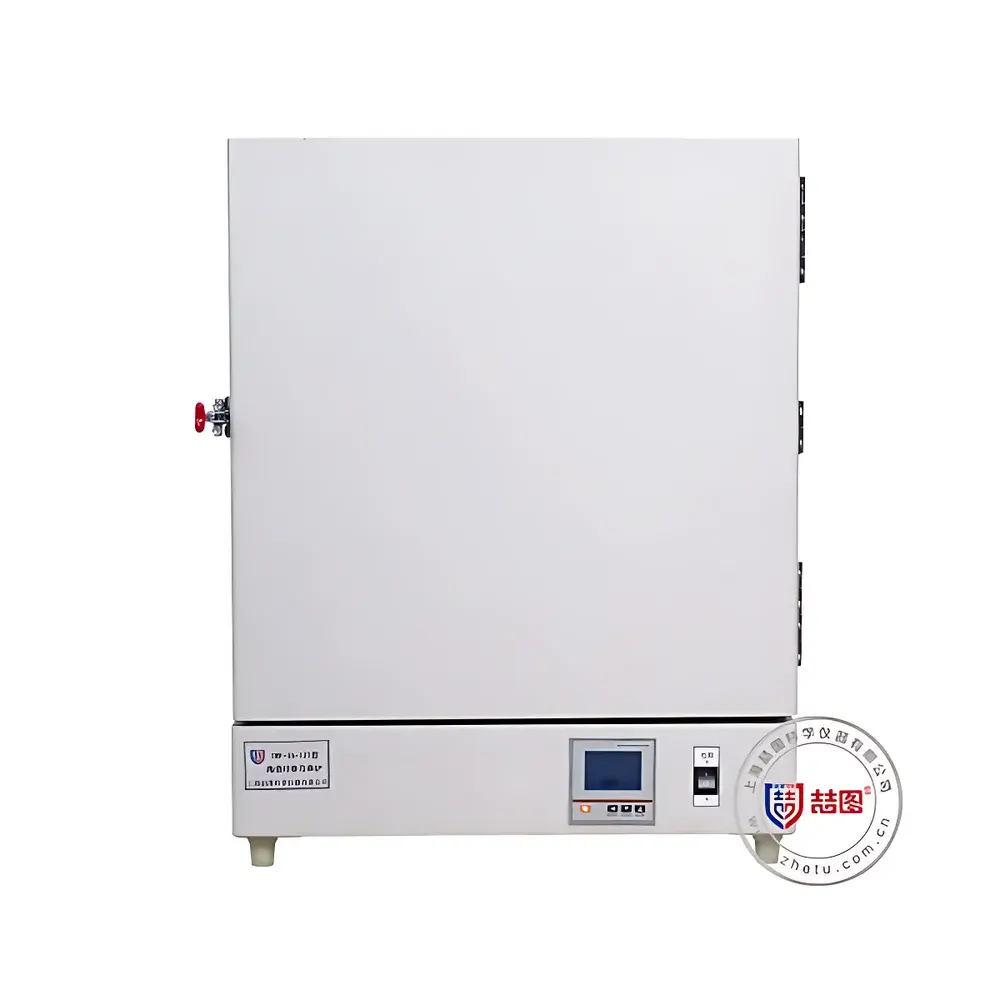
DRETOP TMF-80-13TP Ceramic Fiber Muffle Furnace
| Brand | DRETOP |
|---|---|
| Origin | Shanghai, China |
| Manufacturer Type | Direct Manufacturer |
| Product Category | Domestic |
| Model | TMF-80-13TP |
| Instrument Type | Box-Type Muffle Furnace |
| Maximum Temperature | 1300 °C |
| Temperature Control Accuracy | ±1 °C |
| Rated Power | 18 kW |
| Heating Time to Max Temp | 50 min |
| Heating Element | Silicon Carbide Rods |
| Internal Chamber Dimensions | 400 × 500 × 400 mm |
| Control System | Programmable LCD Controller |
| Nominal Volume | 80 L |
Overview
The DRETOP TMF-80-13TP Ceramic Fiber Muffle Furnace is a high-performance, energy-efficient box-type laboratory furnace engineered for rapid, precise, and repeatable thermal processing across materials science, metallurgy, ceramics, and analytical chemistry applications. Unlike traditional refractory brick furnaces, it employs a vacuum-microporous ceramic fiber insulation system—offering superior thermal retention, reduced thermal mass, and significantly faster heating/cooling cycles. The furnace operates on the principle of resistive heating via high-purity silicon carbide (SiC) rods, delivering uniform temperature distribution across its 80 L chamber (400 × 500 × 400 mm internal dimensions) with minimal axial or radial thermal gradient. Its maximum operating temperature of 1300 °C (continuous use recommended ≤1200 °C) meets standard requirements for ashing, calcination, sintering, annealing, and heat treatment protocols defined in ASTM E1110, ISO 5667-16, and USP . Designed for integration into GLP- and GMP-compliant laboratories, the unit supports traceable thermal profiles and process documentation when paired with optional RS485 communication and compliant data logging software.
Key Features
- Ultra-low thermal inertia architecture: Vacuum-microporous ceramic fiber insulation ensures external surface temperature remains below 60 °C at 1300 °C operation—eliminating burn hazards and reducing ambient heat load.
- Precision programmable control: 30-segment PID-based controller with auto-tuning, ramp/soak programming, slope correction, and automatic shutdown; supports complex multi-step thermal profiles including linear, stepwise, and hold-and-soak sequences.
- Enhanced thermal uniformity: Optimized SiC rod placement and double-layer stainless steel inner door with integrated refractory baffle minimize heat loss at the chamber opening, maintaining ±3 °C uniformity across the working zone (per ASTM C1024).
- Robust mechanical design: Cold-rolled steel housing treated with phosphate conversion coating and electrostatically applied matte-gray high-temp powder coating resists corrosion and mechanical wear.
- Dual safety architecture: Independent overtemperature protection (secondary limit switch + digital cut-off), power-fail memory retention, and automatic restart upon recovery ensure uninterrupted protocol execution and personnel safety.
- Intelligent ambient compensation: Built-in environmental temperature sensor dynamically adjusts startup parameters to reduce preheat time and improve repeatability across varying lab conditions.
Sample Compatibility & Compliance
The TMF-80-13TP accommodates standard crucibles (alumina, quartz, graphite, platinum), ceramic setters, metal samples up to 25 kg, and powdered specimens in controlled-atmosphere configurations. Optional inert gas inlet (N₂, Ar) enables oxidation-sensitive processes such as sintering of TiO₂ nanoparticles or reduction of metal oxides. For volatile or organic-rich samples (e.g., coal, polymers, biomass), integration of the factory-optional exhaust chimney is strongly recommended to prevent carbon deposition and maintain calibration integrity. The furnace complies with IEC 61000-6-3 (EMC emissions), IEC 61000-6-2 (immunity), and UL/CSA 61010-1 safety standards. When equipped with AI-series touchscreen and audit-trail-enabled software, it satisfies FDA 21 CFR Part 11 requirements for electronic records and signatures in regulated environments.
Software & Data Management
The programmable LCD controller provides real-time display of setpoint, actual temperature, segment number, elapsed time, and remaining time. Optional RS485 interface (Modbus RTU protocol) enables bidirectional communication with SCADA systems, LIMS, or custom LabVIEW/Python-based monitoring platforms. With the AI-series upgrade, users gain access to embedded color touchscreen HMI featuring graphical temperature curve visualization, historical trend replay, password-protected parameter editing, and USB export of CSV-formatted thermal logs—including timestamps, deviations, and alarm events. All data exports include metadata required for ISO/IEC 17025 accreditation (e.g., instrument ID, operator, calibration status, environmental conditions).
Applications
- Quantitative elemental analysis: Ash content determination per AOAC 942.05 and ASTM D3174.
- Ceramic processing: Glaze firing, frit melting, and crystallization studies under controlled cooling rates.
- Materials research: Sintering of ZnO varistors, LiFePO₄ cathode precursors, and Y₂O₃-stabilized ZrO₂ electrolytes.
- Metallurgical heat treatment: Normalizing, stress-relieving, and tempering of tool steels and aluminum alloys.
- Pharmaceutical QA/QC: Residue-on-ignition testing per USP , excipient decomposition profiling, and catalyst regeneration.
- Nanomaterial synthesis: Thermal decomposition of metal-organic frameworks (MOFs) and controlled pyrolysis of polymer-derived ceramics.
FAQ
What is the recommended maximum continuous operating temperature?
The furnace is rated for continuous operation up to 1200 °C; extended exposure above this threshold may accelerate SiC rod aging and compromise long-term calibration stability.
Does the unit support inert or reducing atmospheres?
Yes—via optional front-mounted inert gas inlet valve (N₂ or Ar compatible); note that flammable or reducing gases (e.g., H₂, CO) require additional explosion-proof certification and are not supported out-of-the-box.
Is the 30-segment program controller included by default?
Yes—the “P” suffix in TMF-80-13TP indicates standard inclusion of the programmable 30-segment controller; non-P models (e.g., TMF-80-13T) use basic time-proportional control only.
Can the furnace be integrated into an automated lab workflow?
Absolutely—RS485 Modbus RTU output allows seamless connection to PLCs, MES systems, or Python-driven orchestration scripts; full register mapping and command syntax are provided in the technical manual.
What maintenance is required for long-term accuracy?
Annual verification using NIST-traceable thermocouples and periodic inspection of SiC rod resistance (±10% deviation from baseline warrants replacement); ceramic fiber integrity should be visually assessed before each high-temp cycle.



