
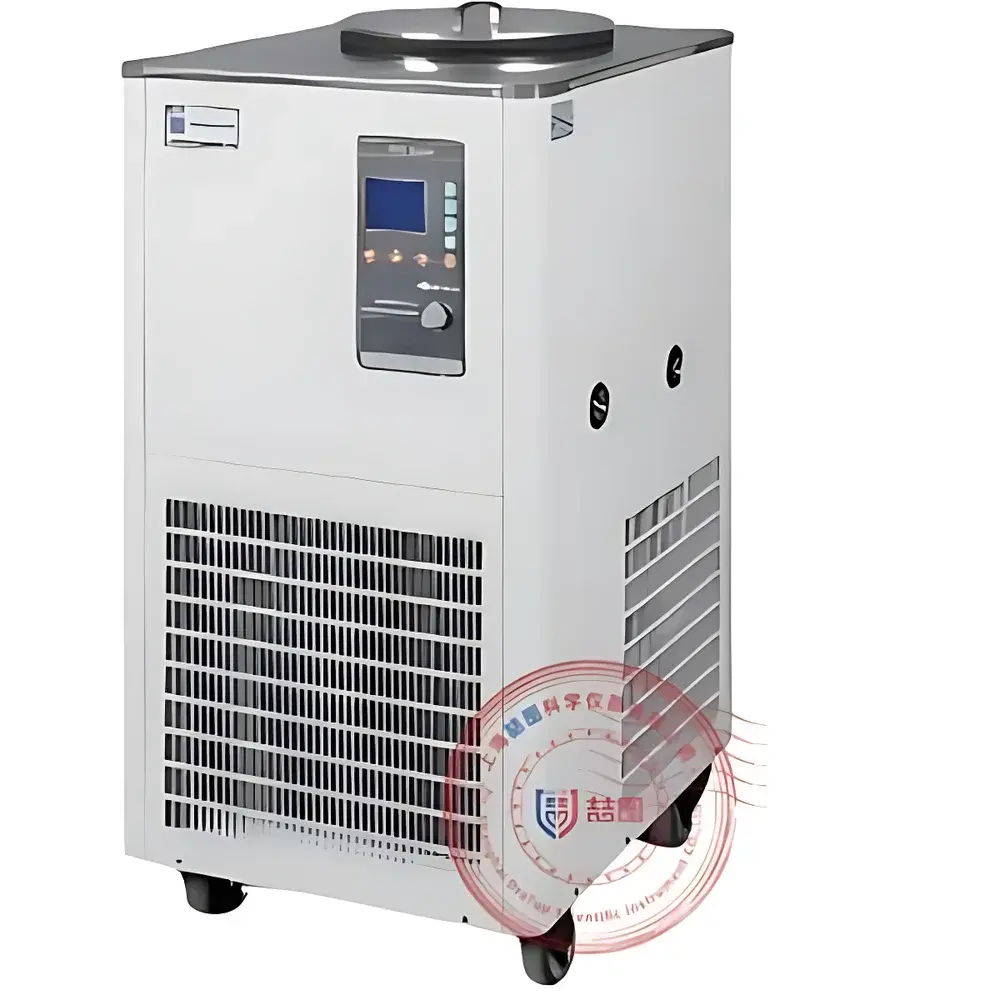
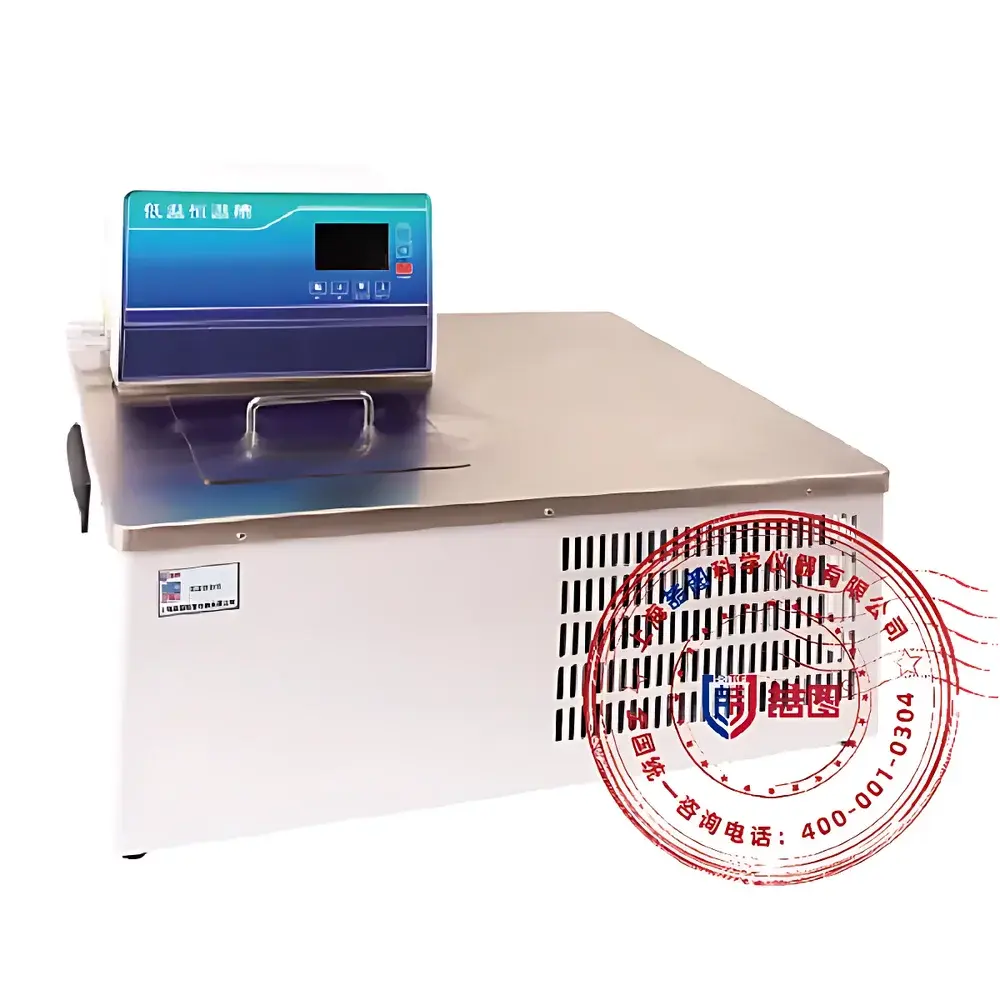
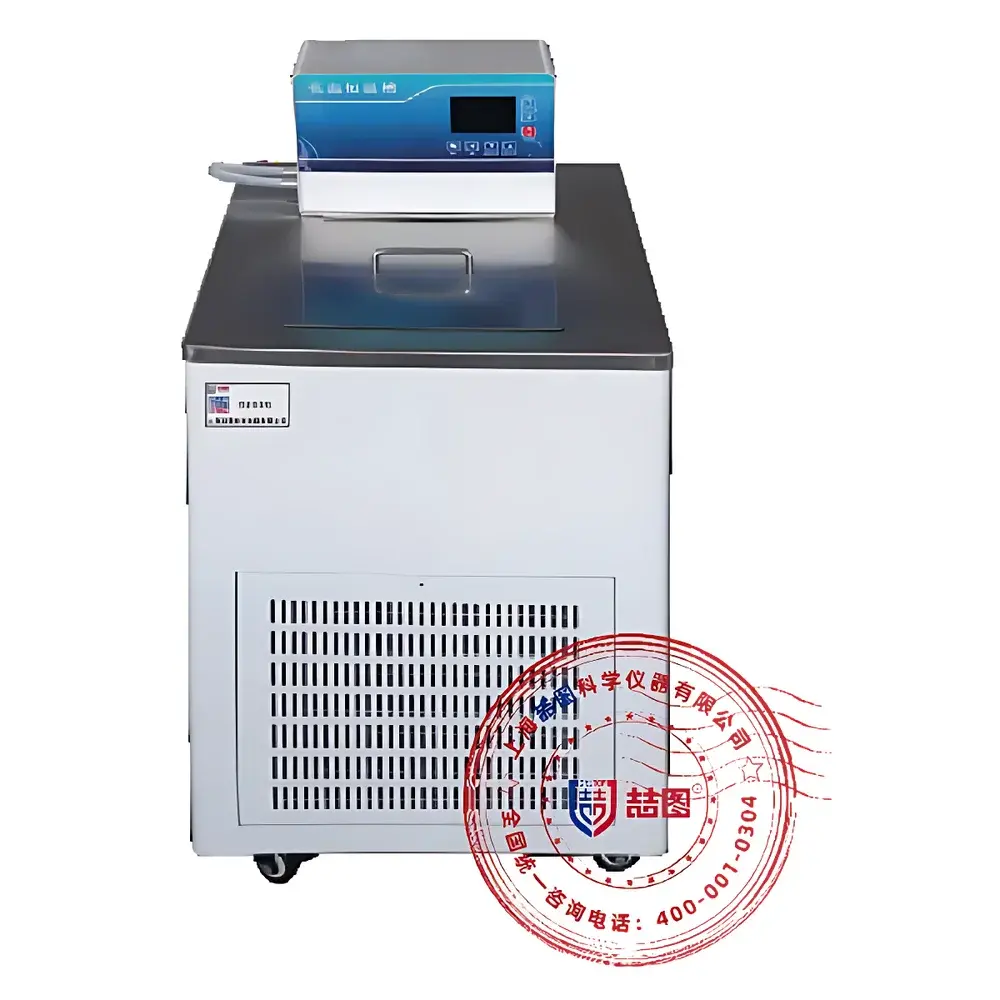
DRETOP FRC-10-20 Low-Temperature Constant-Temperature Circulating Bath
| Brand | DRETOP |
|---|---|
| Origin | Shanghai, China |
| Manufacturer Type | Direct Manufacturer |
| Equipment Type | Circulating Bath |
| Circulation Mode | Internal & External |
| Temperature Control | Refrigeration + Heating |
| Bath Volume | 10 L |
| Temperature Range | −20 °C to 100 °C |
| Temperature Stability | ±0.1 °C |
| Temperature Resolution | 0.1 °C |
| Power Supply | 220 V AC, 50 Hz |
| Pump Flow Rate | 20 L/min |
| Maximum Head | 4–6 m |
| Opening Diameter | Φ250 mm |
| Refrigeration Capacity (at −20 °C) | 2100 W |
Overview
The DRETOP FRC-10-20 Low-Temperature Constant-Temperature Circulating Bath is an engineered thermal management system designed for precise temperature control and uniform heat transfer in laboratory-scale chemical, biochemical, and materials science applications. Operating on a closed-loop refrigeration–heating cycle with integrated circulation pump and high-accuracy PID temperature regulation, the unit maintains setpoint stability within ±0.1 °C across its full operational range of −20 °C to 100 °C. Its 10-liter stainless-steel bath reservoir supports both internal magnetic stirring (via built-in stirrer motor and coupling) and external circulation—enabling direct thermal coupling to jacketed reactors, condensers, spectroscopic cells, or analytical instrumentation requiring stable thermal environments. Unlike basic water baths, the FRC-10-20 incorporates dual-mode thermoelectric compression refrigeration and resistive heating, allowing seamless transition between sub-zero cooling and elevated heating without manual coolant exchange.
Key Features
- Integrated magnetic stirrer with adjustable speed (0–1200 rpm), ensuring homogeneous temperature distribution throughout the bath medium and connected external systems.
- Dual-mode thermal control architecture: hermetically sealed compressor-based refrigeration combined with high-efficiency PTC heating elements for rapid, bidirectional temperature response.
- High-stability Pt100 temperature sensor paired with industrial-grade microprocessor controller featuring real-time digital display, programmable ramp/soak profiles, and over-temperature safety cutoff.
- Stainless-steel bath tank (304 grade) with corrosion-resistant insulation and splash-proof lid; standard Φ250 mm opening accommodates standard lab fixtures including overhead stirrers, pH electrodes, and reflux condensers.
- External circulation port (G1/2″ BSP) supporting flow rates up to 20 L/min and static head up to 6 m—compatible with glass reactor jackets, cold traps, and vacuum pump cooling manifolds.
- Optional secondary electric stirring module available for synchronized agitation inside reaction vessels, eliminating thermal stratification in viscous or heterogeneous samples.
Sample Compatibility & Compliance
The FRC-10-20 is compatible with a broad spectrum of heat-transfer media, selected per operational temperature requirements: deionized water (5–80 °C), 15% glycerol–water mixture (80–100 °C), or ethylene glycol/water blends or anhydrous ethanol (−20 to 5 °C). All wetted components comply with ISO 8502-3 for surface cleanliness and are non-reactive toward common organic solvents, aqueous buffers, and mild acids/bases. The unit meets CE marking requirements under Directive 2014/30/EU (EMC) and 2014/35/EU (LVD), and its temperature control algorithm adheres to ASTM E2777–21 guidelines for thermal stability verification in laboratory equipment. For GLP/GMP-regulated environments, optional audit-trail logging (via RS485/Modbus RTU interface) supports traceability per FDA 21 CFR Part 11 when integrated with validated LIMS platforms.
Software & Data Management
While the FRC-10-20 operates as a standalone instrument with front-panel control, it includes a standard RS485 serial interface supporting Modbus RTU protocol for integration into centralized lab automation networks. Third-party SCADA or LabVIEW-based monitoring systems can acquire real-time temperature, setpoint, compressor status, and pump feedback data at configurable intervals (1–60 s). Optional USB-to-RS485 adapters enable direct connection to Windows/Linux hosts for CSV-based logging using open-source tools such as QCustomPlot or Python-based PyModbus scripts. No proprietary software installation is required; configuration remains accessible via ASCII command set documented in the IEC 61158-compliant communication manual.
Applications
- Temperature-controlled synthesis in jacketed glass reactors (e.g., Grignard, lithiation, hydrogenation) requiring sustained sub-zero conditions.
- Cooling of high-power analytical components: TEM/SEM power supplies, laser diode drivers, CCD detector housings, and RF amplifiers.
- Thermal conditioning of electrophoresis apparatus, viscometers, calorimeters, and cryogenic sample holders.
- Process validation support for pharmaceutical stability testing chambers and excipient crystallization studies.
- Heat sink simulation for electronics reliability testing, including thermal cycling of PCB assemblies and semiconductor packaging.
- Calibration reference source for thermocouple and RTD verification against NIST-traceable standards (when used with certified reference fluids).
FAQ
What temperature media are recommended for operation below 0 °C?
Ethylene glycol–water mixtures (e.g., 30:70 v/v) or anhydrous ethanol are recommended for −20 °C operation. Avoid aqueous solutions below freezing without antifreeze additives.
Is external circulation mandatory for all applications?
No—internal magnetic stirring suffices for bath-only use (e.g., calibration, sample equilibration). External circulation is required only when interfacing with jacketed reactors or remote heat exchangers.
Can the unit maintain temperature during extended unattended runs?
Yes—the controller features automatic restart after power interruption and continuous self-diagnostic monitoring of refrigerant pressure, motor current, and sensor integrity.
Does the FRC-10-20 support programming of multi-step temperature ramps?
Yes—up to 10 segment ramp/soak programs can be stored locally and executed autonomously without PC connectivity.
What safety protections are built into the system?
Over-temperature cutoff (hardware + software), low-level fluid alarm, dry-run pump protection, refrigerant high-pressure lockout, and ground-fault circuit interruption (GFCI) compliant power input.



