
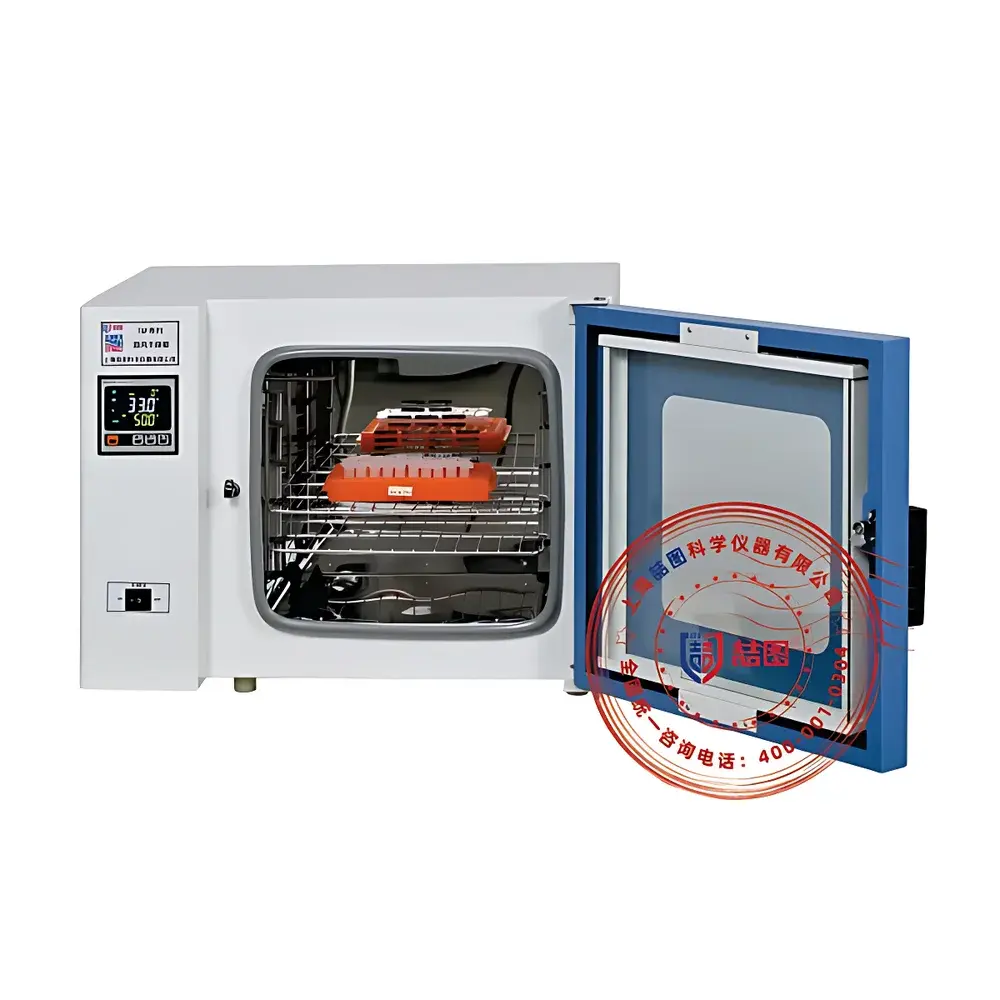
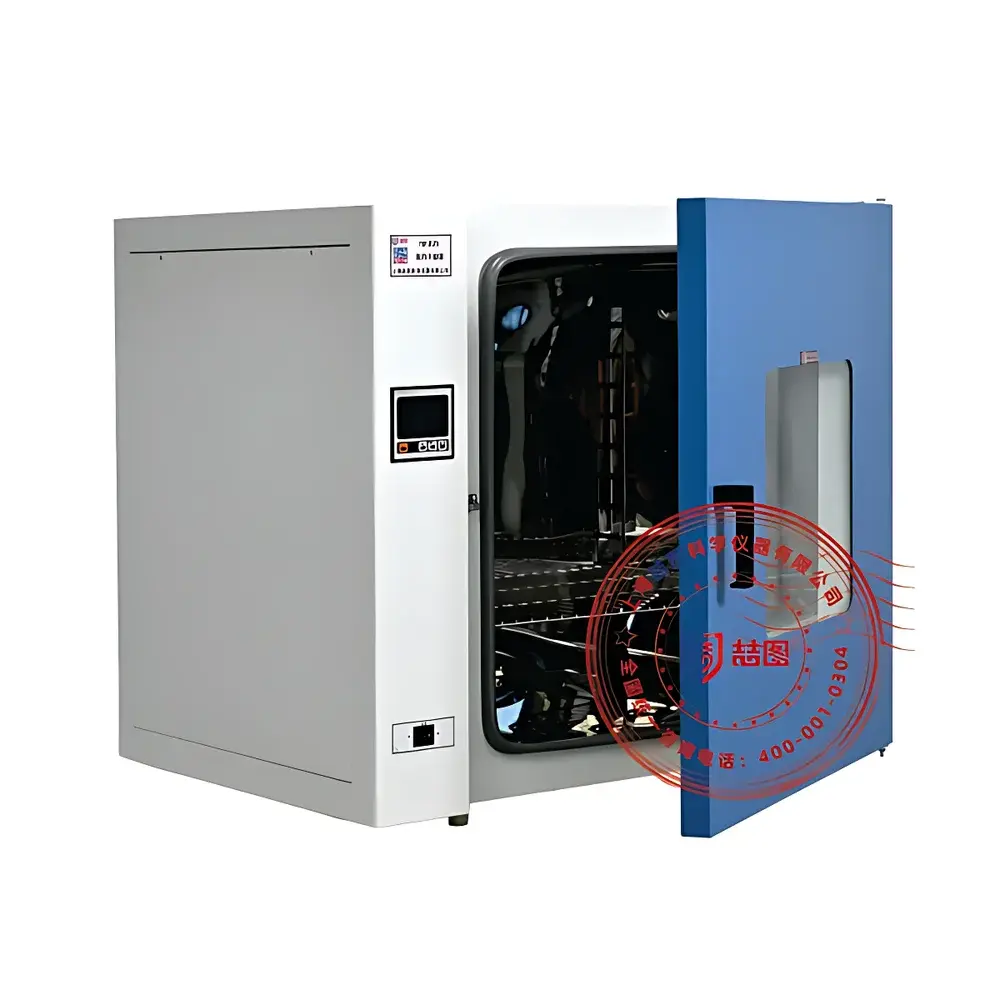
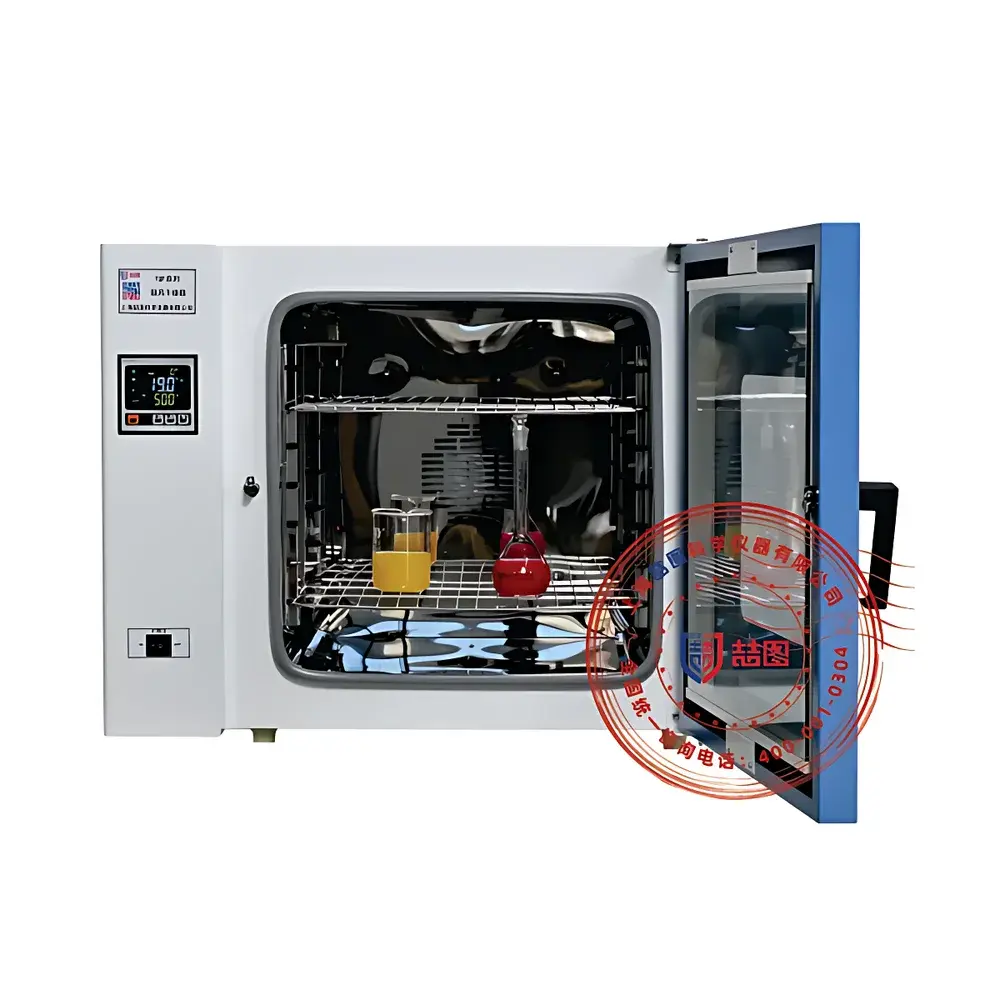
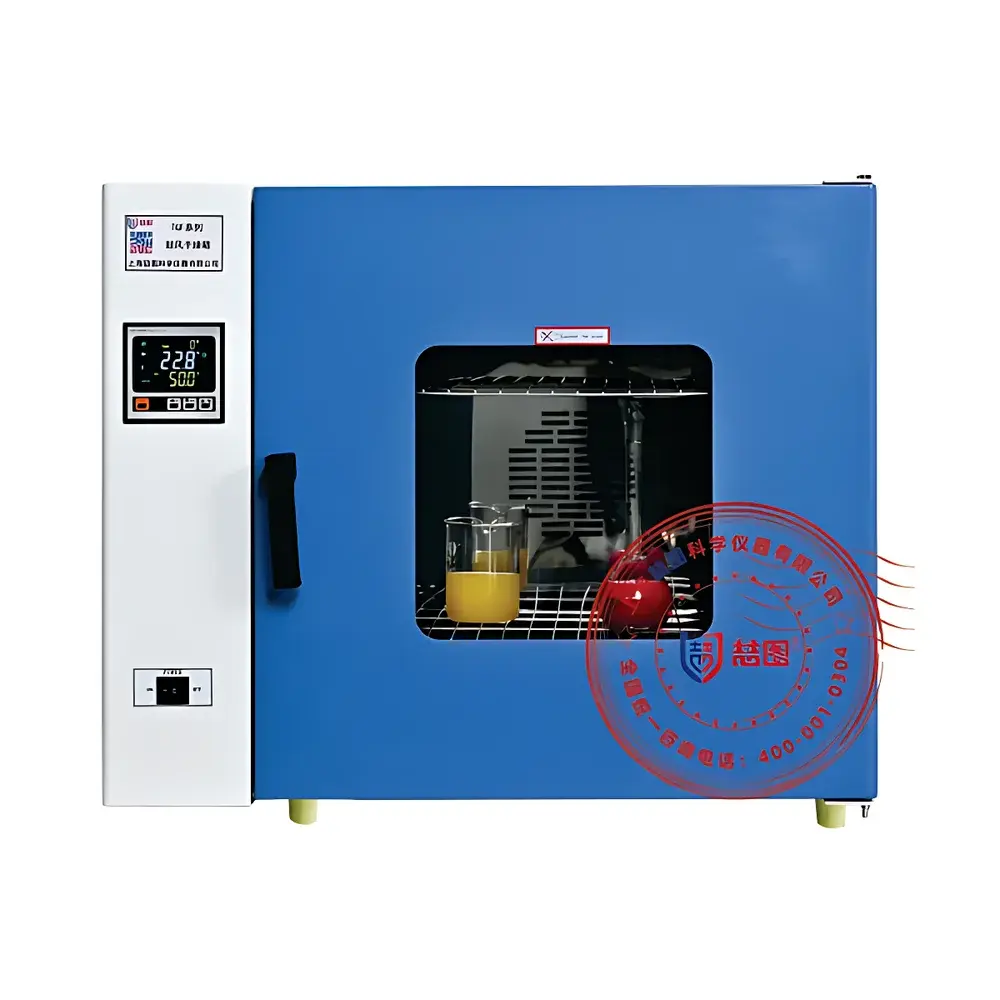
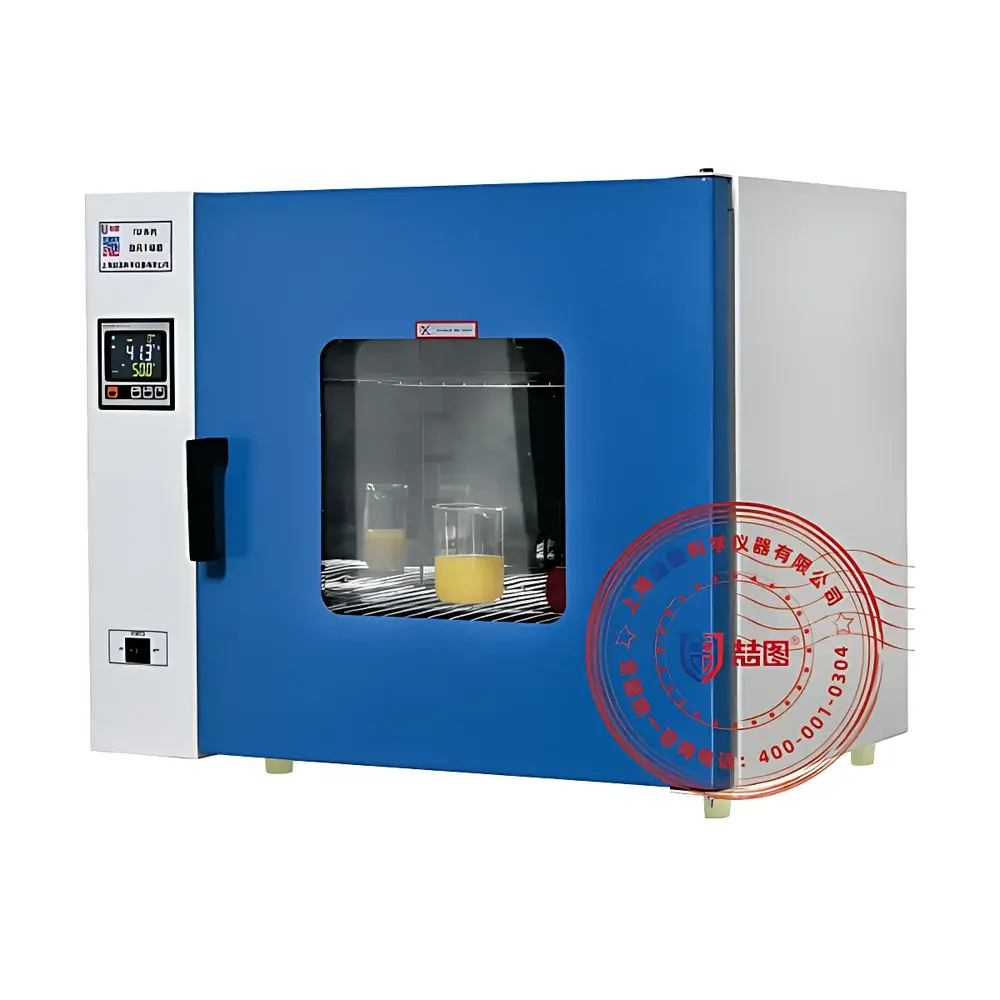
DRETOP TGF-9030A Forced-Air Drying Oven
| Brand | DRETOP |
|---|---|
| Origin | Shanghai, China |
| Manufacturer Type | Direct Manufacturer |
| Model | TGF-9030A |
| Instrument Type | General-Purpose Forced-Air Oven |
| Temperature Range | RT+10°C to 250°C |
| Temperature Uniformity | ±2.5°C (at 100°C, empty chamber) |
| Temperature Fluctuation | ±1°C |
| Temperature Resolution | 0.1°C |
| Chamber Dimensions (W×D×H) | 340 × 330 × 320 mm |
| External Dimensions (W×D×H) | 625 × 540 × 500 mm |
| Working Environment | +5°C to +40°C ambient |
| Interior Material | Stainless Steel (brushed finish) |
| Heating Method | Forced Convection with High-Temperature Fan and Optimized Airflow Ducting |
| Power Supply | AC 220 V, 50 Hz |
| Rated Power | 850 W / 1100 W (dual configuration) |
| Timer Range | 1–9999 minutes |
| Safety Features | Independent Over-Temperature Cut-Off, PID Temperature Controller with Deviation Alarm, Auto-Restart After Power Failure |
Overview
The DRETOP TGF-9030A Forced-Air Drying Oven is an entry-level yet rigorously engineered benchtop convection oven designed for routine thermal processing in academic laboratories, quality control facilities, pharmaceutical production support labs, and industrial R&D environments. It operates on the principle of forced-air convection—using a high-reliability, high-temperature-rated centrifugal fan and a symmetrically optimized air duct system—to ensure rapid heat transfer and stable thermal distribution across the working chamber. Unlike natural convection ovens, this model eliminates thermal stratification through continuous, directional airflow, enabling reproducible drying, baking, sterilization, and moisture removal across non-volatile, non-flammable samples. Its compact footprint (625 × 540 × 500 mm) and side-mounted digital controller facilitate integration into space-constrained lab benches or mobile testing carts without compromising functional integrity.
Key Features
- Microprocessor-based PID temperature controller with 0.1°C resolution, real-time deviation monitoring, and programmable over-temperature alarm thresholds;
- Intelligent self-diagnostic system displaying alphanumeric fault codes directly on the large backlit LCD screen for rapid troubleshooting;
- Dual-stage rotary door lock mechanism with high-elasticity, high-temperature silicone rubber gasket (rated to 300°C), ensuring consistent sealing performance and minimal heat loss;
- Double-layer tempered glass observation window with anti-fog coating, providing unobstructed visual access while maintaining thermal insulation and operator safety;
- Three-position adjustable stainless steel shelves (included), fully removable and dishwasher-safe, supporting flexible sample loading configurations;
- Automatic condensate exhaust path integrated into the rear airflow channel, mitigating internal humidity buildup during prolonged low-temperature drying cycles;
- Power failure recovery function retaining set parameters—including target temperature, timer value, and alarm limits—upon re-energization.
Sample Compatibility & Compliance
The TGF-9030A is validated for use with non-hazardous, non-explosive, and non-volatile materials including glassware, ceramic substrates, polymer films, biological culture vessels, metal components, and inert chemical powders. It complies with general-purpose laboratory equipment safety standards per IEC 61010-1:2010 (Safety Requirements for Electrical Equipment for Measurement, Control, and Laboratory Use). While not certified for Class I Division 1 hazardous locations or ISO 14644 cleanroom operation, its stainless-steel interior, smooth-welded seams, and absence of organic coatings make it suitable for GLP-aligned environments where traceability and ease of decontamination are required. The unit supports basic validation protocols—including IQ/OQ documentation templates—and meets foundational thermal uniformity requirements referenced in ASTM E145-22 (Standard Specification for Gravity-Convection and Forced-Ventilation Ovens) when operated under defined load conditions.
Software & Data Management
The base configuration includes embedded firmware with local data logging capability (up to 10,000 timestamped temperature readings stored internally). Optional accessories expand connectivity and audit readiness: a USB data export interface enables direct transfer of time-stamped temperature logs to external storage; an RS-485 serial port supports integration with centralized SCADA or LIMS platforms using Modbus RTU protocol; and an optional color touchscreen controller adds multi-segment programmable ramp-soak profiles compliant with USP thermal sterilization guidelines. All optional controllers include electronic audit trails meeting FDA 21 CFR Part 11 requirements for electronic records and signatures—supporting role-based user authentication, event logging, and immutable data archiving.
Applications
- Drying of volumetric glassware, filter papers, and ceramic crucibles prior to gravimetric analysis;
- Moisture content determination in coal, soil, foodstuffs, and pharmaceutical excipients per ASTM D3173 and USP ;
- Thermal aging studies of polymers, adhesives, and encapsulants at controlled temperatures up to 250°C;
- Dry-heat sterilization of stainless steel instruments and glass containers (validated at ≥160°C for ≥2 hours);
- Baking of thin-film coatings, solder paste pre-conditioning, and PCB board desiccation in electronics manufacturing QA;
- Pre-heating of catalysts, drying of chromatography columns, and solvent evaporation in synthetic chemistry workflows.
FAQ
Is the TGF-9030A suitable for sterilization applications?
Yes—when operated at ≥160°C for ≥120 minutes, it achieves dry-heat sterilization efficacy per ISO 17665-1 and USP . Validation must be performed in-house using biological indicators (e.g., Geobacillus stearothermophilus spores) and thermocouple mapping.
Can the oven accommodate custom shelving or internal modifications?
The standard interior allows for third-party stainless-steel shelf inserts compatible with 340 × 330 mm footprint; however, structural alterations void the manufacturer warranty and may compromise airflow uniformity and safety certification.
What is the maximum recommended load volume for optimal temperature uniformity?
For compliance with ±2.5°C uniformity specification at 100°C, total solid load should not exceed 30% of chamber volume (i.e., ≤4.5 L of dense material). Load distribution must avoid blocking rear air inlets or top exhaust vents.
Does the unit support remote monitoring via Ethernet or Wi-Fi?
No native Ethernet/Wi-Fi interface is provided; remote supervision requires external IoT gateways interfacing via RS-485 or analog 4–20 mA output (available with optional signal converter module).
Are calibration certificates included with shipment?
Factory calibration verification (NIST-traceable reference sensor) is documented in the delivery package. Full UKAS or ISO/IEC 17025 accredited calibration requires separate service engagement with authorized metrology providers.



