
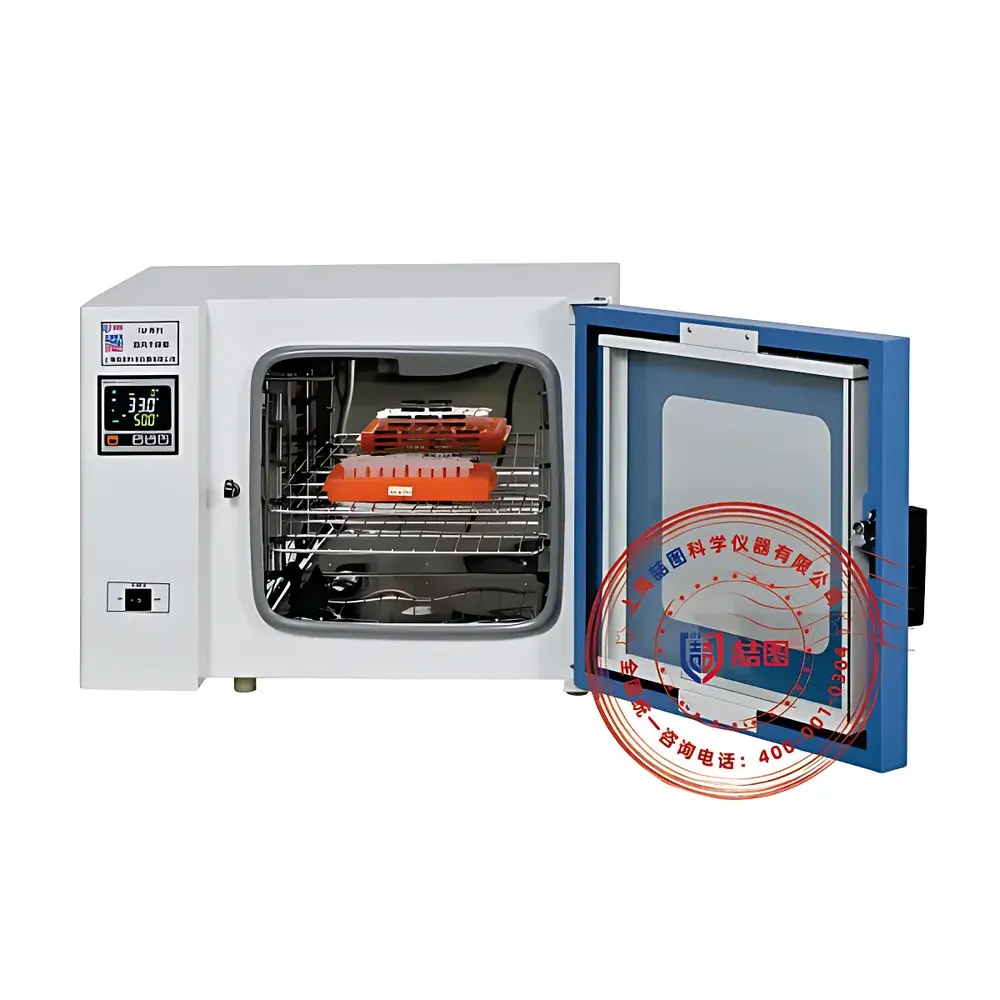
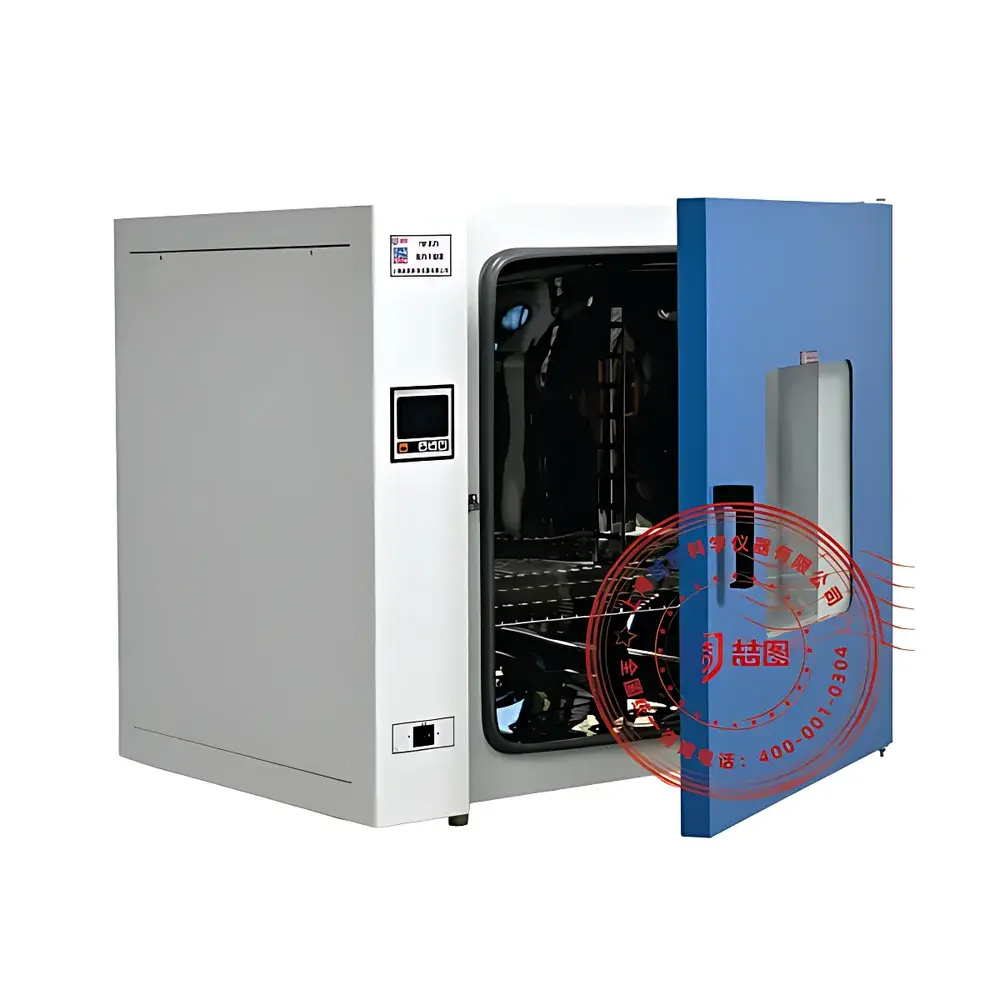
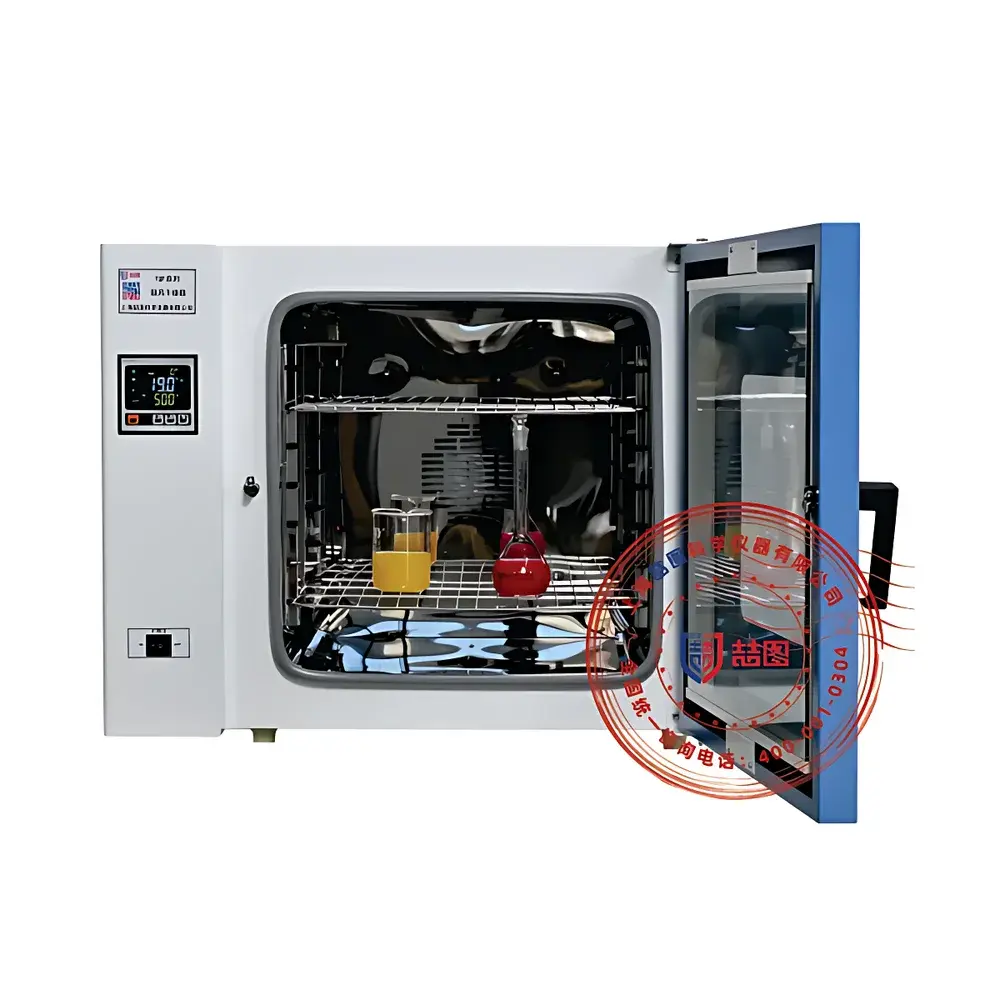
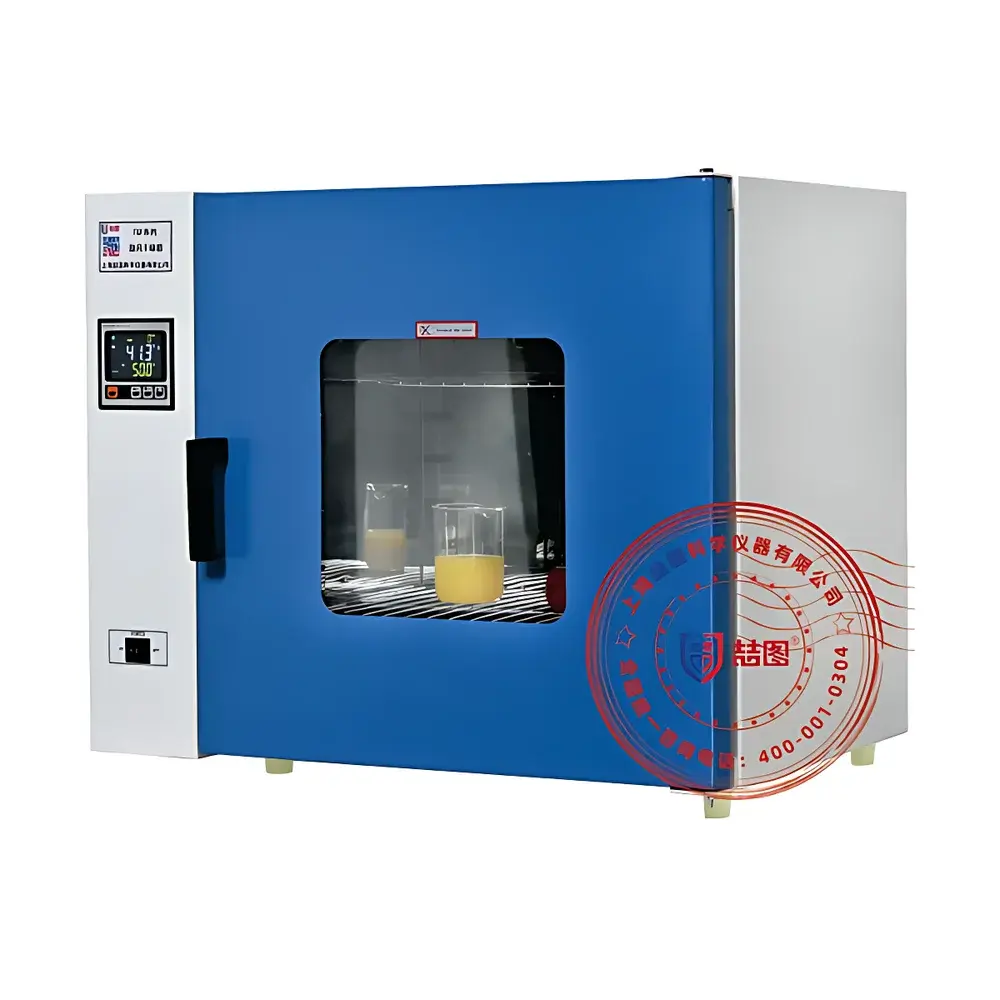
DRETOP TGF-9145A Forced-Air Laboratory Drying Oven
| Brand | DRETOP |
|---|---|
| Origin | Shanghai, China |
| Manufacturer Type | Direct Manufacturer |
| Model | TGF-9145A |
| Temperature Range | RT+10°C to 300°C |
| Temperature Uniformity | ±2.5°C (at 100°C, empty chamber) |
| Temperature Fluctuation | ±1°C |
| Temperature Resolution | 0.1°C |
| Chamber Dimensions (W×D×H) | 550×450×550 mm |
| External Dimensions (W×D×H) | 840×640×735 mm |
| Inner Chamber Material | Stainless Steel (Brushed Finish) |
| Heating Method | Forced-Air Circulation |
| Working Environment Temperature | +5°C to +40°C |
| Power Supply | AC 220 V, 50 Hz |
| Rated Power | 2500 W |
| Timer Range | 1–9999 minutes |
Overview
The DRETOP TGF-9145A Forced-Air Laboratory Drying Oven is an ISO-compliant, general-purpose thermal processing instrument engineered for precision drying, baking, sterilization, and thermal conditioning of non-volatile, non-flammable materials in research laboratories, quality control facilities, pharmaceutical production environments, and academic institutions. It operates on the principle of forced convection heating—using a high-temperature-rated centrifugal blower and optimized internal airflow ducting to ensure uniform heat distribution across the entire working chamber. Designed to meet fundamental requirements of GLP (Good Laboratory Practice) and GMP-aligned workflows, the TGF-9145A delivers stable thermal performance under continuous operation, with independent validation support for temperature mapping (per ASTM E2297 and ISO 17025 guidelines). Its robust construction, combined with a wide operational temperature range (RT+10°C to 300°C), makes it suitable for applications ranging from moisture content determination (e.g., ASTM D2231, USP ) to dry-heat sterilization of glassware and stainless steel tools (per ISO 17665-1).
Key Features
- Microprocessor-based P.I.D. temperature controller with 0.1°C resolution and real-time deviation compensation—ensuring minimal overshoot and long-term stability (±1°C fluctuation, verified per IEC 60068-3-5)
- Dual-layer tempered glass observation window with silicone-sealed gasket, enabling safe visual monitoring without thermal leakage or condensation interference
- Adjustable, removable stainless steel shelving system (3-tier standard configuration) with tool-free height repositioning for flexible sample loading and rapid cleaning
- Self-diagnostic firmware with alphanumeric fault code display (e.g., E01 = sensor open circuit; E03 = overtemperature alarm), reducing troubleshooting time and service dependency
- Independent mechanical overtemperature cut-off circuit (non-software dependent), compliant with EN 61000-6-2 EMC immunity standards and IEC 61010-1 safety requirements
- Electrostatically coated cold-rolled steel exterior and brushed 304 stainless steel interior—resistant to corrosion, thermal oxidation, and repeated chemical exposure
- Automatic condensate venting via integrated exhaust duct—preventing humidity accumulation during prolonged low-temperature drying cycles
Sample Compatibility & Compliance
The TGF-9145A accommodates a broad spectrum of inert and thermally stable samples, including but not limited to: borosilicate glassware, ceramic crucibles, polymer films, metal components, botanical extracts, pharmaceutical excipients, and microbiological culture media plates. It is explicitly rated for non-explosive, non-solvent-based materials only (per IEC 60079-0 classification). The oven meets structural and operational criteria referenced in ISO 15190:2020 (laboratory safety), ASTM D5634 (drying ovens for coating testing), and supports audit-ready documentation when used with optional data logging accessories. Note: Vacuum capability is not integrated; vacuum drying requires external vacuum pump systems and compatible chamber modifications (not supplied).
Software & Data Management
While the base model features a standalone LCD interface, optional digital enhancements enable full traceability and regulatory compliance. The USB data export module permits direct transfer of time-stamped temperature logs to U-drive storage for offline analysis (CSV format). An RS-485 communication port supports Modbus RTU protocol integration with central LIMS or SCADA platforms. Optional color touchscreen controllers offer multi-segment programmable ramp/soak profiles (up to 30 steps), automatic calibration logging, and electronic signature support aligned with FDA 21 CFR Part 11 requirements when deployed with validated authentication modules. All firmware versions undergo periodic revision control and are documented per ISO/IEC 17025 clause 7.7.
Applications
- Moisture loss quantification in coal, soil, foodstuffs, and pharmaceutical raw materials (per ASTM D3173, AOAC 950.46, USP )
- Dry-heat sterilization of surgical instruments, pipette tips, and labware at ≥160°C for ≥2 hours (validated per ISO 17665-1 Annex B)
- Thermal aging studies of polymers, adhesives, and encapsulants under controlled oxidative conditions
- Baking of thin-film coatings, catalyst substrates, and battery electrode layers prior to sintering
- Pre-conditioning of reference standards and calibration weights per ISO/IEC 17025 environmental stabilization protocols
- Routine drying of filter papers, chromatography plates, and electrophoresis gels in analytical chemistry labs
FAQ
Is the TGF-9145A certified for use in regulated pharmaceutical environments?
Yes—when equipped with optional data logging, audit trail, and electronic signature modules, it supports 21 CFR Part 11 compliance. Full qualification (IQ/OQ/PQ) documentation templates are available upon request.
What is the maximum load capacity for the standard shelving system?
Each stainless steel shelf supports up to 15 kg uniformly distributed load. Total chamber loading must not obstruct airflow paths or exceed 70% volumetric occupancy for optimal uniformity.
Can the oven be operated continuously at 300°C?
Yes—the heating elements, insulation, and fan motor are rated for uninterrupted operation at 300°C. Recommended maintenance interval is every 500 operating hours or annually, whichever occurs first.
Does the unit include a built-in printer?
No—a thermal line printer is available as an optional accessory via RS-232 or USB interface, supporting real-time printout of setpoint, actual temperature, and elapsed time.
Is external ventilation required for safe operation?
Not mandatory for standard drying applications. However, local exhaust is recommended when processing materials that may emit volatile decomposition byproducts above 200°C.



