
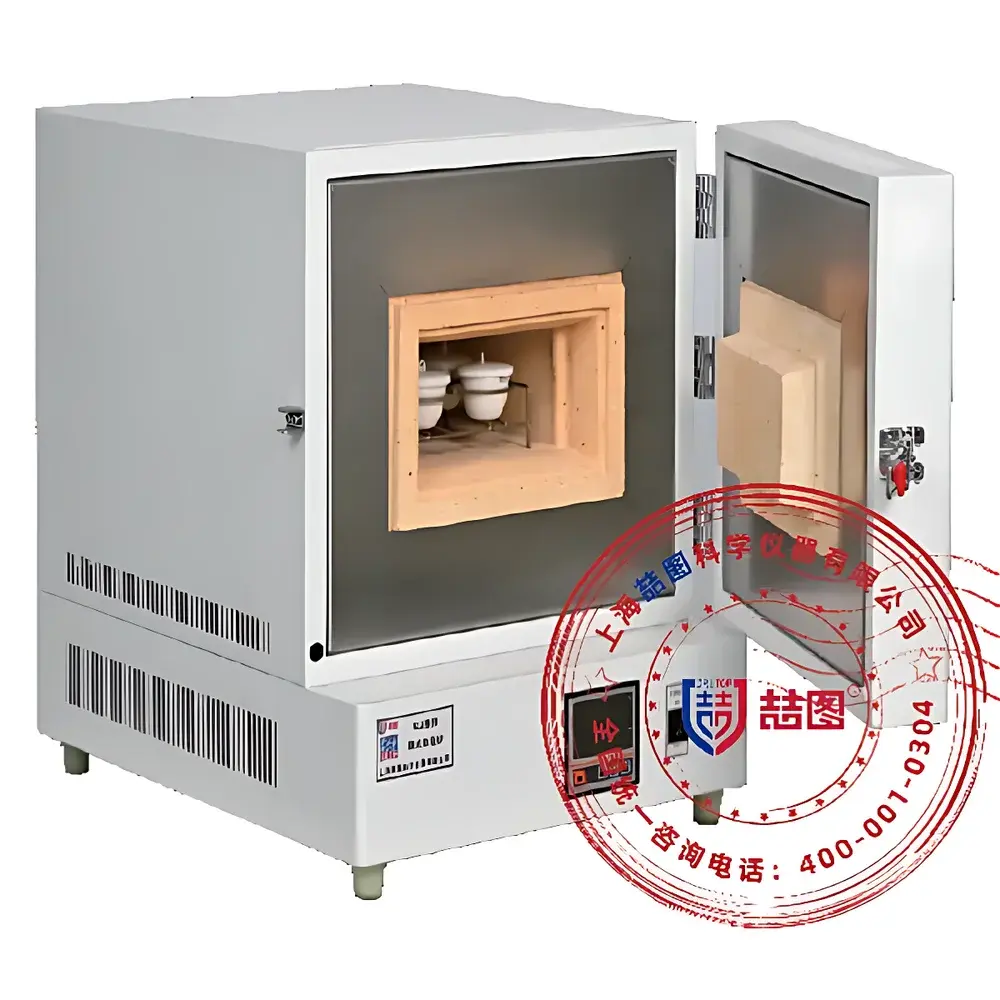
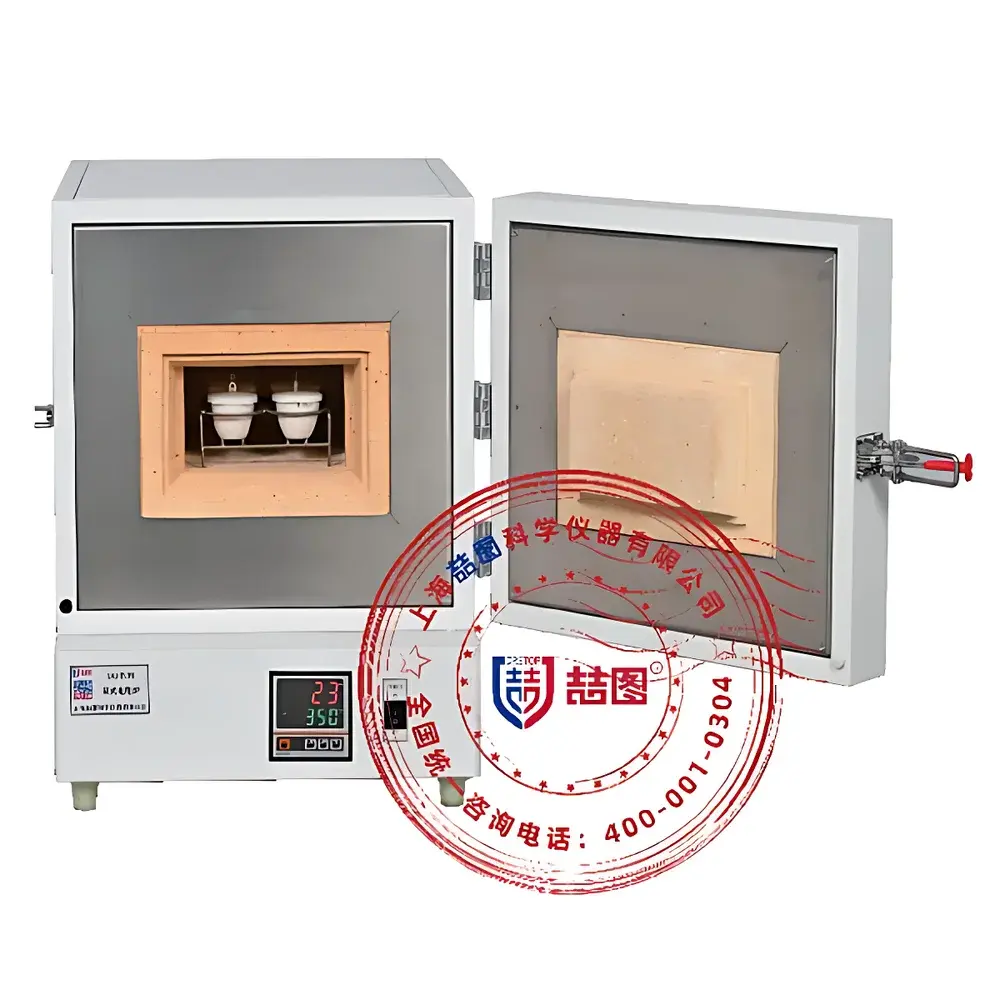
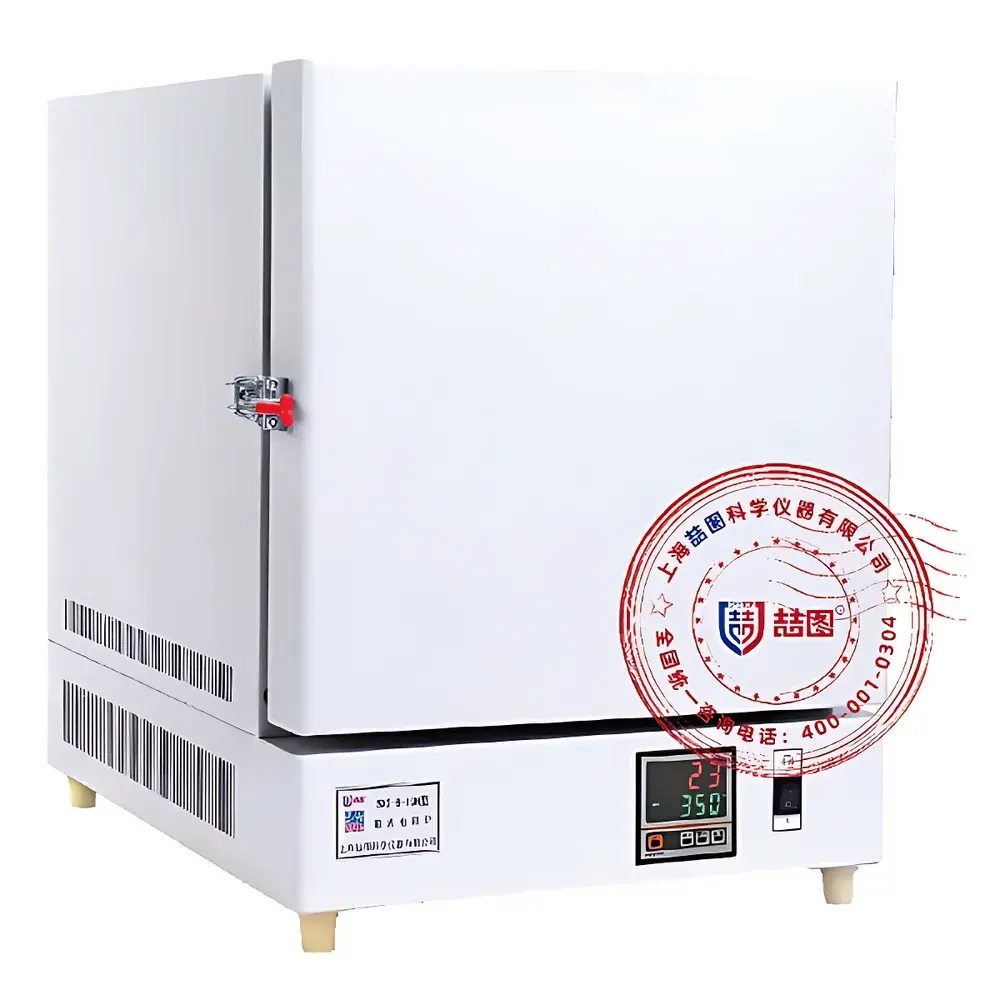
DRETOP SX3-6-13N Refractory Brick Muffle Furnace
| Brand | DRETOP |
|---|---|
| Origin | Shanghai, China |
| Manufacturer Type | Direct Manufacturer |
| Product Category | Domestic |
| Model | SX3-6-13N |
| Instrument Type | Box-Type Muffle Furnace |
| Maximum Temperature | 1300°C |
| Temperature Control Accuracy | ±1°C |
| Rated Power | 6 kW |
| Heating Time to Max Temp | 50 min |
| Heating Element | Silicon Carbide Rods |
| Internal Dimensions | 150 × 300 × 150 mm (W × D × H) |
| Control System | Microcomputer-Based PID Controller |
| Nominal Chamber Volume | 6.75 L |
| Safety Features | Dual-Stage Over-Temperature Protection, Door-Interlocked Power Cut-off, Real-Time Voltage/Current Monitoring, Auto-Restart After Power Recovery, Thermal Runaway Prevention |
Overview
The DRETOP SX3-6-13N is a high-performance refractory brick box-type muffle furnace engineered for precise thermal processing in analytical laboratories and industrial quality control environments. Designed around resistive heating principles using silicon carbide (SiC) rods, it delivers stable, uniform temperature distribution across its insulated chamber—critical for reproducible ash content determination, loss-on-ignition (LOI) analysis, calcination of inorganic compounds, and heat treatment of ceramic and metallurgical samples. Its 1300°C maximum operating temperature complies with standard test methods including ASTM E171, ISO 562, USP , and GB/T 212–2008 for coal and coke analysis. The furnace operates under atmospheric conditions but supports optional inert gas purging via configurable inlet valves—enabling controlled-atmosphere applications such as oxidation-resistant sintering or low-oxygen decomposition studies.
Key Features
- Triple-wall heating configuration with SiC rods embedded in three chamber walls ensures radial thermal symmetry and minimizes axial temperature gradients—achieving ≤±3°C uniformity across the full working volume at 1300°C.
- Refractory brick-lined chamber (Al₂O₃–SiO₂ composite) provides superior thermal mass retention, reduced energy consumption, and resistance to thermal shock during repeated open-door cycling.
- Microprocessor-based PID controller with 30-segment programmable ramp-soak profiles enables precise replication of multi-step thermal protocols—including preheating, dwell, cooling rate modulation, and automatic shutdown.
- Integrated door interlock system cuts power instantly upon opening and resumes operation automatically after closure—eliminating manual reset steps and enhancing operator safety during sample handling.
- Dual-stage over-temperature protection includes primary thermocouple feedback control and independent secondary limit switch, both compliant with IEC 61000-6-2 EMC immunity standards.
- Front-panel digital display shows real-time chamber temperature, setpoint, elapsed time, voltage, and current draw—facilitating immediate diagnostics without external instrumentation.
- Structural design incorporates phosphate-conversion coated carbon steel housing with high-temp epoxy-polyester finish, ensuring corrosion resistance and mechanical durability under continuous 1300°C duty cycles.
Sample Compatibility & Compliance
The SX3-6-13N accommodates standard crucibles (alumina, platinum, graphite) up to Ø80 mm × 60 mm height, supporting routine procedures in coal petrography, cement clinker analysis, catalyst activation, and pharmaceutical excipient thermal stability testing. Its chamber geometry (150 × 300 × 150 mm) allows vertical stacking of multiple samples while maintaining airflow clearance per ASTM C114 requirements. All electrical components meet CE marking directives (2014/30/EU EMC, 2014/35/EU LVD), and firmware architecture supports audit-ready data integrity features required under GLP and GMP environments—including electronic signature-capable user access levels and tamper-evident event logging.
Software & Data Management
While the base N-series model features standalone microcontroller operation, optional NV-I series upgrades integrate a 7-inch capacitive touchscreen with RS485 Modbus RTU and USB host interfaces. Firmware supports CSV export of time-stamped temperature logs, remote parameter setting via PC-based configuration utility, and integration into LabVantage or Thermo Fisher SampleManager LIMS platforms. Data records include operator ID, session timestamp, thermocouple calibration offset, and alarm event codes—all traceable for FDA 21 CFR Part 11 compliance when paired with validated electronic signature modules.
Applications
- Quantitative ash analysis in coal, biomass, and municipal solid waste according to ASTM D3174 and ISO 1171.
- Calcination of metal oxides (e.g., NiO, Co₃O₄) for battery cathode precursor synthesis.
- Thermal gravimetric pre-conditioning prior to XRD or SEM-EDS analysis.
- Ignition loss testing of limestone, dolomite, and refractory raw materials per ASTM C114 and EN 196-2.
- Heat treatment of dental porcelain blanks and orthopedic ceramic implants under controlled ambient conditions.
- Residue quantification in pesticide residue testing workflows (AOAC 999.05).
FAQ
What type of thermocouple is used for temperature sensing?
Type S (Platinum–10% Rhodium / Platinum) thermocouples are factory-installed and calibrated to NIST-traceable standards, optimized for long-term stability at temperatures up to 1300°C.
Is the furnace suitable for inert atmosphere processing?
Yes—optional quartz or stainless-steel gas inlet/outlet ports (M10 × 1 thread) support nitrogen or argon purging; recommended flow rate: 0.5–2 L/min with pressure regulation to ≤0.02 MPa.
Can the controller store multiple heating programs?
The NP-series variant supports storage of up to 16 independent 30-segment programs with password-protected editing privileges assigned by user role.
What maintenance is required for the silicon carbide heating elements?
No periodic replacement is needed under normal use; SiC rods exhibit >5,000 hours service life at 1300°C with gradual resistance increase—monitored via real-time current readout and trending in maintenance logs.
Does the unit comply with laboratory safety standards for Class A equipment?
Yes—it conforms to IEC 61010-1:2010 for electrical safety, UL 61010-1 (recognized component), and features double-insulated wiring, grounded chassis, and thermal cutoffs certified to TÜV Rheinland test reports.
Related Products



