
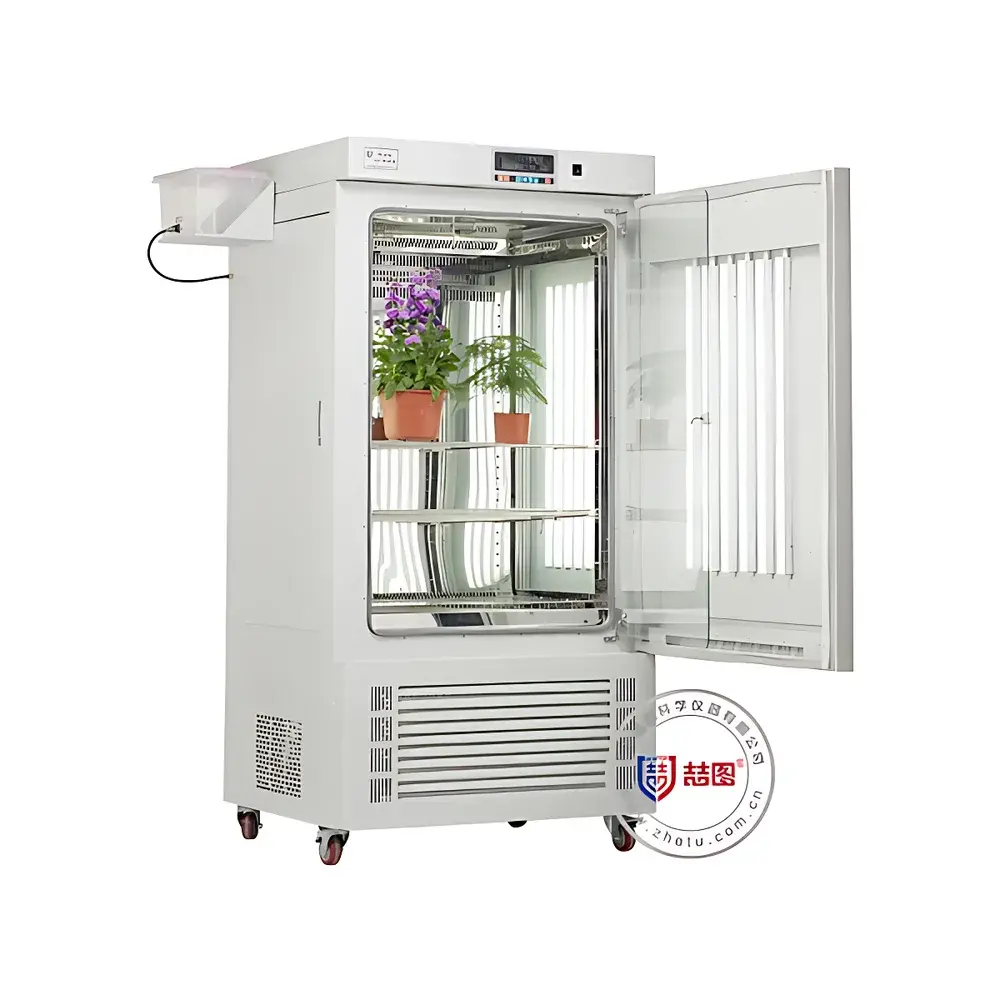
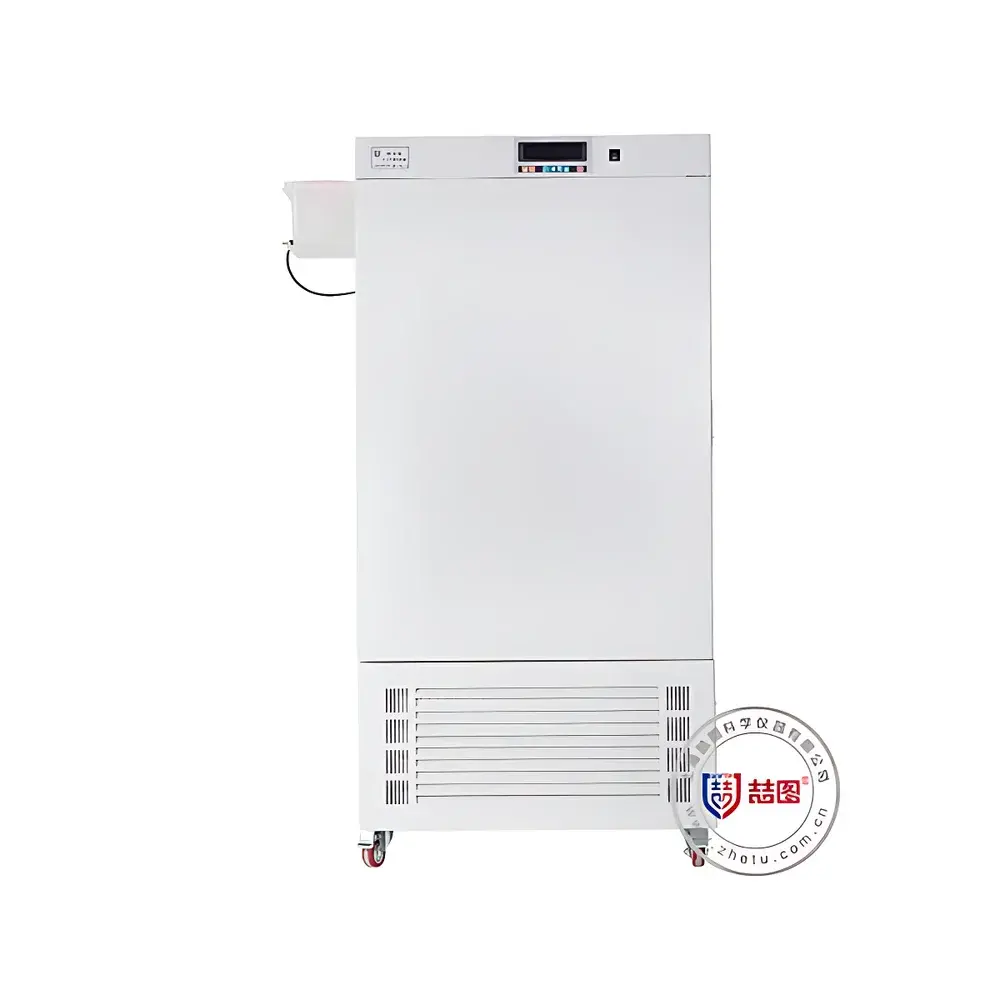
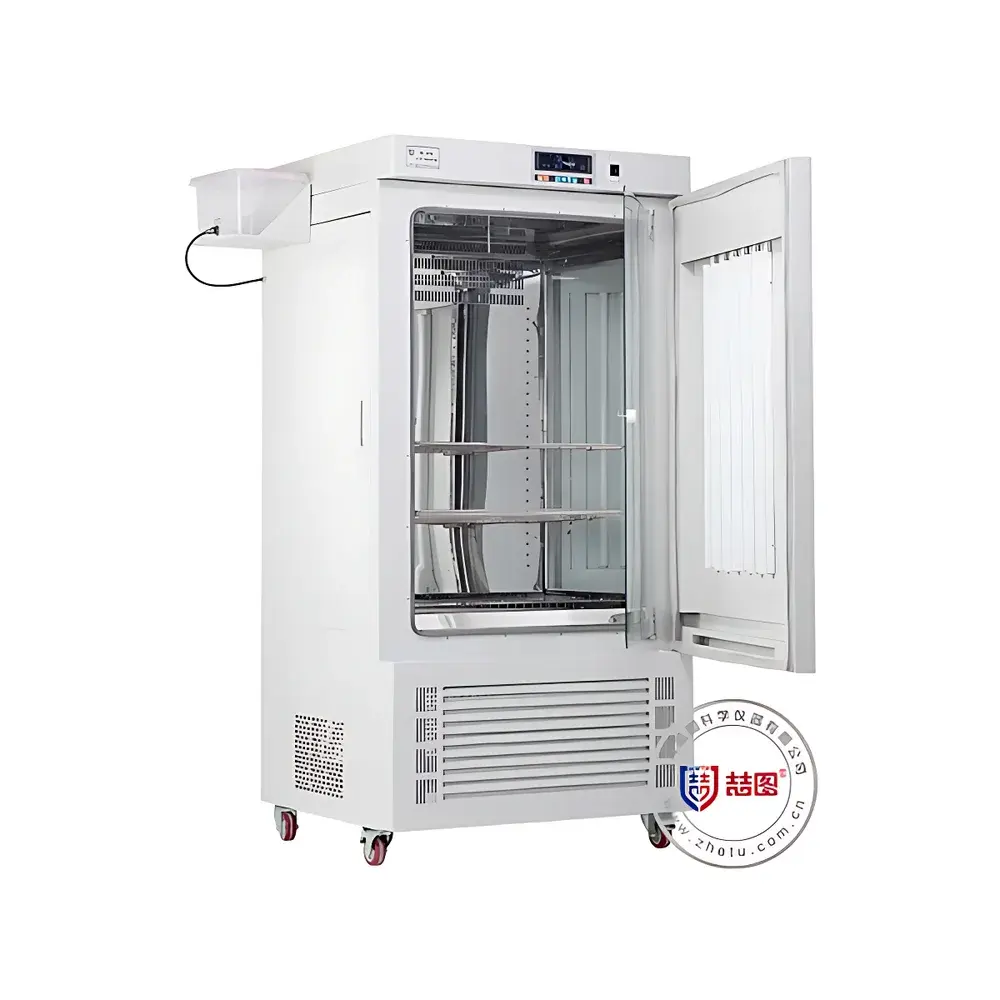
DRETOP ZRQ.CP-250 Multifunctional CO₂ Incubator
| Brand | DRETOP |
|---|---|
| Origin | Shanghai, China |
| Manufacturer Type | Direct Manufacturer |
| Instrument Type | Air-Jacketed CO₂ Incubator |
| CO₂ Detection | Infrared (IR) Sensor |
| Temperature Control Range | 10–50 °C (with illumination), 0–60 °C (without illumination) |
| Temperature Uniformity | Not specified |
| CO₂ Concentration Range & Accuracy | 0–20% vol, ±0.1% vol |
| Humidity Range & Accuracy | 50–95% RH, ±3% RH |
| Chamber Volume | 300 L |
| External Dimensions (W×D×H) | 580 × 500 × 850 mm |
| Control Modes | Constant, Day/Night Cycling, Programmable Ramp-Soak Profiles |
| Optional Features | 90 °C High-Humidity Sterilization, UV Germicidal Lamp (Ozone-Free), Reversible Door Hinge, RS485 Communication Interface, Data Logging |
Overview
The DRETOP ZRQ.CP-250 Multifunctional CO₂ Incubator is an air-jacketed, microprocessor-controlled environmental chamber engineered for precise, long-term maintenance of mammalian cell cultures, primary tissues, and sensitive microbial strains under physiologically relevant conditions. It integrates tightly regulated CO₂ concentration (0–20% vol), temperature (0–60 °C), relative humidity (50–95% RH), and programmable illumination (up to 20,000 lux) within a single platform—enabling advanced applications such as circadian rhythm studies, photobiomodulation assays, and stem cell differentiation protocols requiring dynamic environmental modulation. Unlike conventional CO₂ incubators limited to thermal and gaseous control, the ZRQ.CP-250 employs a dual-sensor IR-based CO₂ monitoring system with zero-oxygen dependency and immunity to catalytic poisoning, ensuring stable gas feedback even during frequent door openings. Its air-jacketed heating architecture—complemented by nickel-chromium alloy heaters and PID-driven thermal management—delivers rapid temperature recovery (<8 min to 37 °C after 30-sec door opening) and exceptional stability (±0.5 °C fluctuation). The chamber’s mirror-finish stainless-steel interior (304 grade), seamless quarter-radius corners, and removable adjustable shelves comply with ISO 14644-1 Class 5 cleanroom-compatible surface standards for ease of decontamination and reduced biofilm retention.
Key Features
- Air-jacketed thermal design with independent heating elements for rapid equilibration and minimal thermal overshoot during repeated access cycles
- Infrared (IR) CO₂ sensor with automatic zero-point calibration, high interference resistance, and response time <60 seconds
- Integrated humidification system featuring reservoir-style water pan with large evaporation surface area; achieves ≤3 min RH recovery to 95% after door opening
- Anti-tilt shelf mechanism: shelves remain level when extended up to 50%, preventing medium spillage during handling
- Door-heated double-glazed inner glass prevents condensation and eliminates moisture-mediated microbial ingress pathways
- Ceramic fiber insulation layer ensures thermal integrity, low external surface temperature (<40 °C), and energy-efficient operation
- Three operational modes: constant setpoint, day/night cycling (temperature + illumination), and multi-step programmable profiles (up to 30 segments)
- Ozone-free UV germicidal lamp (254 nm) irradiates recirculated air and humidification reservoir vapor to suppress airborne and aerosolized contaminants
- 90 °C high-humidity sterilization cycle validated for sporicidal efficacy against *Geobacillus stearothermophilus* endospores per ISO 14937 Annex C guidelines
- Comprehensive safety suite: over-temperature cut-off, low-water-level alarm with heater disable, power-failure memory retention, and configurable audible/visual alarms
Sample Compatibility & Compliance
The ZRQ.CP-250 supports a broad spectrum of biological samples—including adherent and suspension mammalian cell lines (e.g., HeLa, CHO-K1, iPSCs), primary neurons, organoids, bacterial co-cultures, and plant callus tissue—under GMP-aligned environmental traceability. Its humidity control system maintains ≥95% RH without external water supply dependency, minimizing contamination risk associated with top-up ports. All wetted components—including the stainless-steel reservoir pan and silicone-sealed door gasket—are autoclavable or compatible with 70% ethanol and hydrogen peroxide vapor (HPV) decontamination. The unit conforms to IEC 61010-1:2010 for laboratory equipment safety and includes optional RS485 Modbus RTU interface for integration into centralized facility monitoring systems compliant with FDA 21 CFR Part 11 requirements for electronic records and signatures. Internal data logging (optional) captures timestamped temperature, CO₂, RH, and illumination values at user-defined intervals (1–60 min), supporting GLP audit trails.
Software & Data Management
While the base model features a high-contrast monochrome LCD interface with intuitive menu navigation, optional color touchscreen controllers enable graphical real-time trend visualization, remote parameter adjustment via Ethernet/Wi-Fi (with secure authentication), and export of CSV-formatted datasets for LIMS or ELN integration. Firmware supports firmware-over-the-air (FOTA) updates and includes built-in diagnostic self-tests for sensor drift detection, heater continuity verification, and fan performance validation. Audit log functionality records all configuration changes, alarm events, and sterilization cycle executions with operator ID tagging—meeting ALCOA+ principles (Attributable, Legible, Contemporaneous, Original, Accurate, Complete, Consistent, Enduring, Available) for regulated environments.
Applications
- Long-term maintenance of human embryonic stem cells (hESCs) and induced pluripotent stem cells (iPSCs) under hypoxic (5% O₂) + normocapnic (5% CO₂) conditions
- Photoperiod-controlled differentiation of mesenchymal stromal cells (MSCs) using tunable white-light spectra
- Toxicology screening of nanomaterials under dynamic humidity gradients to assess epithelial barrier integrity
- Co-culture experiments involving immune cells and tumor spheroids with synchronized diurnal cytokine release profiling
- In vitro fertilization (IVF) embryo culture with sequential temperature ramping (37 °C → 36.5 °C) mimicking oviductal transit
- Plant tissue culture under controlled PAR (Photosynthetically Active Radiation) regimes for secondary metabolite induction
- Validation of sterile processing workflows using biological indicators placed at ISO-defined worst-case locations inside the chamber
FAQ
What is the difference between air-jacketed and water-jacketed CO₂ incubators?
Air-jacketed designs use internal heating elements to warm chamber air directly, enabling faster temperature recovery after door openings and lower maintenance overhead. Water-jacketed units rely on surrounding water baths for thermal inertia, offering superior stability during power outages but requiring routine water quality monitoring and periodic draining.
Does the ZRQ.CP-250 support regulatory compliance for clinical-grade cell manufacturing?
Yes—when equipped with optional data logging, electronic signature capability, and 21 CFR Part 11-compliant firmware, it meets foundational requirements for ATMP (Advanced Therapy Medicinal Product) process environments under EMA Guideline on Human Cell-Based Medicinal Products.
Can the illumination system be calibrated for photosynthetic photon flux density (PPFD)?
The integrated LED array is factory-calibrated for illuminance (lux); PPFD mapping requires third-party spectroradiometric characterization due to spectral variability across wavelengths.
Is the CO₂ sensor field-replaceable without recalibration?
Yes—the IR sensor module is designed as a plug-and-play component with embedded calibration coefficients stored in EEPROM; replacement does not require external recalibration tools.
What validation documentation is provided with the instrument?
Each unit ships with Factory Acceptance Test (FAT) report including as-delivered temperature uniformity (per ISO 15378 Annex A), CO₂ accuracy verification, and door-opening recovery time measurements—serving as baseline for IQ/OQ protocol development.



