

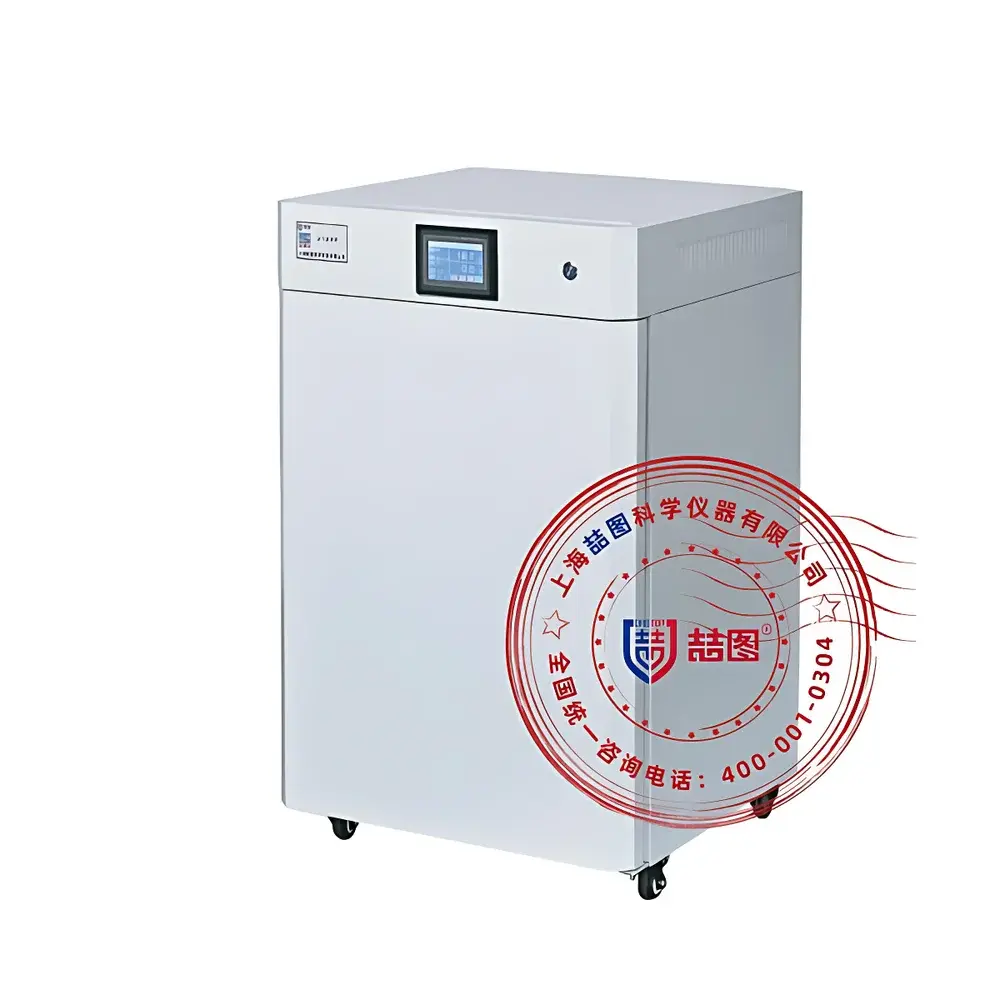
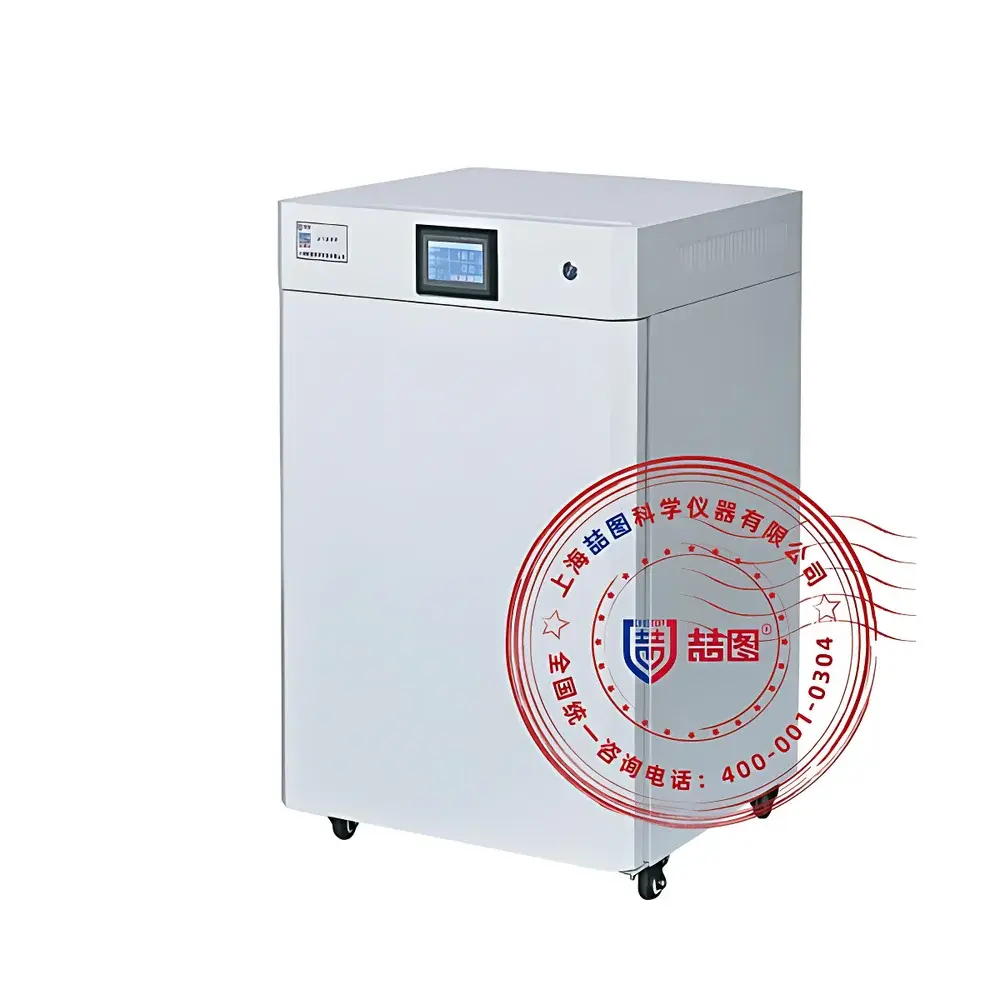
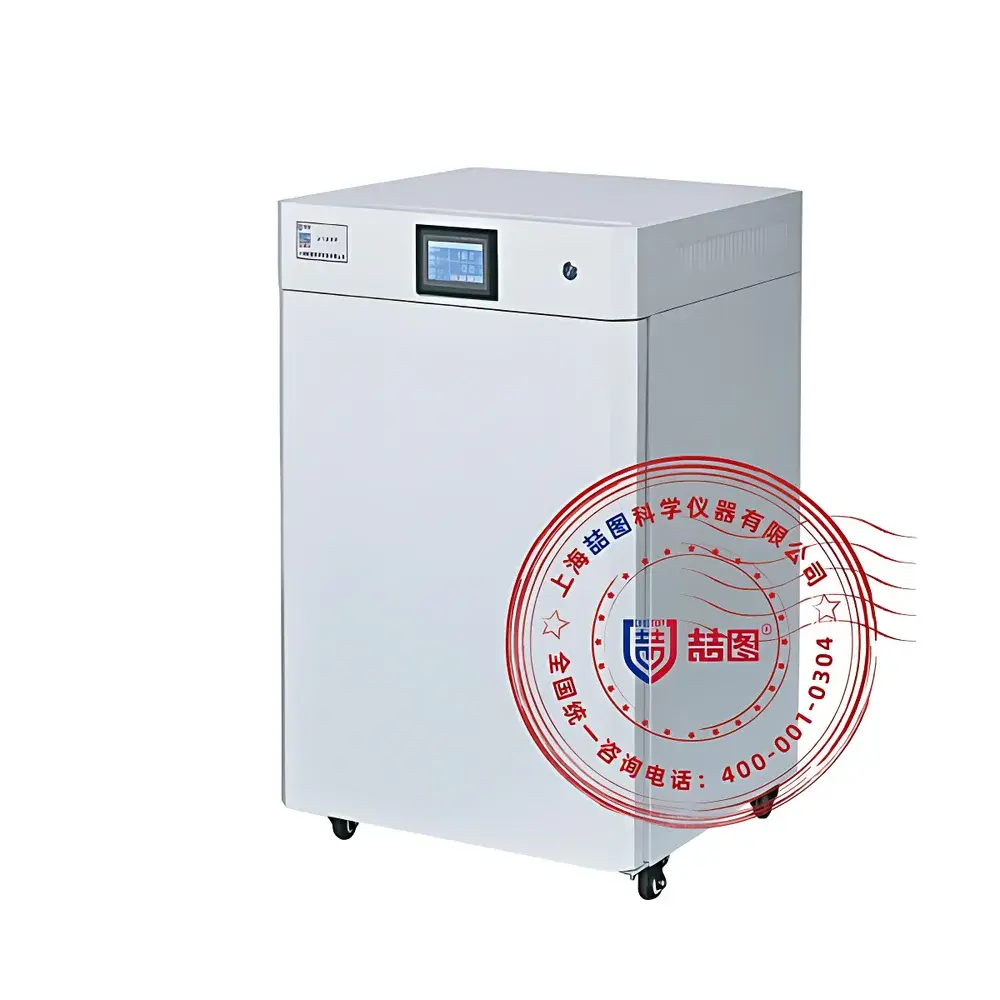
DRETOP TGC-80 Tri-Gas Incubator
| Brand | DRETOP |
|---|---|
| Origin | Shanghai, China |
| Manufacturer | Yes |
| Type | Air-Jacketed Tri-Gas Incubator |
| Model | TGC-80 |
| Temperature Range & Accuracy | RT+5°C to 60°C, ±0.1°C |
| CO₂ Control Range & Accuracy | 0–20%, ±0.1% |
| O₂ Control Range & Accuracy | 1–95%, ±0.2% |
| Humidity | ≥90% RH (natural evaporation, unregulated) |
| Capacity | 80 L |
| Internal Dimensions | 400 × 400 × 500 mm (W × D × H) |
| Power Supply | 220 V, 50 Hz |
| Power Consumption | 400 W |
| Filtration | Integrated HEPA filter |
| Sterilization | UV lamp system |
| Gas Sensors | IR-based CO₂ sensor |
| Heating | Six-sided air-jacketed heating with door heating |
| Air Circulation | Low-turbulence micro-circulation fan system |
| Safety | Dual-door structure with heated inner glass, multi-level alarm logic (temperature deviation, gas concentration drift, door-open duration, sensor fault) |
Overview
The DRETOP TGC-80 Tri-Gas Incubator is an air-jacketed, precision-controlled environmental chamber engineered for advanced cell and tissue culture applications requiring strict regulation of oxygen (O₂), carbon dioxide (CO₂), and nitrogen (N₂) partial pressures. Unlike standard CO₂ incubators, the TGC-80 implements independent, real-time feedback control of all three gases—enabling physiologically relevant hypoxic, normoxic, hyperoxic, and microaerophilic conditions essential for stem cell expansion, tumor spheroid modeling, anaerobic microbiology, and ischemia-reperfusion studies. Its core architecture integrates infrared (IR) CO₂ sensing, zirconia-based O₂ detection, and adaptive N₂ balancing logic to maintain stoichiometric gas composition (sum = 100%) without manual recalibration. The chamber operates on a six-sided air-jacketed heating principle, ensuring uniform thermal distribution (±0.2°C stability) and eliminating cold spots that promote condensation or microbial colonization.
Key Features
- Color touchscreen interface with real-time display of temperature, CO₂, O₂, and optional humidity parameters;
- Air-jacketed six-surface heating system with integrated door heating to prevent inner-glass condensation and minimize thermal disturbance during observation;
- Low-turbulence micro-circulation fan design mimicking natural convection—reducing recovery time after door opening (CO₂ re-stabilization to ±0.1% within 3 minutes post 30-sec door exposure);
- Dual-door structure: outer insulated door + heated tempered-glass inner door for visual monitoring without compromising chamber integrity;
- Passive humidification via removable stainless-steel water pan—achieving ≥90% RH through natural evaporation; rapid rehydration supported by optimized pan geometry and surface area;
- Integrated HEPA filtration (≥99.97% @ 0.3 µm) with dynamic filter-life indicator—ensuring continuous particulate and microbial removal from recirculated air;
- UV-C sterilization system covering interior surfaces, fan blades, sensor housings, and water pan—validated for elimination of bacteria, fungi, mycoplasma, and spores in both airborne and surface-bound states;
- Comprehensive safety protocol: dual-limit temperature alarms, gas concentration deviation alerts, extended-door-open warning, sensor failure diagnostics, and fail-safe gas shutoff logic.
Sample Compatibility & Compliance
The TGC-80 supports a broad range of biological specimens—including primary human cells, induced pluripotent stem cells (iPSCs), organoids, 3D co-cultures, facultative and obligate anaerobes (e.g., Clostridium, Bifidobacterium), and oxygen-sensitive hybridoma lines. Its gas control fidelity meets ISO 13408-1 (aseptic processing) and ASTM E2927-21 (performance verification of controlled-atmosphere incubators) requirements. While not certified for GMP manufacturing, its logging-capable controller, alarm traceability, and UV/HEPA validation pathways align with GLP-compliant laboratory practices. The absence of active humidity control excludes compliance with USP <797> or <800> for sterile compounding but remains suitable for research-grade mammalian and microbial culture under ISO Class 5–7 ambient conditions.
Software & Data Management
The embedded controller logs timestamped records of temperature, CO₂, O₂, and alarm events to internal non-volatile memory (retention ≥12 months). Data export is supported via USB port in CSV format for integration with LIMS or ELN systems. Though no native Ethernet or cloud connectivity is provided, the device supports external data acquisition via analog voltage outputs (0–5 V) for temperature and gas concentrations—enabling third-party SCADA or LabVIEW interfacing. Audit trails include operator ID (via optional password lock), parameter change history, and sterilization cycle logs—supporting basic 21 CFR Part 11 readiness when paired with institutional procedural controls.
Applications
- Hypoxia research: modeling tumor microenvironments (1–5% O₂), embryonic development (2–8% O₂), and ischemic injury;
- Microaerophilic cultivation: Helicobacter pylori, Campylobacter jejuni, and Neisseria gonorrhoeae growth at 5–10% O₂ with 5–10% CO₂;
- Stem cell maintenance: long-term undifferentiated expansion of mesenchymal stromal cells (MSCs) under 2–5% O₂;
- Co-culture systems: spatially resolved oxygen gradients across transwell inserts or microfluidic scaffolds;
- Biopreservation studies: evaluating cryopreservation recovery kinetics under controlled O₂/CO₂ reoxygenation protocols;
- Antibiotic tolerance assays: assessing persister cell formation in low-O₂ biofilms.
FAQ
What gas supply configuration is required for operation?
The TGC-80 requires three independent, pressure-regulated gas sources: medical-grade CO₂ (≥99.5%), O₂ (≥99.5%), and N₂ (≥99.998%). Each line must be fitted with a 0.2 µm inline filter and connected via stainless-steel tubing to dedicated inlet ports. No mixed-gas cylinders are supported.
Is humidity actively controlled or monitored?
Humidity is maintained passively via natural evaporation from a removable stainless-steel water pan. Relative humidity is not measured or regulated; the system achieves ≥90% RH under steady-state conditions at 37°C and 5% CO₂. Optional external hygrometer integration is possible via analog input.
How often must the HEPA filter be replaced?
Filter replacement interval depends on usage frequency and ambient lab air quality. The built-in life indicator estimates service life based on cumulative fan runtime and pressure differential. Typical replacement occurs every 6–12 months under continuous operation in ISO Class 7 environments.
Can the UV sterilization cycle be scheduled automatically?
No—the UV lamp is manually activated via the touchscreen interface. A fixed 30-minute cycle is executed upon confirmation; no programmable timing or interlock with door status is implemented.
Does the incubator support remote monitoring or network connectivity?
No native Ethernet, Wi-Fi, or IoT capability is included. Remote oversight requires external data loggers interfaced via analog outputs or periodic manual USB data extraction.




