
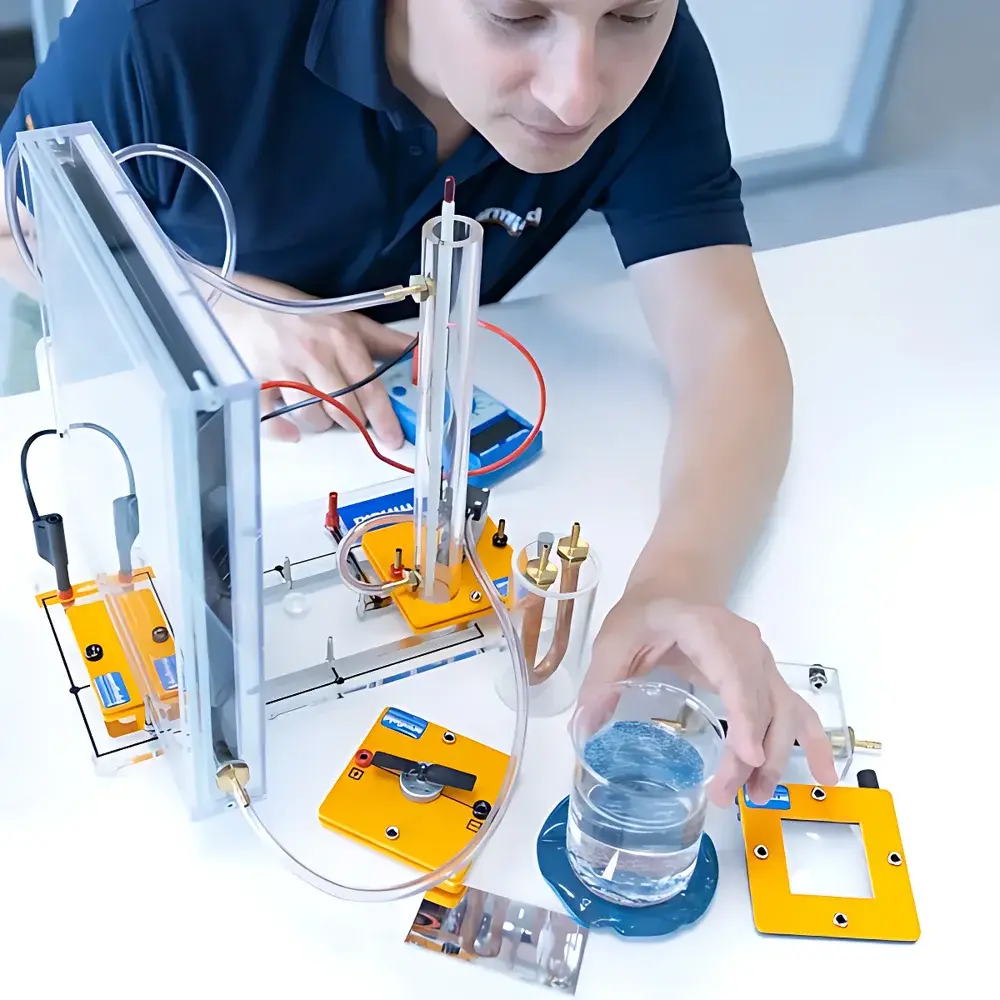
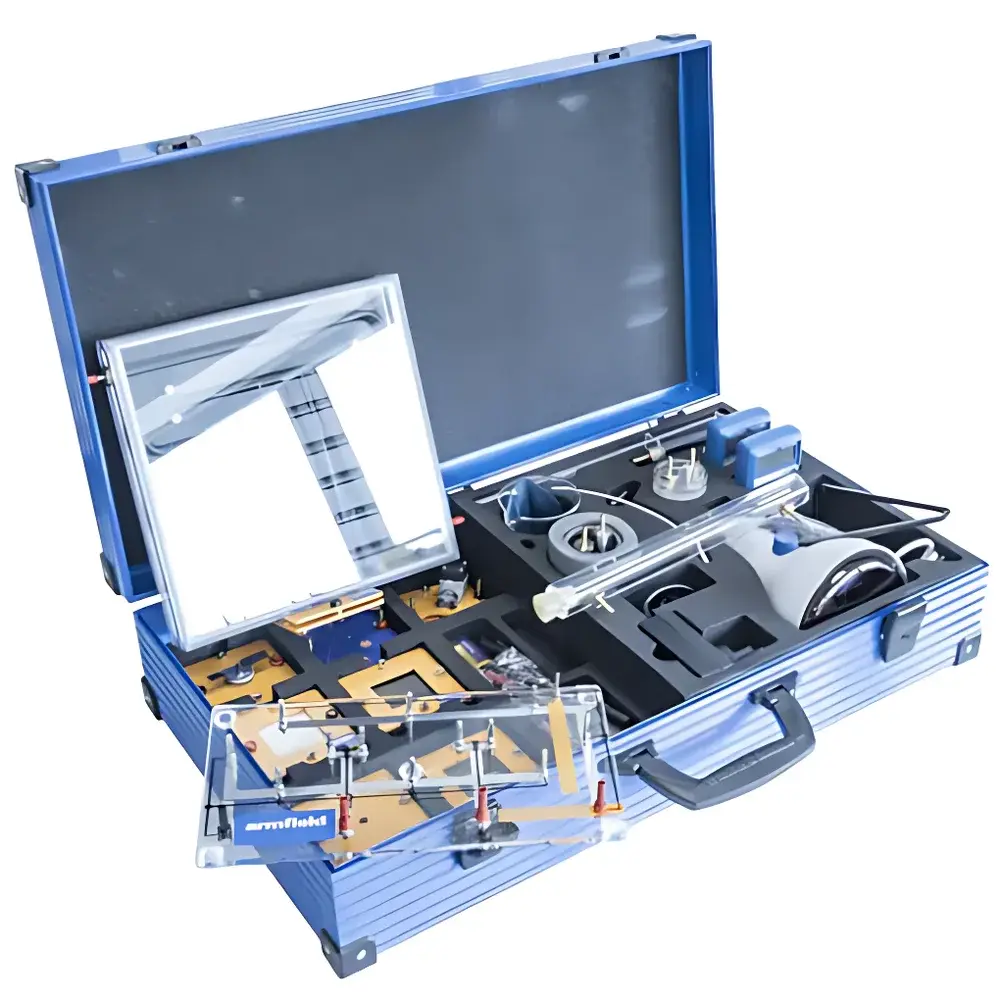
Armfield RE16 Solar Thermal Energy Training System
| Brand | Armfield |
|---|---|
| Origin | United Kingdom |
| Model | RE16 |
| Storage Temperature | −10 °C to +70 °C |
| Operating Temperature | +10 °C to +50 °C |
| Operating Relative Humidity | 0–95% non-condensing |
| Dimensions (L×W×H) | 0.640 m × 0.165 m × 0.370 m |
| Shipping Volume | 0.038 m³ |
| Gross Weight | 8.5 kg |
Overview
The Armfield RE16 Solar Thermal Energy Training System is a comprehensive, benchtop-scale educational platform engineered for hands-on instruction in fundamental and applied principles of solar thermal energy conversion. Designed specifically for undergraduate and postgraduate engineering laboratories, the system implements core thermodynamic and heat transfer phenomena—including conduction, convection, radiation absorption, thermal stratification, and phase-change energy storage—within a rigorously controlled, repeatable experimental environment. Unlike simplified demonstration kits, the RE16 operates on quantifiable physical principles: incident solar irradiance (simulated via calibrated infrared lamp) is converted to sensible or latent thermal energy across multiple collector architectures—including flat-plate, parabolic trough, and Fresnel-lens-focusing configurations—and subsequently transferred via forced or natural circulation loops to heat exchangers, PCM (paraffin wax) storage units, or thermoelectric (Peltier) generators. Its modular architecture enables systematic isolation of variables—such as flow rate, absorber surface emissivity, insulation thickness, or thermal mass—supporting ISO/IEC 17025-aligned experimental design and data traceability.
Key Features
- Modular, reconfigurable hardware platform supporting >15 standardized experiments aligned with ABET-accredited thermal sciences curricula
- Dual-mode fluid circulation: precision-controlled pump-driven loop and passive thermosyphon operation for comparative heat transfer analysis
- Multi-geometry solar collector suite: flat-plate absorber, parabolic reflector with evacuated tube, and Fresnel lens concentrator—each with interchangeable black/white reference absorbers for albedo and absorptivity quantification
- Integrated phase-change thermal storage module using paraffin wax (melting point ~45 °C), enabling transient energy buffering and hysteresis characterization
- Thermoelectric generator (TEG) subsystem with Peltier module for direct solar-to-electric conversion efficiency measurement under variable thermal gradients
- Self-contained aluminum carry-case (640 × 165 × 370 mm) with labeled compartments, ensuring rapid setup, calibration consistency, and inventory control across teaching lab sessions
- Compliant with IEC 61000-6-3 (EMC emission limits) and EN 61010-1 (safety requirements for electrical equipment for measurement, control, and laboratory use)
Sample Compatibility & Compliance
The RE16 accommodates standard laboratory fluids (deionized water, glycol-water mixtures) and solid-phase thermal storage media (paraffin waxes, graphite-enhanced composites). All wetted components meet FDA-compliant material specifications (USP Class VI plastics, stainless steel 316 tubing). Experimental protocols are structured to satisfy ASTM E1036 (Standard Test Methods for Solar Thermal Collector Performance), ISO 9806 (Solar thermal collectors — Test methods), and EN 12975 (Thermal solar systems and components — Solar collectors). The system supports GLP-compliant data acquisition when paired with external DAQ systems meeting 21 CFR Part 11 audit-trail requirements.
Software & Data Management
While the RE16 operates as a standalone hardware platform requiring no proprietary software, it is fully compatible with industry-standard data acquisition environments including National Instruments LabVIEW, MATLAB Data Acquisition Toolbox, and Python-based PyVISA frameworks. All sensors—including PT100 temperature probes (±0.1 °C accuracy), flow meters (±2% FS), and digital multimeters (4½-digit resolution)—output analog or RS232 signals with documented pinouts and scaling equations provided in the technical manual. Calibration certificates traceable to NPL (UK) standards are included for all primary sensors. Experimental procedures include step-by-step uncertainty propagation guidance per GUM (JCGM 100:2008).
Applications
- Quantitative determination of spectral absorptance/emissivity of coated surfaces using black/white reference absorbers and IR source modulation
- Characterization of natural convection boundary layers in vertical ducts via thermocouple ladder arrays and particle image velocimetry (PIV)-compatible flow visualization ports
- Transient response analysis of PCM-integrated thermal storage under cyclic heating/cooling, including melt/freeze front tracking via embedded thermistor chains
- Performance mapping of parabolic trough collectors under variable incidence angles and mass flow rates (0.1–2.0 L/min)
- Efficiency benchmarking of thermoelectric generators across ΔT ranges from 10 K to 60 K, with simultaneous voltage/current/power output logging
- Validation of lumped-capacitance and distributed-parameter thermal models against measured time-domain temperature histories
FAQ
Is the RE16 suitable for research-grade data collection?
Yes—its sensor suite, mechanical stability, and documented measurement uncertainties support publication-quality thermal performance validation when operated within specified environmental limits (+10 °C to +50 °C, non-condensing).
Can the system be integrated with existing campus-wide DAQ infrastructure?
Yes—standard analog (0–10 V, 4–20 mA) and serial (RS232) interfaces enable seamless integration with centralized SCADA or LabVIEW-based monitoring networks.
Does Armfield provide curriculum-aligned teaching resources?
Yes—the supplied instructor’s manual includes learning outcomes mapped to Bloom’s taxonomy, pre-lab quizzes, error analysis worksheets, and sample student reports compliant with IEEE and ASME formatting guidelines.
What maintenance is required for long-term reliability?
Annual verification of PT100 probe calibration and visual inspection of hose integrity; no consumables or scheduled replacement parts are required under normal academic usage conditions.






