
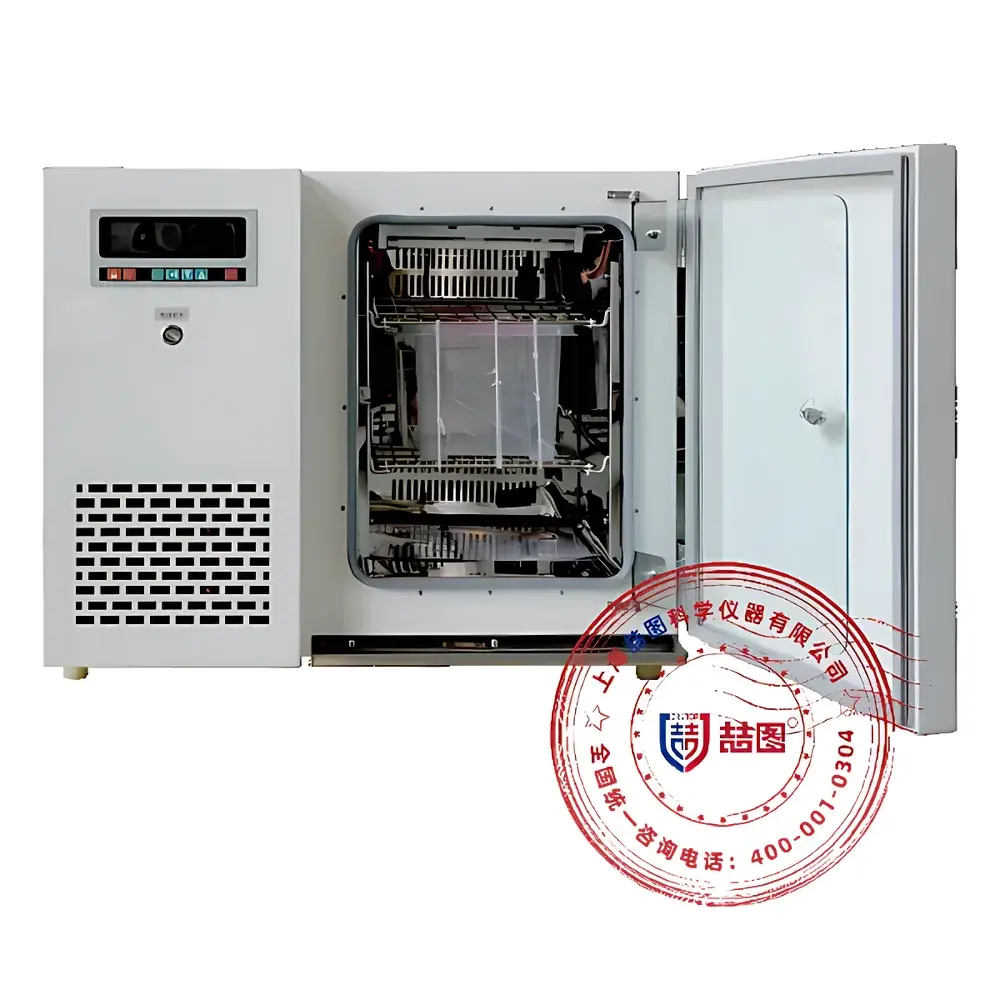
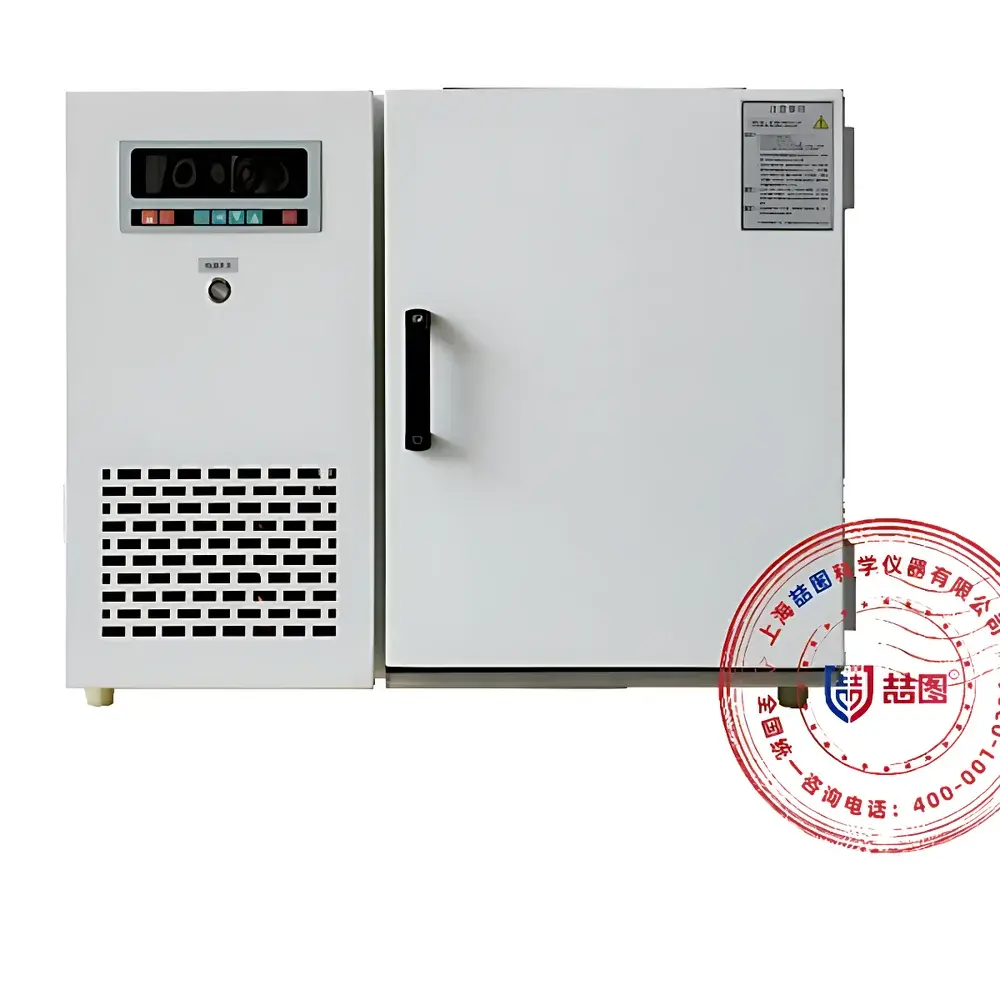
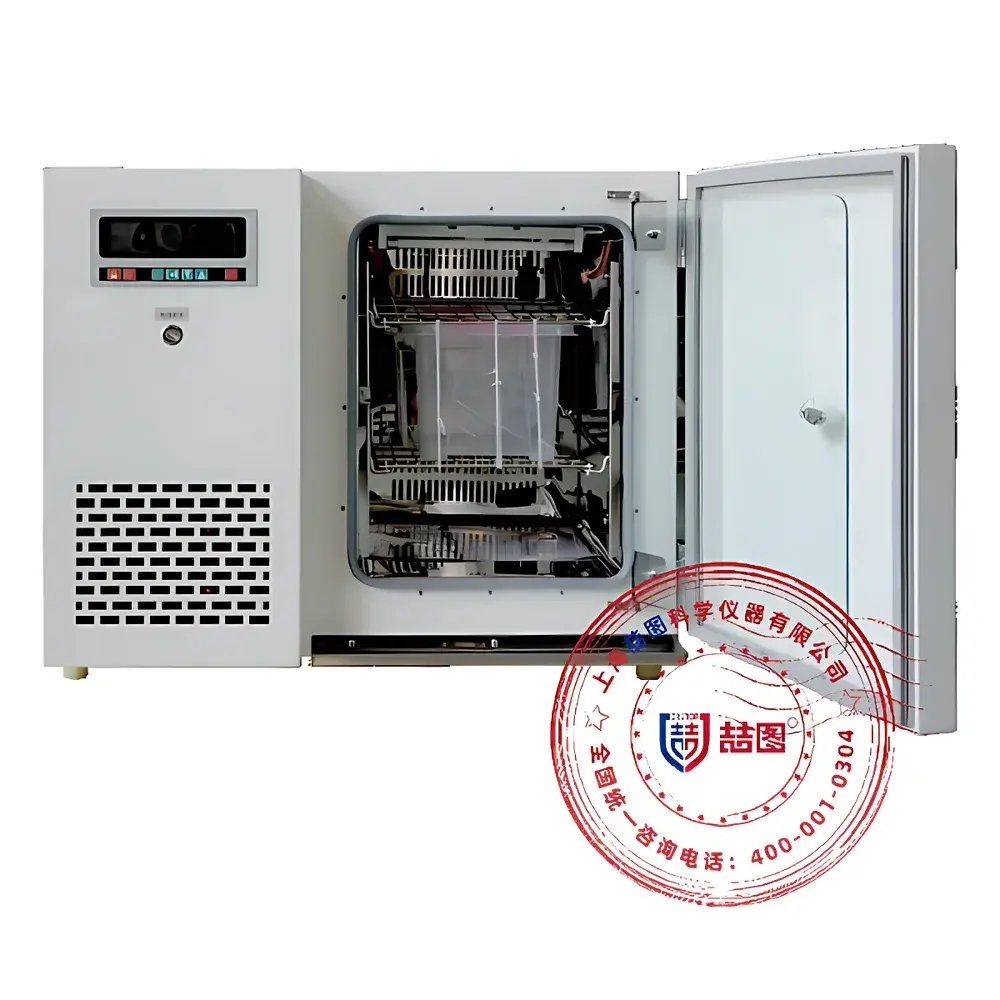
DRETOP DRH-50-N20 Benchtop Temperature and Humidity Controlled Chamber
| Brand | DRETOP |
|---|---|
| Origin | Shanghai, China |
| Manufacturer Type | Direct Manufacturer |
| Region of Origin | Domestic (China) |
| Model | DRH-50-N20 |
| Instrument Type | Benchtop |
| Cooling Method | Air-Cooled |
| Temperature Range | −20 °C to 120 °C |
| Humidity Range | 20–98 % RH |
| Temperature Uniformity | ±0.5 °C |
| Humidity Deviation | ±3–5 % RH |
| Interior Dimensions (W×D×H) | 360 mm × 350 mm × 400 mm |
| Nominal Volume | 50 L |
| Control Interface | Color Touchscreen LCD |
| Programmability | 30-Stage Ramp/Soak Profile |
| Power Supply | AC 220 V / 50 Hz |
| Standard Ports | RS485, Φ25 mm Access Port (Left Side) |
Overview
The DRETOP DRH-50-N20 is a benchtop temperature and humidity controlled chamber engineered for precision environmental simulation in R&D laboratories and quality assurance environments. It operates on the principle of closed-loop PID-controlled thermoelectric and refrigerant-based conditioning, integrating independent heating (nickel-chromium alloy heaters), air-cooled compression refrigeration, and steam-humidification with condensate management. Designed to replicate accelerated aging conditions—such as high-temperature storage, low-temperature operational testing, and cyclic damp heat—the chamber supports reliability validation per international environmental stress screening (ESS) protocols. Its compact footprint (50 L internal volume) and stable microclimate control make it suitable for evaluating small-form-factor components including PCB assemblies, semiconductor packages, medical device sensors, and polymer-based enclosures under ISO 17025-aligned test conditions.
Key Features
- Microprocessor-based PID control system with color touchscreen interface enabling intuitive navigation, real-time parameter monitoring (temperature, humidity, elapsed time, program stage), and multi-segment profile programming (up to 30 steps with ramp/soak logic, timer-based start/stop, and automatic cycle repetition).
- Robust thermal architecture: dual-mode heating (resistive + ambient recovery), dynamically modulated compressor output, and optimized air circulation via tangential blower and baffle-guided airflow—ensuring uniform temperature distribution (±0.5 °C) and controlled humidity homogeneity (±3–5 % RH) across the 360 × 350 × 400 mm stainless steel interior.
- Dual-pane observation window with tempered inner glass and magnetic-seal outer door minimizes thermal bridging while maintaining optical clarity during long-duration tests; anti-fog coating prevents condensation buildup at low-temperature/high-humidity transitions.
- Integrated safety subsystems: over-temperature cut-off with audible/visual alarm, compressor protection (start-delay and stop-interval logic), dry-run prevention for humidifier, auto-drain function, and evaporator self-cleaning cycle to inhibit microbial growth and scale accumulation.
- Stainless steel (SUS304) chamber interior with removable, adjustable shelves; compatible with high-temperature decontamination cycles up to 150 °C using saturated steam—supporting GLP-compliant cleaning validation and cross-contamination mitigation in regulated biomedical applications.
Sample Compatibility & Compliance
The DRH-50-N20 accommodates samples up to 350 mm depth and 400 mm height, ideal for component-level qualification (e.g., IC packages, solder joints, conformal coatings) and sub-assembly testing (e.g., handheld diagnostic units, automotive ECUs). It meets the mechanical and performance requirements of GB/T 2423.1 (cold), GB/T 2423.2 (dry heat), GB/T 2423.3 (damp heat, steady state), GB/T 2423.4 (damp heat, cyclic), and GB/T 10586 (chamber specification). It also aligns with military standard GJB 150.3A–2009 (high-temperature laboratory testing) and GJB 150.4A–2009 (low-temperature laboratory testing), as well as IEC 60068-2-1 (cold), IEC 60068-2-2 (dry heat), IEC 60068-2-30 (damp heat, cyclic), and IEC 60068-2-38 (composite temperature/humidity test). Optional calibration certificate traceable to NIM (National Institute of Metrology, China) is available upon request.
Software & Data Management
The built-in controller logs timestamped temperature and humidity data at user-defined intervals (1–600 seconds), storing up to 10,000 records internally. Data export is supported via RS485 serial interface using Modbus RTU protocol for integration into LIMS or MES platforms. Optional PC software enables remote monitoring, real-time graphing, report generation (PDF/CSV), and electronic signature support compliant with FDA 21 CFR Part 11 requirements—including audit trail, user access levels, and data integrity safeguards. All logged data retains full traceability: operator ID, program ID, start/stop timestamps, deviation flags, and alarm event history.
Applications
- Accelerated life testing of electronic assemblies under combined thermal-hygric stress (e.g., IPC-J-STD-020 moisture sensitivity level classification).
- Material stability assessment for pharmaceutical packaging (blister foils, desiccant sachets) per USP and ICH Q1A(R2) guidelines.
- Reliability screening of automotive sensors exposed to seasonal climate variations (e.g., ISO 16750-4).
- Validation of sterilization packaging integrity after accelerated aging (ASTM F1980).
- Calibration verification of hygrometers and thermistors in metrology labs.
- Pre-conditioning of composite specimens prior to mechanical or electrical characterization (ASTM D5229/D3551).
FAQ
What is the maximum allowable sample load volume inside the chamber?
The effective usable volume is approximately 38–42 L when accounting for airflow clearance and shelf displacement; loading beyond 70 % of internal volume may compromise uniformity and response time.
Does the unit support external sensor input for chamber monitoring?
Yes—a dedicated Φ25 mm port on the left side allows feedthrough of thermocouples, RTDs, or humidity probes; optional analog input module (0–10 V or 4–20 mA) is available for third-party sensor integration.
Is the humidity system capable of operating below 20 % RH?
No—the minimum specified humidity range is 20 % RH; for low-humidity applications (<10 % RH), a desiccant-based dry box or nitrogen-purged chamber is recommended.
Can the DRH-50-N20 be validated for GxP environments?
Yes—when equipped with IQ/OQ documentation package, calibrated reference sensors, and audit-trail-enabled software, it supports installation qualification (IQ), operational qualification (OQ), and routine performance verification per ASTM E2500 and EU Annex 15.
What maintenance intervals are recommended for long-term reliability?
Compressor oil and refrigerant inspection every 24 months; humidifier tank cleaning weekly; evaporator coil inspection quarterly; full system calibration annually or after 2000 operational hours—whichever occurs first.



