
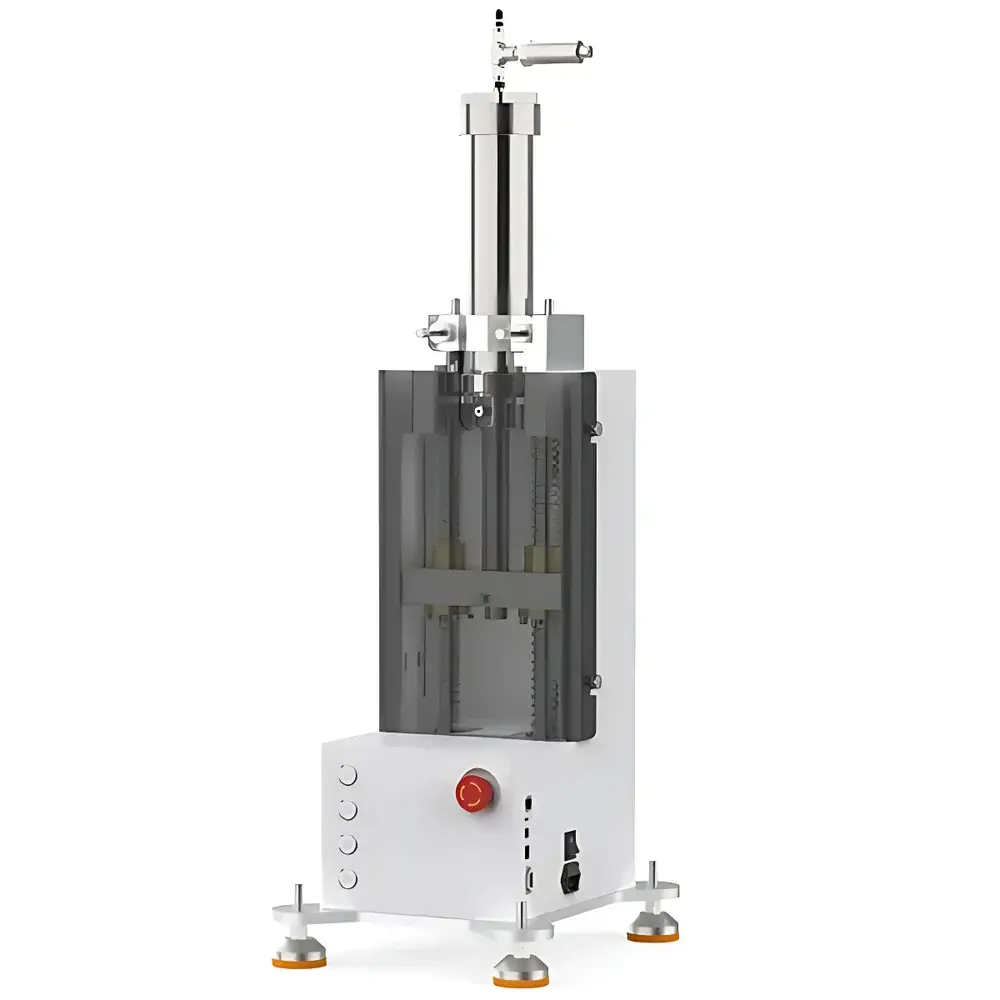
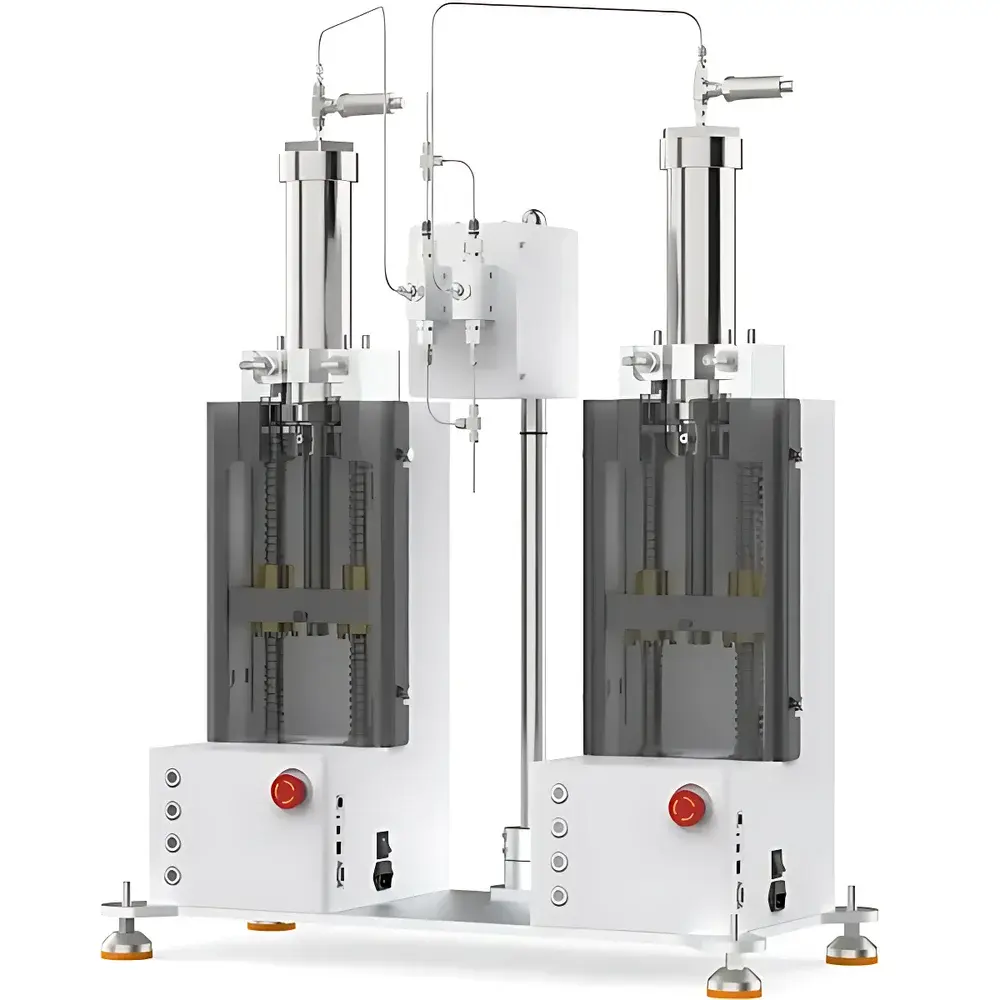
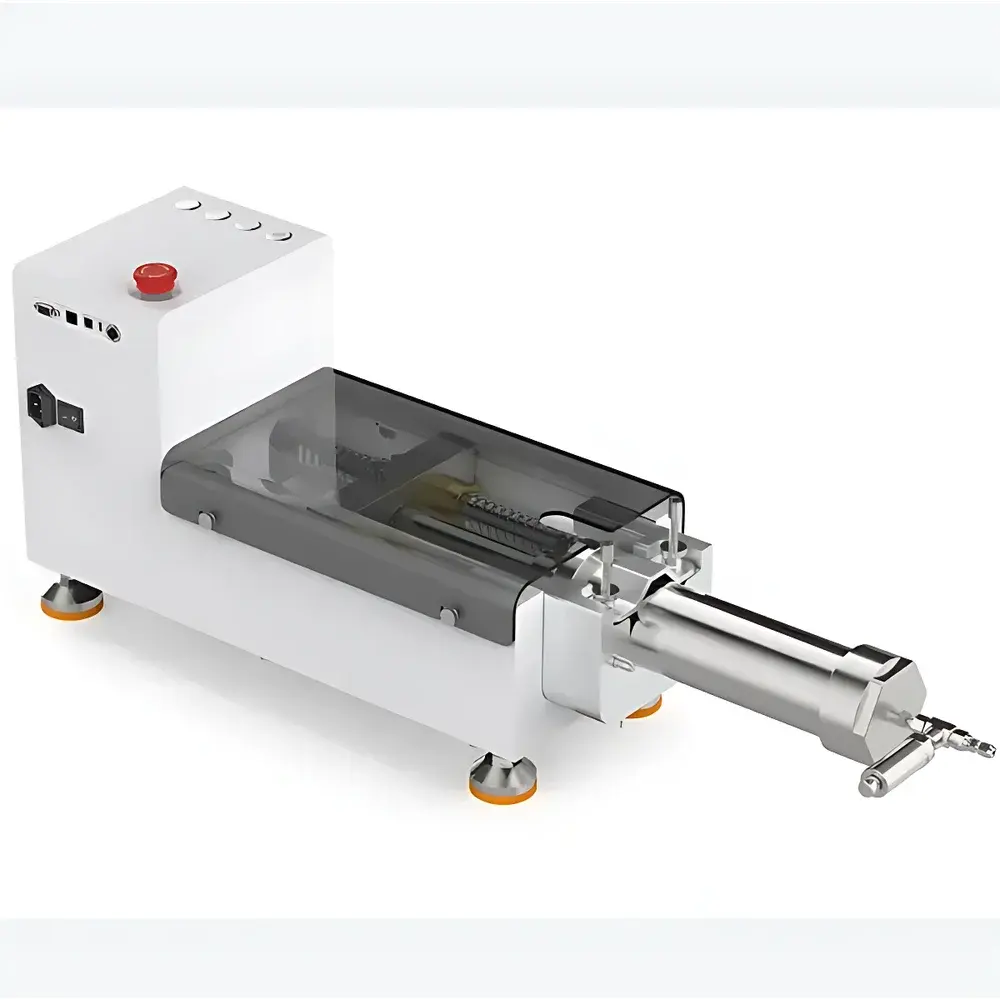
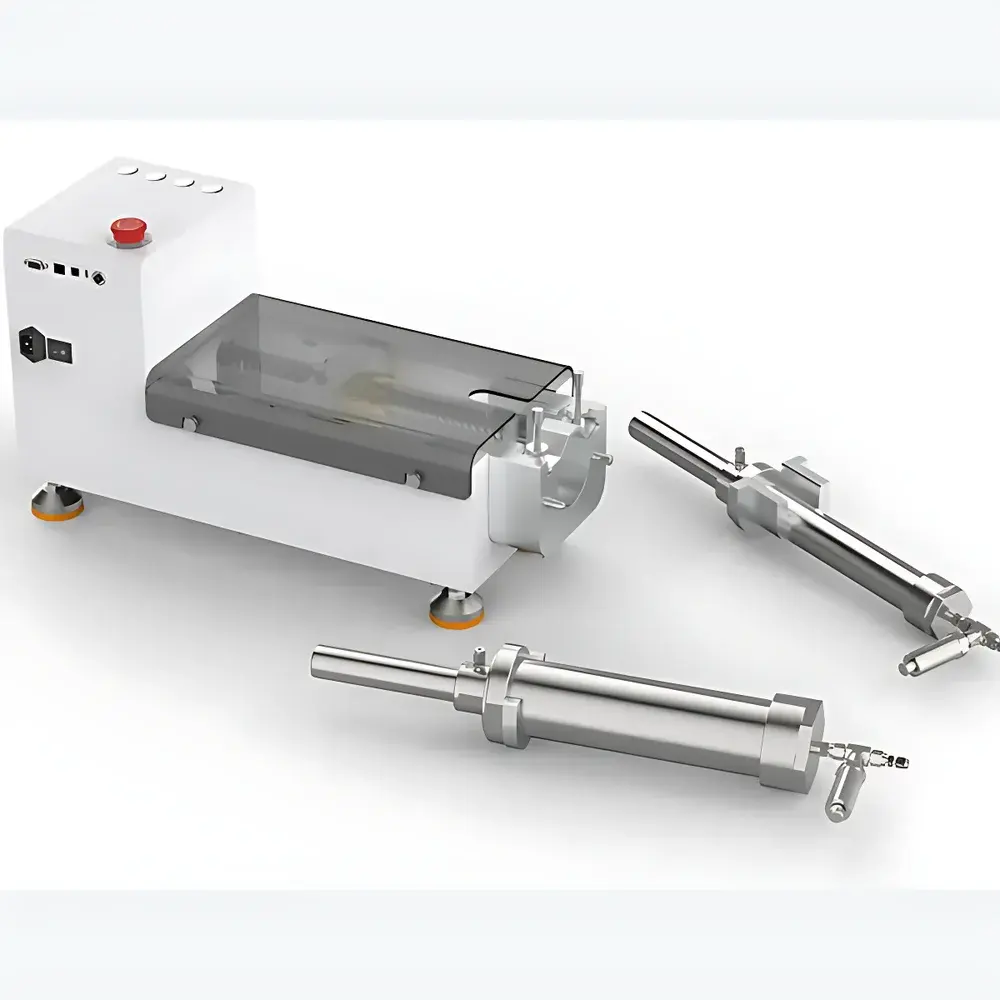
Chemyx HP6 Ultra-High-Pressure Precision Plunger Pump
| Brand | Chemyx |
|---|---|
| Origin | USA |
| Model | HP6 |
| Flow Rate | 0.00004–734 mL/min |
| Maximum Pressure | 0–30,800 psi |
| Drive System | Single-speed geared motor with self-lubricating gears |
| Plunger Force | Up to 10 tons (44.5 kN) |
| Cylinder Volumes | 90 mL, 250 mL, 500 mL, 750 mL, 1 L |
| Standard Wetted Materials | Nitronic 50 austenitic stainless steel |
| Seal Material | Carbon-fiber-reinforced PTFE |
| Communication Interfaces | USB, RS-232, TTL |
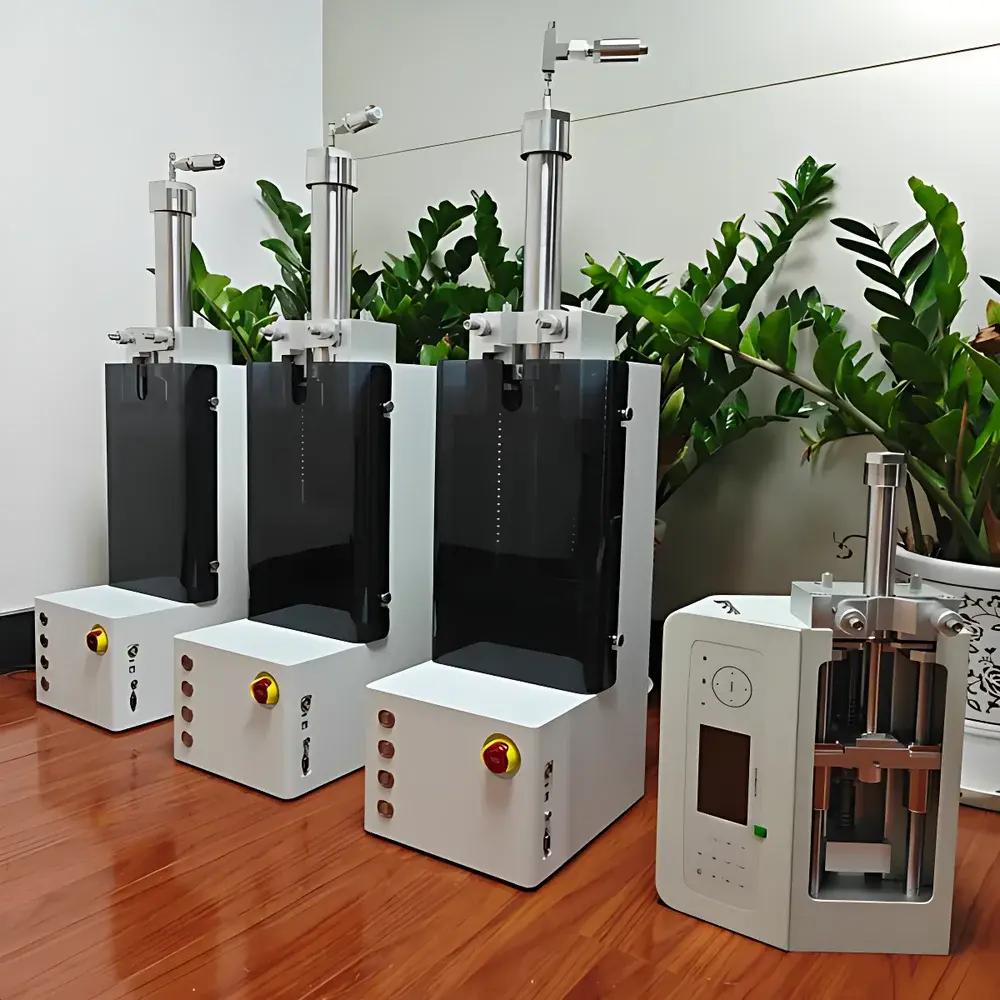
| Mounting Options | Horizontal or vertical orientation |
| Compliance | Designed for GLP/GMP environments |
Overview
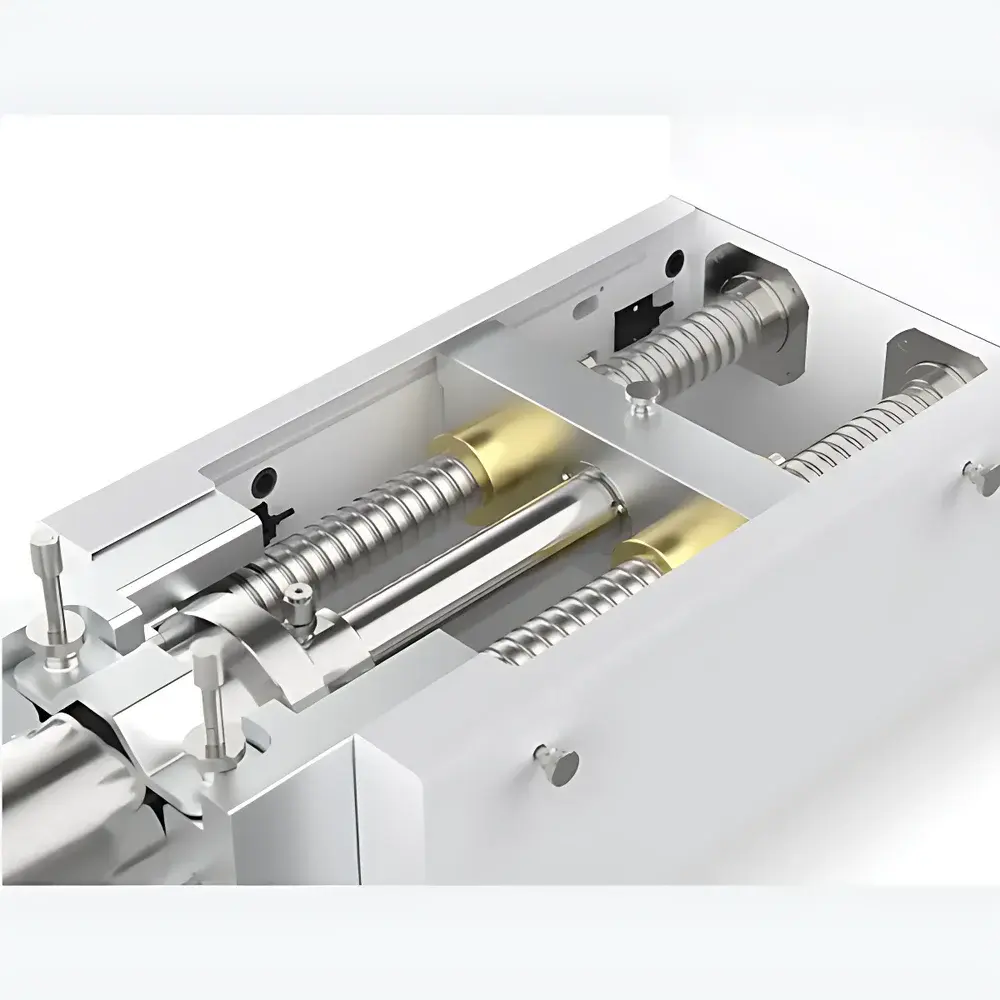
The Chemyx HP6 Ultra-High-Pressure Precision Plunger Pump is an engineered solution for applications demanding simultaneous extreme pressure capability, sub-microliter flow resolution, and long-term operational stability. Based on a dual-screw-driven plunger architecture, the HP6 operates on positive displacement principles—utilizing precisely machined plungers moving within high-strength cylinders to deliver pulseless, laminar flow across its full operating range. Unlike diaphragm or peristaltic pumps, the HP6 eliminates inherent flow pulsation, compressibility artifacts, and seal fatigue-induced drift—critical for quantitative delivery in high-pressure chromatography, rock core flooding, supercritical fluid processing, and controlled polymerization. Its 10-ton (44.5 kN) maximum thrust enables reliable pumping of non-Newtonian slurries, thermally sensitive organics, liquefied gases (e.g., CO₂, N₂), and highly viscous formulations up to 10⁶ cP—without cavitation or shear degradation.
Key Features
- Patented dual-screw drive mechanism reduces mechanical load per screw by 50%, extending service life to up to eight times that of conventional single-screw plunger systems.
- Modular cylinder interchange system allows rapid swapping between five standard volumes (90 mL to 1 L) and optional wetted-material configurations—including Hastelloy C-276 and titanium—for compatibility with aggressive solvents, acids, or elevated-temperature media.
- Self-lubricating gear train ensures consistent torque transmission and minimizes velocity ripple—achieving flow stability < ±0.1% RSD over extended operation.
- Quick-release pump head design enables full disassembly of plunger, cylinder, and valve assembly in under 90 seconds—facilitating cleaning, seal replacement, and cross-contamination prevention in regulated labs.
- Configurable as single-pump (constant flow or constant pressure mode) or synchronized dual-pump system supporting continuous-flow operation, gradient pressure ramping, and programmable flow/pressure profiles.
- Robust enclosure rated IP54; available with optional integrated temperature-controlled jacketing (–20 °C to +150 °C) and real-time pressure transducer feedback (0.1% FS accuracy).
Sample Compatibility & Compliance
The HP6 accommodates aqueous, organic, corrosive, thermally labile, and heterogeneous media—including cementitious slurries, polymer melts, bio-oils, and cryogenic liquids—without compromising integrity or measurement fidelity. All fluid-contact surfaces are constructed from Nitronic 50 stainless steel (ASTM A276), offering superior resistance to pitting, crevice corrosion, and stress-corrosion cracking versus 316 SS. Carbon-fiber-reinforced PTFE seals meet USP Class VI biocompatibility standards and retain mechanical integrity at pressures exceeding 30,000 psi. The system supports validation protocols aligned with ASTM D3236 (hot-melt viscosity), ISO 13320 (laser diffraction particle sizing sample delivery), and API RP 40 (core flooding test methodology). When operated with Chemyx’s SyringePump Pro software, audit trails, electronic signatures, and parameter locking comply with FDA 21 CFR Part 11 and EU Annex 11 requirements.
Software & Data Management
Control and monitoring are executed via SyringePump Pro v4.x—a Windows-based application supporting scripting (Python/Lua APIs), time-based method sequencing, and closed-loop pressure regulation. Real-time data logging records flow rate, pressure, motor current, temperature, and error states at user-defined intervals (down to 10 ms resolution), exported in CSV or HDF5 format for traceability. Remote operation is enabled through USB 2.0, RS-232 (TTL-compatible), or optional Ethernet module. The software architecture includes role-based access control, configurable alarm thresholds, and automatic calibration certificate generation—fully auditable for ISO/IEC 17025-accredited laboratories.
Applications
- Petroleum engineering: Low-permeability reservoir core flooding, EOR fluid injection, and shale gas extraction simulation under geologic confining stresses.
- Pharmaceutical development: Continuous manufacturing feed control for hot-melt extrusion, sterile solvent delivery in lyophilization cycle development, and precise co-injection in nanoparticle synthesis.
- Materials science: Controlled impregnation of aerogels and MOFs, high-pressure polymerization initiation, and rheological characterization of viscoelastic gels.
- Energy research: Supercritical CO₂ extraction, hydrogen fuel cell membrane hydration studies, and battery electrolyte infiltration into porous electrodes.
- Analytical chemistry: Solvent delivery for UHPLC systems operating above 20,000 psi, and mobile phase blending in multi-dimensional LC platforms.
FAQ
What is the minimum programmable flow rate, and how is it achieved without pulsation?
The HP6 achieves 0.00004 mL/min (40 nL/min) using micro-step motor control combined with volumetric displacement geometry and dual-screw kinematic smoothing—eliminating the need for flow-splitting or dilution techniques.
Can the HP6 be integrated into automated reactor or chromatography systems?
Yes—via TTL-triggered start/stop, analog pressure feedback (0–10 V), and bidirectional serial communication, enabling synchronization with PLCs, autosamplers, and mass spectrometers.
Is validation documentation provided for GMP environments?
Chemyx supplies IQ/OQ templates, material certifications (EN 10204 3.1), and traceable calibration reports—supporting customer-executed PQ under internal SOPs.
How does cylinder material selection affect pressure rating?
Nitronic 50 cylinders maintain full 30,800 psi rating; Hastelloy variants retain >25,000 psi at 150 °C; titanium options prioritize weight reduction and chloride resistance at moderate pressures.
What maintenance intervals are recommended for continuous 24/7 operation?
Seal replacement every 6 months under typical organic solvent use; gear oil inspection every 12 months; full metrology verification annually per ISO 9001 clause 7.1.5.
Related Products



