
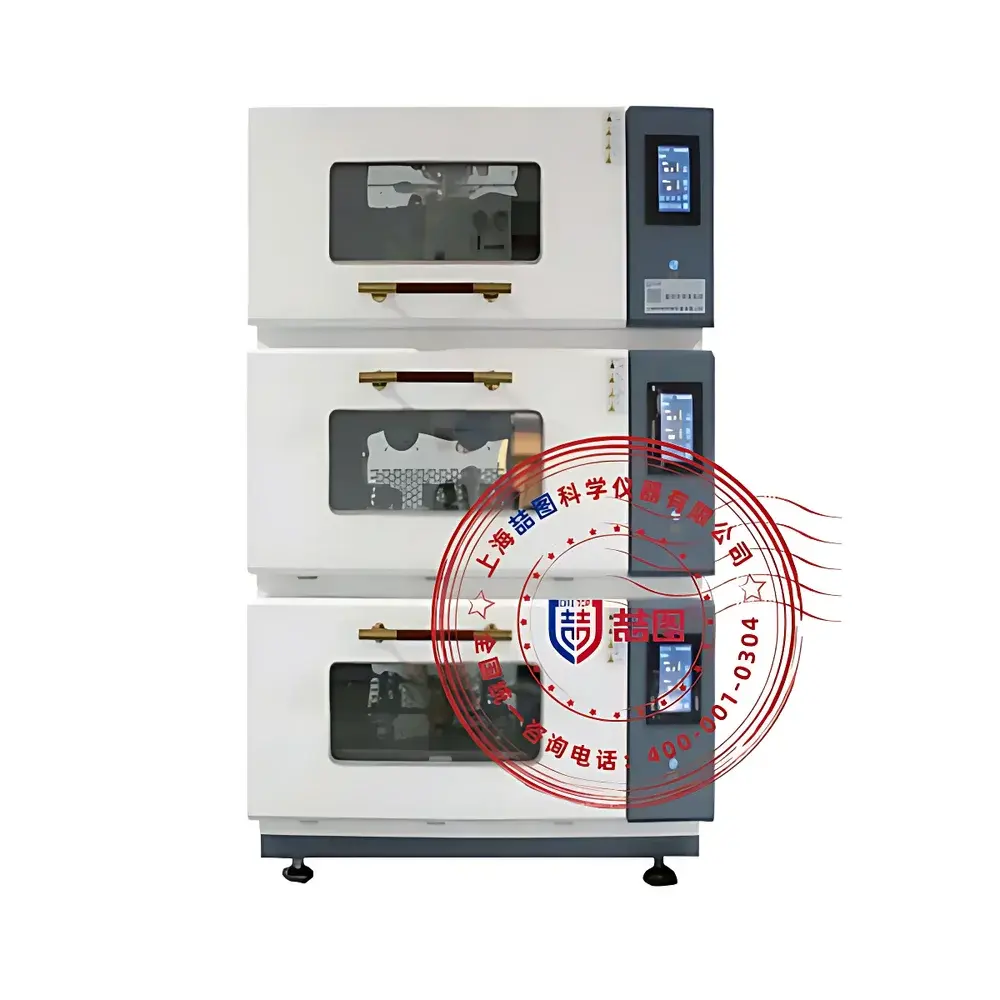
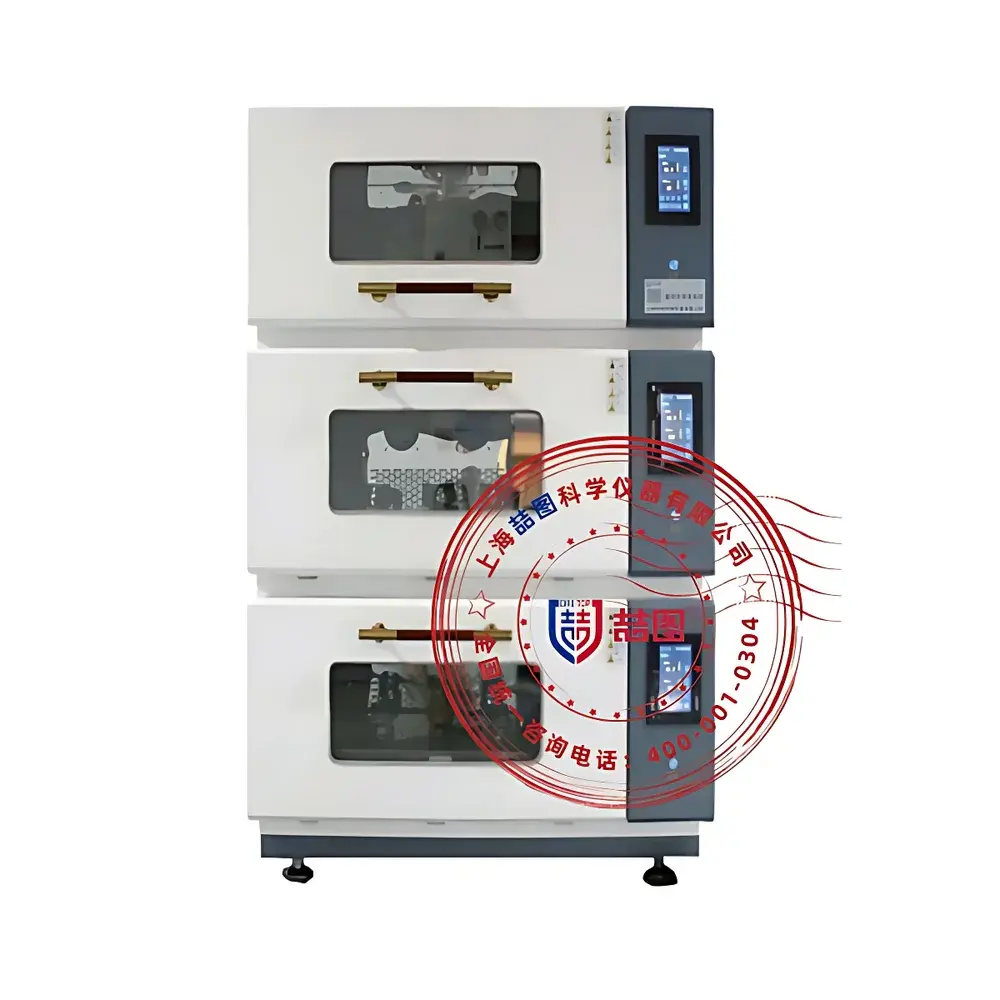
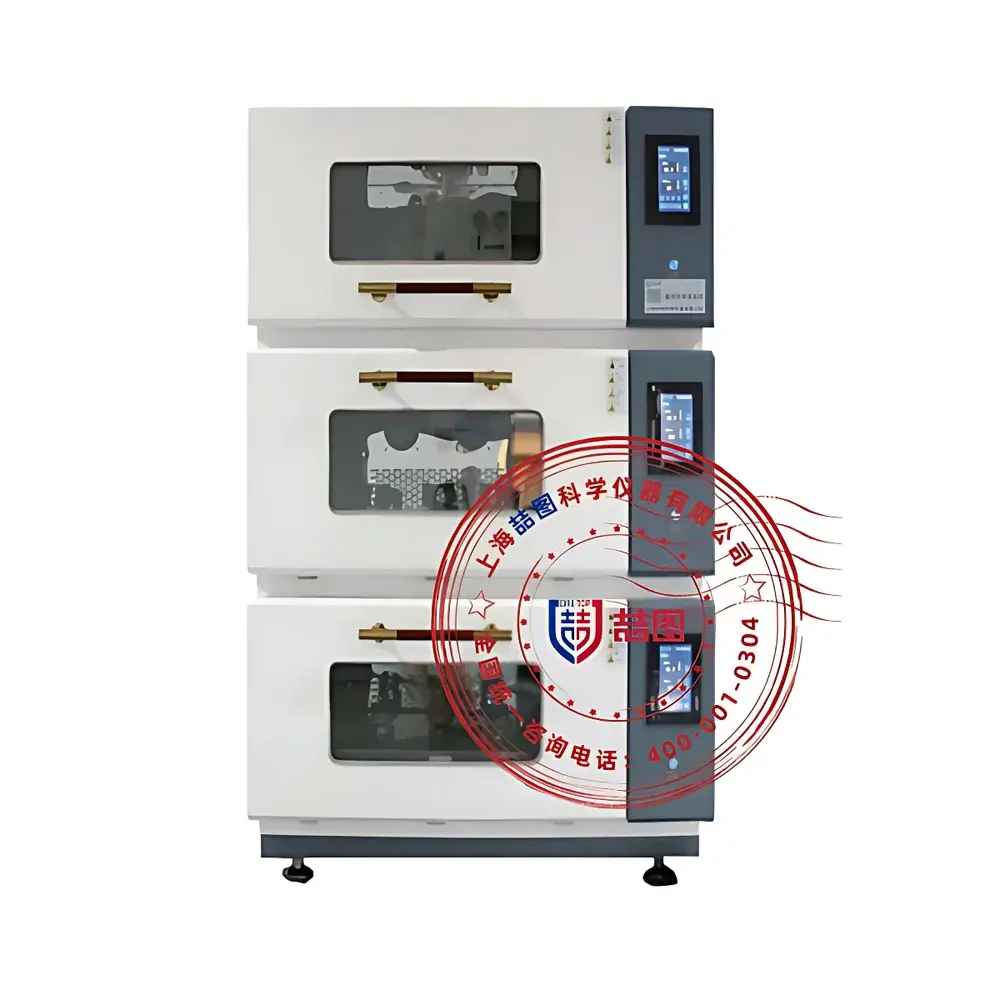
DRETOP XC2-35 Stackable Constant-Temperature Orbital Shaker
| Brand | DRETOP |
|---|---|
| Origin | Shanghai, China |
| Manufacturer Type | Direct Manufacturer |
| Product Category | Domestic (China-Made) |
| Model | XC2-35 |
| Price Range | USD 8,400–35,000 (based on configuration) |
| Instrument Type | Stackable Constant-Temperature Shaker |
| Timer Range | 0–9999 minutes |
| Oscillation Frequency | 30–300 rpm |
| Orbit Diameter | 26 mm |
| Temperature Range | RT+5°C to 60°C |
| Number of Shaking Platforms | 2 |
Overview
The DRETOP XC2-35 Stackable Constant-Temperature Orbital Shaker is an engineered platform for precise, reproducible cultivation and agitation of biological samples under controlled thermal and mechanical conditions. Utilizing orbital shaking mechanics—where the platform moves in a circular motion with a fixed 26 mm diameter orbit—the instrument ensures uniform suspension of microbial cultures, mammalian cells, enzymatic reaction mixtures, and hybridization solutions without vortexing or excessive shear stress. Its dual-platform stackable architecture enables independent temperature and speed control per layer, supporting high-density lab workflows while minimizing footprint. Designed for continuous operation in regulated environments, the XC2-35 integrates PID-based thermal regulation, brushless DC motor drive, and fail-safe operational logic—making it suitable for GLP-compliant cell banking, fermentation process development, and molecular assay preparation.
Key Features
- Independent dual-platform control: Each of the two stainless-steel shaking decks operates with separate setpoints for temperature (RT+5°C to 60°C) and rotational speed (30–300 rpm), enabling parallel experiments under distinct conditions.
- Advanced microprocessor control: Full-color capacitive touchscreen interface with intuitive navigation, real-time display of actual vs. setpoint values for temperature, speed, and elapsed time, and multi-step programmable protocols (up to 99 segments).
- Brushless DC motor drive: Provides consistent torque across the full speed range, eliminates carbon brush wear, requires no routine maintenance, and supports smooth ramp-up/ramp-down profiles to prevent sample splashing during startup or deceleration.
- Robust thermal management: High-efficiency heating system with 0.1°C resolution and ±1°C uniformity; optional R-series variants include compressor-based cooling for extended low-temperature operation down to 4°C.
- Enhanced safety architecture: Features dual-level over-temperature cutoff, overspeed shutdown, automatic restart after power interruption, parameter lockout with password protection, and real-time deviation alarms with audible/visual alerts.
- Ergonomic design: Electrostatically coated steel chassis, 304 stainless-steel chamber interior and platform surface, tempered glass observation window with integrated LED illumination, and dual-locking casters for stable positioning or reconfiguration.
Sample Compatibility & Compliance
The XC2-35 accommodates standard laboratory vessels—including Erlenmeyer flasks (250 mL to 3000 mL), test tubes, deep-well plates, and custom bioreactor bags—via configurable clamping systems and universal platform inserts. Its temperature uniformity (±1°C) and speed stability (<±2 rpm deviation at steady state) meet performance benchmarks referenced in ISO 20733:2020 (Laboratory equipment — Shakers — Performance requirements and test methods). The instrument’s firmware supports audit trail generation and user-access logging, aligning with FDA 21 CFR Part 11 readiness when deployed with validated networked data capture systems. It is routinely deployed in facilities adhering to ISO 13485, USP , and EU GMP Annex 11 frameworks for bioprocess equipment qualification.
Software & Data Management
While the XC2-35 operates as a standalone unit via its embedded controller, optional RS485/USB interfaces enable integration into centralized lab management systems (LIMS) or SCADA platforms. Protocol export/import functions support CSV-based method transfer between instruments. All runtime parameters—including temperature logs, speed profiles, timer status, and alarm events—are timestamped and stored internally for ≥30 days. When connected to compliant third-party software, the device supports electronic signature capture, role-based access control, and encrypted data export compliant with ALCOA+ principles (Attributable, Legible, Contemporaneous, Original, Accurate, Complete, Consistent, Enduring, Available).
Applications
- Microbial and yeast culture expansion in aerobic bioreactor pre-screening
- Protein expression optimization in E. coli and Pichia pastoris systems
- Cell-based assays requiring synchronized suspension (e.g., transfection efficiency studies)
- Nucleic acid hybridization and probe labeling reactions
- Enzyme kinetics profiling under variable thermal-agitation conditions
- Stability testing of biopharmaceutical formulations in shake-flask models
- Environmental microbiology sampling incubation with agitation (e.g., BOD, COD, nitrification assays)
FAQ
Can the two platforms operate at different temperatures simultaneously?
Yes—each platform has an independent heating circuit and sensor, allowing simultaneous operation at different setpoints within the RT+5°C to 60°C range.
Is refrigeration available on the XC2-35 model?
Standard XC2-35 units are heating-only; the XC2-35R variant includes a hermetic compressor and forced-air cooling system for operation down to 4°C.
What is the maximum flask capacity per platform?
With standard clamps, each 520 × 420 mm platform supports up to twenty-four 500 mL flasks or nine 1000 mL flasks—configurations detailed in the included mounting template guide.
Does the instrument support GLP-compliant data integrity?
When used with validated external data acquisition software and appropriate administrative controls, the XC2-35 meets core GLP data traceability requirements including time-stamped event logging and user authentication.
How is calibration verified and maintained?
The unit includes factory calibration certificates for temperature (NIST-traceable PT100 sensors) and speed (laser tachometer-verified). Users may perform field verification using external Class A thermometers and calibrated tachometers per internal SOPs.
Related Products





