
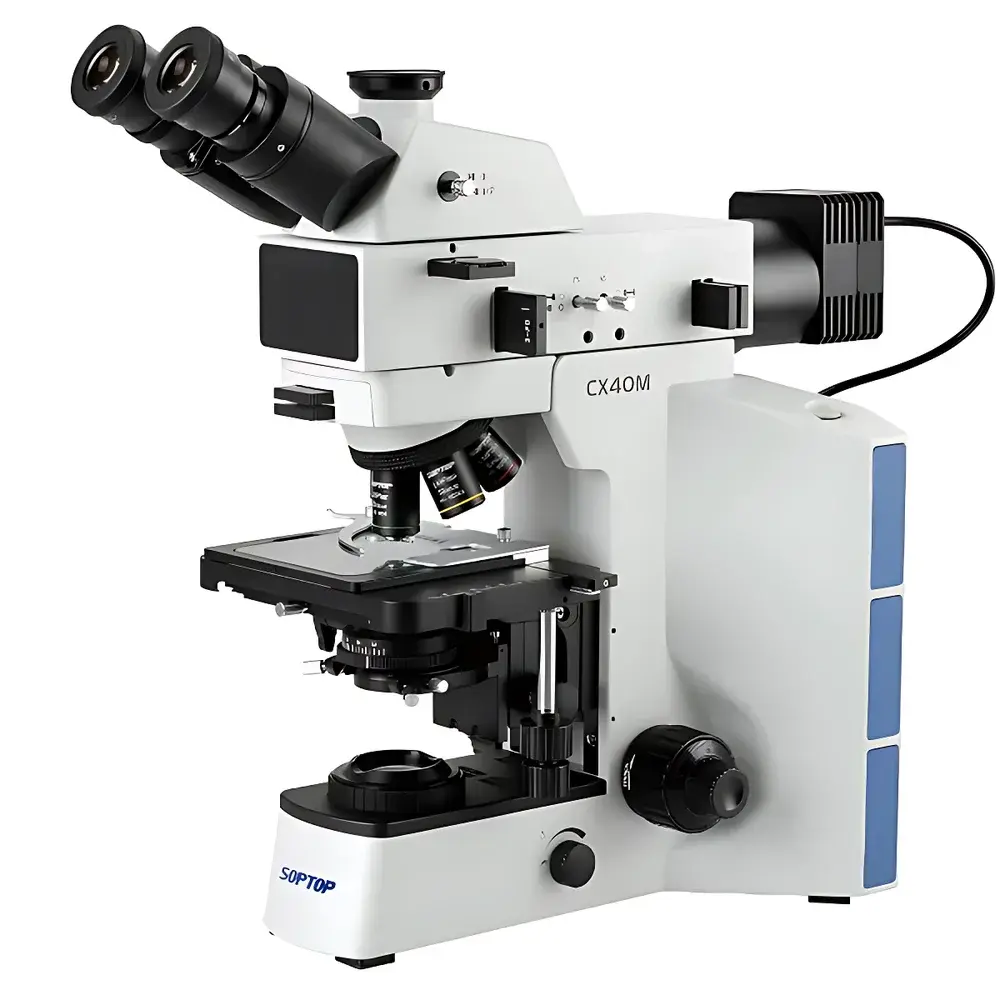
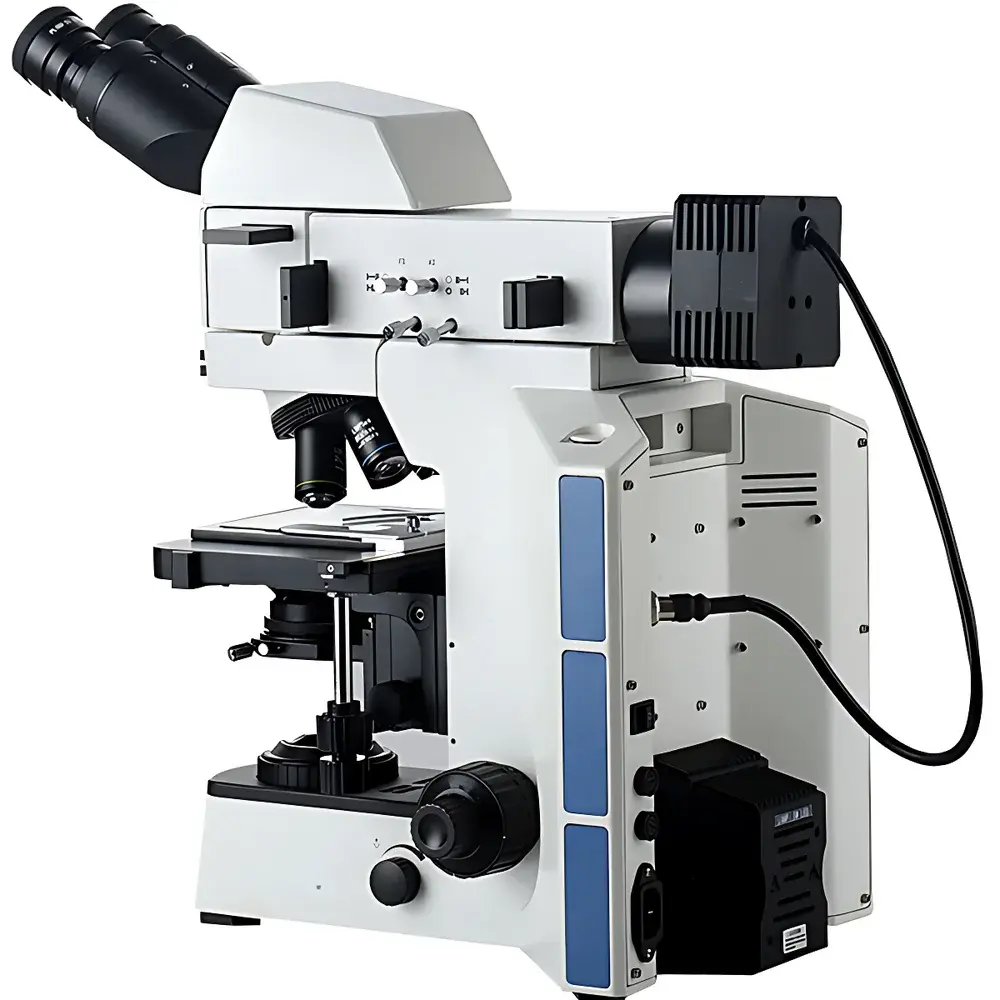
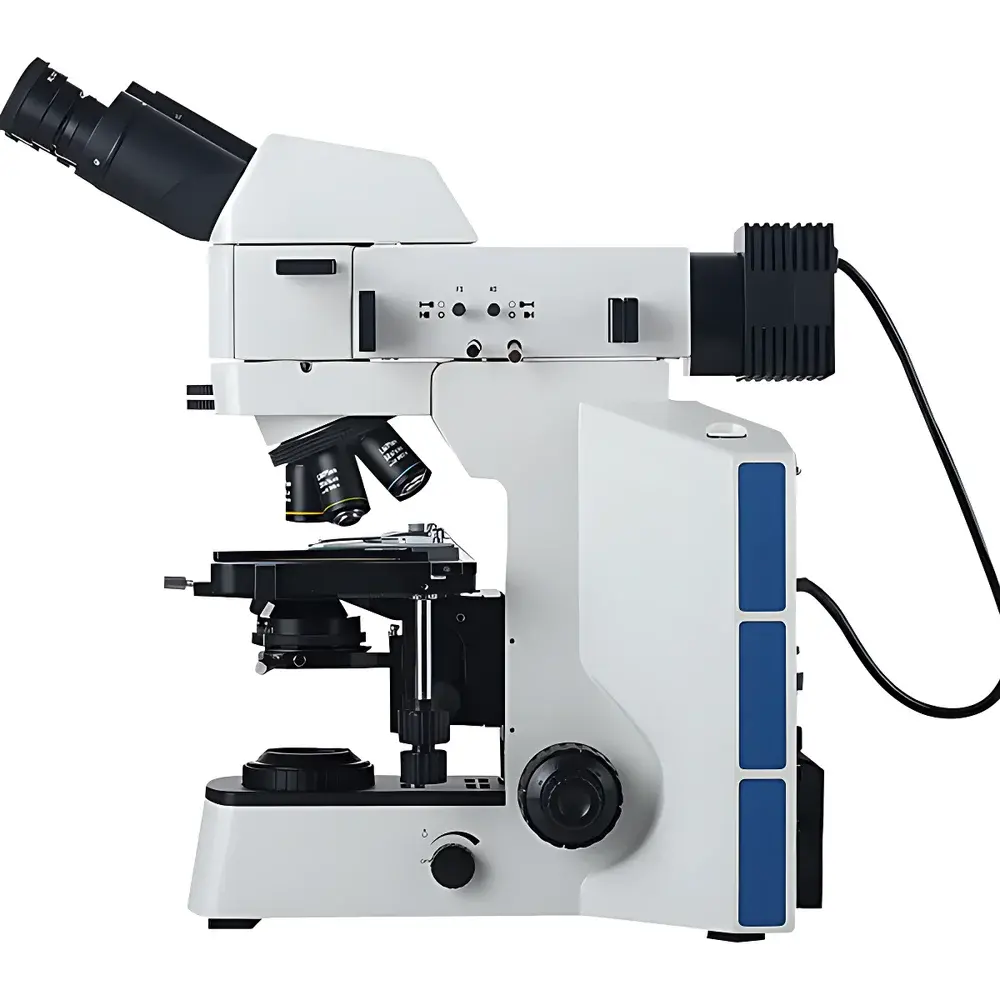
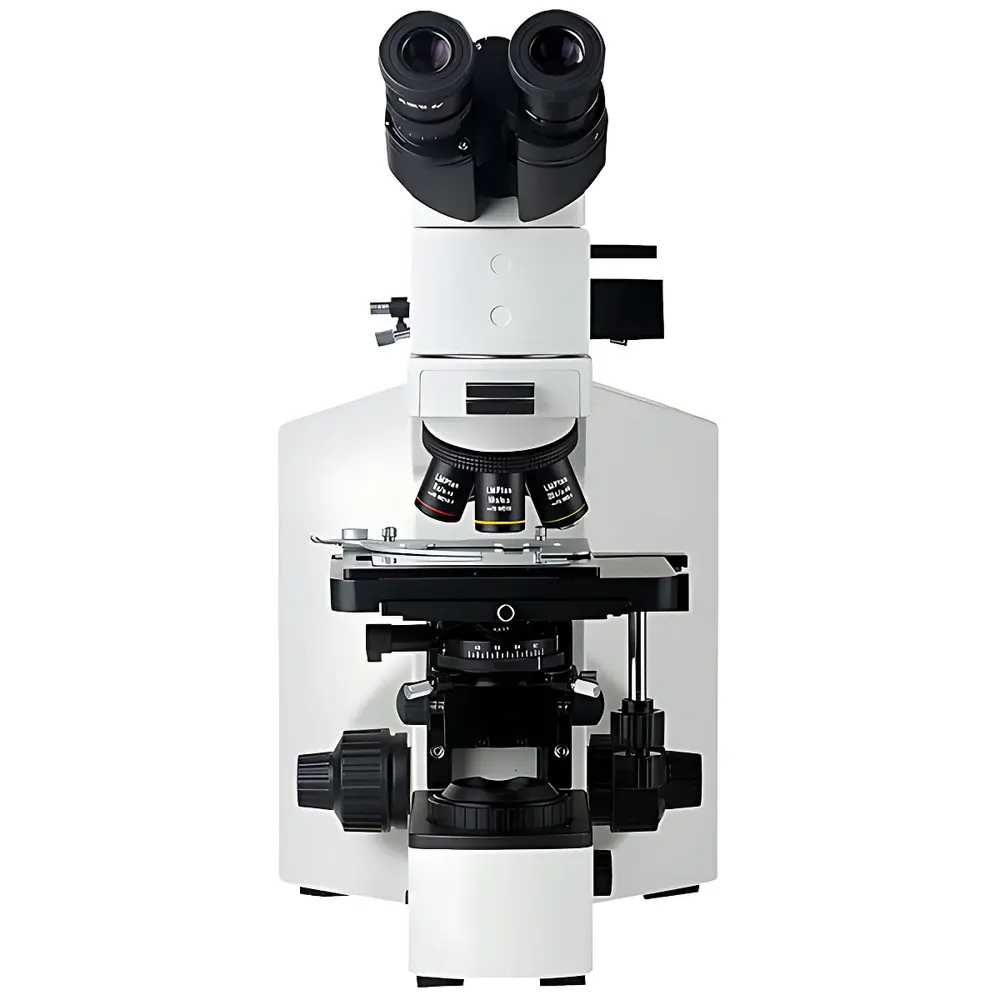
SOPTOP CX40M Upright Metallurgical Microscope
| Brand | SOPTOP |
|---|---|
| Origin | Zhejiang, China |
| Manufacturer Type | Direct Manufacturer |
| Product Type | Upright |
| Total Magnification Range | 50×–1500× |
| Eyepieces | Wide-field Plan Eyepieces PL10×/22 mm and PL15×/16 mm |
| Objectives | 5×–100× LMPlan Long Working Distance Metallurgical Objectives |
| Illumination | 5 W Warm-White LED (3000–3300 K) with Köhler Illumination System |
| Optical Features | Adjustable Field & Aperture Diaphragms, Built-in Polarizer/Analyzer Slots, Optional Color Filter Slots, Oblique Illumination Capability |
| Ergonomics | 30° Inclined Trinocular Observation Tube with Pupillary Distance Scale |
| Included Tool | M4 Hex Key Stored On-Chassis |
Overview
The SOPTOP CX40M is an upright metallurgical microscope engineered for precision microstructural analysis of opaque, reflective specimens—primarily metals, alloys, ceramics, and coated materials. It operates on reflected light microscopy principles, utilizing incident illumination to resolve surface topography, grain boundaries, phase distribution, inclusion morphology, and heat-affected zones. Designed for routine quality control, failure analysis, and R&D laboratories in foundries, aerospace component suppliers, automotive manufacturing, and academic metallurgy departments, the CX40M integrates optical rigor with ergonomic intelligence. Its optical path conforms to ISO 8578 (Microscopy — Terminology for Microscopes) and supports standardized assessment per ASTM E3, ASTM E112 (grain size), ASTM E407 (etchant selection), and ISO 643 (steel microstructure classification). The system delivers diffraction-limited resolution across its full magnification range (50×–1500×), enabled by a fully corrected infinity-corrected optical train and LMPlan long working distance objectives optimized for industrial sample handling.
Key Features
- 30° inclined trinocular observation tube—engineered to reduce cervical strain during extended inspection sessions; includes engraved interpupillary distance scale for rapid, repeatable user setup
- Köhler illumination architecture with independently adjustable field and aperture diaphragms ensures uniform brightness, optimal contrast, and precise critical illumination control
- Integrated oblique illumination mechanism enables rapid transition between brightfield and pseudo-3D relief imaging without mechanical reconfiguration
- Dual polarizing capability: pre-aligned slot-mounted polarizer and analyzer support stress birefringence analysis, anisotropic phase identification, and quantitative retardation assessment
- Warm-white 5 W LED light source (3000–3300 K CCT) minimizes chromatic adaptation fatigue and improves visual discrimination of subtle contrast differences in etched or polished surfaces
- LMPlan series metallurgical objectives (5×, 10×, 20×, 50×, 100× oil) feature enhanced multi-layer anti-reflection coatings and improved longitudinal chromatic correction—delivering high modulation transfer function (MTF) values at Nyquist-limited spatial frequencies
- On-chassis M4 hex key storage eliminates tool misplacement and streamlines objective lens exchange or stage calibration procedures
Sample Compatibility & Compliance
The CX40M accommodates standard metallurgical specimen formats up to 76 mm × 52 mm (3″ × 2″) with optional mechanical or motorized XY translation stages. Its long working distance objectives (≥10.2 mm at 10×, ≥2.1 mm at 50×) enable safe imaging of rough, unpolished, or tall-sectioned samples—including as-cast cross-sections, weld beads, and thermal spray coatings. The instrument complies with IEC 61000-6-3 (EMC emissions) and IEC 61000-6-2 (immunity), and meets CE marking requirements for laboratory equipment. All optical components are sealed against dust ingress (IP20-rated enclosure), and the LED illumination system achieves L70 lifetime >25,000 hours under continuous operation. For regulated environments, the microscope supports GLP-compliant documentation workflows when paired with SOPTOP’s optional digital imaging module (CX40M-DI), which logs acquisition parameters, timestamped metadata, and operator ID per image frame.
Software & Data Management
While the CX40M functions as a standalone optical platform, it is fully compatible with SOPTOP’s proprietary ImagePro Insight Metrology Suite (v3.2+), supporting automated particle analysis, grain size quantification (ASTM E112 compliant), phase area fraction calculation, and hardness impression measurement. Raw image capture is supported via USB 3.0 CMOS sensors (1920×1080 or 3840×2160 options), with TIFF, BMP, and vendor-neutral DNG export. Audit trail functionality—including user login, parameter changes, and image annotation history—is available when configured with network authentication and SQL-based database backend. The system adheres to FDA 21 CFR Part 11 requirements for electronic records and signatures when deployed with validated software modules and role-based access controls.
Applications
- Metallurgical QC: Routine verification of grain structure, inclusion rating (ASTM E45), decarburization depth, and case hardening uniformity
- Failure analysis: Fractography of fatigue cracks, intergranular corrosion mapping, and solder joint integrity assessment in electronics packaging
- Coating & surface engineering: Thickness estimation of PVD/CVD layers, porosity evaluation in thermal barrier coatings, and adhesion interface characterization
- Geological thin section analysis: Reflected-light imaging of ore minerals, sulfide textures, and metamorphic fabric development
- Educational labs: Structured pedagogy for metallography fundamentals, including polishing artifact recognition, etchant selectivity, and optical anisotropy demonstration
FAQ
Does the CX40M support DIC (Differential Interference Contrast) observation?
No—DIC requires dedicated Nomarski prism sets and strain-free condensers not included in the base configuration. However, oblique illumination provides a cost-effective alternative for topographic enhancement.
Is oil immersion compatible with all high-magnification objectives?
Only the 100× objective is designed for oil immersion (Type A immersion oil, nD = 1.515); dry objectives up to 50× maintain optimal resolution without immersion medium.
Can the CX40M be integrated into automated production line inspection stations?
Yes—via optional TTL-triggered shutter control, RS-232/USB device command protocol, and programmable stage interfaces compatible with PLC-driven conveyor synchronization.
What is the maximum specimen height clearance under the 100× objective?
With the standard nosepiece and focus mechanism, vertical clearance is 2.1 mm; extended-focus versions or low-profile stages can increase this to 5.5 mm.
Are calibration certificates traceable to NIST or other national metrology institutes available?
Yes—SOPTOP offers optional factory calibration packages with uncertainty budgets traceable to PTB (Physikalisch-Technische Bundesanstalt) standards for magnification, field diameter, and illumination uniformity.





